


1 month 4 days ago
Until writing was invented, man lived in acoustic space: boundless, directionless, horizonless, in the dark of the mind, in the world of emotion, by primordial intuition, terror. Speech is a social chart of this bog.
▼
Source
source
(p. 48)
2 months 3 days ago
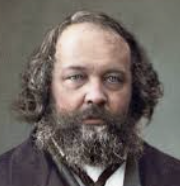
This means that no state, howsoever democratic its forms, not even the reddest political republic - a people's republic only in the sense of the lie known as popular representation - is capable of giving the people what they need: the free organization of their own interests from below upward, without any interference, tutelage, or coercion from above. That is because no state, not even the most republican and democratic, not even the pseudo-popular state contemplated by Marx, in essence represents anything but government of the masses from above downward, by an educated and thereby privileged minority which supposedly understands the real interests of the people better than the people themselves.

3 months 5 days ago
Indeed, if we consider the unblushing promises of reward and the staggering nature of the rewards promised in the Gospels, it would seem that Our Lord finds our desires, not too strong, but too weak. We are half-hearted creatures, fooling about with drink and sex and ambition when infinite joy is offered us, like an ignorant child who wants to go on making mud pies in a slum because he cannot imagine what is meant by the offer of a holiday at the sea. We are far too easily pleased.

3 months 3 weeks ago
Even then [at the time of Peter's speech in Acts 2] it was the last days; how much more so now, when there must still be as much time till the end of the world as has passed since the ascension of the Lord! We do not know the end of the world, because it is not for us to know the times or the seasons that the Father has set in his power; but we know that, like the apostles, we live in the last times, in the last days, in the last hour. Those who lived after the apostles and before us were more in what we call the last times, and we ourselves are in them even more than they; those who will come after us will be so much more, till one gets to those who will be, if one may say so, the last of the last, and finally till that day, the very last, of which the Lord means to speak when he said, "And I will raise him up on the last day". How far are we from that day? That is an impenetrable secret.

3 months 2 weeks ago
In this present that God has made us, there is nothing unworthy our care; we stand accountable for it even to a hair; and is it not a commission to man, to conduct man according to his condition; 'tis express, plain, and the very principal one, and the Creator has seriously and strictly prescribed it to us. Authority has power only to work in regard to matters of common judgment, and is of more weight in a foreign language; therefore let us again charge at it in this place.
▼
Source
source
Ch. 13

1 week 6 days ago
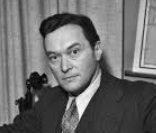
To affirm that humans thrive in many different ways is not to deny that there are universal human values. Nor is it to reject the claim that there should be universal human rights. It is to deny that universal values can only be fully realized in a universal regime. Human rights can be respected in a variety of regimes, liberal and otherwise. Universal human rights are not an ideal constitution for a single regime throughout the world, but a set of minimum standards for peaceful coexistence among regimes that will always remain different.
▼
Source
source
Two Faces of Liberalism (New Press, 2000, ISBN 0-745-62259-3. 168 pages), ch. 1: Liberal Toleration (p. 21)
3 days ago
Whether or not birth control is eugenic, hygienic, and economic, it is the most revolutionary practice in the history of sexual morals.
▼
Source
source
Ch. XIV: "Love in the Great Society", §4, p. 291

4 months 1 week ago
My doubt goes like this: How could the Loving One have the heart to let human beings become so guilty that they got his murder on their consciences?

3 months 3 weeks ago
The superior man, when resting in safety, does not forget that danger may come. When in a state of security he does not forget the possibility of ruin. When all is orderly, he does not forget that disorder may come. Thus his person is not endangered, and his States and all their clans are preserved.

1 month 4 weeks ago
The ontological concept of truth is in the centre of a logic which may serve as a model of pre- technological rationality. It is the rationality of a two-dimensional universe of discourse which, contrasts with the of thought and behavior that develop in the execution of the technological project.
▼
Source
source
p. 130
3 days ago
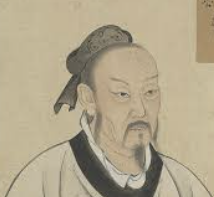
The learning of the gentleman enters through his ears, fastens to his heart, spreads through his four limbs, and manifests itself in his actions. ... The learning of the petty person enters through his ears and passes out his mouth. From mouth to ears is only four inches-how could it be enough to improve a whole body much larger than that?
▼
Source
source
Readings in Classical Chinese Philosophy (2001), p. 259

3 months 1 week ago
The little honesty that exists among authors is discernible in the unconscionable way they misquote from the writings of others.

3 months 6 days ago
Ideas do not exist separately from language.
▼
Source
source
Notebook I, The Chapter on Money, p. 83.

2 months 6 days ago
It was not only that I could not become spiteful, I did not know how to become anything; neither spiteful nor kind, neither a rascal nor an honest man, neither a hero nor an insect. Now, I am living out my life in my corner, taunting myself with the spiteful and useless consolation that an intelligent man cannot become anything seriously, and it is only the fool who becomes anything.
▼
Source
source
Part 1, Chapter 1
3 months 5 days ago
I think that if God forgives us we must forgive ourselves. Otherwise it is almost like setting up ourselves as a higher tribunal than Him.
▼
Source
source
Letter (19 April 1951); published in Letters of C. S. Lewis (1966), p. 230

2 months 2 days ago
One does not inhabit a country; one inhabits a language. That is our country, our fatherland - and no other. Variant translation: We inhabit a language rather than a country.

3 months 1 day ago
This remark provides the key to the problem, how much truth there is in solipsism. For what the solipsist means is quite correct; only it cannot be said, but makes itself manifest. The world is my world: this is manifest in the fact that the limits of language (of that language which alone I understand) mean the limits of my world.
▼
Source
source
-5.62


2 months 2 days ago
His power to adore is responsible for all his crimes: a man who loves a god unduly forces other men to love his god, eager to exterminate them if they refuse.
2 months 1 week ago
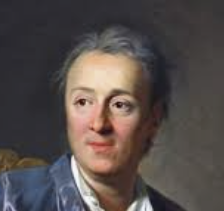
There is only one passion, the passion for happiness.
▼
Source
source
"Will, Freedom"

2 months 3 weeks ago
Fools learn wisdom through misfortune.

3 months 1 week ago
A young man before he leaves the shelter of his father's house, and the guard of a tutor, should be fortify'd with resolution, and made acquainted with men, to secure his virtues, lest he should be led into some ruinous course, or fatal precipice, before he is sufficiently acquainted with the dangers of conversation, and his steadiness enough not to yield to every temptation.
▼
Source
source
Sec. 70
2 days ago
I do not admire myself as a person. My successes do not override my shortcomings.
▼
Source
source
Journal of Humanistic Psychology (Spring 1991) Vol. 31 No. 2, p. 112
2 months 2 days ago
We are all secularised anarchists today.

3 months 1 week ago
Virtuous men alone possess friends.
▼
Source
source
"Friendship", 1764
2 months 1 week ago
There are three principal means of acquiring knowledge available to us: observation of nature, reflection, and experimentation. Observation collects facts; reflection combines them; experimentation verifies the result of that combination. Our observation of nature must be diligent, our reflection profound, and our experiments exact. We rarely see these three means combined; and for this reason, creative geniuses are not common.
▼
Source
source
No. 15

3 months 6 days ago
We do not count a man's years until he has nothing else to count.
▼
Source
source
Old Age

3 months 2 weeks ago
A Christian has no need of any law in order to be saved, since through faith we are free from every law. Thus all the acts of a Christian are done spontaneously, out of a sense of pure liberty. As Christians we do not seek our own advantage or salvation because we are already fully satisfied and saved by God's grace through faith. Now our only motive is to do that which is pleasing to God.
▼
Source
source
pp. 75-76
1 month 2 weeks ago
Ritual practices ensure that we treat not only other people but also things in beautiful ways, that there is an affinity between us and other people as well as things.

1 month 4 weeks ago
I am he that liveth, and was dead; and, behold, I am alive for evermore, Amen; and have the keys of hell and of death. Write the things which thou hast seen, and the things which are, and the things which shall be hereafter.
▼
Source
source
Revelation 1:18-19

2 months 6 days ago
It was these Romans who reunited in one State the Culture which had now been produced by the intermixture of different races, and thereby completed the period of Ancient Time, and closed the simple course of Ancient Civilization. With respect to its influence on Universal History, this nation, more than any other, was the blind and unconscious instrument for the furtherance of a higher World-Plan; after having formed itself, by its internal des tiny indicated above, into a most fit and proper instrument for that purpose.
▼
Source
source
p. 192

3 months 1 week ago
In public, as well as in private expences, great wealth may, perhaps, frequently be admitted as an apology for great folly.
▼
Source
source
Chapter V, p. 563.
2 months 6 days ago
Your worst sin is that you have destroyed and betrayed yourself for nothing.

2 months 1 week ago
The tyranny of a multitude is a multiplied tyranny.
▼
Source
source
Letter to Thomas Mercer
4 months 1 week ago
Aristotle's view that philosophy begins with wonder, not as in our day with doubt, is a positive point of departure for philosophy. Indeed, the world will no doubt learn that it does not do to begin with the negative, and the reason for success up to the present is that philosophers have never quite surrendered to the negative and thus have never earnestly done what they have said. They merely flirt with doubt.
2 months 6 days ago
All became so jealous of the rights of their own personality that they did their very utmost to curtail and destroy them in others, and made that the chief thing in their lives. Slavery followed, even voluntary slavery; the weak eagerly submitted to the strong, on condition that the latter aided them to subdue the still weaker. Then there were saints who came to these people, weeping, and talked to them of their pride, of their loss of harmony and due proportion, of their loss of shame. They were laughed at or pelted with stones.

3 months 1 week ago
When the intensity of emotional conviction subsides, a man who is in the habit of reasoning will search for logical grounds in favour of the belief which he finds in himself.
▼
Source
source
Ch. 1: Mysticism and Logic
Just now
Sociology is the science which has the most methods and the least results.
▼
Source
source
Part I. Ch. 1 : The Selection of Facts, p. 19

3 months 6 days ago
One right-thinking man thinks like all other right-thinking men of his time-that is to say, in most cases, like some wrong-thinking man of another time.
▼
Source
source
"One and Many," p. 12

2 months 6 days ago
Evolution is definable as a change from an incoherent homogeneity to a coherent heterogeneity, accompanying the dissipation of motion and integration of matter.
▼
Source
source
Pt. II, The Knowable; Ch. XV, The Law of Evolution (continued)

3 months 2 weeks ago
Careful thought about this will reveal how few there are who are truly converted from evil habits, especially among those who have prolonged their lives of sin right up to the end. The path down to evil is quick, slippery, and easy. But to turn and "to go forth to the upper air . . . this is effort, this is toil." Think of Aesop's goat before you descend and remember that climbing out is not easy.
▼
Source
source
p. 147
3 months 6 days ago
We are born believing. A man bears beliefs as a tree bears apples.
▼
Source
source
Worship

2 months 1 week ago
The heart of man is the place the devil dwells in; I feel sometimes a hell within myself.
▼
Source
source
Section 51

2 months 1 week ago
If it be of the highest importance to man, as an individual, that his religion should be true, the case of society is not the same. Society has no future life to hope for or to fear; and provided the citizens profess a religion, the peculiar tenets of that religion are of very little importance to its interests. Variant translation: Though it is very important for man as an individual that his religion should be true, that is not the case for society. Society has nothing to fear or hope from another life; what is most important for it is not that all citizens profess the true religion but that they should profess religion.
▼
Source
source
Chapter XVII.
1 month 3 weeks ago
Even the eye that is artificially trained to see color as color, apart from things that colors qualify, cannot shut out the resonances and transfers of value.
▼
Source
source
p. 126

3 months 3 weeks ago
For creation is not a change, but that dependence of the created existence on the principle from which it is instituted, and thus is of the genus of relation; whence nothing prohibits it being in the created as in the subject. Creation is thus said to be a kind of change, according to the way of understanding, insofar as our intellect accepts one and the same thing as not existing before and afterwards existing.
▼
Source
source
II, 18, 2 (see also Summa Theologica I, q. 45, art. 3 ad 2)
2 months 6 days ago
He who carries self-regard far enough to keep himself in good health and high spirits, in the first place thereby becomes an immediate source of happiness to those around, and in the second place maintains the ability to increase their happiness by altruistic actions. But one whose bodily vigour and mental health are undermined by self-sacrifice carried too far, in the first place becomes to those around a cause of depression, and in the second place renders himself incapable, or less capable, of actively furthering their welfare. In estimating conduct we must remember that there are those who by their joyousness beget joy in others, and that there are those who by their melancholy cast a gloom on every circle they enter.
▼
Source
source
Ethics (New York:1915), § 72, pp. 193-194

2 months 2 weeks ago
It is only necessary to make war with five things; with the maladies of the body, the ignorances of the mind, with the passions of the body, with the seditions of the city and the discords of families.
▼
Source
source
As quoted in The Biblical Museum: A Collection of Notes Explanatory, Homiletic, and Illustrative on the Holy Scriptures, Especially Designed for the Use of Ministers, Bible-students, and Sunday-school Teachers (1873) by James Comper Gray, Vol. V
3 months 1 week ago
Since sounds have no natural connection with our ideas ... the doubtfulness and uncertainty of their signification ... has its cause more in the ideas they stand for than in any incapacity there is in one sound more than another to signify any idea.
▼
Source
source
Book III, Ch. 9, sec. 4
2 months 2 weeks ago
Attempt nothing above thy strength!
CivilSimian.com created by AxiomaticPanic, CivilSimian, Kalokagathia