

1 month 3 weeks ago
If the immutable character of sex is contested, perhaps this construct called 'sex' is as culturally constructed as gender; indeed, perhaps it was always already gender, with the consequence that the distinction between sex and gender turns out to be no distinction at all.
▼
Source
source
Gender Trouble: Feminism and the Subversion of Identity

1 month 3 weeks ago
In order that men should embrace the truth - not in the vague way they did in childhood, nor in the one-sided and perverted way presented to them by their religious and scientific teachers, but embrace it as their highest law the complete liberation of this truth from all and every superstition (both pseudo-religious and pseudo-scientific) by which it is still obscured is essential: not a partial, timid attempt, reckoning with traditions sanctified by age and with the habits of the people - not such as was effected in the religious sphere by Guru Nanak, the founder of the sect of the Sikhs, and in the Christian world by Luther, and by similar reformers in other religions - but a fundamental cleansing of religious consciousness from all ancient religious and modern scientific superstitions.
▼
Source
source
VI

2 months 5 days ago
For me [fiction] is a manner of philosophizing ... Philosophy may be only a shadow of the reality it tries to grasp, but the novel is altogether more satisfactory. I am almost tempted to say that no philosopher is qualified to do his job unless he is also a novelist ... I would certainly exchange any of the works of Whitehead or Wittgenstein for the novels they ought to have written.
▼
Source
source
p. 160-1

3 months 3 weeks ago
The state of society is one in which the members have suffered amputation from the trunk, and strut about so many walking monsters,-a good finger, a neck, a stomach, an elbow, but never a man.
▼
Source
source
par. 5
4 months ago
No doubt you know that Galileo had been convicted not long ago by the Inquisition, and that his opinion on the movement of the Earth had been condemned as heresy. Now I will tell you that all things I explain in my treatise, among which is also that same opinion about the movement of the Earth, all depend on one another, and are based upon certain evident truths. Nevertheless, I will not for the world stand up against the authority of the Church. ...I have the desire to live in peace and to continue on the road on which I have started.
▼
Source
source
Letter to Marin Mersenne (end of Feb., 1634) as quoted by Amir Aczel, Pendulum: Leon Foucault and the Triumph of Science
2 weeks 4 days ago
There is a class of writers who are ever boasting of the progress of civilization and of the human mind in modern times. If we were to credit their pretensions, we should be led to believe that the science of society had reached its highest degree of perfection, because old metaphysical and economic theories have been somewhat refined upon.In answer to their boasts of social progress, it is not sufficient to refer to the deeply-rooted social evils which exist, and which prey upon our boasted civilized social order. We will mention but a single one, the frightful increase of national debts and of taxation.
▼
Source
source
The Theory of Social Organization. Harmonian Man: Selected Writings of Charles Fourier

2 months 3 weeks ago
Russia was a slave in Europe but would be a master in Asia.
▼
Source
source
As quoted in "Dilemmas of Empire 1850-1918: Power, Territory, Identity" by Dominic Livien in Journal of Contemporary History, Vol. 34, No.2 (April 1999), pp. 180
3 months 3 weeks ago
We may suppose that everyone has in himself the whole form of a moral conception.
▼
Source
source
Chapter I, Section 9, pg. 50

2 months 3 weeks ago
In the United States, except for slaves, servants and the destitute fed by townships, everyone has the vote and this is an indirect contributor to law-making. Anyone wishing to attack the law is thus reduced to adopting one of two obvious courses: they must either change the nation's opinion or trample its wishes under foot.
▼
Source
source
Chapter XIV.
2 months 5 days ago
Religion, mysticism and magic all spring from the same basic 'feeling' about the universe: a sudden feeling of meaning, which human beings sometimes 'pick up' accidentally, as your radio might pick up some unknown station. Poets feel that we are cut off from meaning by a thick, lead wall, and that sometimes for no reason we can understand the wall seems to vanish and we are suddenly overwhelmed with a sense of the infinite interestingness of things.
▼
Source
source
p. 28
1 month 3 weeks ago
Pierre, who from the moment Prince Andrew entered the room had watched him with glad, affectionate eyes, now came up and took his arm. Before he looked round Prince Andrew frowned again, expressing his annoyance with whoever was touching his arm, but when he saw Pierre's beaming face he gave him an unexpectedly kind and pleasant smile. "There now!... So you, too, are in the great world?" said he to Pierre. "I knew you would be here," replied Pierre. "I will come to supper with you. May I?" he added in a low voice so as not to disturb the vicomte who was continuing his story. "No, impossible!" said Prince Andrew, laughing and pressing Pierre's hand to show that there was no need to ask the question. He wished to say something more, but at that moment Prince Vasíli and his daughter got up to go and the two young men rose to let them pass.
▼
Source
source
Bk. I, Ch. IV

2 months 1 week ago
Warmth, warmth, more warmth! for we are dying of cold and not of darkness. It is not the night that kills, but the frost.

1 month 2 weeks ago
Speech structures the abyss of mental and acoustic space...it is a cosmic, invisible architecture of the human dark.
▼
Source
source
(p. 13)
2 months 3 weeks ago
Even those who have renounced Christianity and attack it, in their inmost being still follow the Christian ideal, for hitherto neither their subtlety nor the ardor of their hearts has been able to create a higher ideal of man and of virtue than the ideal given by Christ.

2 months 2 weeks ago
You are the salt of the earth; but if the salt loses its flavor, how shall it be seasoned? It is then good for nothing but to be thrown out and trampled underfoot by men. You are the light of the world. A city that is set on a hill cannot be hidden. Nor do they light a lamp and put it under a basket, but on a lampstand, and it gives light to all who are in the house. Let your light so shine before men, that they may see your good works and glorify your Father in heaven.
▼
Source
source
Matthew 5:13-16 (NIV) (See also: Mark 9:50; Luke 14:34, 35)
2 weeks 2 days ago
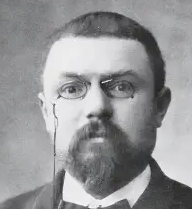
In physical reality one cause does not produce a given effect, but a multitude of distinct causes contribute to produce it, without our having any means of discriminating the part of each of them. ...Causes which have produced a certain effect will never be reproduced except approximately.
1 day ago
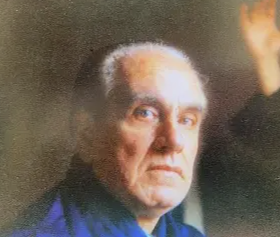
Those who regard the Crusades, with indignation, as among the most extravagant episodes of the 'dark' Middle Ages, have not even the slightest suspicion that what they call 'religious fanaticism' was the visible sign of the presence and effectiveness of a sensitivity and decisiveness, the absence of which is more characteristic of true barbarism. [...] The one who fights according to the sense of 'sacred war' is spontaneously beyond every particularism and exists in a spiritual climate which, at any given moment, may very well give rise and life to a supra-national unity of action. This is precisely what occurred in the Crusades when Princes and Dukes of every land gathered in the heroic and sacred enterprise, regardless of their particular utilitarian interests or political divisions, bringing about for the first time a great European unity, true to the common civilisation and to the very principle of the Sacred Roman Empire.
▼
Source
source
pp. 40-41



4 months 1 week ago
When we have intelligence resulting from sincerity, this condition is to be ascribed to nature; when we have sincerity resulting from intelligence, this condition is to be ascribed to instruction. But given the sincerity, and there shall be the intelligence; given the intelligence, and there shall be the sincerity.

3 months 3 weeks ago
Every thing in the world is purchased by labour.
▼
Source
source
Part II, Essay 1: Of Commerce

2 months 3 weeks ago
An event has happened, upon which it is difficult to speak, and impossible to be silent.
▼
Source
source
Speech on the sixth article of charge in the impeachment of Warren Hastings (5 May 1789), quoted in The Works of the Right Honourable Edmund Burke, Volume the Tenth (1899), p. 306
2 months 1 week ago
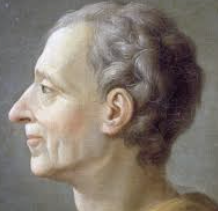
One must give one power a ballast, so to speak, to put it in a position to resist another.
▼
Source
source
Book V, Chapter 14.
2 months 1 day ago
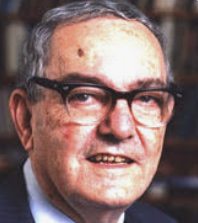
Global rationality, the rationality of neoclassical theory, assumes that the decision maker has a comprehensive, consistent utility function, knows all the alternatives that are available for choice, can compute the expected value of utility associated with each alternative, and chooses the alternative that maximizes expected utility. Bounded rationality, a rationality that is consistent with our knowledge of actual human choice behavior, assumes that the decision maker must search for alternatives, has egregiously incomplete and inaccurate knowledge about the consequences of actions, and chooses actions that are expected to be satisfactory (attain targets while satisfying constraints).
▼
Source
source
Simon (1997, p. 17); As cited in: Gustavo Barros (2010, p. 460).

2 weeks 3 days ago
Liberal values like tolerance and individual freedom are prized most intensely when they are denied: People who live in brutal dictatorships want the simple freedom to speak, associate, and worship as they choose. But over time life in a liberal society comes to be taken for granted and its sense of shared community seems thin.

2 months 2 weeks ago
Knowledge, having irritated and stimulated our appetite for power, will lead us inexorably to our ruin.

4 months 2 weeks ago
Of all the books I have ever worked on, I think Asimov's Guide to Shakespeare gave me the most pleasure, day in, day out. For months and months I lived and thought Shakespeare, and I don't see how there can be any greater pleasure in the world, any pleasure, that is, that one can indulge in for as much as ten hours without pause, day after day indefinitely.
3 months 3 weeks ago
It is a matter of perfect indifference where a thing originated; the only question is: "Is it true in and for itself?" Many think that by pronouncing a doctrine to be Neo-Platonic, they have ipso facto banished it from Christianity. Whether a Christian doctrine stands exactly thus or thus in the Bible, the point to which the exegetical scholars of modern times devote all their attention is not the only question. The Letter kills, the Spirit makes alive: this they say themselves, yet pervert the sentiment by taking the Understanding for the Spirit.
▼
Source
source
Pt. III, sec. 3, ch. 2 Lectures on the History of History Vol 1 p. 344 John Sibree translation (1857), 1914
3 months 3 weeks ago
Obey the voice at eve obeyed at prime.
▼
Source
source
Terminus
3 months 3 weeks ago
In vain, therefore, should we pretend to determine any single event, or infer any cause or effect, without the assistance of observation and experience.
▼
Source
source
§ 4.11
2 months 1 week ago
Even to-day, in spite of some signs which are making a tiny breach in that sturdy faith, even to-day, there are few men who doubt that motorcars will in five years' time be more comfortable and cheaper than to-day. They believe in this as they believe that the sun will rise in the morning. The metaphor is an exact one. For, in fact, the common man, finding himself in a world so excellent, technically and socially, believes that it has been produced by nature, and never thinks of the personal efforts of highly-endowed individuals which the creation of this new world presupposed. Still less will he admit the notion that all these facilities still require the support of certain difficult human virtues, the least failure of which would cause the rapid disappearance of the whole magnificent edifice.... These traits together make up the well-known psychology of the spoilt child. Chap.
▼
Source
source
VI: The Dissection Of The Mass-Man Begins
3 days ago
Ivanov came to quite the same conclusion, though life supplied him with quite different material to think about. He puts it like this: many lives have a mystical sense, but not everyone reads it right; more often than not it is given to us in cryptic form, and when we fail to decipher it we despair because our lives seem meaningless... the secret of a great life is often a man's success in deciphering the mysterious symbols vouchsafed to him, understanding them, and so learning to walk in the true path.
2 months 2 weeks ago
Fate and temperament are two words for one and the same concept.
▼
Source
source
As quoted in Demian (1965) by Hermann Hesse, trans. Michael Roloff and Michael Lebeck
3 days ago
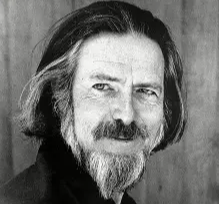
Sex is no longer a serious taboo. Teenagers sometimes know more about it than adults.
▼
Source
source
Inside Information p. 4
2 months 2 weeks ago
Out of the shadow of the abstract man, who thinks for the pleasure of thinking, emerges the organic man, who thinks because of a vital imbalance, and who is beyond science and art.
3 weeks 5 days ago
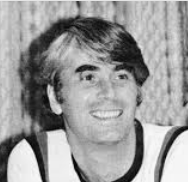
Whatever arises from a just situation by just steps is itself just.
▼
Source
source
Ch. 7 : Distributive Justice, Section I, The Entitlement Theory, p. 151

3 months 3 weeks ago
Space is employed as the type even of the concept of time itself, representing it by a line, and its limits - moments - by points. Time, on the other had, approaches more to a universal and rational concept, comprising under its relations all things whatsoever, to wit, space itself, and besides, those accidents which are not comprehended in the relations of space, such as the thoughts of the soul. Again, time, besides this, though it certainly does not dictate the laws of reason, yet constitutes the principal conditions tinder favor of which the mind compares its notions according to the laws of reason. Thus, I cannot judge what is impossible except by predicating a and not-a of the same subject at the same time.
3 months 1 week ago
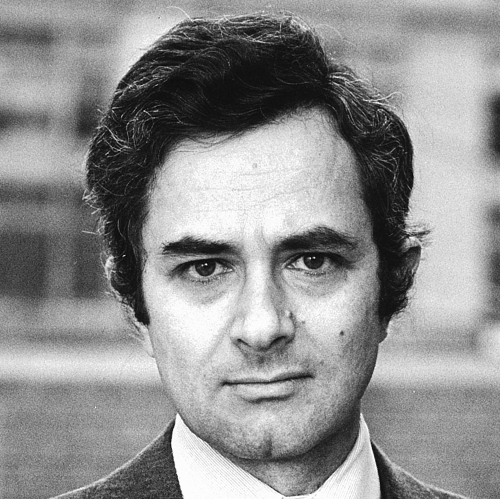
All of us, I believe, are fortunate to have been born.
▼
Source
source
"Death" (1970), p. 7.
1 week 1 day ago
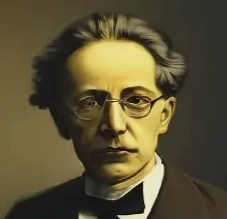
Because the Egoist is to himself the warder of the human, and has nothing to say to the state except: "Get out of my sunshine!"
▼
Source
source
Tucker 1907, p. 307
2 months 2 weeks ago
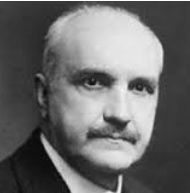
When men and women agree, it is only in their conclusions; their reasons are always different.
▼
Source
source
Ch. VI: Free Society
4 months 3 weeks ago
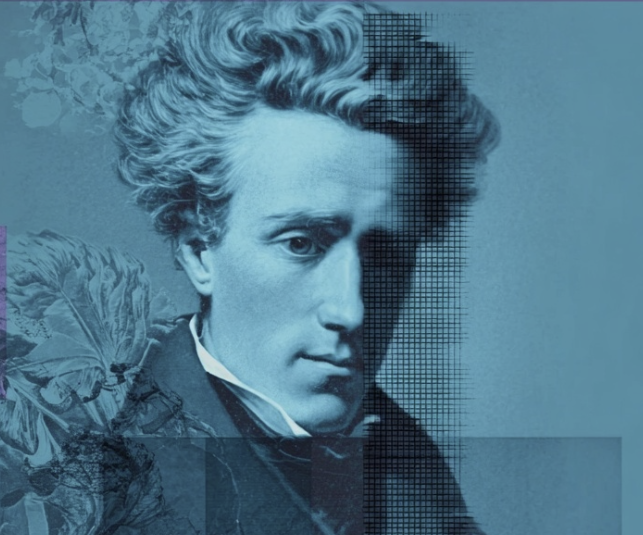
It is of this sort of divine service I used the expression that, in comparison with the Christianity of the New Testament, it is playing Christianity. The expression is essentially true and characterizes the thing perfectly. For what does it mean to play, when one reflects how the word must be understood in this connection? It means to imitate, to counterfeit, a danger when there is no danger, and to do it in such a way that the more art is applied to it, the more delusive the pretense is that the danger is present.

3 months 3 weeks ago
To aspire to be superhuman is a most discreditable admission that you lack the guts, the wit, the moderating judgment to be successfully and consummately human.
▼
Source
source
Spinoza's Worm," p. 75
2 months 2 weeks ago
Technical progress and more comfortable living permit the systematic inclusion of libidinal components into the realm of commodity production and exchange. But no matter how controlled the mobilization of instinctual energy may be (it sometimes amounts to a scientific management of libido), no matter how much it may serve as a prop for the status quo-it is also gratifying to the managed individuals, just as racing the outboard motor, pushing the power lawn mower, and speeding the automobile are fun.
▼
Source
source
p. 75
3 months 3 weeks ago
I hung my verse in the wind Time and tide their faults will find.
▼
Source
source
"The Test", as quoted in Emerson As A Poet (1883) by Joel Benton, p. 40
2 months 2 weeks ago
Even when he turns from religion, man remains subject to it; depleting himself to create false gods, he then feverishly adopts them; his need for fiction, for mythology triumphs over evidence and absurdity alike.
2 months 2 weeks ago
What an incitation to hilarity, hearing the word goal while following a funeral procession!
3 months 3 weeks ago
If the stars should appear one night in a thousand years, how would men believe and adore, and preserve for many generations the remembrance of the city of God which had been shown! But every night come out these envoys of beauty, and light the universe with their admonishing smile.
▼
Source
source
Nature

2 months 2 days ago
Actual aristocracy cannot be abolished by any law: all the law can do is decree how it is to be imparted and who is to acquire it.
▼
Source
source
L 44
3 months 1 week ago
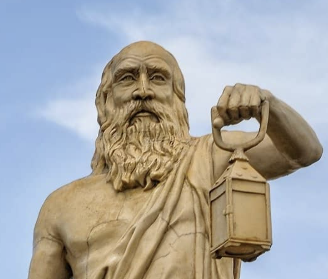
To Xeniades, who had purchased Diogenes at the slave market, he said, "Come, see that you obey orders."
▼
Source
source
Diogenes Laërtius, vi. 36
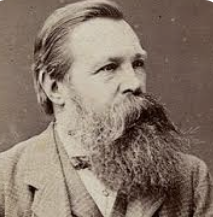
2 months 2 weeks ago
The class of the wholly propertyless, who are obliged to sell their labor to the bourgeoisie in order to get, in exchange, the means of subsistence for their support. This is called the class of proletarians, or the proletariat.

1 week 6 days ago
Wise command, wise obedience: the capability of these two is the net measure of culture, and human virtue, in every man; all good lies in the possession of these two capabilities; all evil, wretchedness and ill-success in the want of these.
CivilSimian.com created by AxiomaticPanic, CivilSimian, Kalokagathia