


4 months 2 weeks ago
...and woe betide fateful curiosity should it ever succeed in peering through a crack in the chamber of consciousness, out and down into the depths, and thus gain an intimation of the fact that humanity, in the indifference of its ignorance, rests on the pitiless, the greedy, the insatiable, the murderous clinging in dreams, as it were, to the back of a tiger.

2 months 1 week ago
All ordinary expression may be explained causally, but creative expression which is the absolute contrary of ordinary expression, will be forever hidden from human knowledge.

2 months 1 week ago
There are no arguments. Can anyone who has reached the limit bother with arguments, causes, effects, moral considerations, and so forth? Of course not. For such a person there are only unmotivated motives for living. On the heights of despair, the passion for the absurd is the only thing that can still throw a demonic light on chaos. When all the current reasons - moral, esthetic, religious, social, and so on - no longer guide one's life, how can one sustain life without succumbing to nothingness? Only by a connection with the absurd, by love of absolute uselessness, loving something which does not have substance but which simulates an illusion of life. I live because the mountains do not laugh and the worms do not sing.
1 month 1 week ago
Every one excels in something in which another fails.
▼
Source
source
Maxim 17
2 months 1 week ago
We say: he has no talent, only tone. But tone is precisely what cannot be invented - we're born with it. Tone is an inherited grace, the privilege some of us have of making our organic pulsations felt - tone is more than talent, it is its essence.

2 months 1 week ago
Economy is a distributive virtue, and consists not in saving but selection. Parsimony requires no providence, no sagacity, no powers of combination, no comparison, no judgment.

4 months 1 week ago
People are entirely too disbelieving of coincidence. They are far too ready to dismiss it and to build arcane structures of extremely rickety substance in order to avoid it. I, on the other hand, see coincidence everywhere as an inevitable consequence of the laws of probability, according to which having no unusual coincidence is far more unusual than any coincidence could possibly be.
3 months 2 weeks ago
By God's grace, I know Satan very well. If Satan can turn God's Word upside down and pervert the Scriptures, what will he do with my words -- or the words of others?
▼
Source
source
Confession Concerning Christ's Supper, Part 3. Robert E. Smith, tr. Dr. Martin Luthers Werke: Kritische Gesamtsusgabe. (Weimar: Herman Boehlaus Nachfolger, 1909), pp. 499-500.
2 months 1 week ago
To say that authority, whether secular or religious, supplies no ground for morality is not to deny the obvious fact that it supplies a sanction.
▼
Source
source
"The Meaning of Life".
2 months 1 week ago
The Leaders have ever since gone...to propagate the principles of French Levelling and confusion, by which no house is safe from its Servants, and no Officer from his Soldiers, and no State or constitution from conspiracy and insurrection. I will not enter into the baseness and depravity of the System they adopt; but one thing I will remark, that its great Object is not, (as they pretend to delude worthy people to their Ruin) the destruction of all absolute Monarchies, but totally to root out that thing called an Aristocrate or Noblemen and Gentleman.
▼
Source
source
Letter to Lord Fitzwilliam (21 November 1791), quoted in Alfred Cobban and Robert A. Smith (eds.), The Correspondence of Edmund Burke, Volume VI: July 1789-December 1791 (1967), p. 451

3 months 1 week ago
When they have really learned to love their neighbours as themselves, they will be allowed to love themselves as their neighbours.
▼
Source
source
Letter XIV
4 months 1 week ago
Parmenides: Whatever the subject of your hypothesis, if you suppose that it is or is not, or that it experiences any other affection, you must consider what happens to it and to any other particular things you may choose, and to a greater number and to all in the same way; and you must consider other things in relation to themselves and to anything else you may choose in any instance, whether you suppose that the subject of your hypothesis exists or does not exist, if you are to train yourself completely to see the truth perfectly.
2 months 1 week ago
When we are young, we take a certain pleasure in our infirmities. They seem so new, so rich! With age, they no longer surprise us, we know them too well. Now, without anything unexpected in them, they do not deserve to be endured.
3 months 2 weeks ago
Men never do good unless necessity drives them to it; but when they are free to choose and can do just as they please, confusion and disorder become rampant.
▼
Source
source
Book 1, Ch. 3 (as translated by LJ Walker and B Crick)
2 weeks 2 days ago
Whatever arises from a just situation by just steps is itself just.
▼
Source
source
Ch. 7 : Distributive Justice, Section I, The Entitlement Theory, p. 151
1 month 5 days ago
In an age of enormities, the emotions are naturally weakened. We are continually called upon to have feelings - about genocide, for instance, or about famine or the blowing up of passenger planes - and we are all aware that we are incapable of reacting appropriately. A guilty consciousness of emotional inadequacy or impotence makes people doubt their own human weight.
▼
Source
source
"The Distracted Public" (1990), p. 156
3 months 3 days ago
Remember Bostrom's definition of existential risk, which refers to the annihilation not of human beings, but of "Earth-originating intelligent life." The replacement of our species by some other form of conscious intelligent life is not in itself, impartially considered, catastrophic. Even if the intelligent machines kill all existing humans, that would be...a very small part of the loss of value that Parfit and Bostrom believe would be brought about by the extinction of Earth-originating intelligent life. The risk posed by the development of AI, therefore, is not so much whether it is friendly to us, but whether it is friendly to the idea of promoting wellbeing in general, for all sentient beings it encounters, itself included.
▼
Source
source
Chapter 15: Preventing Human Extinction (p. 176)
3 months 1 week ago
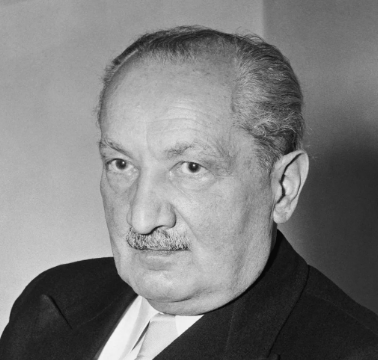
Technology is in its essence something that human beings cannot master of their own accord.
4 months 1 week ago
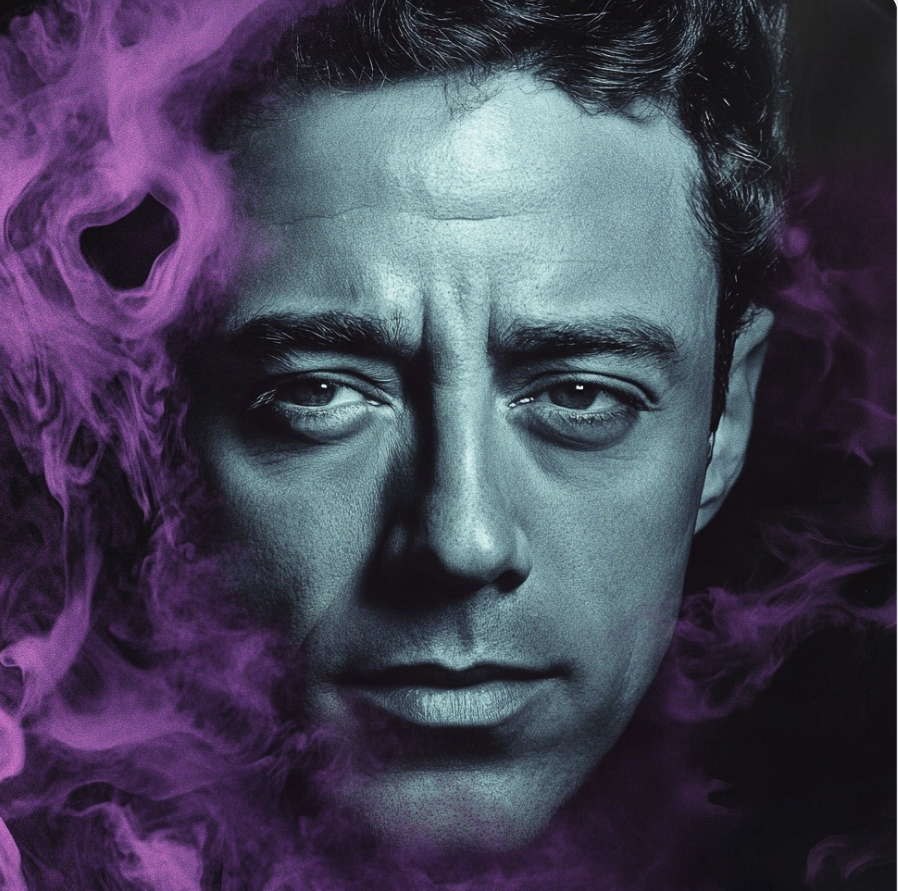
The preceding merely defines a way of thinking. But the point is to live.
4 months 2 days ago
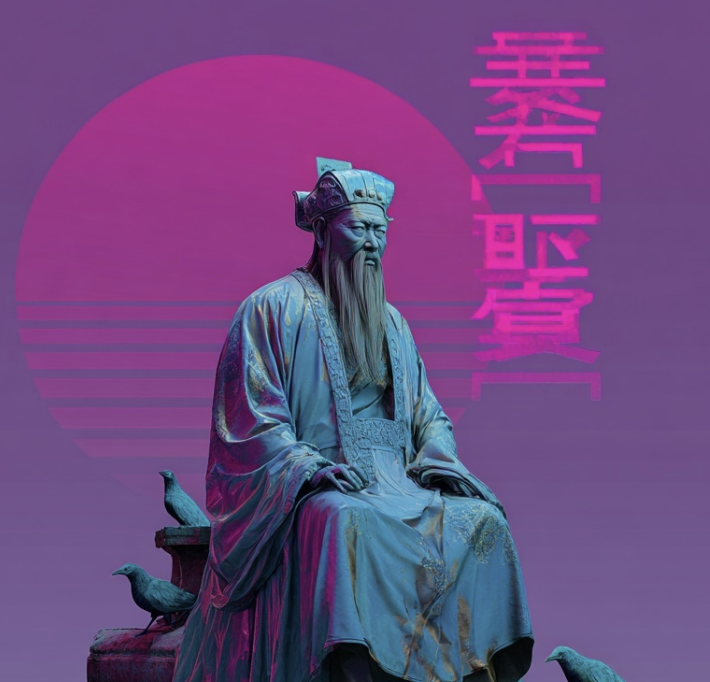
To no one but the Son of Heaven does it belong to order ceremonies, to fix the measures, and to determine the written characters.
1 month 2 weeks ago
Nonviolence does not make sense without a commitment to equality. The reason why nonviolence requires a commitment to equality can best be understood by considering that in this world some lives are more clearly valued than others, and that this inequality implies that certain lives will be more tenaciously defended than others. If one opposes the violence done to human lives-or, indeed, to other living beings-this presumes that it is because those lives are valuable. Our opposition affirms those lives as valuable. If they were to be lost as a result of violence, that loss would be registered as a loss only because those lives were affirmed as having a living value, and that, in turn, means we regard those lives as worthy of grief.
▼
Source
source
p. 28
1 month 3 weeks ago
In conclusion, I wish to say that my attitude to the whole tragic question is not dictated by my Jewish antecedents. It is motivated by my abhorrence of injustice, and man's inhumanity to man. It is because of this that I have fought all my life for anarchism which alone will do away with the horrors of the capitalist régime and place all races and peoples, including the Jews, on a free and equal basis. Until then I consider it highly inconsistent for socialists and anarchists to discriminate in any shape or form against the Jews.
2 days ago
Great organizers, as much as inevitable slaves, tend to stoic moods: it is difficult to be either master or servant if one is sensitive.
3 months 1 week ago
In a really equal democracy, every or any section would be represented, not disproportionately, but proportionately. ... Unless they are, there is not equal government, but a government of inequality and privilege: one part of the people rule over the rest: there is a part whose fair and equal share of influence in the representation is withheld from them, contrary to all just government, but, above all, contrary to the principle of democracy, which professes equality as its very root and foundation.
▼
Source
source
Ch. VII: Of True and False Democracy; Representation of All, and Representation of the Majority only (p. 248)

1 month 3 weeks ago
Steiner goes further than this -- and this is his own central contribution to modern thought. He states that once we have made a habit of remembering Mozart and the stars, we shall find ourselves developing powers of 'spiritual vision.' We shall never again feel ourselves to be helpless victims of the external world.
▼
Source
source
p. 169
1 month 3 weeks ago
If you have had your attention directed to the novelties in thought in your own lifetime, you will have observed that almost all really new ideas have a certain aspect of foolishness when they are first produced.
▼
Source
source
Ch. 3: "The Century of Genius", pp. 67-68
2 months 1 week ago
Berkeley, Hume, Kant, Fichte, Hegel, James, Bergson all are united in one earnest attempt, the attempt to reinstate man with his high spiritual claims in a place of importance in the cosmic scheme.
▼
Source
source
Edwin Arthur Burtt, The Metaphysical Foundations of Modern Physical Science (1925).

3 months 1 week ago
People seem not to see that their opinion of the world is also a confession of character.
▼
Source
source
Worship
2 months 1 week ago
Jean Paul calls the most important night of his life the one when he discovered there was no difference between dying the next day or in thirty years. A revelation as significant as it is futile; if we occasionally manage to grasp its cogency, we resist on the other hand drawing its consequences, in immediacy the difference in question seeming to each of us somehow irreducible, even absolute: to exist is to prove that we have not understood to what point it is all one and the same thing to die now or no matter when.

3 months 3 weeks ago
You must acquire the best knowledge first, and without delay; it is the height of madness to learn what you will later have to unlearn.
▼
Source
source
Letter to Christian Northoff (1497), as translated in Collected Works of Erasmus (1974), p. 114

1 month 1 week ago
Relativity theory forced the abandonment, in principle, of absolute space and absolute time.
▼
Source
source
p. 43

2 months 3 weeks ago
Meditate upon my counsels; love them; follow them; To the divine virtues will they know how to lead thee. I swear it by the One who in our hearts engraved The sacred Tetrad, symbol immense and pure, Source of Nature and model of the Gods.
▼
Source
source
As translated by Fabre d'Olivet

3 months 1 week ago
In civil law the existing property relationships are declared to be the result of the general will. The jus utendi et abutendi itself asserts on the one hand the fact that private property has become entirely independent of the community, and on the other the illusion that private property itself is based solely on the private will, the arbitrary disposal.
▼
Source
source
ibid, pp. 188
4 months 1 week ago
This is the end of the web of the statesman activity: the direct interweaving of the characters of restrained and courageous men, when the kingly science has drawn them together by friendship and community of sentiment into a common life, and having perfected the most glorious and the best of all textures, clothes with it all the inhabitants of the state, both slaves and freemen, holds them together by this fabric, and omitting nothing which ought to belong to a happy state, rules and watches over them.

2 months 2 weeks ago
Persecution is a bad and indirect way to plant Religion.
▼
Source
source
Section 25
1 month 1 week ago
Until writing was invented, man lived in acoustic space: boundless, directionless, horizonless, in the dark of the mind, in the world of emotion, by primordial intuition, terror. Speech is a social chart of this bog.
▼
Source
source
(p. 48)
2 months 1 week ago
...out of the tomb of the murdered Monarchy in France, has arisen a vast, tremendous, unformed spectre, in a far more terrific guise than any which ever yet have overpowered the imagination and subdued the fortitude of man.
▼
Source
source
p. 7
4 months 1 week ago
The attempt to separate everything from everything else is not only not in good taste but also shows that a man is utterly uncultivated and unphilosophical. The complete separation of each thing from all is the utterly final obliteration of all discourse. For our power of discourse is derived from the interweaving of the classes or ideas with one another.
6 days ago
This shows, perhaps, why we have tried to put all physical phenomena into the same frame. But that can not pass for a definition of simultaneity, since this hypothetical intelligence, even if it existed, would be for us impenetrable. It is... necessary to seek something else.
2 months 1 week ago
"Where do you get those superior airs of yours?" "I've managed to survive, you see, all those nights when I wondered: am I going to kill myself at dawn?"
3 months 1 week ago
There are always two parties, the party of the Past and the party of the Future: the Establishment and the Movement. At times the resistance is reanimated, the schism runs under the world and appears in Literature, Philosophy, Church, State and social customs.
▼
Source
source
p. 529, col. 1

3 months 2 weeks ago
Fools have a habit of believing that everything written by a famous author is admirable. For my part I read only to please myself and like only what suits my taste.

1 month 3 weeks ago
A book is a mirror: if an ape looks into it an apostle is hardly likely to look out. We have no words for speaking of wisdom to the stupid. He who understands the wise is wise already.
▼
Source
source
E 49
3 weeks 4 days ago
The equation of religion with belief is rather recent.
▼
Source
source
Christianity Among the Religions of the World (New York: Scribner's, 1957) p. 7
6 days ago
Yet when we speak of time... do we not unconsciously adopt this hypothesis... and put ourselves in the place of this imperfect god... Do not even the atheists put themselves in the place where god would be..?
3 months 1 week ago
But capitalist production begets,with the inexorability of a law of Nature,its own negation. It is the negation of negation.
▼
Source
source
Vol. I, Ch. 32, p. 837.

3 months 1 week ago
To be without some of the things you want is an indispensable part of happiness.

1 month 3 weeks ago
I was aggressively nonpolitical. I believed that people who make a fuss about politics do so because their heads are too empty to think about more important things. So I felt nothing but impatient contempt for Osborne's Jimmy Porter and the rest of the heroes of social protest.
▼
Source
source
p. 2
4 months 2 days ago
If names be not correct, language is not in accordance with the truth of things. Paraphrased as a chinese proverb stating "The beginning of wisdom is to call things by their proper name."
CivilSimian.com created by AxiomaticPanic, CivilSimian, Kalokagathia