


3 months 3 weeks ago
If thou shouldst say, 'It is enough, I have reached perfection,' all is lost. For it is the function of perfection to make one know one's imperfection.
▼
Source
source
Quoted by Aldous Huxley, in The Perennial Philosophy (1945)
4 months 1 week ago
To the contemporary, Christ can only say: I will offer myself as a sacrifice for the sins of the world and for yours also. Is this easier to believe now than when he has done it, has offered himself? Or is the comfort greater because of his saying that he will do it than it is because of his having done it? There is no greater love than this, that someone lays down his life for another, but when is it easier to believe, and when is the comfort greater: when the loving one says he will do it, or when he has done it?
1 month 2 weeks ago
Organizations and institutions permit stable expectations to be formed by each member of the group as to the behavior of the other members under specified conditions.
▼
Source
source
p. 100.

1 month 1 week ago
With so many mind-bytes to be downloaded, so many mental codons to be replicated, it is no wonder that child brains are gullible, open to almost any suggestion, vulnerable to subversion, easy prey to Moonies, Scientologists and nuns. Like immune-deficient patients, children are wide open to mental infections that adults might brush off without effort.
1 month 2 weeks ago
Once animals had a more sacred, more divine character than men. There is not even a reign of the "human" in primitive societies, and for a long time the animal order has been the order of reference. Only the animal is worth being sacrificed, as a god, the sacrifice of man only comes afterward, according to a degraded order. Men qualify only by their affiliation to the animal: the Bororos "are" macaws. "
▼
Source
source
The Animals: Territory and Metamorphoses," p. 133

3 months 1 week ago
Never stay up on the barren heights of cleverness, but come down into the green valleys of silliness.
▼
Source
source
p. 76e
2 months 2 weeks ago
We are far more liable to catch the vices than the virtues of our associates.
▼
Source
source
As quoted in Thesaurus of Epigrams: A New Classified Collection of Witty Remarks, Bon Mots and Toasts (1942) by Edmund Fuller

2 months 3 weeks ago
Rejoice not in another man's misfortune!
1 month 4 days ago
Burke emphasized that the new forms of politics, which hope to organize society around the rational pursuit of liberty, equality, fraternity, or their modernist equivalents, are actually forms of militant irrationality.
▼
Source
source
Why I became a conservative, The New Criterion
1 month 4 days ago
A civilization is a social entity that manifests religious, political , legal, and customary uniformity over an extended period, and which confers on its members the benefits of socially accumulated knowledge.
▼
Source
source
"What is Culture?" (p. 2)

3 months 2 weeks ago
All passions that suffer themselves to be relished and digested are but moderate.
▼
Source
source
Ch. 2. Of Sorrow, tr. Cotton, rev. W. Hazlitt, 1842

7 months 2 weeks ago
The source of totalitarianism is a dogmatic attachment to the official word: the lack of laughter, of ironic detachment. An excessive commitment to Good may in itself become the greatest Evil: real Evil is any kind of fanatical dogmatism, especially exerted in the name of supreme Good... Consider only Mozart's Don Giovanni at the end of the opera, when he is confronted with the following choice: if he confesses his sins, he can still achieve salvation; if he persists, he will be damned forever. From this viewpoint of the pleasure principle, the proper thing to do would be to renounce his past, but he does not, he persists in his Evil, although he knows that by persisting he will be damned forever. Paradoxically, with his final choice of Evil, he acquires the status of an ethical hero - that is, of someone who is guided by fundamental principles beyond the pleasure principle and not just by the search for pleasure or material gain.
2 months 4 days ago
If the individual were no longer compelled to prove himself on the market, as a free economic subject, the disappearance of this kind of freedom would be one of the greatest achievements of civilization. The technological processes of mechanization and standardization might release individual energy into a yet uncharted realm of freedom beyond necessity. The very structure of human existence would be altered; the individual would be liberated from the work world's imposing upon him alien needs and alien possibilities. The individual would be free to exert autonomy over a life that would be his own.
▼
Source
source
p. 2
3 weeks 6 days ago
Try to learn something about everything and everything about something.
▼
Source
source
A favourite comment, inscribed on his memorial at Ealing, quoted in Nature Vol. XLVI (30 October 1902), p. 658
2 months 2 weeks ago
Jews are angry and brutish people, vile and vulgar men, slaves worthy of the yoke [Talmudism] which you bear... Go, take back your books and remove yourselves from me. [ The Talmud ] taught the Jews to steal the goods of Christians, to regard them as savage beasts, to push them over the precipice... to kill them with impunity and to utter every morning the most horrible imprecations against them.
▼
Source
source
See The Jews: A History, Second Edition, by John Efron, Steven Weitzman and Matthias Lehmann
2 months 4 days ago
The prestige of the Nobel Prize is due to many causes, but in particular to its twofold idealistic and international character: idealistic in that it has been designed for works of lofty inspiration; international in that it is awarded after the production of different countries has been minutely studied and the intellectual balance sheet of the whole world has been drawn up. Free from all other considerations and ignoring any but intellectual values, the judges have deliberately taken their place in what the philosophers have called a community of the mind.
▼
Source
source
In a letter accepting the 1927 Nobel Prize in literature, read by the French minister, Armand Bernard.

1 month 4 weeks ago
Like monarchy, monotheism had a martial origin. "It is only on the march and it time of war," says Robertson Smith in The Prophets of Israel, "that a nomad people feels any urgent need of a central authority, and so it came about that in the first beginnings of national organization, centering in the sanctuary of the ark, Israel was thought of mainly as a host of Jehovah. the very name of Israel is martial, and means 'God (El) fighteth,' and Jehovah in the Old Testament is Iahwé Cebāôth - the Jehovah of the armies of Israel. It was on the battlefield that Jehovah's presence was most clearly realized; but in primitive nations the leader in time of war is also the natural judge in time of peace."
2 months 1 week ago
The bourgeoisie ... lets him have the appearance of acting from a free choice, of making a contract with free, unconstrained consent, as a responsible agent who has attained his majority. Fine freedom, where the proletarian has no other choice than that of either accepting the conditions which the bourgeoisie offers him, or of starving, of freezing to death, of sleeping naked among the beasts of the forests!
▼
Source
source
p. 112
3 weeks 6 days ago
I cannot say that I am in the slightest degree impressed by your bigness, or your material resources, as such. Size is not grandeur, and territory does not make a nation. The great issue, about which hangs true sublimity, and the terror of overhanging fate, is what are you going to do with all these things?
▼
Source
source
"Address on University Education" (1876), delivered at the formal opening of Johns Hopkins University, Baltimore, Maryland, September 12, 1876. Huxley, American Addresses (1877), p. 125.
3 months 1 week ago
People are often reproached because their desires are directed mainly to money and they are fonder of it than of anything else. Yet it is natural and even inevitable for them to love that which, as an untiring Proteus, is ready at any moment to convert itself into the particular object of our fickle desires and manifold needs. Thus every other blessing can satisfy only one desire and one need; for instance, food is good only to the hungry, wine only for the healthy, medicine for the sick, a fur coat for winter, women for youth, and so on. Consequently, all these are only ... relatively good. Money alone is the absolutely good thing because it meets not merely one need in concreto, but needs generally in abstracto.
▼
Source
source
E. Payne, trans. (1974) Vol. 1, p. 347

3 months 1 week ago
The game of science is, in principle, without end. He who decides one day that scientific statements do not call for any further test, and that they can be regarded as finally verified, retires from the game.
▼
Source
source
Ch. 2 "On the Problem of a Theory of Scientific Method", Section 11: Methodological Rules as Conventions, p. 32.

2 months 2 weeks ago
I am not so much afraid of death, as ashamed thereof; 'tis the very disgrace and ignominy of our natures, that in a moment can so disfigure us that our nearest friends, Wife, and Children stand afraid and start at us.
▼
Source
source
Section 40

2 months 1 week ago
This world is empty to him alone who does not understand how to direct his libido towards objects, and to render them alive and beautiful for himself, for Beauty does not indeed lie in things, but in the feeling that we give to them.
3 months 2 weeks ago
As the analysis of a substantial composite terminates only in a part which is not a whole, that is, in a simple part, so synthesis terminates only in a whole which is not a part, that is, the world.
2 months 1 week ago
You women could make someone fall in love even with a lie.
▼
Source
source
Act I.

1 month 1 week ago
Unlike previous environmental changes, the electric media constitutes a total and near-instanteous transformation of culture, values and attitudes.

2 days ago
Truly it is a sad thing for a people, as for a man, to fall into Scepticism, into dilettantism, insincerity; not to know Sincerity when they see it. For this world, and for all worlds, what curse is so fatal?

3 months 2 weeks ago
Let the public good overcome all private and selfish regards of every kind and degree; though in truth, even private and selfish regards, and every man's own interest, will be best promoted by the preservation of peace.
3 weeks 6 days ago
My convictions, positive and negative, on all the matters of which you speak, are of long and slow growth and are firmly rooted. But the great blow which fell on me seemed to stir them to their foundation, and had I lived a couple of centuries earlier I could have fancied a devil scoffing at me and them - and asking me what profit it was to have stripped myself of the hopes and consolations of the mass of mankind? To which my only reply was and is - Oh devil! Truth is better than much profit. I have searched over the grounds of my belief, and if wife and child and name and fame were all to be lost to me one after the other as the penalty, still I will not lie.

3 months 1 week ago
It's a bit embarrassing to have been concerned with the human problem all one's life and find at the end that one has no more to offer by way of advice than 'Try to be a little kinder.'
▼
Source
source
As quoted in Huston Smith, "Aldous Huxley--A Tribute," The Psychedelic Review, (1964) Vol I, No.3, (Aldous Huxley Memorial Issue), p. 264-5

3 months 1 week ago
If God has made us in his image, we have returned him the favor.
▼
Source
source
Notebooks, c.1735-c.1750
1 month 1 week ago
An agreeable companion on a journey is as good as a carriage.
▼
Source
source
Maxim 143
1 month ago
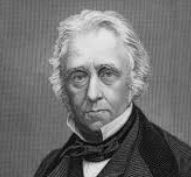
There were gentlemen and there were seamen in the navy of Charles II. But the seamen were not gentlemen, and the gentlemen were not seamen.
▼
Source
source
Vol. I, ch. 2

3 months 1 week ago
What interest, zest, or excitement can there be in achieving the right way, unless we are enabled to feel that the wrong way is also a possible and a natural way, - nay, more, a menacing and an imminent way? And what sense can there be in condemning ourselves for taking the wrong way, unless we need have done nothing of the sort, unless the right way was open to us as well? I cannot understand the willingness to act, no matter how we feel, without the belief that acts are really good and bad.
▼
Source
source
The Dilemma of Determinism, 1884

2 months 1 week ago
Consciousness is nature's nightmare.
2 months 2 weeks ago
How shall the dead arise, is no question of my faith; to believe only possibilities, is not faith, but mere philosophy.
▼
Source
source
Section 48
2 months 1 week ago
This is how I recognize an authentic poet: by frequenting him, living a long time in the intimacy of his work, something changes in myself, not so much my inclinations or my tastes as my very blood, as if a subtle disease had been injected to alter its course, its density and nature. To live around a true poet is to feel your blood run thin, to dream a paradise of anemia, and to hear, in your veins, the rustle of tears.

3 months 1 week ago
The reason that I call my doctrine logical atomism is because the atoms that I wish to arrive at as the sort of last residue in analysis are logical atoms and not physical atoms. Some of them will be what I call "particulars" - such things as little patches of color or sounds, momentary things - and some of them will be predicates or relations and so on.
3 months 3 weeks ago
Incomprehensible and immutable is the love wherewith God loves. He did not begin to love us only on the day we were reconciled to Him by the blood of His Son; He loved us before the world was made, that we too might become His sons together with His Only-begotten Son, long before we had any existence.
▼
Source
source
p.435
3 months 4 weeks ago
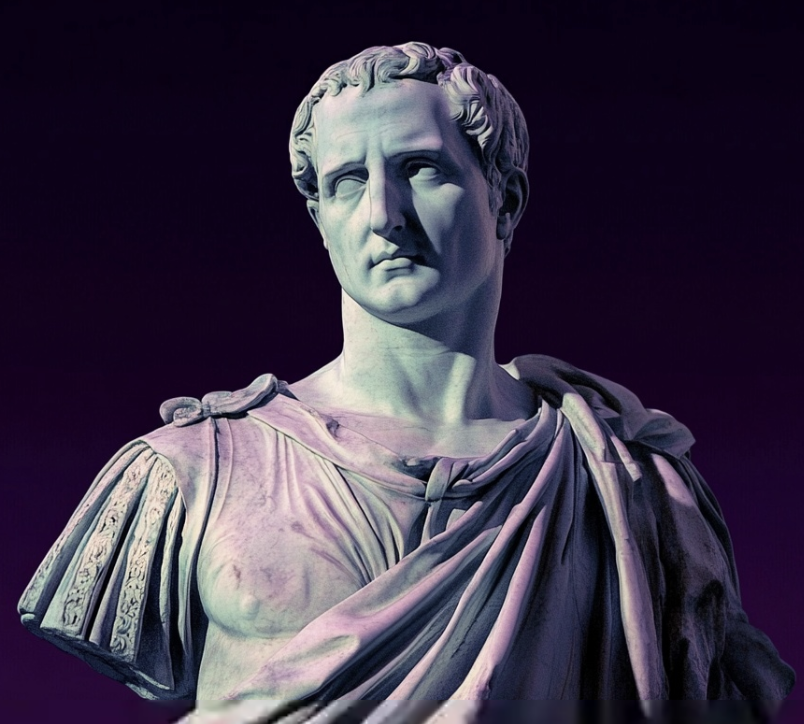
The greatest states have been overthrown by the young and sustained and restored by the old. ... Rashness is the product of the budding-time of youth, prudence of the harvest-time of age.
▼
Source
source
section 20
3 months 1 week ago
Philosophical problems can be compared to locks on safes, which can be opened by dialing a certain word or number, so that no force can open the door until just this word has been hit upon, and once it is hit upon any child can open it.
▼
Source
source
Ch. 9 : Philosophy, p. 175

1 month 1 week ago
The universal hypocrisy has so entered into the flesh and blood of all classes of our modern society, it has reached such a pitch that nothing in that way can rouse indignation. Hypocrisy in the Greek means "acting," and acting-playing a part-is always possible. Chapter XII, Conclusion-Repent Ye, for the Kingdom of Heaven is at Hand Variant Translation: Hypocrisy with good reason means the same as acting, and anybody can pretend - act a part.

3 months 6 days ago
There is hardly a philosophy which has not invoked something like the will or desire to know, the love of truth, etcetera. But, in truth, very few philosophers-apart, perhaps, from Spinoza and Schopenhauer-have accorded it more than a marginal status; as if there was no need for philosophy to say first of all what the name that it bears actually refers to. As if placing at the head of its discourse the desire to know, which it repeats in its name, was enough to justify its own existence and show-at a stroke-that it is necessary and natural: All men desire to know. Who, then, is not a philosopher, and how could philosophy not be the most necessary thing in the world?
▼
Source
source
pp. 4-5

3 months 1 week ago
So that is what hell is. I would never have believed it. You remember: the fire and brimstone, the torture. Ah! the farce. There is no need for torture: Hell is other people.
▼
Source
source
Garcin, Act 1, sc. 5

3 months 1 week ago
Announced by all the trumpets of the sky Arrives the snow, and, driving o'er the fields, Seems nowhere to alight: the whited air Hides hills and woods, the river and the heaven, And veils the farm-house at the garden's end.
▼
Source
source
The Snow-Storm

3 months 4 weeks ago
Anything done against faith or conscience is sinful.
▼
Source
source
Commentary on Romans, cap 14, I 3
1 month 1 week ago
There are no passengers on Spaceship Earth. We are all crew.
▼
Source
source
Statement in 1965, in reference to Operating Manual for Spaceship Earth (1963) by Buckminster Fuller
2 months 4 days ago
Our mass media have little difficulty in selling particular interests as those of all sensible men. The political needs of society become individual needs and aspirations, their satisfaction promotes business and the commonweal, and the whole appeals to be the very embodiment of Reason.
▼
Source
source
p. xli
CivilSimian.com created by AxiomaticPanic, CivilSimian, Kalokagathia