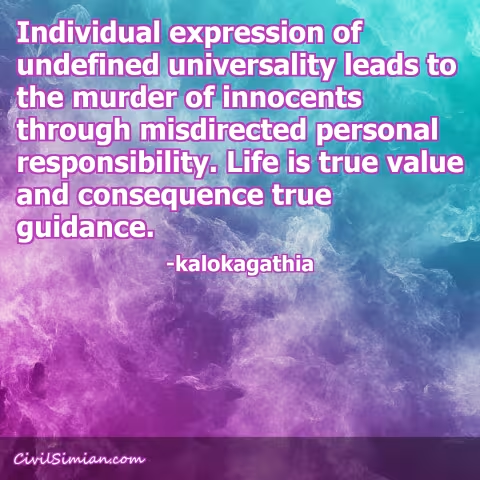
Individual expression of undefined universality leads to the murder of innocents through misdirected personal responsibility. Life is true value and consequence true guidance.



Their worship was not paid to the demon which such a being as they imagined would really be, but to their own idea of excellence. The evil is, that such a belief keeps the ideal wretchedly low; and opposes the most obstinate resistance to all thought which has a tendency to raise it higher. Believers shrink from every train of ideas which would lead the mind to a clear conception and an elevated standard of excellence, because they feel (even when they do not distinctly see) that such a standard would conflict with many of the dispensations of nature, and with much of what they are accustomed to consider as the Christian creed.
We are sorely deficient in talking with each other and listening to each other. We lack mobility, criticism and self-criticism. We incline to doctrinism. What makes it worse is that so many people do not really want to think. They want only slogans and obedience. They ask no questions and they give no answers, except by repeating drilled-in phrases. They can only assert and obey, neither probe nor apprehend. Thus they cannot be convinced, either. How shall we talk with people who will not go where others probe and think, where men seek independence in insight and conviction?
If a person loves only one other person and is indifferent to all others, his love is not love but a symbiotic attachment, or an enlarged egotism.
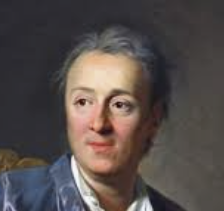
The best doctor is the one you run for and can't find.

In fact, contempt for happiness is usually contempt for other people's happiness, and is an elegant disguise for hatred of the human race.
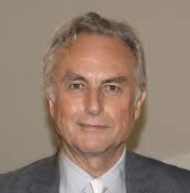
But if you can breed cattle for milk yield, horses for running speed, and dogs for herding skill, why on Earth should it be impossible to breed humans for mathematical, musical or athletic ability? Objections such as "these are not one-dimensional abilities" apply equally to cows, horses and dogs and never stopped anybody in practice. I wonder whether, some 60 years after Hitler's death, we might at least venture to ask what the moral difference is between breeding for musical ability and forcing a child to take music lessons. Or why it is acceptable to train fast runners and high jumpers but not to breed them. I can think of some answers, and they are good ones, which would probably end up persuading me. But hasn't the time come when we should stop being frightened even to put the question? From the Afterword, The Herald
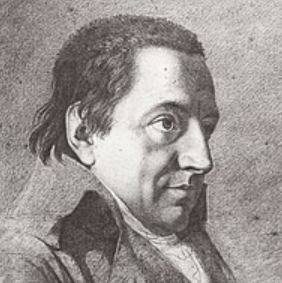
The Doctrine of a Perfect God; in whose nature nothing arbitrary or changeable can have a place; in whose Highest Being we all live, and in this Life may, and ought at all times to be, blessed;-this Doctrine, which ignorant men think they have sufficiently demolished when they have proclaimed it to be Mysticism, is by no means Mysticism, for it has an immediate reference to human action, and in deed to the inmost spirit which ought to inspire and guide all our actions. It can only become Mysticism when it is associated with the pretext that the insight into this truth proceeds from a certain inward and mysterious light, which is not accessible to all men, but is only bestowed upon a few favourites chosen from among the rest:-in which pretext the Mysticism consists, for it betrays a presumptuous contemplation of personal merit, and a pride in mere sensuous Individuality.

For a truly religious man nothing is tragic.
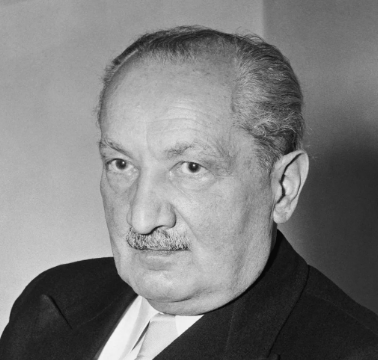
This is precisely what is decisive in Nietzsche's conception of art, that he sees it in its essential entirety in terms of the artist; this he does consciously and in explicit opposition to that conception of art which represents it in terms of those who "enjoy" and "experience" it.That is a guiding principle of Nietzsche's teaching on art: art must be grasped in terms of creators and producers, not recipients. Nietzsche expresses it unequivocally in the following words (WM, 811): "Our aesthetics heretofore has been a woman's aesthetics, inasmuch as only the recipients of art have formulated their experiences of 'what is beautiful.' In all philosophy to date the artist is missing." Philosophy of art means "aesthetics" for Nietzsche too-but masculine aesthetics, not feminine aesthetics. The question of art is the question of the artist as the productive, creative one; his experiences of what is beautiful must provide the standard.
He is a fool who lets slip a bird in the hand for a bird in the bush.
If every strategy today is that of mental terror and of deterrence tied to the suspension and the eternal simulation of catastrophe, then the only means of mitigating this scenario would be to make the catastrophe arrive, to produce or to reproduce a real catastrophe. To which Nature is at times given: in its inspired moments, it is God who through his cataclysms unknots the equilibrium of terror in which humans are imprisoned. Closer to us, this is what terrorism is occupied with as well: making real, palpable violence surface in opposition to the invisible violence of security. Besides, therein lies terrorism's ambiguity.

"Then those people are right who say that Heaven and Hell are only states of mind?" "Hush," he said sternly. "Do not blaspheme. Hell is a state of mind - ye never said a truer word. And every state of mind, left to itself, every shutting up of the creature within the dungeon of its own mind - is, in the end, Hell. But Heaven is not a state of mind. Heaven is reality itself. All that is fully real is Heavenly."

It is requisite to choose the most excellent life; for custom will make it pleasant. Wealth is an infirm anchor, glory is still more infirm; and in a similar manner, the body, dominion, and honour. For all these are imbecile and powerless. What then are powerful anchors. Prudence, magnanimity, fortitude. These no tempest can shake. This is the Law of God, that virtue is the only thing that is strong; and that every thing else is a trifle.
But the Jews are so hardened that they listen to nothing; though overcome by testimonies they yield not an inch. It is a pernicious race, oppressing all men by their usury and rapine. If they give a prince or magistrate a thousand florins, they extort twenty thousand from the subjects in payment. We must ever keep on guard against them.
If we accept values as given and consistent, if we postulate an objective description of the world as it really is, and if we assume that the decision maker's computational powers are unlimited, then two important consequences follow. First, we do not need to distinguish between the real world and the decision maker's perception of it: he or she perceives the world as it really is. Second, we can predict the choices that will be made by a rational decision maker entirely from our knowledge of the real world and without a knowledge of the decision maker's perceptions or modes of calculation. (We do, of course, have to know his or her utility function.)
It is almost impossible to bear the torch of truth through a crowd without singeing somebody's beard. G 4 Variant translations: It is almost impossible to carry the torch of wisdom through a crowd without singeing someone's beard. It is virtually impossible to carry the torch of truth through a crowd, without singeing someone's beard

Abstract liberty, like other mere abstractions, is not to be found.

Men, I say, never did believe idle songs, never risked their soul's life on allegories: men in all times, especially in early earnest times, have had an instinct for detecting quacks, for detesting quacks.
Oceans of horse-hair, continents of parchment, and learned-sergeant eloquence, were it continued till the learned tongue wore itself small in the indefatigable learned mouth, cannot make unjust just.
Abbot Terrasson tells us that if the size of a book were measured not by the number of its pages but by the time required to understand it, then we could say about many books that they would be much shorter were they not so short.
Our "Theories of Taste," as they are called, wherein the deep, infinite, unspeakable Love of Wisdom and Beauty, which dwells in all men, is "explained," made mechanically visible, from "Association" and the like, ...
The successful revolutionary is a statesman, the unsuccessful one a criminal.
The desire to philosophize from the standpoint of standpointlessness, as a purportedly genuine and superior objectivity, is either childish, or, as is usually the case, disingenuous.

Once man loses his faculty of indifference he becomes a potential murderer; once he transforms his idea into a god the consequences are incalculable. We kill only in the name of a god or of his counterfeits: the excesses provoked by the goddess Reason, by the concept of nation, class, or race are akin to those of the Inquisition or of the Reformation.
An event has happened, upon which it is difficult to speak, and impossible to be silent.
The attitude that living things are placed here for our benefit still dominates our culture, even where its underpinnings have disappeared. We now need, for purposes of scientific understanding, to find a less human-centered view of the natural world.
Nevertheless, the ultimate business of philosophy is to preserve the force of the most elemental words in which Dasein expresses itself, and to keep the common understanding from levelling them off to that unintelligibility which functions in turn as a source of pseudo-problems.

Never read any book that is not a year old.
You have to study a great deal to know a little.
Never read any book that is not a year old.
Uttering a word is like striking a note on the keyboard of the imagination.
When the man governed by self-interest, the god of this world, does not renounce it but merely refines it by the use of reason and extends it beyond the constricting boundary of the present, he is represented (Luke XVI, 3-9) as one who, in his very person [as servant], defrauds his master [self- interest] and wins from him sacrifices in behalf of "duty."
Man needs difficulties; they are necessary for health.
Of this Shakspeare of ours, perhaps the opinion one sometimes hears a little idolatrously expressed is, in fact, the right one; I think the best judgement not of this country only, but of Europe at large, is slowly pointing to the conclusion, That Shakspeare is the chief of all Poets hitherto; the greatest intellect who, in our recorded world, has left record of himself in the way of Literature. On the whole, I know not such a power of vision, such a faculty of thought, if we take all the characters of it, in any other man. Such a calmness of depth; placid joyous strength; all things imaged in that great soul of his so true and clear, as in a tranquil unfathomable sea!
Mahomet was only fourteen; had no language but his own: much in Syria must have been a strange unintelligible whirlpool to him. But the eyes of the lad were open; glimpses of many things would doubtless be taken in, and lie very enigmatic as yet, which were to ripen in a strange way into views, into beliefs and insights one day. These journeys to Syria were probably the beginning of much to Mahomet. One other circumstance we must not forget: that he had no school-learning; of the thing we call school-learning none at all.
It is impossible to imagine a more dramatic and horrifying combination of scientific triumph with political and moral failure than has been shown to the world in the destruction of Hiroshima. From the scientific point of view, the atomic bomb embodies the results of a combination of genius and patience as remarkable as any in the history of mankind.
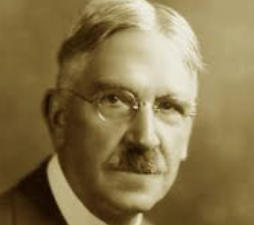
The determination of the mot juste, of the right incident in the right place, of exquisiteness of proportion, of the precise tone, hue, and shade that helps unify the whole while it defines a part, is accomplished by emotion. Not every emotion, however, can do this work, but only one informed by material that is grasped and gathered. Emotion is informed and carried forward when it is spent indirectly in search for material and in giving it order, not when it is directly expended.

Every man is fully satisfied that there is such a thing as truth, or he would not ask any question.
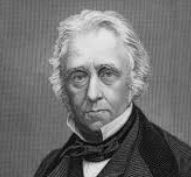
What a singular destiny has been that of this remarkable man! To be regarded in his own age as a classic, and in ours as a companion! To receive from his contemporaries that full homage which men of genius have in general received only from posterity! To be more intimately known to posterity than other men are known to their contemporaries!
Logic takes care of itself; all we have to do is to look and see how it does it.
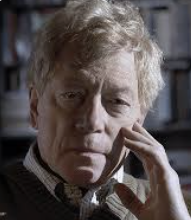
[Asked "Do you still favour English independence?"] No, I don't think I've ever really favoured English independence. My view is that if the Scots want to be independent then we should aim for the same thing. Scottish independence, I don't think the Welsh want independence, the Northern Irish certainly don't. The Scottish desire for independence is, to some extent, a fabrication. They want to identify themselves as Scots but still to be part of a,[sic] to enjoy the subsidy they get from being part of the kingdom. I can see there are Scottish nationalists who envision something more than that, but if that becomes a real political force then yeah, we should try for independence too. As it is, as you know, the Scots have two votes: they can vote for their own parliament and vote to put their people into our parliament, who come to our parliament with no interest in Scotland but an interest in bullying us.

Nature gets credit which should in truth be reserved for ourselves: the rose for its scent: the nightingale for his song: and the sun for his radiance. The poets are entirely mistaken. They should address their lyrics to themselves, and should turn them into odes of self-congratulation on the excellency of the human mind.
Nature must not win the game, but she cannot lose. And whenever the conscious mind clings to hard and fast concepts and gets caught in its own rules and regulations-as is unavoidable and of the essence of civilized consciousness-nature pops up with her inescapable demands.

The man who esteems himself as he ought, and no more than he ought, seldom fails to obtain from other people all the esteem that he himself thinks due. He desires no more than is due to him, and he rests upon it with complete satisfaction.
You can never do a kindness too soon, for you never know how soon it will be too late.
Find in any country the Ablest Man that exists there; raise him to the supreme place, and loyally reverence him: you have a perfect government for that country; no ballot-box, parliamentary eloquence, voting, constitution-building, or other machinery whatsoever can improve it a whit.
The measure of action is the sentiment from which it proceeds. The greatest action may easily be one of the most private circumstance.

My philosophical views approach somewhat closely those of the late Countess of Conway, and hold a middle position between Plato and Democritus, because I hold that all things take place mechanically as Democritus and Descartes contend against the views of Henry More and his followers, and hold too, nevertheless, that everything takes place according to a living principle and according to final causes - all things are full of life and consciousness, contrary to the views of the Atomists.
CivilSimian.com created by AxiomaticPanic, CivilSimian, Kalokagathia