


3 months 1 week ago
When I am furious about something, I sometimes beat the ground or a tree with my walking stick. But I certainly do not believe that the ground is to blame or that my beating can help anything... And all rites are of this kind.
▼
Source
source
Ch. 7 : Remarks on Frazer's Golden Bough, p. 131

3 months 2 weeks ago
It is so rare to meet with a man out-doors who cherishes a worthy thought in his mind, which is independent of the labor of his hands.
1 month 1 week ago
Scientific beliefs are supported by evidence, and they get results. Myths and faiths are not and do not.
2 months 4 days ago
Even those who have desired to work out a completely positive philosophy have been philosophers only to the extent that, at the same time, they have refused the right to install themselves in absolute knowledge. They taught not this knowledge, but its becoming in us, not the absolute but, at most, our absolute relation to it, as Kierkegaard said. What makes a philosopher is the movement which leads back without ceasing from knowledge to ignorance, from ignorance to knowledge, and a kind of rest in this movement.
▼
Source
source
p. 5

2 months 1 week ago
It is not by genius, it is by suffering, and suffering alone, that one ceases to be a marionette.

1 month 1 week ago
When the woman showed her love for the children that were not her own, and wept over them, I saw in her the living God, and understood What men live by.
▼
Source
source
Ch. XI


3 months 3 weeks ago
There is no man so good that if he placed all his actions and thoughts under the scrutiny of the laws, he would not deserve hanging ten times in his life.
▼
Source
source
Ch. 9
3 months 1 week ago
What makes it so plausible to assume that hypocrisy is the vice of vices is that integrity can indeed exist under the cover of all other vices except this one. Only crime and the criminal, it is true, confront us with the perplexity of radical evil; but only the hypocrite is really rotten to the core.
▼
Source
source
On Revolution (1963), ch. 2
3 months 3 days ago
The sight of both eyes becomes one.
▼
Source
source
fr. 88
3 months 1 week ago
The defiance of established authority, religious and secular, social and political, as a world-wide phenomenon may well one day be accounted the outstanding event of the last decade.
▼
Source
source
"Civil Disobedience"
1 month 4 weeks ago
By abstaining from all definite content, whether as formal logic and theory of science or as the legend of Being beyond all beings, philosophy declared its bankruptcy regarding concrete social goals.
▼
Source
source
p. 6
1 month 3 weeks ago
To me it seems clear that the descriptions of human life we find in the novels of Tolstoy or George Eliot are not mere entertainment; they teach us to perceive what goes on in social and individual life. And such descriptions require the many subtle distinctions that ordinary language has made available to us. The question of the relevance or irrelevance of "how we speak" is not just a question for philosophers, although it is that too. It is a question for philosophers because once ordinary language is laughed out of the room, philosophical theories are no longer held responsible at all to the ways we actually speak and actually live; but it is a question for more than just philosophers because, at bottom, contempt for ordinary language is contempt for all the humanities.
▼
Source
source
"Science and Philosophy"
1 month 3 weeks ago
Chronic boredom - compensated or uncompensated - constitutes one of the major psychopathological phenomena in contemporary technotronic society, although it is only recently that it has found some recognition.
▼
Source
source
p. 273
1 month 3 weeks ago
If it were true what in the end would be gained? Nothing but another truth. Is this such a mighty advantage? We have enough old truths still to digest, and even these we would be quite unable to endure if we did not sometimes flavor them with lies.
▼
Source
source
E 10
2 months 1 week ago
Not content with real sufferings, the anxious man imposes imaginary ones on himself; he is a being for whom unreality exists, must exist; otherwise where would he obtain the ration of torment his nature demands?

2 months 2 weeks ago
The Indian knew how to live without wants, to suffer without complaint, and to die singing.
▼
Source
source
Chapter I.

3 months 2 weeks ago
No greater mistake can be made than to imagine that what has been written latest is always the more correct; that what is written later on is an improvement on what was written previously; and that every change means progress. Men who think and have correct judgment, and people who treat their subject earnestly, are all exceptions only. Vermin is the rule everywhere in the world: it is always at hand and busily engaged in trying to improve in its own way upon the mature deliberations of the thinkers.

2 months 1 week ago
Should the believers in special creations consider it unfair thus to call upon them to describe how special creations take place, I reply that this is far less than they demand from the supporters of the Development Hypothesis. They are merely asked to point out a conceivable mode. On the other hand, they ask, not simply for a conceivable mode, but for the actual mode.
3 months 2 weeks ago
The commonest and cheapest sounds, as the barking of a dog, produce the same effect on fresh and healthy ears that the rarest music does. It depends on your appetite for sound. Just as a crust is sweeter to a healthy appetite than confectionery to a pampered or diseased one.
▼
Source
source
December 27, 1857

2 months 3 weeks ago
A bad feeling is a commotion of the mind repugnant to reason, and against nature.
▼
Source
source
As quoted in Tusculanae Quaestiones by Cicero, iv. 6.
2 months 1 week ago
It has never been in my power to study anything, - mathematics, ethics, metaphysics, gravitation, thermodynamics, optics, chemistry, comparative anatomy, astronomy, psychology, phonetics, economics, the history of science, whist, men and women, wine, metrology, except as a study of semeiotic.
▼
Source
source
Letter to Victoria
3 months 3 weeks ago
Valor is stability, not of legs and arms, but of courage and the soul.
3 months 2 weeks ago
It is in vain to dream of a wildness distant from ourselves.
▼
Source
source
August 30, 1856

4 days ago
In the whole world, that day, there was not a more entirely unimportant-looking pair of people than this Miner and his Wife. And yet what were all Emperors, Popes and Potentates, in comparison? There was born here, once more, a Mighty Man; whose light was to flame as the beacon over long centuries and epochs of the world; the whole world and its history was waiting for this man. It is strange, it is great.
3 weeks 5 days ago
When I was a child, the institution of war, which, by then, had been in existence for perhaps about five thousand years, was still being taken for granted by most people in the World as a normal and acceptable fact of life. One small religious community, the Society of Friends, was at that time singular in condemning war as immoral and in consequently refusing to have any part or lot in war-making.
▼
Source
source
Experiences (New York: Oxford UP, 1969) pt. 2, sect. 4
2 months 3 days ago
When scientists take part in activity they transform themselves from scientists into acting beings, that is, they become elements, data, facts; as soon as they reflect on their activity, however, they are re-transformed into scientists. The trained specialist qua scientist looks upon himself as a chain of judgments and inferences; qua member of society, he regard himself as a mere object. The same holds for everyone. The individual is divided into innumerable functions, the interconnection of which are unknown. In society a man is pater familias under one aspect, business man under another, thinker under a third; to be more precise, he is not a human being at all, but all these aspects and many more in an inevitable succession.
▼
Source
source
p. 155.

1 month 4 weeks ago
"A man thinks he is dying for his country," said Anatole France, "but he is dying for a few industrialists." But even that is saying too much. What one dies for is not even so substantial and tangible as an industrialist.
▼
Source
source
p. 224
2 months 1 week ago
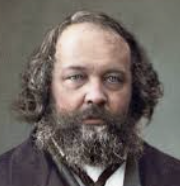
I hate Communism because it is the negation of liberty and because humanity is for me unthinkable without liberty. I am not a Communist, because Communism concentrates and swallows up in itself for the benefit of the State all the forces of society, because it inevitably leads to the concentration of property in the hands of the State, whereas I want the abolition of the State, the final eradication of the principle of authority and the patronage proper to the State, which under the pretext of moralizing and civilizing men has hitherto only enslaved, persecuted, exploited and corrupted them. I want to see society and collective or social property organized from below upwards, by way of free association, not from above downwards, by means of any kind of authority whatsoever.
▼
Source
source
As quoted in Michael Bakunin (1937) by E.H. Carr, p. 356
2 months 2 weeks ago
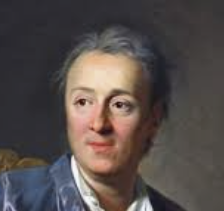
From fanaticism to barbarism is only one step.
▼
Source
source
Essai sur le Mérite de la Vertu (1745)

3 months 1 week ago
Nor mourn the unalterable Days That Genius goes and Folly stays.
▼
Source
source
In Memoriam E. B. E., st. 9

4 months 2 weeks ago
Where there have been powerful governments, societies, religions, public opinions, in short wherever there has been tyranny, there the solitary philosopher has been hated; for philosophy offers an asylum to a man into which no tyranny can force it way, the inward cave, the labyrinth of the heart.
3 weeks 5 days ago
When one is a stranger to oneself then one is estranged from others too. If one is out of touch with oneself, then one cannot touch others.

2 months 2 weeks ago
We scarce ever had a prince, who by fraud, or violence, had not made some infringement on the constitution. We scarce ever had a parliament which knew, when it attempted to set limits to the royal authority, how to set limits to its own. Evils we have had continually calling for reformation, and reformations more grievous than any evils. Our boasted liberty sometimes trodden down, sometimes giddily set up, and ever precariously fluctuating and unsettled; it has only been kept alive by the blasts of continual feuds, wars, and conspiracies.

3 months 3 weeks ago
A theologian is born by living, nay dying and being damned, not by thinking, reading, or speculating.
▼
Source
source
352
3 months 1 week ago
I wish to write such rhymes as shall not suggest a restraint, but contrariwise the wildest freedom.
▼
Source
source
June 27, 1839

1 month 1 week ago
Bless advertising art for its pictorial vitality and verbal creativity.
▼
Source
source
(p. 18)
2 months 1 week ago
Lord, give me the capacity of never praying, spare me the insanity of all worship, let this temptation of love pass from me which would deliver me forever unto You. Let the void spread between my heart and heaven! I have no desire to people my deserts by Your presence, to tyrannize my nights by Your light, to dissolve my Siberias beneath Your sun.

3 months 3 days ago
Throw moderation to the winds, and the greatest pleasures bring the greatest pains.

3 months 1 week ago
Frantic administration of panaceas to the world is certainly discouraged by the reflection that "this present" might be "the world's last night"; sober work for the future, within the limits of ordinary morality and prudence, is not.

3 months 3 days ago
Truth is great and its effectiveness endures.
▼
Source
source
Maxim no. 5. Cf. 1 Esdras 4:41
3 months 3 days ago
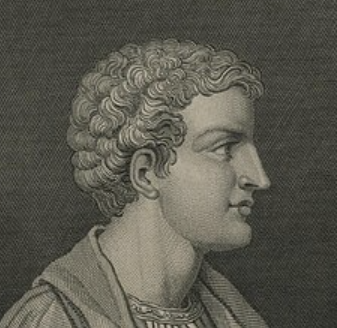
It is difficult to speak of the universal specifically.
▼
Source
source
Line 128
3 months 3 weeks ago
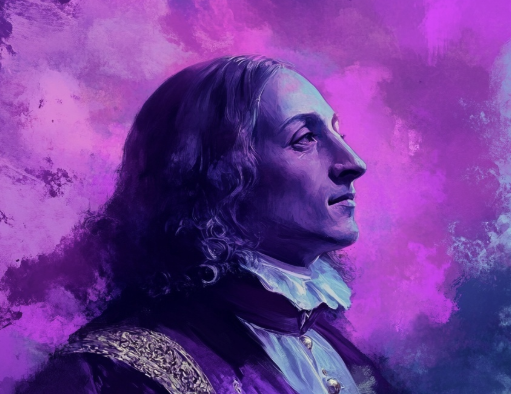
Mahomet established a religion by putting his enemies to death; Jesus Christ, by commanding his followers to lay down their own lives.
▼
Source
source
Thoughts on Religion and Philosophy (W. Collins, 1838), Ch. XVI, p. 202

3 months 3 weeks ago
No Man is wise at all Times, or is without his blind Side.
▼
Source
source
The Alchymyst, in Colloquies of Erasmus, Volume I.

4 months 1 week ago
Hypocrisy is a universal phenomenon. It ends with death, but not before.

4 months 2 weeks ago
An authorship that began with Either/Or and advanced step by step seeks here its decisive place of rest, at the foot of the altar, where the author, personally most aware of his own imperfections and guilt, certainly does not call himself a truth-witness but only a singular kind of poet and thinker who, without authority, has had nothing new to bring but “has wanted once again to read through, if possible in a more inward way, the original text handed down from the fathers.
3 months 3 days ago
It is sweet and honorable to die for one's country.
▼
Source
source
Book III, ode ii, line 13
2 months 1 week ago
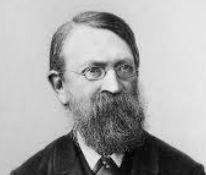
Scientists believe there is a hierarchy of facts and that among them may be made a judicious choice. They are right, since otherwise there would be no science... One need only open the eyes to see that the conquests of industry which have enriched so many practical men would never have seen the light, if these practical men alone had existed and if they had not been preceded by unselfish devotees who died poor, who never thought of utility, and yet had a guide far other than caprice.As Mach says, these devotees have spared their successors the trouble of thinking.
▼
Source
source
Henri Poincaré, The Value of Science (1907) Author's Essay Prefatory to the Translation: "The Choice of Facts," p.4, Tr. George Bruce Halsted
3 months 2 weeks ago
Rascals are always sociable - more's the pity! and the chief sign that a man has any nobility in his character is the little pleasure he takes in others' company.
▼
Source
source
Vol. 1, Ch. 5, § 9
1 month 2 days ago
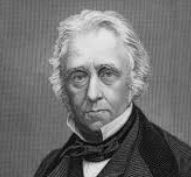
I believe that the progress of experimental science, the free intercourse of nation with nation, the unrestricted influx of commodities from countries where they are cheap, and the unrestricted efflux of labour towards countries where it is dear, will soon produce, nay, I believe that they are beginning to produce, a great and most blessed social revolution.
▼
Source
source
Speech in Edinburgh (2 November 1852), quoted in Speeches of the Right Honourable T. B. Macaulay, M.P. (1854), p. 517
CivilSimian.com created by AxiomaticPanic, CivilSimian, Kalokagathia