


2 months 6 days ago
Faculty X is simply that latent power in human beings possess to reach beyond the present. After all, we know perfectly well that the past is as real as the present, and that New York and Singapore and Lhasa and Stepney Green are all as real as the place I happen to be in at the moment. Yet my senses do not agree. They assure me that this place, here and now, is far more real than any other place or any other time. Only in certain moments of great inner intensity do I know this to be a lie. Faculty X is a sense of reality, the reality of other places and other times, and it is the possession of it - fragmentary and uncertain though it is - that distinguishes man from all other animals.
▼
Source
source
p. 59

3 months 3 weeks ago
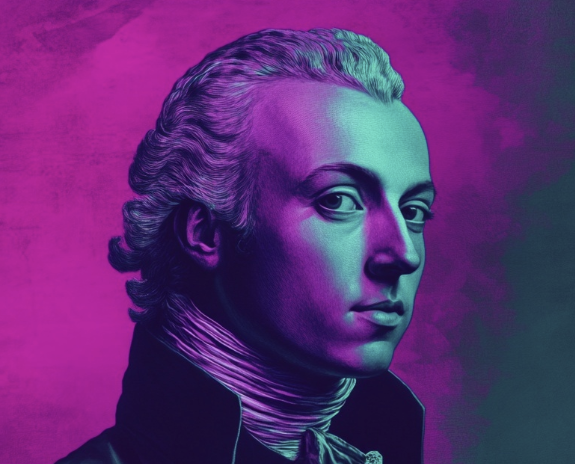
That which is best about conservatism, that which, though it cannot be expressed in detail, inspires reverence in all, is the Inevitable.
3 months 3 weeks ago
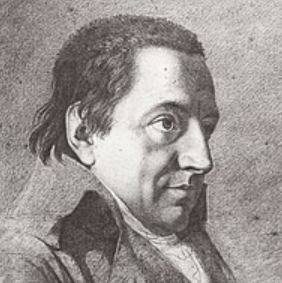
The child must be brought up free (that he allow others to be free). He must learn to endure the restraint to which freedom subjects itself for its own preservation (experience no subordination to his command). Thus he must be disciplined. This precedes instruction. Training must continue without interruption. He must learn to do without things and to be cheerful about it. He must not be obliged to dissimulate, he must acquire immediate horror of lies, must learn so to respect the rights of men that they become an insurmountable wall for him. His instruction must be more negative. He must not learn religion before he knows morality. He must be refined, but not spoiled (pampered). He must learn to speak frankly, and must assume no false shame. Before adolescence he must not learn fine manners ; thoroughness is the chief thing. Thus he is crude longer, but earlier useful and capable.
▼
Source
source
Part III : Selection on Education from Kant's other Writings, Ch. I Pedagogical Fragments, # 3
2 months 3 weeks ago
Each individual imagines that he can exist, live, think, and act for himself, and believes that he himself is the thinking principle of his thoughts; whereas in truth he is but a single ray of the ONE universal and necessary Thought.
▼
Source
source
p. 21

3 months 3 weeks ago
It is not enough to be industrious; so are the ants. What are you industrious about?
▼
Source
source
Letter to Harrison Blake, November 16, 1857
1 month 2 days ago
Lakshmi, the Goddess of wealth, comes of Her own accord where fools are not respected, grain is well stored up, and the husband and wife do not quarrel.
1 month 5 days ago
By and large, mothers and housewives are the only workers who do not have regular time off. They are the great vacationless class.
1 month 3 weeks ago
You need to know enough philosophy so that the methods of logical analysis are available to you to be used as a tool. One of the most depressing things about educated people today is that so few of them, even among professional intellectuals, are able to follow the steps of a simple logical argument.

1 month 2 weeks ago
New media are new archetypes, at first disguised as degradations of older media.
▼
Source
source
Arts in society, Volume 3, 1964, p. 240
4 months 1 week ago
The world is divided into men who have wit and no religion and men who have religion and no wit.

2 months 2 days ago
It is a question whether, when we break a murderer on the wheel, we do not fall into the error a child makes when it hits the chair it has bumped into.
▼
Source
source
J 146



2 months 3 weeks ago
Whenever our neighbour's house is on fire, it cannot be amiss for the engines to play a little on our own.

3 months 3 weeks ago
To be without some of the things you want is an indispensable part of happiness.

3 months 2 weeks ago
Without some redistribution of wealth and power, downward mobility and debilitating poverty will continue to drive people into desperate channels. And without principled opposition to xenophobias from above and below, these desperate channels will produce a cold-hearted and mean-spirited America no longer worth fighting for or living in.
▼
Source
source
(p79)

2 months 1 week ago
Use harms and even destroys beauty. The noblest function of an object is to be contemplated.
▼
Source
source
Niebla [Mist]
2 months 2 weeks ago
A certain maxim of Logic which I have called Pragmatism has recommended itself to me for diverse reasons and on sundry considerations. Having taken it as my guide for most of my thought, I find that as the years of my knowledge of it lengthen, my sense of the importance of it presses upon me more and more. If it is only true, it is certainly a wonderfully efficient instrument. It is not to philosophy only that it is applicable. I have found it of signal service in every branch of science that I have studied. My want of skill in practical affairs does not prevent me from perceiving the advantage of being well imbued with pragmatism in the conduct of life.
▼
Source
source
Lecture I : Pragmatism : The Normative Sciences, CP 5.14
3 months 3 weeks ago
We have, in fact, two kinds of morality side by side; one which we preach but do not practise, and another which we practise but seldom preach.
▼
Source
source
Ch. 8: Eastern and Western Ideals of Happiness

4 months ago
There is a plague on Man, the opinion that he knows something.
3 months 3 weeks ago
The means employed by Nature to bring about the development of all the capacities of men is their antagonism in society, so far as this is, in the end, the cause of a lawful order among men.
▼
Source
source
Fourth Thesis

4 months 3 weeks ago
I will make an attempt to attain freedom, the youthful soul says to itself; and is it to be hindered in this by the fact that two nations happen to hate and fight one another, or that two continents are separated by an ocean, or that all around it a religion is taught with did not yet exist a couple of thousand years ago. All that is not you, it says to itself.
2 months 1 week ago
The aim is to replace economic oligarchies by the State, which has a will-to-power of its own and is quite as little concerned with the public good; and a will-to-power, moreover, which is not economic but military and therefore much more dangerous to any good folk who have a taste for staying alive. And on the bourgeois side what on earth is the sense of objecting to State control in economic affairs if one accepts private monopolies which have all the economic and technical disadvantages of State monopolies and possibly some others as well?
▼
Source
source
p. 230
4 months ago
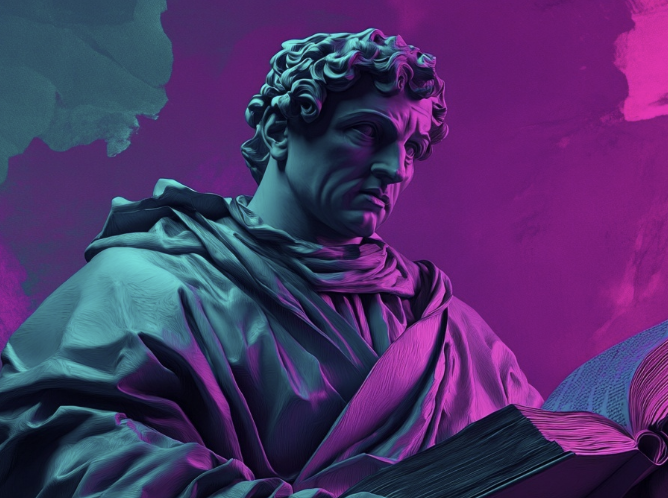
The heathen really make their self-invented notions and dreams of God and idol. Ultimately, they put their trust in that which is nothing. So it is with all idolatry. For it happens not merely by erecting an image and worshipping it, but rather it happens in the heart. For the heart seeks help and consolation from creatures, saints, or devils. It neither cares for God, nor looks to Him for anything better than to believe that He is willing to help.
▼
Source
source
"On Infant Baptism," Large Catechism
2 months 3 weeks ago
Has woman the same rights in the state which man has? This question may appear ridiculous to many. For if the only ground of all legal rights is reason and freedom, how can a distinction exist between two sexes which possess both the same reason and the same freedom. Nevertheless, it seems that, so long as men have lived, this has been differently held, and the female sex seems not to have been placed on a par with the male sex in the exercise of its rights. Such a universal sentiment must have a ground, to discover which was never a more urgent problem than in our days.
▼
Source
source
P. 439
1 week 1 day ago
The goal of liberalism is the peaceful cooperation of all men. It aims at peace among nations too. When there is private ownership of the means of production everywhere and when laws, the tribunals and the administration treat foreigners and citizens on equal terms, it is of little importance where a country's frontiers are drawn. Nobody can derive any profit from conquest, but many can suffer losses from fighting. War no longer pays; there is no motive for aggression. The population of every territory is free to determine to which state it wishes to belong, or whether it prefers to establish a state of its own. All nations can coexist peacefully, because no nation is concerned about the size of its state.
▼
Source
source
Omnipotent Government : The Rise of the Total State and Total War
1 month 2 weeks ago
It may be that brain hardware has co-evolved with the internal virtual worlds that it creates. This can be called hardware-software co-evolution.

2 weeks ago
Consider how, even in the meanest sorts of Labour, the whole soul of a man is composed into a kind of real harmony, the instant he sets himself to work! Doubt, Desire, Sorrow, Remorse, Indignation, Despair itself, all these like helldogs lie beleaguering the soul of the poor dayworker, as of every man: but he bends himself with free valour against his task, and all these are stilled, all these shrink murmuring far off into their caves. The man is now a man. The blessed glow of Labour in him, is it not as purifying fire, wherein all poison is burnt up, and of sour smoke itself there is made bright blessed flame!
2 weeks ago
One comfort is, that Great Men, taken up in any way, are profitable company. We cannot look, however imperfectly, upon a great man, without gaining something by him. He is the living light-fountain, which it is good and pleasant to be near. The light which enlightens, which has enlightened the darkness of the world; and this not as a kindled lamp only, but rather as a natural luminary shining by the gift of Heaven; a flowing light-fountain, as I say, of native original insight, of manhood and heroic nobleness;-in whose radiance all souls feel that it is well with them.
2 weeks 3 days ago
Now what is science? ...it is before all a classification, a manner of bringing together facts which appearances separate, though they are bound together by some natural and hidden kinship. Science, in other words, is a system of relations. ...it is in relations alone that objectivity must be sought. ...it is relations alone which can be regarded as objective.External objects... are really objects and not fleeting and fugitive appearances, because they are not only groups of sensations, but groups cemented by a constant bond. It is this bond, and this bond alone, which is the object in itself, and this bond is a relation.

1 week ago
The one is ready even to sacrifice itself for the good of others, the other to plunge into peril provided it drags others with it.
1 week 1 day ago
The State's behavior is violence, and it calls its violence "law"; that of the individual, "crime." The state calls its own violence law, but that of the individual, crime.
▼
Source
source
As quoted in The Great Quotations (1960) by George Seldes, p. 664
1 month 6 days ago
The business of grabbing and money-making, through a violent extractive economy that the 1% have built, is burdening the earth and humanity with unbearable and non-sustainable costs, and has brought us to the brink of extinction. We do not have to escape from the earth; we have to escape from the illusions that enslave our minds and make extinction look inevitable.

3 months 3 weeks ago
Whether, then, all ought not immediately to discontinue and renounce it, with grief and abhorrence? Should not every society bear testimony against it, and account obstinate persisters in it bad men, enemies to their country, and exclude them from fellowship; as they often do for much lesser faults?
2 months 3 weeks ago
He who must still exhort himself, and be exhorted, to will the good, has as yet no firm and ever-ready will, but wills a will anew every time he needs it. But he who has such a stable will, wills what he wills for ever, and cannot under any circumstances will otherwise than he always wills. For him freedom of the will is destroyed and swallowed up in necessity.
▼
Source
source
General Nature of New Eduction p 21

3 months 2 weeks ago
In Plato... or Xenophon... we never see Socrates requiring... examination of conscience or... confession of sins. [A]n account of your life, your bios, is... not to give... the historical events... but... to demonstrate whether you are able to show... a relation between the rational discourse, the logos, you... use, and the way... you live. Socrates is inquiring into the way that logos gives form to a person's style of life... whether there is a harmonic relation between the two... the degree of accord between a person's life and its principle of intelligibility or logos... [and] the true nature of the relation between the logos and bios.

2 months 4 weeks ago
Coulson Turnbull in Life and Teachings of Giordano Bruno : Philosopher, Martyr, Mystic 1548 - 1600 (1913), p. 41
3 months 2 weeks ago
From Plato's Republic... the primary danger of liberty and free speech in a democracy is what results when everyone has his own... style of life... For then there can be no common logos, no possible unity, for the city.
2 months 2 weeks ago
Wherever big industries displaced manufacture, the bourgeoisie developed in wealth and power to the utmost and made itself the first class of the country. The result was that wherever this happened, the bourgeoisie took political power into its own hands and displaced the hitherto ruling classes, the aristocracy, the guildmasters, and their representative, the absolute monarchy. The bourgeoisie annihilated the power of the aristocracy, the nobility, by abolishing the entailment of estates - in other words, by making landed property subject to purchase and sale, and by doing away with the special privileges of the nobility. It destroyed the power of the guildmasters by abolishing guilds and handicraft privileges. In their place, it put competition - that is, a state of society in which everyone has the right to enter into any branch of industry, the only obstacle being a lack of the necessary capital.

2 months 2 weeks ago
Fear is the antidote to boredom: the remedy must be stronger than the disease.
2 weeks ago
Every noble work is at first impossible.
▼
Source
source
From Past and Present (1843), Chapter XI : Labour
3 months 1 week ago
After the battle in Pharsalia, when Pompey was fled, one Nonius said they had seven eagles left still, and advised to try what they would do. "Your advice," said Cicero, "were good if we were to fight jackdaws."
▼
Source
source
Cicero

3 months 3 weeks ago
Eloquence, when at its highest pitch, leaves little room for reason or reflection; but addressing itself entirely to the fancy or the affections, captivates the willing hearers, and subdues their understanding. Happily, this pitch it seldom attains. But what a Tully or a Demosthenes could scarcely effect over a Roman or Athenian audience, every Capuchin, every itinerant or stationary teacher can perform over the generality of mankind, and in a higher degree, by touching such gross and vulgar passions.
▼
Source
source
Section 10 : Of Miracles Pt. 2
3 months 3 weeks ago
His character does not appear more extraordinary and unusual by the mixture of so much absurdity with so much penetration, than by his tempering such violent ambition, and such enraged fanaticism with so much regard to justice and humanity.
▼
Source
source
Volume III, Chapter LXI; referring to Oliver Cromwell
2 weeks ago
Or indeed we may say again, it is in what I called Portrait-painting, delineating of men and things, especially of men, that Shakspeare is great. All the greatness of the man comes out decisively here. It is unexampled, I think, that calm creative perspicacity of Shakspeare. The thing he looks at reveals not this or that face of it, but its inmost heart and generic secret: it dissolves itself as in light before him, so that he discerns the perfect structure of it. Creative, we said: poetic creation, what is this too but seeing the thing sufficiently? The word that will describe the thing, follows of itself from such clear intense sight of the thing. And is not Shakspeare's morality, his valour, candour, tolerance, truthfulness; his whole victorious strength and greatness, which can triumph over such obstructions, visible there too? Great as the world!
4 months ago
No matter that we may mount on stilts, we still must walk on our own legs. And on the highest throne in the world, we still sit only on our own bottom.
▼
Source
source
Ch. 13

4 months ago
There is nothing so easy, so sweet, and so favourable, as the divine law: it calls and invites us to her, guilty and abominable as we are; extends her arms and receives us into her bosom, foul and polluted as we at present are, and are for the future to be. But then, in return, we are to look upon her with a respectful eye; we are to receive this pardon with all gratitude and submission, and for that instant at least, wherein we address ourselves to her, to have the soul sensible of the ills we have committed, and at enmity with those passions that seduced us to offend her.
▼
Source
source
Ch. 56, tr. Cotton, rev. W. Carew Hazlitt, 1877

3 months 3 weeks ago
I cannot guess what may be the fate of Quakerism in America; but I perceive it loses ground daily in England. In all countries, where the established religion is of a mild and tolerating nature, it will at length swallow up all the rest.
3 months 3 weeks ago
There are some simple maxims [...] which I think might be commanded to writers of expository prose. First: never use a long word if a short word will do. Second: if you want to make a statement with a great many qualifications, put some of the qualifications in separate sentences. Third: do not let the beginning of your sentence lead the reader to an expectation which is contradicted by the end.
▼
Source
source
"How I Write", The Writer, September 1954

3 months 3 weeks ago
All war propaganda consists, in the last resort, in substituting diabolical abstractions for human beings. Similarly, those who defend war have invented a pleasant sounding vocabulary of abstractions in which to describe the process of mass murder.
▼
Source
source
"Pacifism and Philosophy", 1936
CivilSimian.com created by AxiomaticPanic, CivilSimian, Kalokagathia