


1 month 2 weeks ago
People try to do all sorts of clever and difficult things to improve life instead of doing the simplest, easiest thing-refusing to participate in activities that make life bad.
▼
Source
source
p. 210
3 months 2 weeks ago
That power should be exercised over any portion of mankind without any obligation of consulting them, is only tolerable while they are in an infantine, or a semi-barbarous state. In any civilized condition, power ought never to be exempt from the necessity of appealing to the reason, and recommending itself by motives which justify it to the conscience and feelings, of the governed.
▼
Source
source
Thoughts on Parliamentary Reform (1859), p. 24

1 month 3 weeks ago
Women dream till they have no longer the strength to dream; those dreams against which they so struggle, so honestly, vigorously, and conscientiously, and so in vain, yet which are their life, without which they could not have lived; those dreams go at last. All their plans and visions seem vanished, and they know not where; gone, and they cannot recall them. They do not even remember them. And they are left without the food of reality or of hope. Later in life, they neither desire nor dream, neither of activity, nor of love, nor of intellect. The last often survives the longest. They wish, if their experiences would benefit anybody, to give them to someone. But they never find an hour free in which to collect their thoughts, and so discouragement becomes ever deeper and deeper, and they less and less capable of undertaking anything.

3 months 2 weeks ago
When I say that children should be told about sex, I do not mean that they should be told only the bare physiological facts; they should be told whatever they wish to know. There should be no attempt to represent adults as more virtuous than they are, or sex as occurring only in marriage. There is no excuse for deceiving children. And when, as must happen in conventional families, they find that their parents have lied, they lose confidence in them, and feel justified in lying to them.
▼
Source
source
Our Sexual Ethics, 1936

2 months 3 weeks ago
Place is the greatest thing, as it contains all things.
▼
Source
source
As quoted in Diogenes Laërtius, The Lives and Opinions of Eminent Philosophers, I, 35

2 months 2 weeks ago
There is hardly a member of Congress who can make up his mind to go home without having despatched at least one speech to his constituents; nor who will endure any interruption until he has introduced into his harangue whatever useful suggestions may be made touching the four-and-twenty States of which the Union is composed, and especially the district which he represents.
▼
Source
source
Book One, Chapter XXI.

4 months 1 week ago
I may not have been sure about what really did interest me, but I was absolutely sure about what didn't.
2 months 6 days ago
What, by a word lacking even in grammar, is called amorality, is a thing that does not exist. If you are unwilling to submit to any norm, you have, nolens volens, to submit to the norm of denying all morality, and this is not amoral, but immoral. It is a negative morality which preserves the empty form of the other.
▼
Source
source
Chapter XV: We Arrive At The Real Question

4 months 5 days ago
This happy state can only be obtained by a prudent care of the body, and a steady government of the mind. The diseases of the body are to be prevented by temperance, or cured by medicine, or rendered tolerable by patience.

3 months 1 week ago
The bourgeois public sphere may be conceived above all as the sphere of private people come together as a public; they soon claimed the public sphere regulated from above against the public authorities themselves, to engage them in a debate over the general rules governing relations in the basically privatized but publicly relevant sphere of commodity exchange and social labor.
▼
Source
source
p. 27

4 months 1 week ago
Just you think first, and don't bother to speak afterward, either.

3 months 2 weeks ago
I am sure, zeal or love for truth can never permit falsehood to be used in the defence of it.
▼
Source
source
187

1 month 1 week ago
The measure of a man is a man. Justice, morality, ethics, fairness, goodness all based on the preservation of life. You can do other things, but you'd be Good by coincidence.

1 month 4 weeks ago
One cannot ignore half of life for the purposes of science, and then claim that the results of science give a full and adequate picture of the meaning of life. All discussions of 'life' which begin with a description of man's place on a speck of matter in space, in an endless evolutionary scale, are bound to be half-measures, because they leave out most of the experiences which are important to use as human beings.
▼
Source
source
p. 309

2 months 2 weeks ago
That chastity of honour which felt a stain like a wound.
▼
Source
source
Volume iii, p. 332

6 days ago
No sadder proof can be given by a man of his own littleness than disbelief in great men.
2 months 2 weeks ago
Revolution is like Saturn, it devours its own children.
▼
Source
source
Act I.

3 months 2 weeks ago
So monstrous is the making and keeping them slaves at all, abstracted from the barbarous usage they suffer, and the many evils attending the practice; as selling husbands away from wives, children from parents, and from each other, in violation of sacred and natural ties; and opening the way for adulteries, incests, and many shocking consequences, for all of which the guilty Masters must answer to the final Judge.

2 months 1 week ago
But fantasy kills imagination, pornography is death to art.
▼
Source
source
The Message to the Planet (1989) p. 43.

3 months 2 weeks ago
You must love the crust of the earth on which you dwell more than the sweet crust of any bread or cake; you must be able to extract nutriment out of a sand heap.
▼
Source
source
January 25, 1858

3 months 2 weeks ago
But perhaps I lack the gift. I see I've described her as being like a sword. That's true as far as it goes. But utterly inadequate by itself, and misleading. I ought to have said 'But also like a garden. Like a nest of gardens, wall within wall, hedge within hedge, more secret, more full of fragrant and fertile life, the further you explore.' And then, of her, and every created thing I praise, I should say 'in some way, in its unique way, like Him who made it.' Thus up from the garden to the Gardener, from the sword to the Smith. to the life-giving Life and the Beauty that makes beautiful.

2 months 1 week ago
Objection to scientific knowledge: this world doesn't deserve to be known.
3 months 2 weeks ago
The law of faith, being a covenant of free grace, God alone can appoint what shall be necessarily believed by everyone whom He will justify. What is the faith which He will accept and account for righteousness, depends wholly on his good pleasure. For it is of grace, and not of right, that this faith is accepted. And therefore He alone can set the measures of it: and what he has so appointed and declared is alone necessary. No-body can add to these fundamental articles of faith; nor make any other necessary, but what God himself hath made, and declared to be so. And what these are which God requires of those who will enter into, and receive the benefits of the new covenant, has already been shown. An explicit belief of these is absolutely required of all those to whom the gospel of Jesus Christ is preached, and salvation through his name proposed.
▼
Source
source
§ 156
4 months 5 days ago
The happiness which belongs to man, is that state in which he enjoys as many of the good things, and suffers as few of the evils incident to human nature as possible; passing his days in a smooth course of permanent tranquility. A wise man, though deprived of sight or hearing, may experience happiness in the enjoyment of the good things which yet remain; and when suffering torture, or laboring under some painful disease, can mitigate the anguish by patience, and can enjoy, in his afflictions, the consciousness of his own constancy.

1 month 1 week ago
Interface, of the resonant interval as 'where the action is', whether chemical, psychic or social, involves touch.
▼
Source
source
p. 102

2 months 2 weeks ago
To be acutely conscious is a disease, a real, honest-to-goodness disease.
▼
Source
source
Part 1, Chapter 2 (tr. David Magarshack, 1950) To think too much is a disease, a real, actual disease.

4 months ago
For freedom is not acquired by satisfying yourself with what you desire, but by destroying your desire.
▼
Source
source
Book IV, ch. 1, 175.
2 months 2 weeks ago
I have in general no very exalted opinion of the virtue of paper government.
3 months 3 days ago
When one asked him what boys should learn, "That," said he, "which they shall use when men."
▼
Source
source
Of Agesilaus the Great
1 month 1 day ago
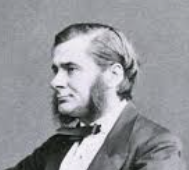
Regarded anatomically, the resemblances between the foot of Man and the foot of the Gorilla are far more striking and important than the differences. ...be the differences between the hand and foot of Man and those of the Gorilla what they may-the differences between those of the Gorilla and those of the lower Apes are much greater.
▼
Source
source
Ch.2, p. 110
3 months 2 weeks ago
Wit and good nature meeting in a fair young lady as they do in you make the best resemblance of an angel that we know; and he that is blessed with the conversation and friendship of a person so extraordinary enjoys all that remains of paradise in this world.
▼
Source
source
Letter to Mary Clarke (7 May 1682), quoted in Maurice Cranston, John Locke: A Biography (1957; 1985), p. 221
2 months 2 weeks ago
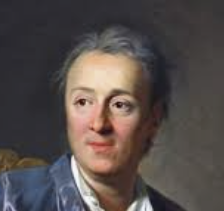
All abstract sciences are nothing but the study of relations between signs.
▼
Source
source
Dr. Théophile de Bordeu, in "Conversation Between D'Alembert and Diderot"
2 months 1 week ago
If, at the limit, you can rule without crime, you cannot do so without injustices.
1 month 1 week ago
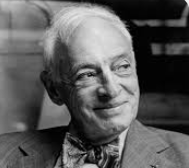
Writers, poets, painters, musicians, philosophers, political thinkers, to name only a few of the categories affected, must woo their readers, viewers, listeners, from distraction. To this we must add, for simple realism demands it, that these same writers, painters, etc., are themselves the children of distraction. As such, they are peculiarly qualified to approach the distracted multitudes. They will have experienced the seductions as well as the destructiveness of the forces we have been considering here. This is the destructive element in which we do not need to be summoned to immerse ourselves, for we were born to it.
▼
Source
source
The Distracted Public (1990), p. 167
2 months 1 week ago
Why don't I kill myself? If I knew exactly what keeps me from doing so, I should have no more questions to ask myself since I should have answered them all.
4 months 1 week ago
Goodbye, friend Elijiah, and remember that, although people apply the phrase to Aurora, it is, from this point on, Earth itself that is the true World of the Dawn.
2 months 1 week ago
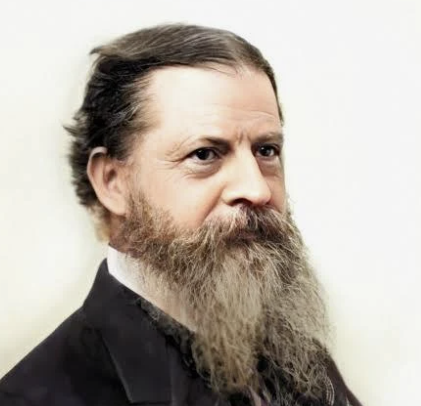
Our whole past experience is continually in our consciousness, though most of it sunk to a great depth of dimness. I think of consciousness as a bottomless lake, whose waters seem transparent, yet into which we can clearly see but a little way.
▼
Source
source
Vol. VII, par. 547
2 months 2 weeks ago
The people never give up their liberties but under some delusion.
▼
Source
source
Speech at a County Meeting of Buckinghamshire
2 months 6 days ago
To win a truly great life for the people of Israel, a great peace is necessary, not a fictitious peace, the dwarfish peace that is no more than a feeble intermission, but a true peace with the neighboring peoples, which alone can render possible a common development of this portion of the earth as the vanguard of the awakening Near East.
▼
Source
source
"Our Reply" (September 1945), as published in A Land of Two Peoples : Martin Buber on Jews and Arabs (1983) edited by Paul Mendes-Flohr, p. 178

3 months 3 weeks ago
The oldest and best known evil was ever more supportable than one that was new and untried.
▼
Source
source
Book III, Ch. 9. Of Vanity
2 months 1 day ago
The word 'definition' has come to have a dangerously reassuring sound, owing no doubt to its frequent occurrence in logical and mathematical writings.
▼
Source
source
"Two dogmas of Empiricism", p. 26

3 months 3 weeks ago
Jews hate the name of Christ and have a secret and innate rancor against the people among whom they live.
▼
Source
source
See Silent Truth by Mark Edwards

3 months 3 weeks ago
A constant element of enjoyment must be mingled with our studies, so that we think of learning as a game rather than a form of drudgery, for no activity can be continued for long if it does not to some extent afford pleasure to the participant.
▼
Source
source
Letter to Christian Northoff (1497), as translated in Collected Works of Erasmus (1974), p. 114
3 months 2 weeks ago
A thing is important if anyone think it important.
▼
Source
source
Ch. 28, Note 35

2 months 3 weeks ago
We indeed, who are beings of finite powers, are forced to make use of instruments. And the use of an instrument sheweth the agent to be limited by rules of another's prescription, and that he cannot obtain his end but in such a way, and by such conditions. Whence it seems a clear consequence, that the supreme unlimited agent useth no tool or instrument at all. The will of an Omnipotent Spirit is no sooner exerted than executed, without the application of means; which, if they are employed by inferior agents, it is not upon account of any real efficacy that is in them, or necessary aptitude to produce any effect, but merely in compliance with the laws of nature, or those conditions prescribed to them by the First Cause, who is Himself above all limitation or prescription whatsoever.
▼
Source
source
Philonous to Hylas. The Second Dialogue
4 months 1 week ago
Consider the most famous pure dystopian tale of modern times, 1984, by George Orwell (1903-1950), published in 1948 (the same year in which Walden Two was published). I consider it an abominably poor book. It made a big hit (in my opinion) only because it rode the tidal wave of cold war sentiment in the United States.

Just now
Alexander, king of Macedon, began to study geometry; unhappy man, because he would thereby learn how puny was that earth of which he had seized but a fraction! Unhappy man, I repeat, because he was bound to understand that he was bearing a false title. For who can be "great" in that which is puny?
3 months 2 weeks ago
Intuitionism is not constructive, perfectionism is unacceptable.
▼
Source
source
Chapter I, Section 9, pg. 52

4 months 2 weeks ago
Every human being is tried this way in the active service of expectancy. Now comes the fulfillment and relieves him, but soon he is again placed on reconnaissance for expectancy; then he is again relieved, but as long as there is any future for him, he has not yet finished his service. And while human life goes on this way in very diverse expectancy, expecting very different things according to different times and occasions and in different frames of mind, all life is again one nightwatch of expectancy.
4 months ago
In each separate thing that you do consider the matters which come first, and those which follow after, and only then approach the thing itself.
▼
Source
source
Book III, ch. 15, 1 (= Enchiridion 29, 1).
CivilSimian.com created by AxiomaticPanic, CivilSimian, Kalokagathia