

3 months 3 weeks ago
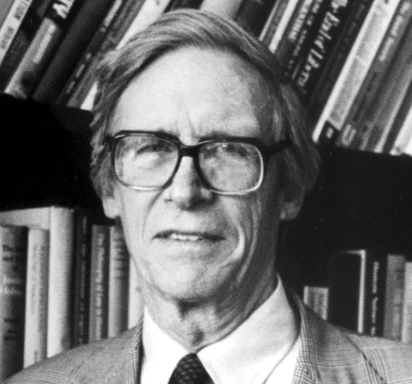
First of all, no one knows his place in society, his class position or social status; nor does he know his fortune in the distribution of natural assets and abilities, his intelligence and strength, and the like. Nor, again, does anyone know his conception of the good, the particulars of his rational plan of life, or even the special features of psychology such as his aversion to risk or liability to optimism or pessimism. More than this, I assume that the parties do not know the particular circumstances of their own society. That is, they do not know its particular economic or political situation, or the level of civilization and culture it has been able to achieve. The persons in the original position have no information as to which generation they belong.
▼
Source
source
p. 117

2 months 3 weeks ago
On our earth we can only love with suffering and through suffering. We cannot love otherwise, and we know of no other sort of love. I want suffering in order to love. I long, I thirst, this very instant, to kiss with tears the earth that I have left, and I don't want, I won't accept life on any other!"

3 months 3 weeks ago
As long as this deliberate refusal to understand things from above, even where such understanding is possible, continues, it is idle to talk of any final victory over materialism.
2 months 2 weeks ago
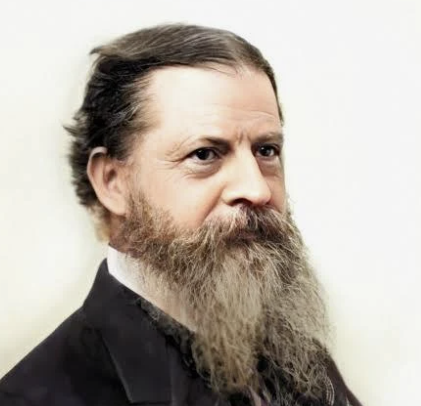
It is terrible to see how a single unclear idea, a single formula without meaning, lurking in a young man's head, will sometimes act like an obstruction ... in an artery, hindering the nutrition of the brain, and condemning its victim to pine away in the fullness of his intellectual vigor and in the midst of intellectual plenty.
▼
Source
source
How to make our ideas clear, Popular Science Monthly, Vol. 12

2 weeks 3 days ago
In morals, truth is but little prized when it is a mere sentiment, and only attains its full value when realized in the world as fact.
▼
Source
source
Ch. 5.



3 months 3 weeks ago
...man first of all exists, encounters himself, surges up in the world - and defines himself afterwards.

3 months 3 weeks ago
To hold a pen is to be at war.
▼
Source
source
Letter to Jeanne-Grâce Bosc du Bouchet, comtesse d'Argental (4 October 1748)
2 weeks 2 days ago
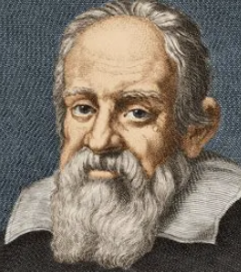
I do not feel obliged to believe that the same God who has endowed us with senses, reason, and intellect has intended us to forgo their use and by some other means to give us knowledge which we can attain by them.

4 months 3 weeks ago
Every human being is tried this way in the active service of expectancy. Now comes the fulfillment and relieves him, but soon he is again placed on reconnaissance for expectancy; then he is again relieved, but as long as there is any future for him, he has not yet finished his service. And while human life goes on this way in very diverse expectancy, expecting very different things according to different times and occasions and in different frames of mind, all life is again one nightwatch of expectancy.

4 months 1 day ago
Most Christians are superstitious rather than pious, and except for the name of Christ differ hardly at all from superstitious pagans.
▼
Source
source
The Erasmus Reader (1990), pp. 140-141.

3 months 3 weeks ago
Our condition is like that of the poor wolves: if one of the flock wound himself, or so much as limp, the rest eat him up incontinently. That serene Power interposes the check upon the caprices and officiousness of our wills.

2 months 2 weeks ago
If death had only negative aspects, dying would be an unmanageable action.

3 months 6 days ago
It is told that those who first brought out the irrationals from concealment into the open perished in shipwreck, to a man. For the unutterable and the formless must needs be concealed. And those who uncovered and touched this image of life were instantaneously destroyed and shall remain forever exposed to the play of the eternal waves.
▼
Source
source
As quoted by Tobias Dantzig, Number: The Language of Science (1930) also see Proclus, scholium to Book X of Euclid's Elements, vol. V.

4 months 1 week ago
Reason in man is rather like God in the world.
▼
Source
source
Opuscule II, De Regno On Kingship, c. 1267

3 months 3 weeks ago
It is in vain to dream of a wildness distant from ourselves.
▼
Source
source
August 30, 1856
3 months 3 weeks ago
The measure of action is the sentiment from which it proceeds. The greatest action may easily be one of the most private circumstance.
▼
Source
source
Goethe; or, The Writer

2 months 5 days ago
The God idea is growing more impersonal and nebulous in proportion as the human mind is learning to understand natural phenomena and in the degree that science progressively correlates human and social events.

1 week 6 days ago
All greatness is unconscious, or it is little and naught.
1 week 6 days ago
All this of Liberty and Equality, Electoral suffrages, Independence and so forth, we will take, therefore, to be a temporary phenomenon, by no means a final one. Though likely to last a long time, with sad enough embroilments for us all, we must welcome it, as the penalty of sins that are past, the pledge of inestimable benefits that are coming.
2 days ago
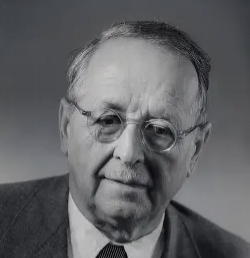
Physicists and philosophers stick stubbornly to the principles of a mechanistic interpretation of the world after physics has, in its factual structure, already outgrown the latter. They have the same excuse as the inhabitant of the mainland who for the first time travels on the open sea: he will desperately try to stay in sight of the vanishing coast line, as long as there is no other coast in sight, towards which he steers.
▼
Source
source
"Wissenschaft als symbolische Konstruktion des Menschen" Eranos-Jahrbuch (1948) GA IV, as quoted/translated by Erhard Scholz, "Philosophy as a Cultural Resource and Medium of Reflection for Hermann Weyl"

2 weeks 4 days ago
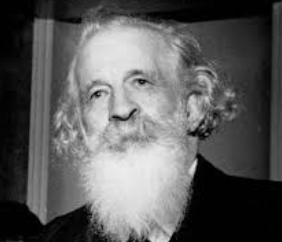
It is no coincidence that the ABM Treaty was signed midway between the delinking of the U.S. dollar from the gold standard in 1971 and the first oil crisis in 1973. These were the years not only of monetary and economic crises but also of both the beginning of the destruction of the welfare state and the shift of the hegemony of economic production from the factory to more social and immaterial sectors. One might think of these various transformations as different faces of one common phenomenon, one grand social transformation.
▼
Source
source
39
2 months 2 weeks ago
Even a minor event in the life of a child is an event of that child's world and thus a world event.
▼
Source
source
The Phoenix, a Linguistic Phenomenon, ch. 1

3 months 2 weeks ago
Is it just I who cannot found a school, or can a philosopher never do so?
▼
Source
source
p. 69e

3 months 3 weeks ago
Value, therefore, does not stalk about with a label describing what it is.
▼
Source
source
Vol. I, Ch. 1, Section 4, pg. 85.
3 months 3 weeks ago
The principles of justice are chosen behind a veil of ignorance.
▼
Source
source
Chapter I, Section 3, pg. 12

2 months 4 weeks ago
No man can justly censure or condemn another, because indeed no man truly knows another.
▼
Source
source
Section 4
1 week 5 days ago
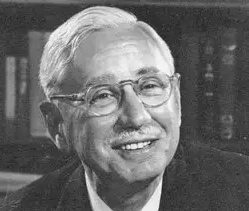
Great organizers, as much as inevitable slaves, tend to stoic moods: it is difficult to be either master or servant if one is sensitive.
2 months 3 weeks ago
So long as man remains free he strives for nothing so incessantly and so painfully as to find someone to worship. But man seeks to worship what is established beyond dispute, so that all men would agree at once to worship it. For these pitiful creatures are concerned not only to find what one or the other can worship, but to find community of worship is the chief misery of every man individually and of all humanity from the beginning of time. For the sake of common worship they've slain each other with the sword. They have set up gods and challenged one another, 'Put away your gods and come and worship ours, or we will kill you and your gods!' And so it will be to the end of the world, even when gods disappear from the earth; they will fall down before idols just the same.

3 months 4 days ago
Avoid doing what you would blame others for doing.
▼
Source
source
As quoted in Diogenes Laërtius, The Lives and Opinions of Eminent Philosophers, I, 36 Cf. Golden Rule

4 months 1 day ago
But the best demonstration by far is experience, if it go not beyond the actual experiment.
▼
Source
source
Aphorism 70

2 months 3 weeks ago
Two things in America are astonishing: the changeableness of most human behavior and the strange stability of certain principles. Men are constantly on the move, but the spirit of humanity seems almost unmoved.
▼
Source
source
Book Three, Chapter XXI.
2 weeks 1 day ago
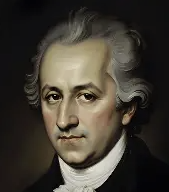
But among all the discoveries and corrections probably none has resulted in a deeper influence on the human spirit than the doctrine of Copernicus.... Possibly mankind has never been demanded to do more, for considering all that went up in smoke as a result of realizing this change: a second Paradise, a world of innocence, poetry and piety: the witness of the senses, the conviction of a poetical and religious faith. No wonder his contemporaries did not wish to let all this go and offered every possible resistance to a doctrine which in its converts authorized and demanded a freedom of view and greatness of thought so far unknown indeed not even dreamed of.
▼
Source
source
Zur Farbenlehre, Materialien zur Geschichte der Farbenlehre (1810), Frankfurt am Main, 1991, Seite 666.
3 months 3 weeks ago
The best way to drive out the devil, if he will not yield to texts of Scripture, is to jeer and flout him, for he cannot bear scorn.
▼
Source
source
Martin Luther, quoted at the beginning of The Screwtape Letters
2 months 2 weeks ago
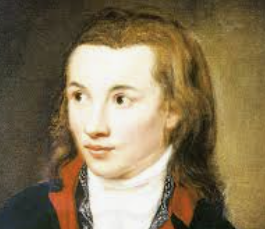
Poetry heals the wounds inflicted by reason.
▼
Source
source
As quoted in Quote, Unquote (1989) by Jonathan Williams, p. 136

3 months 3 weeks ago
Hatred comes from the heart; contempt from the head; and neither feeling is quite within our control.
▼
Source
source
"Psychological Observations"

2 months 2 weeks ago
Ye fools, did not he that made that which is without make that which is within also?
▼
Source
source
11:40 (KJV)
3 months 3 weeks ago
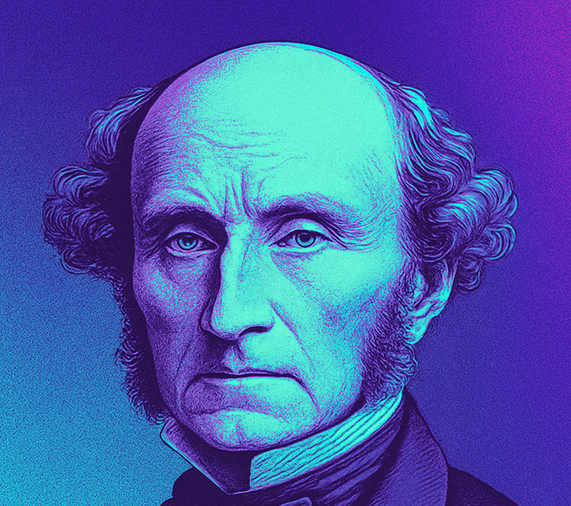
All honour to those who can abnegate for themselves the personal enjoyment of life, when by such renunciation they contribute worthily to increase the amount of happiness in the world; but he who does it, or professes to do it, for any other purpose, is no more deserving of admiration than the ascetic mounted on his pillar. He may be an inspiriting proof of what men can do, but assuredly not an example of what they should.
▼
Source
source
Ch. 2

1 week ago
Besides, he who is feared, fears also; no one has been able to arouse terror and live in peace of mind.

4 months 3 weeks ago
It is impossible that each of the elements should be infinite. For that is body which has interval on all sides; and that is infinite which has extension without bound.

4 months 1 week ago
The fellow who eggs you on to avenge yourself will rob you of what you were going to say, as we forgive our debtors. When you have forfeited that, all your sins will be held against you; absolutely nothing is forgiven.
▼
Source
source
2.382673611
2 months 4 days ago
Among most Christians the Old Testament is little read in comparison to the New Testament. Furthermore, much of what is read is often distorted by prejudice. Frequently the Old Testament is believed to express exclusively the principles of justice and revenge, in contrast to the New Testament, which represents those of love and mercy; even the sentence, "Love your neighbor as yourself," is thought by many to derive from the New, not the Old Testament. Or the Old Testament is believed to have been written exclusively in the spirit of narrow nationalism and to contain nothing of supranational universalism so characteristic of the New Testament.
▼
Source
source
You Shall Be as Gods: A Radical Interpretation of the Old Testament and Its Tradition (1966) "Introduction"

4 months 1 week ago
This is one of the most intricate problems of religion. For if you look into the traditional arguments (Hadith) about this problem you will find them contradictory; such also being the case with arguments of reason. The contradiction in the arguments of the first kind is found in the Qur'an and the Hadith.
3 months 2 weeks ago
Don't get involved in partial problems, but always take flight to where there is a free view over the whole single great problem, even if this view is still not a clear one.
▼
Source
source
Journal entry
3 months 3 weeks ago
It is in this way that all my books have been composed. They were always written at least twice over; a first draft of the entire work was completed to the very end of the subject, then the whole begun again de novo; but incorporating, in the second writing, all sentences and parts of sentences of the old draft, which appeared as suitable to my purpose as anything which I could write in lieu of them. I have found great advantages in this system of double redaction. It combines, better than any other mode of composition, the freshness and vigour of the first conception, with the superior precision and completeness resulting from prolonged thought. In my own case, moreover, I have found that the patience necessary for a careful elaboration of the details of composition and expression, costs much less effort after the entire subject has been once gone through, and the substance of all that I find to say has in some manner, however imperfect, been got upon paper.
▼
Source
source
(p. 222)
3 months 3 weeks ago
The difference principle, for example, requires that the higher expectations of the more advantaged contribute to the prospects of the least advantaged.
▼
Source
source
Chapter II, Section 16, pg. 95
2 months 2 weeks ago
The poor maidservant who used to say that she only believed in God when she had a toothache puts all theologians to shame.

4 months 1 week ago
Never trust her at any time, when the calm sea shows her false alluring smile.
▼
Source
source
Book II, lines 557-559 (tr. Rouse)
1 month 2 weeks ago
Believe me, my friends, you are yet very deficient with regard to the best modes of training your children, or of arranging your domestic concerns.

3 months 3 weeks ago
Fear is in almost all cases a wretched instrument of government, and ought in particular never to be employed against any order of men who have the smallest pretensions to independency.
▼
Source
source
Chapter I, Part III, p. 862.
CivilSimian.com created by AxiomaticPanic, CivilSimian, Kalokagathia