


2 days ago
If Governments neglect to invite what noble intellect there is, then too surely all intellect, not omnipotent to resist bad influences, will tend to become beaverish ignoble intellect; and quitting high aims, which seem shut up from it, will help itself forward in the way of making money and such like; or will even sink to be sham intellect, helping itself by methods which are not only beaverish but vulpine, and so "ignoble" as not to have common honesty.

2 months 4 days ago
My soul is exceeding sorrowful, even unto death: tarry ye here, and watch with me.
▼
Source
source
26:38 (KJV)
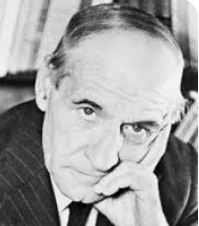
2 months 2 days ago
Even to-day, in spite of some signs which are making a tiny breach in that sturdy faith, even to-day, there are few men who doubt that motorcars will in five years' time be more comfortable and cheaper than to-day. They believe in this as they believe that the sun will rise in the morning. The metaphor is an exact one. For, in fact, the common man, finding himself in a world so excellent, technically and socially, believes that it has been produced by nature, and never thinks of the personal efforts of highly-endowed individuals which the creation of this new world presupposed. Still less will he admit the notion that all these facilities still require the support of certain difficult human virtues, the least failure of which would cause the rapid disappearance of the whole magnificent edifice.... These traits together make up the well-known psychology of the spoilt child. Chap.
▼
Source
source
VI: The Dissection Of The Mass-Man Begins

4 months 1 week ago
The tyrant has arisen, and the king and oligarchy and aristocracy and democracy, because men are not contented with that one perfect ruler, and do not believe that there could ever be any one worthy of such power or willing and able by ruling with virtue and knowledge to dispense justice and equity rightly to all, but that he will harm and kill and injure any one of us whom he chooses on any occasion, since they admit that if such a man as we describe should really arise, he would be welcomed and would continue to dwell among them, directing to their weal as sole ruler a perfectly right form of government. But, as the case now stands, since, as we claim, no king is produced in our states who is, like the ruler of the bees in their hives, by birth pre-eminently fitted from the beginning in body and mind, we are obliged, as it seems, to follow in the track of the perfect and true form of government by coming together and making written laws.

2 months 4 days ago
We are again confronted with one of the most vexing aspects of advanced industrial civilization: the rational character of its irrationality. Its productivity and efficiency, its capacity to increase and spread comforts, ... the extent to which this civilization transforms the object world into an extension of man's mind and body makes the very notion of alienation questionable. The people recognize themselves in their commodities; they find their soul in their automobile, hi-fi set, split-level home, kitchen equipment. The very mechanism which ties the individual to his society has changed, and social control is anchored in the new needs which it has produced.
▼
Source
source
p. 9

3 months 1 week ago
Under a government which imprisons any unjustly, the true place for a just man is also a prison... the only house in a slave State in which a free man can abide with honor.

1 month 3 weeks ago
The more Lil' Kim distorted her natural beauty to become a cartoonlike caricature of whiteness, the larger her success.

2 months 1 week ago
Boldness formerly was not the character of Atheists as such. ... But of late they are grown active, designing, turbulent, and seditious.
▼
Source
source
"Thoughts on French Affairs" (December 1791), in Three Memorials on French Affairs (1797), p. 53

3 months 2 weeks ago
In this life it is necessary that we be on our guard. To begin with we must be constantly aware of the fact that life here below is best described as being a type of continual warfare. This is a fact that Job, that undefeated soldier of vast experience, tells us so plainly. Yet in this matter the great majority of mankind is often deceived, for the world, like some deceitful magician, captivates their minds with seductive blandishments, and as a result most individuals behave as if there had been a cessation of hostilities.
▼
Source
source
p.61

3 weeks ago
The world's biggest power is the youth and beauty of a woman.
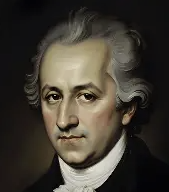
4 days ago
Patriotism ruins history.
▼
Source
source
Conversation with Friedrich Wilhem Riemer
2 months 2 days ago
The nineteenth century, utilitarian throughout, set up a utilitarian interpretation of the phenomenon of life which has come down to us and may still be considered as the commonplace of everyday thinking. ... An innate blindness seems to have closed the eyes of this epoch to all but those facts which show life as a phenomenon of utility.
▼
Source
source
p. 16

3 months 1 week ago
Even serious students are misled by the myth of the subject.

2 months 1 week ago
We dread the future only when we are not sure we can kill ourselves when we want to.
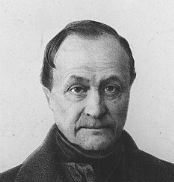
2 months 2 weeks ago
And now I have explained the series of social and intellectual conditions by which the discovery of sociological laws, and consequently the foundation of Positivism, was fixed for the precise date at which I began my philosophical career: that is to say, one generation after the progressive dictatorship of the Convention, and almost immediately after the fall of the retrograde tyranny of Bonaparte.
▼
Source
source
p. 71

2 weeks 6 days ago
Our present-day neurochemical cocktail, we are asked to believe, is the medium through which alien realms of consciousness can be grasped and neutrally appraised from a third-person perspective. Empirical research suggests this optimism is at best naïve.
▼
Source
source
Storming Heaven: LSD and the American Dream, BLTC Research
3 months 1 week ago
I wish to suggest that a man may be very industrious, and yet not spend his time well. There is no more fatal blunderer than he who consumes the greater part of his life getting his living. All great enterprises are self-supporting. The poet, for instance, must sustain his body by his poetry, as a steam planing-mill feeds its boilers with the shavings it makes. You must get your living by loving.
▼
Source
source
pp. 486-7

3 months 1 week ago
The world is upheld by the veracity of good men: they make the earth wholesome.
▼
Source
source
Uses of Great Men

3 months 1 day ago
My enemy is not the man who wrongs me, but the man who means to wrong me.
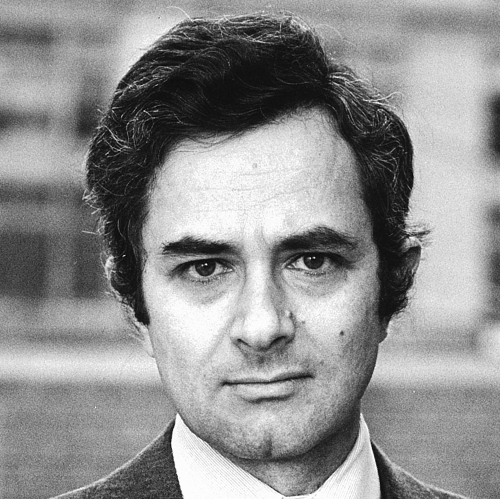
3 months 2 days ago
Usually, when we are told that X is Y we know how it is supposed to be true, but that depends on a conceptual or theoretical background and is not conveyed by the 'is' alone. ... But when the two terms of the identification are very disparate it may not be so clear how it could be true ... and a theoretical framework may have to be supplied to enable us to understand this. Without the framework, an air of mysticism surrounds the identification.This explains the magical flavor of popular presentations of fundamental scientific discoveries, given out as propositions to which one must subscribe without really understanding them. For example, people are now told at an early age that all matter is really energy. But despite the fact that they know what 'is' means, most of them never form a conception of what makes this claim true, because they lack the theoretical background.
▼
Source
source
pp. 176-177.

3 months 1 week ago
As for me, I am mean: that means that I need the suffering of others to exist. A flame. A flame in their hearts. When I am all alone, I am extinguished.
▼
Source
source
Inès, describing her path to Hell, Act 1, sc. 5

1 month 1 week ago
Media, by altering the environment, evoke in us unique ratios of sense perception...When these ratios change, men change.

3 months 1 week ago
I have been merely oppressed by the weariness and tedium and vanity of things lately: nothing stirs me, nothing seems worth doing or worth having done: the only thing that I strongly feel worth while would be to murder as many people as possible so as to diminish the amount of consciousness in the world. These times have to be lived through: there is nothing to be done with them.
▼
Source
source
Letter to Gilbert Murray, March 21, 1903
3 months 1 week ago
Our inventions are wont to be pretty toys, which distract our attention from serious things. They are but improved means to an unimproved end, an end which it was already but too easy to arrive at.
▼
Source
source
pp. 60-61

1 month 3 weeks ago
The key to understanding Crowley is the same as the key to understanding the Marquis de Sade. Both wasted an immense amount of energy screaming defiance at the authority they resented so much, and lacked the insight to see that they were shaking their fists at an abstraction.
▼
Source
source
p. 29
3 months 1 week ago
The entire process seems simple and natural, i.e., possesses the naturalness of a shallow rationalism.
▼
Source
source
Vol. II, Ch. III, p. 95.

1 month 3 weeks ago
We often have need of a profound philosophy to restore to our feelings their original state of innocence, to find our way out of the rubble of things alien to us, to begin to feel for ourselves and to speak ourselves, and I might almost say to exist ourselves. Even if my philosophy does not extend to discovering anything new, it does nevertheless possess the courage to regard as questionable what has long been thought true.
▼
Source
source
B 49
2 months 1 week ago
...my extreme anxiety about the Object of our common sollicitude and my clear and decided conviction, that there is one part of the War, which instead of being postponed and considered in a secondary light, ought to have priority over every other, and requires our most early and our most careful attention; I mean La Vendée. ... This is a War directly against Jacobinism and its principles. It strikes at the Enemy in his weakest and most vulnerable part. At La Vendée with infinitely less Charge, we may make an impression likely to be decisive. This goes to the heart of the Business.
▼
Source
source
Letter to the Home Secretary Henry Dundas (8 October 1793), quoted in P. J. Marshall and John A. Woods (eds.)
3 months 1 week ago
England, it is true, in causing a social revolution in Hindostan, was actuated only by the vilest interests, and was stupid in her manner of enforcing them. But that is not the question. The question is, can mankind fulfil its destiny without a fundamental revolution in the social state of Asia? If not, whatever may have been the crimes of England she was the unconscious tool of history in bringing about that revolution.
▼
Source
source
"The British Rule in India," New York Daily Tribune, 10 June 1853.
2 months 2 days ago
Having given up autonomy, reason has become an instrument.
▼
Source
source
p. 21.
2 months 1 week ago
Labor is a commodity, like any other, and its price is therefore determined by exactly the same laws that apply to other commodities. In a regime of big industry or of free competition - as we shall see, the two come to the same thing - the price of a commodity is, on the average, always equal to its cost of production. Hence, the price of labor is also equal to the cost of production of labor. But, the costs of production of labor consist of precisely the quantity of means of subsistence necessary to enable the worker to continue working, and to prevent the working class from dying out. The worker will therefore get no more for his labor than is necessary for this purpose; the price of labor, or the wage, will, in other words, be the lowest, the minimum, required for the maintenance of life.
1 month 1 week ago
For a good cause, wrongdoing is virtuous.
▼
Source
source
Maxim 207

3 months 1 week ago
It is true: Man is the microcosm: I am my world.
▼
Source
source
Journal entry (12 October 1916), p. 84e

1 month 1 week ago
I am much more open about categories of gender, and my feminism has been about women's safety from violence, increased literacy, decreased poverty and more equality. I was never against the category of men. "As a Jew, I was taught it was ethically imperative to speak up" in Haaretz.
▼
Source
source
24-Feb-10

2 weeks 4 days ago
In ancient Europe, Stoics asserted that a slave could be freer than a master who suffers from self-division. In China, Daoists imagined a type of sage who responded to the flow of events without weighing alternatives. Disciples of monotheistic faiths have believed something similar: freedom, they say, is obeying God's will. What those who follow these traditions want most is not any kind of freedom of choice. Instead, what they long for is freedom from choice.
▼
Source
source
The Faith of Puppets: The Freedom of the Marionette (p. 6-7)

2 months 2 weeks ago
Distance is a great promoter of admiration!
▼
Source
source
As quoted in Thesaurus of Epigrams: A New Classified Collection of Witty Remarks, Bon Mots and Toasts (1942) by Edmund Fuller
4 months 1 day ago
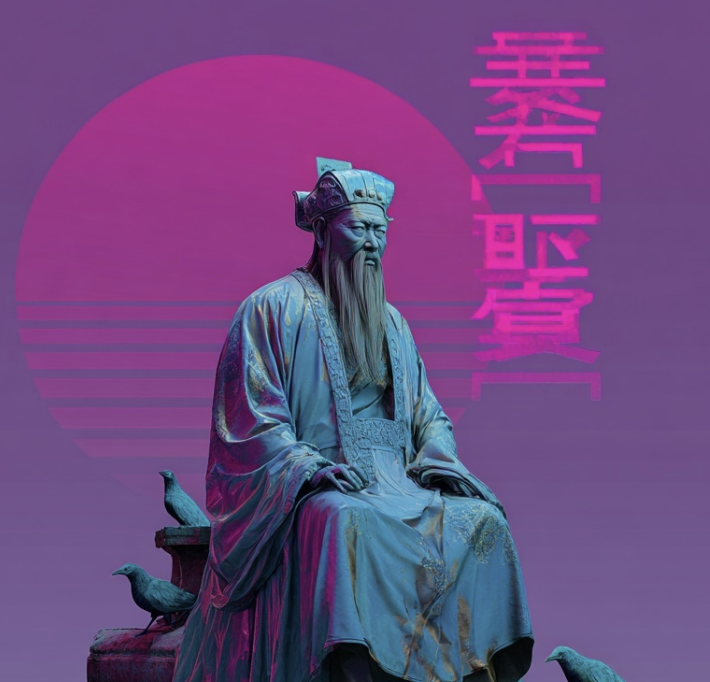
Being in humaneness is good. If we select other goodness and thus are far apart from humaneness, how can we be the wise? The opening phrase of this chapter after which the chapter is named in Chinese.
2 months 1 week ago
As the years pass, the number of those we can communicate with diminishes. When there is no longer anyone to talk to, at last we will be as we were before stooping to a name.

1 month 3 weeks ago
The human soul has need of truth and of freedom of expression. The need for truth requires that intellectual culture should be universally accessible, and that it should be able to be acquired in an environment neither physically remote nor psychologically alien.
2 days ago
The true University of these days is a Collection of Books.
3 months 2 weeks ago
This world, the whole of the planet called earth, is the common country of all who live and breathe upon it.

3 months 2 weeks ago
Though experience be our only guide in reasoning concerning matters of fact; it must be acknowledged, that this guide is not altogether infallible, but in some cases is apt to lead us into errors.
▼
Source
source
Section 10 : Of Miracles Pt. 1
3 months 1 week ago
The less somebody knows and understands himself the less great he is, however great may be his talent. For this reason our scientists are not great.
▼
Source
source
p. 51e
2 months 1 week ago
Nostalgia, more than anything, gives us the shudder of our own imperfection.

1 month 4 weeks ago
The Ottoman Empire whose sick body was not supported by a mild and regular diet, but by a powerful treatment, which continually exhausted it.
▼
Source
source
No. 19. (Usbek writing to Rustan)
3 months 1 week ago
It is certain that we cannot escape anguish, for we are anguish.
2 months 2 days ago
Calvin's theocentric irrationalism eventually revealed itself as the cunning to technocratic reason which had to shape its human material. Misery and the poor laws did not suffice to drive men into the workshops of the early capitalistic era. The new spirit helped to supplement external pressures with a concern for wife and child to which the moral autonomy of the introverted subject in reality was tantamount.
▼
Source
source
p. 34.

3 months 1 week ago
Ignore death up to the last moment; then, when it can't be ignored any longer, have yourself squirted full of morphia and shuffle off in a coma. Thoroughly sensible, humane and scientific, eh?
1 month 5 days ago
Believe me, my friends, you are yet very deficient with regard to the best modes of training your children, or of arranging your domestic concerns.
CivilSimian.com created by AxiomaticPanic, CivilSimian, Kalokagathia