


3 months 3 weeks ago
Now I say this to keep the conscience free from mischievous laws and fictitious sins, and not because I would defend images. Nor would I condemn those who have destroyed them, especially those who destroy divine and idolatrous images. But images for memorial and witness, such as crucifixes and images of saints, are to be tolerated.
▼
Source
source
p. 91

3 months 2 weeks ago
I conceive that the description so often given of a Benthamite, as a mere reasoning machine, though extremely inapplicable to most of those who have been designated by that title, was during two or three years of my life not altogether untrue of me. ...There is nothing very extraordinary in this fact: no youth of the age I then was, can be expected to be more than one thing, and this was the thing I happened to be. Ambition and desire of distinction, I had in abundance; and zeal for what I thought the good of mankind was my strongest sentiment, mixing with and colouring all others. But my zeal was as yet little else, at that period of my life, than zeal for speculative opinions. It had not its root in genuine benevolence, or sympathy with mankind; though these qualities held their due place in my ethical standard. Nor was it connected with any high enthusiasm for ideal nobleness.
▼
Source
source
(pp. 109-110)

1 month 2 weeks ago
What is now happening to the people of the East as of the West is like what happens to every individual when he passes from childhood to adolescence and from youth to manhood. He loses what had hitherto guided his life and lives without direction, not having found a new standard suitable to his age, and so he invents all sorts of occupations, cares, distractions, and stupefactions to divert his attention from the misery and senselessness of his life. Such a condition may last a long time.
▼
Source
source
VI



3 months 2 weeks ago
Every thing in the world is purchased by labour.
▼
Source
source
Part II, Essay 1: Of Commerce

3 months 2 weeks ago
Old-fashioned determinism was what we may call hard determinism. It did not shrink from such words as fatality, bondage of the will, necessitation, and the like. Nowadays, we have a soft determinism which abhors harsh words, and, repudiating fatality, necessity, and even predetermination, says that its real name is freedom; for freedom is only necessity understood, and bondage to the highest is identical with true freedom.
▼
Source
source
The Dilemma of Determinism (1884) republished in The Will to Believe, Dover, 1956, p. 149

2 months 1 day ago
Just as eunuchs will never know aesthetics as applied to the selection of beautiful women, so neither will pure rationalists ever know ethics, nor will they ever succeed in defining happiness, for happiness is a thing that is lived and felt, not a thing that is reasoned or defined.
1 month 1 week ago
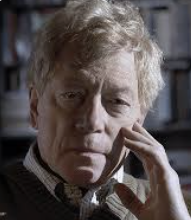
Hayek fails to account either for the passion among intellectuals for equality, or for the resulting success of socialists and their egalitarian successors in driving the liberal idea from the stage of politics. This passion for equality is not a new thing, and indeed pre-dates socialism by many centuries, finding its most influential expression in the writings of Rousseau. There is no consensus as to how equality might be achieved, what it would consist in if achieved, or why it is so desirable in the first place. But no argument against the cogency or viability of the idea has the faintest chance of being listened to or discussed by those who have fallen under its spell.
▼
Source
source
Hayek and conservatism, in Edward Feser (ed.), The Cambridge Companion to Hayek
3 months 2 weeks ago
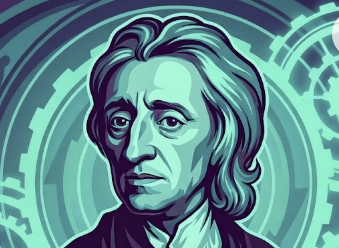
The three great things that govern mankind are reason, passion and superstition. The first governs a few, the two last share the bulk of mankind and possess them in their turns. But superstition most powerfully produces the greatest mischief.
▼
Source
source
Journal entry (16 May 1681), quoted in Maurice Cranston, John Locke: A Biography (1957; 1985), p. 200
2 months 1 day ago
The cult of the Virgin, Mariolatry, which by the gradual elevation of the divine element in the Virgin has led almost to her deification, answers merely to the feeling that God should be a perfect man, that God should include in his nature the feminine element. The progressive exaltation of the Virgin Mary, the work of Catholic piety, having its beginning in the expression Mother of God, ...has culminated in attributing to her the status of co-redeemer and in the dogmatic declaration of her conception without the stain of original sin. Hence she now occupies a position between Humanity and Divinity and nearer Divinity than Humanity. And it has been surmised that in course of time she may perhaps even come to be regarded as yet another personal manifestation of the Godhead.
3 months 1 week ago
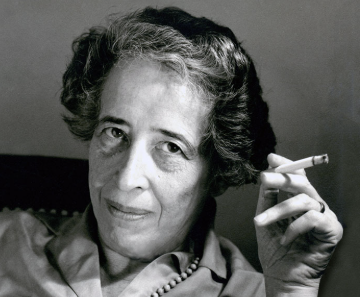
Power and violence are opposites; where the one rules absolutely, the other is absent. Violence appears where power is in jeopardy, but left to its own course it ends in power's disappearance.
▼
Source
source
"On Violence"
4 months 2 weeks ago
But it is clear there is a difference in the ends proposed: for in some cases they are activities, and in others results beyond the mere activities, and where there are certain ends beyond and beside the actions, the results are naturally superior to the activities. Now, as there are numerous kinds of actions and numerous arts and sciences, it follows that the ends are also various. Thus the end of the healing art is health, of ship-building ships, of strategy victory, of economy wealth.
1 month 2 weeks ago
To evoke in oneself a feeling one has once experienced, and having evoked it in oneself, then by means of movements, lines, colors, sounds, or forms expressed through words, so to convey this so that others may experience the same feeling - this is the activity of art.
2 months 2 weeks ago
Poetry must have something in it that is barbaric, vast and wild.
1 month ago
There is no alleviation for the sufferings of mankind except veracity of thought and of action, and the resolute facing of the world as it is, when the garment of make-believe, by which pious hands have hidden its uglier features, is stripped off.
▼
Source
source
Autobiography
3 months 2 weeks ago
[H]e regarded it with the feelings due not to a mere mental delusion, but to a great moral evil. He looked upon it as the greatest enemy of morality: first, by setting up factitious excellencies,-belief in creeds, devotional feelings, and ceremonies, not connected with the good of human kind,-and causing these to be accepted as substitutes for genuine virtues: but above all, by radically vitiating the standard of morals; making it consist in doing the will of a being, on whom it lavishes indeed all the phrases of adulation, but whom in sober truth it depicts as eminently hateful.
▼
Source
source
(p. 40)


3 months 2 weeks ago
It cannot be very difficult to determine who have been the contrivers of this whole mercantile system; not the consumers, we may believe, whose interest has been entirely neglected; but the producers, whose interests has been so carefully attended to; and among this later class our merchants and manufactures have been by far the principal architects. In the mercantile regulations, which have been taken notice of in this chapter, the interest of our manufacturers has been most peculiarly attended to;and the interest, not so much of the consumers, as that of some other sets of producers, has been sacrificed to it.
▼
Source
source
Chapter VIII, p. 721.

3 months 2 weeks ago
Because machines could be made progressively more and more efficient, Western man came to believe that men and societies would automatically register a corresponding moral and spiritual improvement. Attention and allegiance came to be paid, not to Eternity, but to the Utopian future. External circumstances came to be regarded as more important than states of mind about external circumstances, and the end of human life was held to be action, with contemplation as a means to that end. These false and historically, aberrant and heretical doctrines are now systematically taught in our schools and repeated, day in, day out, by those anonymous writers of advertising copy who, more than any other teachers, provide European and American adults with their current philosophy of life. And so effective has been the propaganda that even professing Christians accept the heresy unquestioningly and are quite unconscious of its complete incompatibility with their own or anybody else's religion.
1 month 3 weeks ago
Where cruelty and injustice are concerned, hopelessness is submission, which I believe is immoral.
▼
Source
source
quoted in "Internal Exile" by Pankaj Mishra in The New Yorker, 2021

1 month 1 week ago
We have become like the most primitive Palaeolithic man, once more global wanderers, but information gatherers rather than food gatherers. From now on the source of food, wealth and life itself will be information.
2 months 5 days ago
It is a great good fortune, as Stendhal said, for one "to have his passion as a profession."
▼
Source
source
p. 4

2 months 2 weeks ago
A diversity of opinion upon almost every principle of politics, had indeed drawn a strong line of separation between them and some others. However, they were desirous not to extend the misfortune by unnecessary bitterness; they wished to prevent a difference of opinion on the commonwealth from festering into rancorous and incurable hostility. Accordingly they endeavoured that all past controversies should be forgotten; and that enough for the day should be the evil thereof. There is however a limit at which forbearance ceases to be a virtue. Men may tolerate injuries, whilst they are only personal to themselves. But it is not the first of virtues to bear with moderation the indignities that are offered to our country.
▼
Source
source
Describing the Government's position at a previous time of deep division in British politics in fact over policy on America, Observations on a Late Publication on the Present State of the Nation (1769), page 2

3 months 1 week ago
A proposition is completely logically analyzed if its grammar is made completely clear: no matter what idiom it may be written or expressed in...
▼
Source
source
Philosophical Remarks (1930), Part I (1)

1 month 1 week ago
Faith is the great cop-out, the great excuse to evade the need to think and evaluate evidence. Faith is belief in spite of, even perhaps because of, the lack of evidence.
▼
Source
source
From speech at the Edinburgh International Science Festival, 1992-04-15.
4 months 2 weeks ago
Misfortune shows those who are not really friends.

3 months 2 weeks ago
It must not be supposed that the subjective elements are any less 'real' than the objective elements; they are only less important... because they do not point to anything beyond ourselves...
▼
Source
source
An Outline of Philosophy Ch.15 The Nature of our Knowledge of Physics, 1927

3 months 1 week ago
The very man who has argued you down will sometimes be found, years later, to have been influenced by what you said.
▼
Source
source
Reflections on the Psalms (1958), ch. VII: Connivance, p. 73
3 months 2 weeks ago
I find that the whiter my hair becomes the more ready people are to believe what I say.
▼
Source
source
Bertrand Russell Speaks His Mind (1960), p. 80

3 months 1 week ago
If we compare the third-person attitude of someone who simply says how things stand (this is the attitude of the scientist, for example) with the performative attitude of someone who tries to understand what is said to him (this is the attitude of the interpreter, for example), the implications ... become clear. ... First, interpreters relinquish superiority that observers have by virtue of their privileged position, in that they themselves are drawn, at least potentially, into negotiations about the meaning and validity of utterances. By taking part in communicative action, they accept in principle the same status as those whose utterances they are trying to understand. ... It is impossible to decide a priori who is to learn from whom.
▼
Source
source
p. 26

1 month 3 weeks ago
I've always believed that a writer has got to remain an outsider. If I was offered anything like the Nobel Prize for Literature, I'd find it an extremely difficult conflict because I'd be basically disinclined to accept.
▼
Source
source
Interview with Paul Newman in Abraxas Unbound #7
1 week 1 day ago
What is objective must be common to many minds and consequently transmissible from one to the other, and as this transmission can only come about by... discourse... we are even forced to conclude: no discourse no objectivity.

2 months 1 week ago
In a republic, that paradise of debility, the politician is a petty tyrant who obeys the laws.
3 months 2 weeks ago
In our monogamous part of the world, to marry means to halve one's rights and double one's duties.
▼
Source
source
Vol. 2, Ch. 27, § 370 Variant translation: To marry is to halve your rights and double your duties.

3 months 3 weeks ago
For truth itself has not the privilege to be spoken at all times and in all sorts.
▼
Source
source
Book III, Ch. 13. Of Experience

2 months 3 weeks ago
If melodiously piping flutes sprang from the olive, would you doubt that a knowledge of flute-playing resided in the olive? And what if plane trees bore harps which gave forth rhythmical sounds? Clearly you would think in the same way that the art of music was possessed by plane trees. Why, then, seeing that the universe gives birth to beings that are animate and wise, should it not be considered animate and wise itself?
▼
Source
source
As quoted in De Natura Deorum by Cicero, ii. 8.
1 month 2 weeks ago
But one no longer wonders when one realizes that in the higher classes there is an unerring instinct of what tends to maintain and of what tends to destroy the organization by virtue of which they enjoy their privileges. The fashionable lady had certainly not reasoned out that if there were no capitalists and no army to defend them, her husband would have no fortune, and she could not have her entertainments and her ball-dresses. And the artist certainly does not argue that he needs the capitalists and the troops to defend them, so that they may buy his pictures. But instinct, replacing reason in this instance, guides them unerringly. And it is precisely this instinct which leads all men, with few exceptions, to support all the religious, political, and economic institutions which are to their advantage.
▼
Source
source
Chapter XII, Conclusion-Repent Ye, for the Kingdom of Heaven is at Hand

3 months 4 weeks ago
A thing therefore never returns to nothing.
▼
Source
source
Book I, line 248 (tr. Munro)

3 months 2 weeks ago
I wish to write such rhymes as shall not suggest a restraint, but contrariwise the wildest freedom.
▼
Source
source
June 27, 1839

2 months 2 weeks ago
Americans combine to give fêtes, found seminaries, build churches, distribute books, and send missionaries to the antipodes. Hospitals, prisons, and schools take shape in that way. Finally, if they want to proclaim a truth or propagate some feeling by the encouragement of a great example, they form an association. In every case, at the head of any new undertaking, where in France you would find the government or in England some territorial magnate, in the United States you are sure to find an association. I have come across several types of association in America of which, I confess, I had not previously the slightest conception, and I have often admired the extreme skill they show in proposing a common object for the exertions of very many and in inducing them voluntarily to pursue it.
▼
Source
source
Book Two, Chapter V.
3 months 3 weeks ago
I live from day to day, and content myself with having enough to meet my present and ordinary needs; for the extraordinary, all the provision in the world could not suffice.
▼
Source
source
Ch. 14
3 months 2 weeks ago
The people who are regarded as moral luminaries are those who forego ordinary pleasures themselves and find compensation in interfering with the pleasures of others.
▼
Source
source
Ch. 8: Eastern and Western Ideals of Happiness
1 month 2 weeks ago
Nothing in this book is true.
1 month 1 week ago
If we want to postulate a deity capable of engineering all the organized complexity in the world, either instantaneously or by guiding evolution, that deity must have been vastly complex in the first place. The creationist, whether a naive Bible-thumper or an educated bishop, simply postulates an already existing being of prodigious intelligence and complexity. If we are going to allow ourselves the luxury of postulating organized complexity without offering an explanation, we might as well make a job of it and simply postulate the existence of life as we know it!
▼
Source
source
Chapter 11 "Doomed Rivals" (p. 316)
2 months 1 week ago
To think is to run after insecurity, to be demoralized for grandiose trifles, to immure oneself in abstractions with a martyr's avidity, to hunt up complications the way others pursue collapse or gain. The thinker is by definition keen for torment.
3 months 5 days ago
Any reductionist program has to be based on an analysis of what is to be reduced. If the analysis leaves something out, the problem will be falsely posed.
▼
Source
source
p. 167.
3 months 2 weeks ago
But though empires, like all the other works of men, have all hitherto proved mortal, yet every empire aims at immortality.
▼
Source
source
Chapter II, Part II, p. 896.

4 months 1 week ago
Parmenides: Whatever the subject of your hypothesis, if you suppose that it is or is not, or that it experiences any other affection, you must consider what happens to it and to any other particular things you may choose, and to a greater number and to all in the same way; and you must consider other things in relation to themselves and to anything else you may choose in any instance, whether you suppose that the subject of your hypothesis exists or does not exist, if you are to train yourself completely to see the truth perfectly.

CivilSimian.com created by AxiomaticPanic, CivilSimian, Kalokagathia