


3 months 3 weeks ago
Let me mention another requirement for a better understanding of Holy Scripture. I would suggest that you read those commentators who do not stick so closely to the literal sense. The ones I would recommend most highly after St. Paul himself are Origen, Ambrose, Jerome, and Augustine. Too many of our modern theologians are prone to a literal interpretation, which they subtly misconstrue.
▼
Source
source
p.37

3 months 2 weeks ago
The pursuit of knowledge is, I think, mainly actuated by love of power. And so are all advances in scientific technique. In politics, also, a reformer may have just as strong a love of power as a despot. It would be a complete mistake to decry love of power altogether as a motive. Whether you will be led by this motive to actions which are useful, or to actions which are pernicious, depends upon the social system, and upon your capacities.

1 month 4 weeks ago
More and more it is becoming evident that what the West can most readily give to the East is its science and its scientific outlook. This is transferable from country to country, and from race to race, wherever there is a rational society.
▼
Source
source
Ch. 1: "The Origins of Modern Science", p. 4

3 months 1 week ago
The aspects of things that are most important for us are hidden because of their simplicity and familiarity. (One is unable to notice something - because it is always before one's eyes.) The real foundations of his enquiry do not strike a man at all. Unless that fact has at some time struck him. - And this means: we fail to be struck by what, once seen, is most striking and most powerful.
▼
Source
source
§ 129

4 months 4 days ago
Self-sufficiency is the greatest of all wealth.

3 months 1 week ago
Friendship is the greatest of worldly goods. Certainly to me it is the chief happiness of life. If I had to give a piece of advice to a young man about a place to live, I think I shd. say, 'sacrifice almost everything to live where you can be near your friends.
▼
Source
source
Letter to Arthur Greeves (29 December 1935) - in They Stand Together: The Letters of C. S. Lewis to Arthur Greeves (1914-1963) (1979), p. 477

2 months 2 weeks ago
Times before you, when even the living men were Antiquities; when the living might exceed the dead, and to depart this world, could not be properly said, to go unto the greater number. Dedication
3 months 2 weeks ago
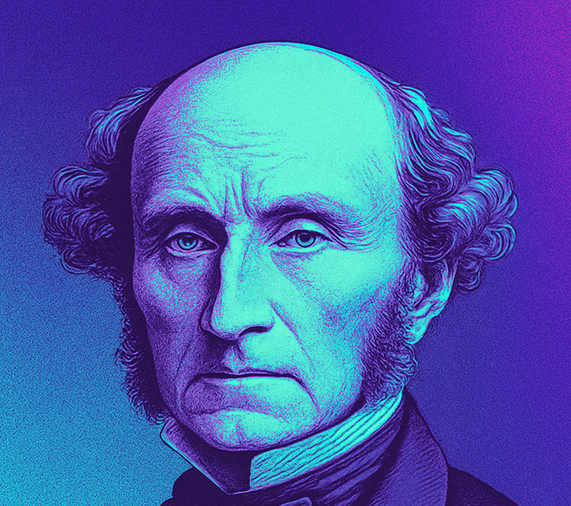
People are not aware how entirely, in former ages, the law of superior strength was the rule of life; how publicly and openly it was avowed, I do not say cynically or shamelessly - for these words imply a feeling that there was something in it to be ashamed of, and no such notion could find a place in the faculties of any person in those ages, except a philosopher or a saint.
▼
Source
source
Ch. 1

2 months 1 week ago
Are ye also yet without understanding? Do not ye yet understand, that whatsoever entereth in at the mouth goeth into the belly, and is cast out into the draught? But those things which proceed out of the mouth come forth from the heart; and they defile the man. For out of the heart proceed evil thoughts, murders, adulteries, fornications, thefts, false witness, blasphemies: These are the things which defile a man: but to eat with unwashen hands defileth not a man.
▼
Source
source
15:16-20 (KJV)

3 months 1 week ago
You take souls for vegetables.... The gardener can decide what will become of his carrots but no one can choose the good of others for them.
▼
Source
source
Heinrich, Act 5, sc. 3
4 days ago
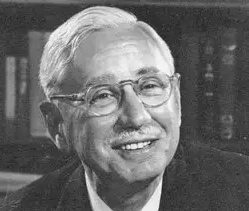
Childhood may be defined as the age of play; therefore some children are never young, and some adults are never old.
▼
Source
source
Ch. 1 : Our life begins
2 months 1 week ago
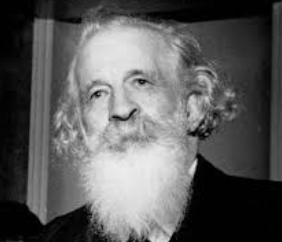
Childhood lasts all through life. It returns to animate broad sections of adult life.... Poets will help us to find this living childhood within us, this permanent, durable immobile world.
▼
Source
source
Introduction, sect. 6
2 months 2 weeks ago
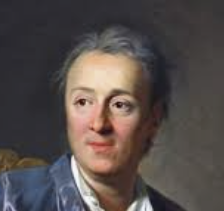
There is no kind of harassment that a man may not inflict on a woman with impunity in civilized societies.
▼
Source
source
"On Women" (1772), as translated in Selected Writings (1966) edited by Lester G. Crocker

2 months 2 weeks ago
Men who undertake considerable things, even in a regular way, ought to give us ground to presume ability.
1 week 4 days ago
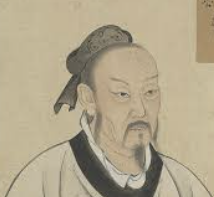
Learning proceeds until death and only then does it stop. ... Its purpose cannot be given up for even a moment. To pursue it is to be human, to give it up to be a beast.
▼
Source
source
Readings in Classical Chinese Philosophy (2001), p. 258
1 month 4 weeks ago
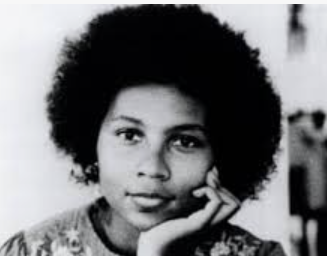
Feminist thought and practice were fundamentally altered when radical women of color and white women allies began to rigorously challenge the notion of "gender" was the primary factor determining a woman's fate. I can still recall how it upset everyone in the first women's studies class I attended-a class where everyone except me was white and female and mostly from privileged backgrounds-when I interrupted a discussion about the origins of domination in which it was argued that when a child is coming out of the womb the factor deemed most important is gender. I stated that when the child of two black parents is coming out of the womb the factor that is considered first is skin color, then gender, because race and gender will determine that child's fate. Looking at the interlocking nature of gender, race, and class was the perspective that changed the direction of feminist thought.
▼
Source
source
p. xiii.

4 months 1 week ago
The fall of Empire, gentlemen, is a massive thing, however, and not easily fought. It is dictated by a rising bureaucracy, a receding initiative, a freezing of caste, a damming of curiosity, a hundred other factors. It has been going on, as I have said, for centuries, and it is too majestic and massive a movement to stop.
1 month 3 weeks ago
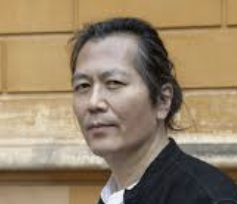
Power is never naked. Rather, it is eloquent.
2 months 1 week ago
He that is not on my side is against me, and he that does not gather with me scatters.
▼
Source
source
12:30, New World Translation

3 months 2 weeks ago
As for 'taking sides' - the choice, it seems to me, is no longer between two users of violence, two systems of dictatorship. Violence and dictatorship cannot produce peace and liberty; they can only produce the results of violence and dictatorship, results with which history has made us only too sickeningly familiar. The choice now is between militarism and pacifism. To me, the necessity of pacifism seems absolutely clear.
▼
Source
source
Authors Take Sides on the Spanish War (1937) edited by Nancy Cunard and published by the Left Review
1 month 3 weeks ago
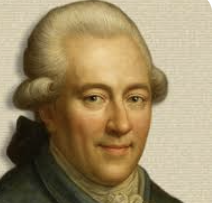
I am convinced we do not only love ourselves in others but hate ourselves in others too.
▼
Source
source
F 54
1 week ago
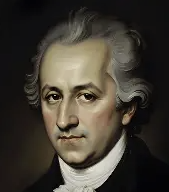
One must be something in order to do something.
▼
Source
source
Conversations with Eckermann
2 months 2 weeks ago
The arbitrary rule of a just and enlightened prince is always bad. His virtues are the most dangerous and the surest form of seduction: they lull a people imperceptibly into the habit of loving, respecting, and serving his successor, whoever that successor may be, no matter how wicked or stupid.
▼
Source
source
Refutation of Helvétius

3 months 2 weeks ago
Poetry teaches the enormous force of a few words, and, in proportion to the inspiration, checks loquacity.
▼
Source
source
Parnassus (1874) Preface

2 months 1 week ago
If I were asked to summarize as briefly as possible my vision of things, to reduce it to its most succinct expression, I should replace words with an exclamation point, a definitive !

2 months 1 week ago
Understanding finds nothing but itself when it seeks the essence behind the appearance of things. 'It is manifest that behind the so-called curtain, which is to hide the inner world, there is nothing to be seen unless we ourselves go behind there, as much in order that we may thereby see, as that there may be something behind there which can be seen.'
▼
Source
source
P. 111
2 months 5 days ago
The disparagement of empirical evidence in favor of a metaphysical world of illusion has its origin in the conflict between the emancipated individual of bourgeois society and his fate within that society.
▼
Source
source
p. 138.
2 months 1 week ago
The mental operation by which one achieves new concepts and which one denotes generally by the inadequate name of induction is not a simple but rather a very complicated process. Above all, it is not a logical process although such processes can be inserted as intermediary and auxiliary links. The principle effort that leads to the discovery of new knowledge is due to abstraction and imagination.
▼
Source
source
3rd edition, p. 318ff, As quoted by Phillip Frank, Philosophy of Science: The Link Between Science and Philosophy
2 months 2 weeks ago
Go further, and require each of them to make a contribution: you will see how many things are still missing, and you will be obliged to get the assistance of a large number of men who belong to different classes, priceless men, but to whom the gates of the academies are nonetheless closed because of their social station. All the members of these learned societies are more than is needed for a single object of human science; all the societies together are not sufficient for a science of man in general.
▼
Source
source
Article on Encyclopedia
3 months 2 weeks ago
We are told that a utilitarian will be apt to make his own particular case an exception to moral rules, and, when under temptation, will see a utility in the breach of a rule, greater than he will see in its observance. But is utility the only creed which is able to furnish us with excuses for evil doing, and means of cheating our own conscience? They are afforded in abundance by all doctrines which recognise as a fact in morals the existence of conflicting considerations; which all doctrines do, that have been believed by sane persons. It is not the fault of any creed, but of the complicated nature of human affairs, that rules of conduct cannot be so framed as to require no exceptions, and that hardly any kind of action can safely be laid down as either always obligatory or always condemnable.
▼
Source
source
Ch. 2
2 months 2 weeks ago
There is only one passion, the passion for happiness.
▼
Source
source
"Will, Freedom"

2 months 2 weeks ago
Fathers and teachers, I ponder, "What is hell?" I maintain that it is the suffering of being unable to love.
▼
Source
source
Book VI, Chapter 3 (trans. Constance Garnett)

5 days ago
Henry of Essex's religion was the Inner Light or Moral Conscience of his own soul; such as is vouchsafed still to all souls of men;-which Inner Light shone here 'through such intellectual and other media' as there were; producing 'Phantasms,' Kircherean Visual-Spectra, according to circumstances! It is so with all men. The clearer my Inner Light may shine, through the less turbid media; the fewer Phantasms it may produce,-the gladder surely shall I be, and not the sorrier! Hast thou reflected, O serious reader, Advanced- Liberal or other, that the one end, essence, use of all religion past, present and to come, was this only: To keep that same Moral Conscience or Inner Light of ours alive and shining.

3 months 2 weeks ago
Paradise on earth is where I am.
▼
Source
source
Le Mondain, 1736

3 months 2 weeks ago
An evil may be real, tho' its cause has no relation to us: It may be real, without being peculiar: It may be real, without shewing itself to others: It may be real, without being constant: And it may be real, without falling under the general rules. Such evils as these will not fail to render us miserable, tho' they have little tendency to diminish pride: And perhaps the most real and the most solid evils of life will be found of this nature.
▼
Source
source
Part 1, Section 6
1 month 1 week ago
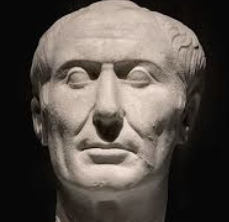
The loss which is unknown is no loss at all.
▼
Source
source
Maxim 38
2 months 2 weeks ago
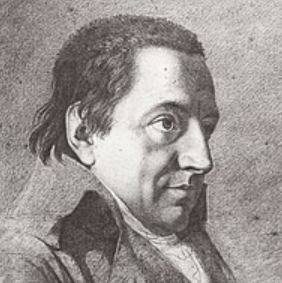
While all these are disturbed and divided by the multifarious objects to which their thoughts must be applied, the Philosopher pursues, in solitary silence and in unbroken concentration of mind, his single and undeviating course towards the Good, the Beautiful, and the True; and that is his daily labour, to which others can only resort at times for rest and refreshment after toil.
▼
Source
source
P. 17
2 months 1 week ago
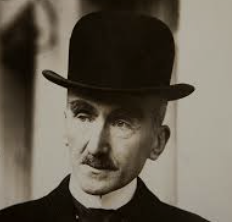
Intuition is a method of feeling one's way intellectually into the inner heart of a thing to locate what is unique and inexpressible in it.
▼
Source
source
Quoted in Georgia O'Keeffe, 1887-1986 : Flowers in the Desert (2000) by Britta Benke, p. 28
2 months 2 weeks ago
The unbought grace of life, the cheap defence of nations, the nurse of manly sentiment and heroic enterprise, is gone!
▼
Source
source
Volume iii, p. 331
2 months 5 days ago
We cannot credit our enjoyment of a flower or of the atmosphere of a room to an autonomous esthetic instinct. Man's esthetic responsiveness relates in its prehistory to various forms of idolatry; his belief in the goodness or sacredness of a thing precedes his enjoyment of its beauty. The applies no less to such concepts as freedom and humanity.
▼
Source
source
p. 36.
1 month 4 weeks ago
To be in touch with senses and emotions beyond conquest is to enter the realm of the mysterious.
▼
Source
source
Chapter 2, Altars of Sacrifice
3 months 4 days ago
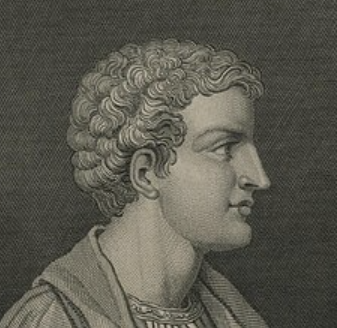
He will through life be master of himself and a happy man who from day to day can have said, "I have lived: tomorrow the Father may fill the sky with black clouds or with cloudless sunshine."
▼
Source
source
Book III, ode xxix, line 41


1 month 1 week ago
The unique innovation of the phonetic alphabet released the Greeks from the universal acoustic spill of tribal societies.
▼
Source
source
(p. 70)
3 months 2 weeks ago
There's only one corner of the universe you can be certain of improving, and that's your own self.
3 weeks 2 days ago
Assume, provisionally at any rate, a utilitarian ethic. The abolitionist project follows naturally, in "our" parochial corner of Hilbert space at least. On its completion, if not before, we should aim to develop superintelligence to maximise the well-being of the fragment of the cosmos accessible to beneficent intervention. And when we are sure - absolutely sure - that we have done literally everything we can do to eradicate suffering elsewhere, perhaps we should forget about its very existence.
▼
Source
source
Quantum Ethics? Suffering in the Multiverse, BLTC Research, 2008
2 months 2 weeks ago
Because half-a-dozen grasshoppers under a fern make the field ring with their importunate chink, whilst thousands of great cattle, reposed beneath the shadow of the British oak, chew the cud and are silent, pray do not imagine that those who make the noise are the only inhabitants of the field; that of course they are many in number; or that, after all, they are other than the little shrivelled, meagre, hopping, though loud and troublesome insects of the hour.
▼
Source
source
Volume iii, p. 344
4 months 1 week ago
I am not a visual person. I have spent so many bounded years in my childhood that I have grown used to having books as my window on reality.

3 months 2 weeks ago
It is a mistake to classify the passions as lawful and unlawful, so as to yield to the one and refuse the other. All alike are good if we are their masters; all alike are bad if we abandon ourselves to them. Nature forbids us to extend our relations beyond the limits of our strength; reason forbids us to want what we cannot get, conscience forbids us, not to be tempted, but to yield to temptation. To feel or not to feel a passion is beyond our control, but we can control ourselves. Every sentiment under our own control is lawful; those which control us are criminal. A man is not guilty if he loves his neighbour's wife, provided he keeps this unhappy passion under the control of the law of duty; he is guilty if he loves his own wife so greatly as to sacrifice everything to that love.

2 months 1 day ago
Rousseau has said in his Emile (book iv.): "Even though philosophers should be in a position to discover the truth, which of them would take any interest in it? Each one knows well that his system is not better founded than the others, but he supports it because it is his. ...The essential thing is to think differently from others. With believers he is an atheist; with atheists he is a believer." How much substantial truth there is in these gloomy confessions of this man of painful sincerity.
CivilSimian.com created by AxiomaticPanic, CivilSimian, Kalokagathia