


4 months 2 days ago
God, the supreme being, is neither circumscribed by space, nor touched by time; he cannot be found in a particular direction, and his essence cannot change. The secret conversation is thus entirely spiritual; it is a direct encounter between God and the soul, abstracted from all material constraints.

3 months 2 weeks ago
I fancy I need more than another to speak (rather than write), with such a formidable tendency to the lapidary style. I build my house of boulders.
▼
Source
source
Letter to Thomas Carlyle, 30 October 1841
2 months 1 week ago
The world must be romanticized. In this way the originary meaning may be found again.
▼
Source
source
As quoted in The Experience of the Foreign : Culture and Translation in Romantic Germany (1992) by Antoine Berman Variant translation: Romanticize the world.

5 days ago
Is not every true Reformer, by the nature of him, a Priest first of all? He appeals to Heaven's invisible justice against Earth's visible force; knows that it, the invisible, is strong and alone strong. He is a believer in the divine truth of things; a seer, seeing through the shows of things; a worshipper, in one way or the other, of the divine truth of things; a Priest, that is. If he be not first a Priest, he will never be good for much as a Reformer.

3 months 2 weeks ago
I take it for granted, when I am invited to lecture anywhere, - for I have had a little experience in that business, - that there is a desire to hear what I think on some subject, though I may be the greatest fool in the country, - and not that I should say pleasant things merely, or such as the audience will assent to; and I resolve, accordingly, that I will give them a strong dose of myself. They have sent for me, and engaged to pay for me, and I am determined that they shall have me, though I bore them beyond all precedent.
▼
Source
source
p. 484

3 months 1 week ago
I felt less alone when I didn't know you yet: I was waiting for the other. I thought only of his strength and never of my weakness. And now here you are, Orestes, it was you. I look at you and I see that we are two orphans.
▼
Source
source
Electra to her brother Orestes, Act 2

1 month 3 weeks ago
Crowley wanted to be a magician because he wanted power -- power over other people.
▼
Source
source
p. 157

3 months 2 weeks ago
Nothing is so common as to imitate one's enemies, and to use their weapons.
▼
Source
source
"Oracles", 1770

3 months 2 weeks ago
The statesman who should attempt to direct people in what manner they ought to employ their capitals, would not only load himself with a most unnecessary attention, but assume an authority which could safely be trusted, not only to no single person, but to no council or senate whatever, and which would nowhere be so dangerous as in the hands of a man who had folly and presumption enough to fancy himself fit to exercise it.
▼
Source
source
Chapter II

3 months 1 week ago
To be an intellectual really means to speak a truth that allows suffering to speak. That is, it creates a vision of the world that puts into the limelight the social misery that is usually hidden or concealed by the dominant viewpoints of a society. "Intellectual" in that sense simply means those who are willing to reflect critically upon themselves as well as upon the larger society and to ascertain whether there is some possibility of amelioration and betterment.
▼
Source
source
"Chekhov, Coltrane, and Democracy: Interview by David Lionel Smith." in The Cornel West Reader. Basic Books. 2000. p. 551. ISBN 978-0-465-09110-2.

1 month 4 weeks ago
Men can be provincial in time, as well as in place.
▼
Source
source
Preface, p. ix

1 month 3 weeks ago
You', the ego, live in your left brain. When we say that man is the only creature who spends 99 per cent of his time inside his own head, we mean, in fact, inside his left cerebral hemisphere. And in the basement of the left hemisphere is the library full of filing cabinets -- the stuffy room that we mistake for reality.
▼
Source
source
p. 9

2 months 1 week ago
Can it really be that for us existence means exile, and nothingness, home?

2 months 1 week ago
Wherever ideas come together they tend to weld into general ideas; and whenever they are generally connected, general ideas govern the connection; and these general ideas are living feelings spread out.

2 months 2 weeks ago
Law and arbitrary power are in eternal enmity. Name me a magistrate, and I will name property; name me power, and I will name protection. It is a contradiction in terms, it is blasphemy in religion, it is wickedness in politics, to say that any man can have arbitrary power. In every patent of office the duty is included. For what else does a magistrate exist? To suppose for power is an absurdity in idea. Judges are guided and governed by the eternal laws of justice, to which we are all subject. We may bite our chains, if we will, but we shall be made to know ourselves, and be taught that man is born to be governed by law; and he that will substitute will in the place of it is an enemy to God.
▼
Source
source
Speech in opening the impeachment of Warren Hastings (16 February 1788), quoted in The Works of the Right Honourable Edmund Burke, Volume the Ninth (1899), p. 458
2 months 1 day ago
I write to thee on this subject, friend, because I am angry at a book which I have just left, which is so large, that it seems to contain universal science, but it hath almost split my head, without teaching me anything.
▼
Source
source
No. 66.

2 months 3 weeks ago
Rest satisfied with doing well, and leave others to talk of you as they please.
▼
Source
source
As quoted in The World's Laconics: Or, The Best Thoughts of the Best Authors (1853) by Everard Berkeley Variant: Rest satisfied with doing well, and leave others to talk of you as they will.
5 days ago
From of old, a thousand thoughts, in his pilgrimings and wanderings, had been in this man: What am I? What is this unfathomable Thing I live in, which men name Universe? What is Life; what is Death? What am I to believe? What am I to do? The grim rocks of Mount Hara, of Mount Sinai, the stern sandy solitudes answered not. The great Heaven rolling silent overhead, with its blue-glancing stars, answered not. There was no answer. The man's own soul, and what of God's inspiration dwelt there, had to answer!

3 months 1 week ago
Discourses are tactical elements or blocks operating in the field of force relations; there can exist different and even contradictory discourses within the same strategy; they can, on the contrary, circulate without changing their form from one strategy to another, opposing strategy.
▼
Source
source
Vol I, pp. 101-102
3 months 2 weeks ago
It is so hard to forget what it is worse than useless to remember! If I am to be a thoroughfare, I prefer that it be of the mountain-brooks, the Parnassian streams, and not the town-sewers. There is inspiration, that gossip which comes to the ear of the attentive mind from the courts of heaven. There is the profane and stale revelation of the bar-room and the police court. The same ear is fitted to receive both communications. Only the character of the hearer determines to which it shall be open, and to which closed. I believe that the mind can be permanently profaned by the habit of attending to trivial things, so that all our thoughts shall be tinged with triviality.
▼
Source
source
p. 492
1 month 1 week ago
McDonald: Now a lot of people find great comfort from religion. Not everybody is as you are - well-favored, handsome, wealthy, with a good job, happy family life. I mean, your life is good - not everybody's life is good, and religion brings them comfort.Dawkins: There are all sorts of things that would be comforting. I expect an injection of morphine would be comforting - it might be more comforting, for all I know. But to say that something is comforting is not to say that it's true.

4 months 3 days ago
Much learning does not teach understanding.
Just now
No social co-operation under the division of labour is possible when some people or unions of people are granted the right to prevent by violence and the threat of violence other people from working. When enforced by violence, a strike in vital branches of production or a general strike are tantamount to a revolutionary destruction of society.

3 months 3 weeks ago
No more useful inquiry can be proposed than that which seeks to determine the nature and the scope of human knowledge. ... This investigation should be undertaken once at least in his life by anyone who has the slightest regard for truth, since in pursuing it the true instruments of knowledge and the whole method of inquiry come to light. But nothing seems to me more futile than the conduct of those who boldly dispute about the secrets of nature ... without yet having ever asked even whether human reason is adequate to the solution of these problems.
▼
Source
source
Rules for the Direction of the Mind in Key Philosophical Writings (1997), pp. 29-30

3 months 2 weeks ago
We are not so absurd as to propose that the teacher should not set forth his own opinions as the true ones and exert his utmost powers to exhibit their truth in the strongest light. To abstain from this would be to nourish the worst intellectual habit of all, that of not finding, and not looking for, certainty in any teacher. But the teacher himself should not be held to any creed; nor should the question be whether his own opinions are the true ones, but whether he is well instructed in those of other people, and, in enforcing his own, states the arguments for all conflicting opinions fairly.
▼
Source
source
"Civilization," London and Westminster Review, April 1836
Just now
The criterion of truth is that it works even if nobody is prepared to acknowledge it.
▼
Source
source
Chapter 5: On Some Popular Errors Concerning the Scope and Method of Economics, § 9 : The Belief in the Omnipotence of Thought

3 months 3 weeks ago
Every man bears the whole stamp of the human condition.
▼
Source
source
Ch. 2
2 months 1 week ago
By all evidence we are in the world to do nothing.
3 months 1 day ago
For many, as Cranton tells us, and those very wise men, not now but long ago, have deplored the condition of human nature, esteeming life a punishment, and to be born a man the highest pitch of calamity; this, Aristotle tells us, Silenus declared when he was brought captive to Midas.
3 months 1 week ago
Humility is the fruit of inner security and wise maturity. To be humble is to be so sure of one's self and one's mission that one can forego calling excessive attention to one's self and status. And, even more pointedly, to be humble is to revel in the accomplishments or potentials of others -- especially those with whom one identifies and to whom one is linked organically.
▼
Source
source
(p38)

4 months 1 week ago
Life continues, and some mornings, weary of the noise, discouraged by the prospect of the interminable work to keep after, sickened also by the madness of the world that leaps at you from the newspaper, finally convinced that I will not be equal to it and that I will disappoint everyone, all I want to do is sit down and wait for evening. This is what I feel like, and sometimes I yield to it.
3 months 2 weeks ago
It is precisely in knowing its limits that philosophy consists.
▼
Source
source
A 727, B 755
5 days ago
Insurrection, never so necessary, is a most sad necessity; and governors who wait for that to instruct them are surely getting into the fatalest courses,-proving themselves sons of Nox and Chaos, of blind Cowardice, not of seeing Valour! How can there be any remedy in insurrection? It is a mere announcement of the disease,-visible now even to sons of Night. Insurrection usually gains little; usually wastes how much. One of its worst kinds of waste, to say nothing of the rest, is that of irritating and exasperating men against each other, by violence done, which is always sure to be injustice done; for violence does even justice unjustly. Book I, Chap. III
3 months 2 weeks ago
We rarely hear, it has been said, of the combinations of masters, though frequently of those of the workman. But whoever imagines, upon this account, that masters rarely combine, is as ignorant of the world as of the subject.
▼
Source
source
Chapter VIII, p. 80.
2 months 2 weeks ago
All law relations are determined by this principle: each one must restrict his freedom by the possibility of the freedom of the other. ... My freedom is limited by the freedom of the other only on condition that he limits his freedom by the conception of mine. Otherwise he is lawless. Hence, if a law-relation is to result from my cognition of the other, the cognition and the consequent limitation of freedom must have been mutual. All law-relation between persons is, therefore, conditioned by their mutual cognition of each other, and is, at the same time, completely determined thereby.
▼
Source
source
P. 173-175
2 months 5 days ago
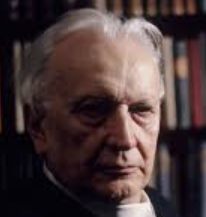
My path was not the normal one of professors of philosophy. I did not intend to become a doctor of philosophy by studying philosophy (I am in fact a doctor of medicine) nor did I by any means, intend originally to qualify for a professorship by a dissertation on philosophy. To decide to become a philosopher seemed as foolish to me as to decide to become a poet. Since my schooldays, however, I was guided by philosophical questions. Philosophy seemed to me the supreme, even the sole, concern of man. Yet a certain awe kept me from making it my profession.

1 month 3 weeks ago
In one sense, I do believe I am "like a man," as Parthe [the writer's sister] says. But how? In having sympathy. ... Women crave for being loved, not for loving. They scream out at you for sympathy all day long, they are incapable of giving any in return, for they cannot remember your affairs long enough to do so. ... They cannot state a fact accurately to another, nor can that other attend to it accurately enough for it to become information. Now is not all this the result of want of sympathy?
▼
Source
source
Letter to Madame Mohl
2 months 1 week ago
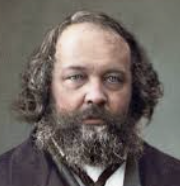
What all other men are is of the greatest importance to me. However independent I may imagine myself to be, however far removed I may appear from mundane considerations by my social status, I am enslaved to the misery of the meanest member of society. The outcast is my daily menace. Whether I am Pope, Czar, Emperor, or even Prime Minister, I am always the creature of their circumstance, the conscious product of their ignorance, want and clamoring. They are in slavery, and I, the superior one, am enslaved in consequence.
▼
Source
source
Solidarity in Liberty: The Workers' Path to Freedom
3 months 3 weeks ago
In true education, anything that comes to our hand is as good as a book: the prank of a page-boy, the blunder of a servant, a bit of table talk- they are all part of the curriculum.
▼
Source
source
The Autobiography of Michel de Montaigne, Chapter III, pg. 24 (Translated by Marvin Lowenthal

1 week 2 days ago
The Republican party has really gone off the rails and has become... in many ways a quasi-authoritarian party because many Republicans are not willing to accept the results of a... free and fair election. ...We've learned a lot from the... House committee that's studying the January 6th insurrection... What that committee has revealed was that this wasn't just a demonstration that spontaneously got out of hand. It was planned very deliberately by the White House as a way of pressuring former vice president Pence to overturn the election and keep Donald Trump in office, and right now a lot of state level Republican legislatures are trying to modify their rules for counting votes in the next election so that they would be in a better position to do what they tried to do in 2020, but didn't get away with... So this is probably the most severe threat to American democracy... since the Civil War... and I'm quite worried about that.
▼
Source
source
43:51:00
3 months 2 weeks ago
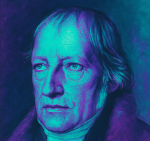
Every philosophy is complete in itself and, like a genuine work of art, contains the totality. Just as the works of Apelles and Sophocles, if Raphael and Shakespeare had known them, should not have appeared to them as mere preliminary exercises for their own work, but rather as a kindred force of the spirit, so, too reason cannot find in its own earlier forms mere useful preliminary exercises for itself.
▼
Source
source
Difference of the Fichtean and Schellingean System of Philosophy, cited in W. Kaufmann, Hegel (1966), p. 49
2 months 1 week ago
Obviously God was a solution, and obviously none so satisfactory that will ever be found again.

2 months 2 weeks ago
Half our days we pass in the shadow of the earth; and the brother of death exacteth a third part of our lives.

3 months 3 weeks ago
Seek first the virtues of the mind; and other things either will come, or will not be wanted.
▼
Source
source
Book II, xxxi
3 months 1 week ago
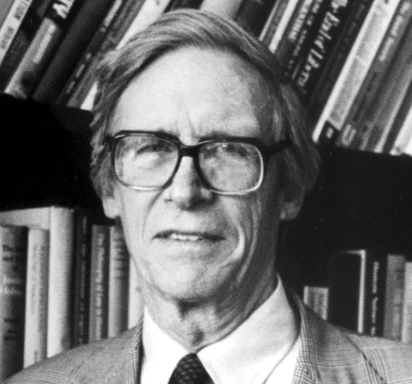
Indeed, it is tempting to suppose that it is self evident that things should be so arranged so as to lead to the most good.
▼
Source
source
Chapter I, Section 5, pg. 25

2 months 2 weeks ago
The primary use of knowledge is for such guidance of conduct under all circumstances as shall make living complete. All other uses of knowledge are secondary.
▼
Source
source
Vol. 3, Ch. XV, The Americans

3 months 2 weeks ago
The effectiveness of political and religious propaganda depends upon the methods employed, not upon the doctrines taught. These doctrines may be true or false, wholesome or pernicious-it makes little or no difference.
▼
Source
source
Chapter 7 (p. 63)
3 months 2 weeks ago
Lands for the purposes of pleasure and magnificence, parks, gardens, public walks, &c. possessions which are every where considered as causes of expence, not as sources of revenue, seem to be the only lands which, in a great and civilized monarchy, ought to belong the crown.
▼
Source
source
Chapter II, Part I, p. 891.
1 week 1 day ago
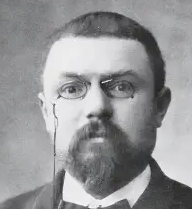
What postulate do we implicitly admit? It is that the duration of two identical phenomena is the same; or... that the same causes take the same time to produce the same effects. ...Is it impossible that experiment may some day contradict our postulate?
CivilSimian.com created by AxiomaticPanic, CivilSimian, Kalokagathia