

1 month 3 days ago
The Puritan hated bear-baiting, not because it gave pain to the bear, but because it gave pleasure to the spectators.
▼
Source
source
Vol. I, ch. 3

2 months 3 weeks ago
Most men and women, by birth or nature, lack the means to advance in wealth and power, but all have the ability to advance in knowledge.
▼
Source
source
As quoted in The Golden Ratio (2002) by Mario Livio

1 month 3 weeks ago
But as I listened to him, I felt a touch of coldness inside of me, as if I had suddenly become aware of the eyes of some dangerous creature. It passed in a moment, but I found myself shuddering.
▼
Source
source
p. 29
1 month 3 weeks ago
A single observation that is inconsistent with some generalization points to the falsehood of the generalization, and thereby 'points to itself'.
▼
Source
source
Chapter 4, Evidence, p. 34.

1 month 4 weeks ago
We think in generalities, but we live in detail. To make the past live, we must perceive it in detail in addition to thinking of it in generalities.
▼
Source
source
"The Education of an Englishman" in The Atlantic Monthly, Vol. 138 (1926), p. 192.


2 months ago
If a young girl is being forced into a brothel she will not talk about her rights. In such a situation the word would sound ludicrously inadequate.
▼
Source
source
p. 63
1 week 2 days ago
Tyrants would distribute largess, a bushel of wheat, a gallon of wine, and a sesterce: and then everybody would shamelessly cry, "Long live the King!" The fools did not realize that they were merely recovering a portion of their own property, and that their ruler could not have given them what they were receiving without having first taken it from them.
▼
Source
source
Part 2

4 months 1 week ago
Moreover, there is a victory and defeat, the first and best of victories, the lowest and worst of defeat, which each man gains or sustains at the hands, not of another, but of himself; this shows that there is a war against ourselves going on within every one of us. Book I Sometimes paraphrased as "The first and best victory is to conquer self".

4 months 1 week ago
Nonsense. You are a military man and should know better. If there is one science into which man has probed continuously and successfully, it is that of military technology. No potential weapon would remain unrealized for ten thousand years.

1 month 2 weeks ago
The Quakers sent me books, from which I learnt how they had, years ago, established beyond doubt the duty for a Christian of fulfilling the command of non-resistance to evil by force, and had exposed the error of the Church's teaching in allowing war and capital punishment.
▼
Source
source
Chapter I, The Doctrine of Non-resistance to Evil by Force has been Professed by a Minority of Men from the Very Foundation of Christianity

4 months 2 weeks ago
Because of the way that myth takes it for granted that miracles are always happening, the waking life of a mythically inspired people the ancient Greeks, for instance more closely resembles a dream than it does the waking world of a scientifically disenchanted thinker.

1 month 1 week ago
The coverage is the war. If there were no coverage, there'd be no war. Yes, the newsmen and the mediamen around the world are actually the fighters, not the soldiers anymore.

3 months 2 weeks ago
Pride is an established conviction of one's own paramount worth in some particular respect, while vanity is the desire of rousing such a conviction in others, and it is generally accompanied by the secret hope of ultimately coming to the same conviction oneself. Pride works from within; it is the direct appreciation of oneself. Vanity is the desire to arrive at this appreciation indirectly, from without.
▼
Source
source
Vol. 1, Ch. 4, § 2
1 month 4 weeks ago
The study of mathematics is apt to commence in disappointment... We are told that by its aid the stars are weighed and the billions of molecules in a drop of water are counted. Yet, like the ghost of Hamlet's father, this great science eludes the efforts of our mental weapons to grasp it.
▼
Source
source
ch. 1.
3 months 2 weeks ago
Dissimulation is innate in woman, and almost as much a quality of the stupid as of the clever.
▼
Source
source
"Of Women"

4 months 4 days ago
Let the superior man never fail reverentially to order his own conduct, and let him be respectful to others and observant of propriety: then all within the four seas, all men are brothers. What has the superior man to do with being distressed because he has no brothers?

3 months 2 weeks ago
Morality is a subject that interests us above all others: We fancy the peace of society to be at stake in every decision concerning it; and 'tis evident, that this concern must make our speculations appear more real and solid, than where the subject is, in a great measure, indifferent to us. What affects us, we conclude can never be a chimera; and as our passion is engag'd on the one side or the other, we naturally think that the question lies within human comprehension; which, in other cases of this nature, we are apt to entertain some doubt of. Without this advantage I never should have ventur'd upon a third volume of such abstruse philosophy, in an age, wherein the greatest part of men seem agreed to convert reading into an amusement, and to reject every thing that requires any considerable degree of attention to be comprehended.
▼
Source
source
Part 1, Section 1
1 month 2 weeks ago
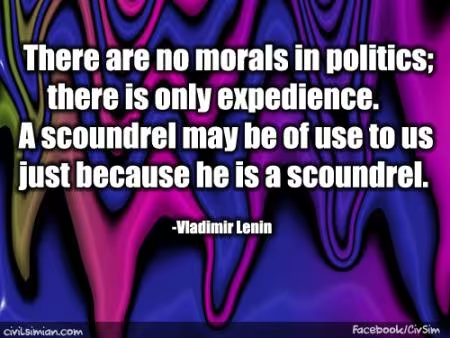
One might think that it must be quite clear to people not deprived of reason, that violence breeds violence; that the only means of deliverance from violence lies in not taking part in it. This method, one would think, is quite obvious. It is evident that a great majority of men can be enslaved by a small minority only if the enslaved themselves take part in their own enslavement. If people are enslaved, it is only because they either fight violence with violence or participate in violence for their own personal profit. Those who neither struggle against violence nor take part in it can no more be enslaved than water can be cut. They can be robbed, prevented from moving about, wounded or killed, but they cannot be enslaved: that is, made to act against their own reasonable will.
▼
Source
source
The Meaning of the Russian Revolution
1 month 3 weeks ago
To hope means to be ready at every moment for that which is not yet born, and yet not become desperate if there is no birth in our lifetime.
1 month 2 weeks ago
After Plotinus, says Schassler, fifteen centuries passed without the slightest scientific interest for the world of beauty and art. ...In reality, nothing of the kind happened. The science of aesthetics ... neither did nor could vanish, because it never existed. ... the Greeks were so little developed that goodness and beauty seemed to coincide. On that obsolete Greek view of life the science of aesthetics was invented by men of the eighteenth century, and especially shaped and mounted in Baumgarten's theory. The Greeks (as anyone may read in Bénard's book on Aristotle and Walter's work on Plato) never had a science of aesthetics.

3 months 2 weeks ago
It is remarkable, that almost all speakers and writers feel it to be incumbent on them, sooner or later, to prove or to acknowledge the personality of God. ... In reading a work on agriculture, we have to skip the author's moral reflections, and the words "Providence" and "He" scattered along the page, to come at the profitable level of what he has to say. What he calls his religion is for the most part offensive to the nostrils. ... There is more religion in men's science than there is science in their religion.
2 months 2 weeks ago
Supreme power rests in the will of all or of the majority.
1 month 2 days ago
Soon fades the spell, soon comes the night: Say will it not be then the same, Whether we played the black or white,Whether we lost or won the game?
▼
Source
source
Sermon in a Churchyard, st. 8 (1825), quoted in The Miscellaneous Writings of Lord Macaulay, Vol. II (1860), p. 390

2 months 6 days ago
Love is the extremely difficult realisation that something other than oneself is real. Love, and so art and morals, is the discovery of reality.
▼
Source
source
"The Sublime and the Good", in the Chicago Review, Vol. 13 Issue 3 (Autumn 1959) p. 51.
1 month 1 week ago
Pornography and obscenity...work by specialism and fragmentation. They deal with a figure without a ground -- situations in which the human factor is suppressed in favor of sensations and kicks.
▼
Source
source
Letter to Clare Westcott, November 26 1975. Letters of Marshall McLuhan, p. 514

3 months 1 week ago
Your crystal? That's silly. Whom do you think you are fooling? Come on, everyone knows that I threw the baby out of the window. The crystal is shattered on earth, and I do not care. I am no longer anything but a skin, and my skin does not belong to you.
▼
Source
source
Estelle to Inès, Act 1, sc. 5

2 months 1 week ago
You have dreamed of setting the world ablaze, and you have not even managed to communicate your fire to words, to light up a single one!
3 months 2 weeks ago
To be a philosopher, that is to say, a lover of wisdom (for wisdom is nothing but truth), it is not enough for a man to love truth, in so far as it is compatible with his own interest, with the will of his superiors, with the dogmas of the church, or with the prejudices and tastes of his contemporaries; so long as he rests content with this position, he is only a philautos, not a philosophos [a lover of self, not a lover of wisdom]. For this title of honor is well and wisely conceived precisely by its stating that one should love the truth earnestly and with one's whole heart, and thus unconditionally and unreservedly, above all else, and, if need be, in defiance of all else. Now the reason for this is the one previously stated that the intellect has become free, and in this state it does not even know or understand any other interest than that of truth.
▼
Source
source
E. Payne, trans. (1974) Vol. 1, pp. 21-22
1 week 3 days ago
Those who have taken the planets to be inanimate bodies without function, limited to traveling geometric paths, resemble idiots who would believe that the brain is inanimate because it has no visible function, or that the stomach is idle because it does no visible work as do our limbs. Civilizees have always been reproached for believing nature to be limited to known effects. If the planets were not animate creatures endowed with functions, God would then appear to be an advocate of laziness. He would have created universes furnished with large inert bodies spending eternity in purposeless meandering as do the idlers in our society.
▼
Source
source
L'attraction passioneé
2 months 6 days ago
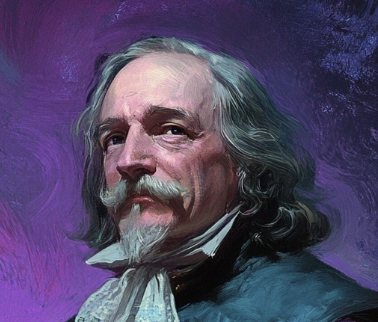
A Covenant not to defend my selfe from force, by force, is always voyd.
▼
Source
source
The First Part, Chapter 14, p. 69
2 months 5 days ago
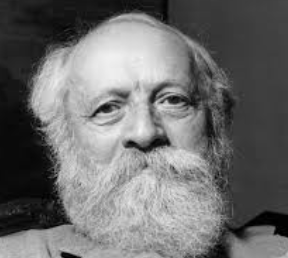
In the ice of solitude man becomes most inexorably a question to himself, and just because the question pitilessly summons and draws into play his most secret life he becomes an experience to himself.
▼
Source
source
p. 150

3 months 2 weeks ago
Human beings are not born identical. There are many different temperaments and constitutions; and within each psycho-physical class one can find people at very different stages of spiritual development. Forms of worship and spiritual discipline which may be valuable for one individual maybe useless or even positively harmful for another belonging to a different class and standing, within that class, at a lower or higher level of development.
1 month 3 days ago
He had a head which statuaries loved to copy, and a foot the deformity of which the beggars in the streets mimicked.
▼
Source
source
p. 313
3 weeks 2 days ago
Nietzsche would say my friends lacked ears.
▼
Source
source
Chapter 8, Performative Reflexivity, p. 133


3 months 2 weeks ago
If I negate powdered wigs, I am still left with unpowdered wigs.

3 months 1 week ago
Science does not rest upon solid bedrock. The bold structure of its theories arises, as it were, above a swamp. It is like a building erected on piles. The piles are driven down from above into the swamp, but not down to any natural or 'given' base; and if we stop driving the piles deeper, it is not because we have reached firm ground. We simply stop when we are satisfied that the piles are firm enough to carry the structure, at least for the time being.
▼
Source
source
Ch. 5 "The Problem of the Empirical Basis", Section 30: Theory and Experiment, p. 94.
3 months 2 weeks ago
It is in vain to dream of a wildness distant from ourselves.
▼
Source
source
August 30, 1856

1 month 2 weeks ago
But it is not to be conceived that mere mechanical causes could give birth to so many regular motions: since the Comets range over all parts of the heavens, in very eccentric orbits. For by that kind of motion they pass easily through the orbs of the Planets, and with great rapidity; and in their aphelions, where they move the slowest, and are detain'd the longest, they recede to the greatest distances from each other, and thence suffer the least disturbance from their mutual attractions.

3 months 4 days ago
There are two forms of knowledge, one genuine, one obscure. To the obscure belong all of the following: sight, hearing, smell, taste, feeling. The other form is the genuine, and is quite distinct from this. [And then distinguishing the genuine from the obscure, he continues:] Whenever the obscure [way of knowing] has reached the minimum sensibile of hearing, smell, taste, and touch, and when the investigation must be carried farther into that which is still finer, then arises the genuine way of knowing, which has a finer organ of thought.


4 months 2 weeks ago
The person who is going to preach ought to live in the Christian thoughts and ideas: they ought to be his daily life. If so, this is the view of Christianity, then you, too, will have eloquence enough and precisely that which is needed when you speak extemporaneously without specific preparation. However, it is fallacious eloquence if someone, without otherwise occupying himself with, without living in these thoughts, once in a while sits down and laboriously collects such thoughts, perhaps in the field of literature, and then works them into a well-composed discourse, which is then committed to memory and delivered superbly, with respect both to voice and diction and gestures.
4 months 2 weeks ago
This is the mistake which I seem to make eternally, that I imagine the sufferings of others as far greater than they really are. Ever since my childhood, the proposition, my greatest dangers lie in pity, has been confirmed again and again.

3 months 1 week ago
Don't say: "They must have something in common, or they would not be called 'games'" but look and see whether there is anything common to all. For if you look at them, you won't see something that is common to all, but similarities, affinities, and a whole series of them at that.
▼
Source
source
To repeat: don't think, but look! § 66
3 days ago
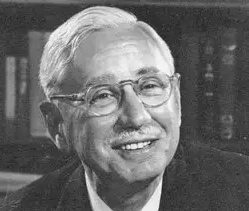
There is no greater drama in human record than the sight of a few Christians, scorned or oppressed by a succession of emperors, bearing all trials with a fierce tenacity, multiplying quietly, building order while their enemies generated chaos, fighting the sword with the word, brutality with hope, and at last defeating the strongest state that history has known. Caesar and Christ had met in the arena, and Christ had won.
▼
Source
source
Chapter 30, part 1, p. 652

2 months 2 weeks ago
No natural boundary seems to be set to the efforts of man; and what is not yet done is only what he has not yet attempted to do. Variant: What is not yet done is only what we have not yet attempted to do.
▼
Source
source
Chapter XVIII.

4 months 2 weeks ago
Thus every action must be due to one or other of seven causes: chance, nature, compulsion, habit, reasoning, anger, or appetite.
CivilSimian.com created by AxiomaticPanic, CivilSimian, Kalokagathia