


2 months 1 week ago
We can know only one thing about God - that he is what we are not. Our wretchedness alone is an image of this. The more we contemplate it, the more we contemplate him.
▼
Source
source
p. 216

4 months 2 weeks ago
I consider one of the most important duties of any scientist the teaching of science to students and to the general public.

3 months 3 weeks ago
Nature is the best posture-master.
▼
Source
source
p. 167
3 months 3 weeks ago
Mark what 'tis his mind aims at in the question, and not what words he expresses it in: and when you have informed and satisfied him in that, you shall see how his thoughts will enlarge themselves, and how by fit answers he may be led on farther than perhaps you could have imagine. For knowledge is grateful to the understanding, as light to the eyes.
▼
Source
source
Sec. 118

2 months 3 weeks ago
Because half-a-dozen grasshoppers under a fern make the field ring with their importunate chink, whilst thousands of great cattle, reposed beneath the shadow of the British oak, chew the cud and are silent, pray do not imagine that those who make the noise are the only inhabitants of the field; that of course they are many in number; or that, after all, they are other than the little shrivelled, meagre, hopping, though loud and troublesome insects of the hour.
▼
Source
source
Volume iii, p. 344

3 months 3 weeks ago
To aspire to be superhuman is a most discreditable admission that you lack the guts, the wit, the moderating judgment to be successfully and consummately human.
▼
Source
source
Spinoza's Worm," p. 75

3 months 3 weeks ago
Gradually the village murmur subsided, and we seemed to be embarked on the placid current of our dreams, floating from past to future as silently as one awakes to fresh morning or evening thoughts.

3 months 2 weeks ago
The problems are dissolved in the actual sense of the word - like a lump of sugar in water.
▼
Source
source
Ch. 9 : Philosophy, p. 183
2 months 3 weeks ago
An act of the mind of which we are conscious, as such, is called freedom. An act without consciousness of action is called spontaneity. I by no means assume as necessary any immediate consciousness of the act, but merely, that on subsequent reflection thou shouldst perceive it to be an act. The higher question of what it is that prevents any such state of indecision, or any consciousness of the act, we may perhaps subsequently be able to solve. This act of the mind is called thought and it is said that thought is a spontaneous act, to distinguish it from sensation, in which the mind is merely receptive and passive.
▼
Source
source
Jane Sinnett, trans 1846 p. 44
3 months 2 weeks ago
What we do is to bring words back from their metaphysical to their everyday use.
▼
Source
source
§ 116

3 months 3 weeks ago
Men did not make the earth... It is the value of the improvements only, and not the earth itself, that is individual property... Every proprietor owes to the community a ground rent for the land which he holds.
▼
Source
source
Agrarian Justice
4 months ago
Do not fight against these harmful spells. For you do not know what God wants with them. You do not know the greater divine plan behind it all.
▼
Source
source
As attributed by Kai Lehmann, curator of the exhibition "Luther und die Hexen" ("Luther and the witches"). (2013) in "Interview with Dr. Kai Lehmann, curator of the exhibition "Luther und die Hexen" ("Luther and the witches")"

3 days ago
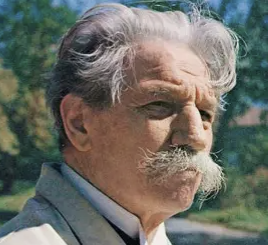
I do not want to frighten you by telling you about the temptations life will bring. Anyone who is healthy in spirit will overcome them. But there is something I want you to realize. It does not matter so much what you do. What matters is whether your soul is harmed by what you do. If your soul is harmed, something irreparable happens, the extent of which you won't realize until it will be too late.
3 months 3 weeks ago
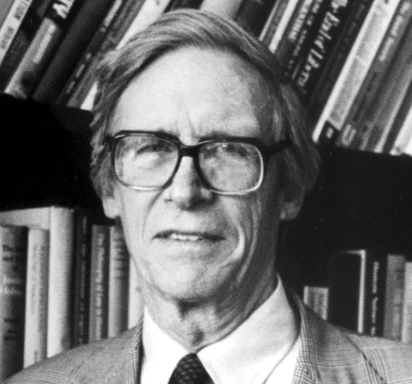
I have tried to set forth a theory that enables us to understand and to assess these feelings about the primacy of justice. Justice as fairness is the outcome: it articulates these opinions and supports their general tendency.
▼
Source
source
Chapter IX, Section 87, p. 586
3 months 3 weeks ago
That what we seek we shall find; what we flee from flees from us.
▼
Source
source
Fate

1 week ago
It was a great deed to conquer Carthage, but a greater deed to conquer death.
3 months 3 weeks ago
We live together, we act on, and react to, one another; but always and in all circumstances we are by ourselves. The martyrs go hand in hand into the arena; they are crucified alone. Embraced, the lovers desperately try to fuse their insulated ecstasies into a single self-transcendence; in vain. By its very nature every embodied spirit is doomed to suffer and enjoy in solitude. Sensations, feelings, insights, fancies - all these are private and, except through symbols and at second hand, incommunicable. We can pool information about experiences, but never the experiences themselves. From family to nation, every human group is a society of island universes.
1 month 2 weeks ago
Bush and bin Laden are really on the same side: the side of faith and violence against the side of reason and discussion. Both have implacable faith that they are right and the other is evil. Each believes that when he dies he is going to heaven. Each believes that if he could kill the other, his path to paradise in the next world would be even swifter. The delusional "next world" is welcome to both of them. This world would be a much better place without either of them.
▼
Source
source
Gordy Slack, "The Atheist" Salon.com
2 months 2 weeks ago
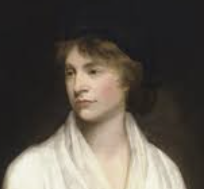
Situation seems to be the mould in which men's characters are formed.
▼
Source
source
Letter 23
2 months 2 weeks ago
Words ... are little houses, each with its cellar and garret. Common sense lives on the ground floor, always ready to engage in 'foreign commerce' on the same level as the others, as the passers-by, who are never dreamers. To go upstairs in the word house is to withdraw step by step; while to go down to the cellar is to dream, it is losing oneself in the distant corridors of an obscure etymology, looking for treasures that cannot be found in words. To mount and descend in the words themselves-this is a poet's life. To mount too high or descend too low is allowed in the case of poets, who bring earth and sky together.
▼
Source
source
Ch. 6
2 months 2 weeks ago
The world is a perpetual caricature of itself; at every moment it is the mockery and the contradiction of what it is pretending to be.
▼
Source
source
"Dickens"

2 months 2 weeks ago
If I used to ask myself, over a coffin, "what good did it do the occupant to be born?" I now put the same question about anyone alive.
2 weeks 1 day ago
The true, prescriptive artist strives after artistic truth; the lawless artist, following blind instinct, after an appearance of naturalness. The one leads to the highest peaks of art, the other to its lowest depths.
▼
Source
source
Propylaea (1798) Introduction

2 months 3 weeks ago
How it could come to pass I do not know, but I remember it clearly. The dream embraced thousands of years and left in me only a sense of the whole. I only know that I was the cause of their sin and downfall. Like a vile trichina, like a germ of the plague infecting whole kingdoms, so I contaminated all this earth, so happy and sinless before my coming. They learnt to lie, grew fond of lying, and discovered the charm of falsehood.

1 week 6 days ago
There is endless merit in a man's knowing when to have done.
▼
Source
source
Dr. Francia (1845).

3 months 2 weeks ago
Generally speaking, all the authorities exercising individual control function according to a double mode; that of binary division and branding (mad/sane; dangerous/harmless; normal/abnormal); and that of coercive assignment, of differential distribution (who he is; where he must be; how he is to be characterized' how he is to be recognized' how a constant surveillance is to be exercised over him in a individual way, etc.).
▼
Source
source
Part Four, Complete and austere institutions

3 months 3 weeks ago
Real life is, to most men, a long second-best, a perpetual compromise between the ideal and the possible; but the world of pure reason knows no compromise, no practical limitations, no barrier to the creative activity embodying in splendid edifices the passionate aspiration after the perfect from which all great work springs. Remote from human passions, remote even from the pitiful facts of nature, the generations have gradually created an ordered cosmos, where pure thought can dwell as in its natural home, and where one, at least, of our nobler impulses can escape from the dreary exile of the actual world.
2 months 2 weeks ago
It is no longer a question anywhere of inventing interconnections from out of our brains, but of discovering them in the facts.
▼
Source
source
Ludwig Feuerbach and the End of Classical German Philosophy
4 months 1 week ago
Charity is no substitute for justice withheld.
▼
Source
source
As quoted in Majority of One (1957) by Sydney J. Harris, p. 283
2 months 2 days ago
Prejudices are so to speak the mechanical instincts of men: through their prejudices they do without any effort many things they would find too difficult to think through to the point of resolving to do them.
▼
Source
source
A 58

3 months 3 weeks ago
I entered the [Communist] Party because its cause was just and I will leave it when it ceases to be just.
▼
Source
source
Hugo to Hoederer, Act 5, sc. 3

2 months 2 weeks ago
By virtue of the way it has organized its technological base, contemporary industrial society tends to be totalitarian. For "totalitarian" is not only a terroristic political coordination of society, but also a non-terroristic economic-technical coordination which operates through the manipulation of needs by vested interests.
▼
Source
source
p. 5
3 months 3 weeks ago
Deep in the man sits fast his fate To mould his fortunes, mean or great.
▼
Source
source
Fate
2 months 2 weeks ago
In all probability, the proletarian revolution will transform existing society gradually and will be able to abolish private property only when the means of production are available in sufficient quantity. What will be the course of this revolution? Above all, it will establish a democratic constitution, and through this, the direct or indirect dominance of the proletariat.
3 months 3 weeks ago
Our concern is solely with the basic structure of society and its major institutions and therefore with the standard cases of social justice.
▼
Source
source
Chapter II, Section 10, pg. 58
3 months 3 weeks ago
There are two classes of poets - the poets by education and practice, these we respect; and poets by nature, these we love.
▼
Source
source
Parnassus (1874) Preface
3 months 3 weeks ago
Self-command is the main elegance.
▼
Source
source
p. 205
4 months 1 week ago
It is no advantage to be near the light if the eyes are closed.
▼
Source
source
p. 607

3 months 2 weeks ago
Justice is what love looks like in public.
▼
Source
source
Brother West (2009), p. 232

1 month 2 weeks ago
Chinese script is not visual but iconic and tactile. It does not disturb the tribal bonds.
▼
Source
source
(p. 72)
1 month 2 weeks ago
The population of the US is nearly 300 million, including many of the best educated, most talented, most resourceful, humane people on earth. By almost any measure of civilised attainment, from Nobel prize-counts on down, the US leads the world by miles. You would think that a country with such resources, and such a field of talent, would be able to elect a leader of the highest quality. Yet, what has happened? At the end of all the primaries and party caucuses, the speeches and the televised debates, after a year or more of non-stop electioneering bustle, who, out of that entire population of 300 million, emerges at the top of the heap? George Bush.
▼
Source
source
"Bin Laden's victory " The Guardian
2 months 4 days ago
The martyr sacrifices herself (himself in a few instances) entirely in vain. Or rather not in vain; for she (or he) makes the selfish more selfish, the lazy more lazy, the narrow narrower.
▼
Source
source
As quoted in Forever Yours (1990) by Martha Vicinus and Bea Nergaard , p. 275. Letter, c. 1867, to the scholar Benjamin Jowett.

4 months 3 weeks ago
When someone hides something behind a bush and looks for it again in the same place and finds it there as well, there is not much to praise in such seeking and finding. Yet this is how matters stand regarding seeking and finding "truth" within the realm of reason. If I make up the definition of a mammal, and then, after inspecting a camel, declare "look, a mammal' I have indeed brought a truth to light in this way, but it is a truth of limited value. That is to say, it is a thoroughly anthropomorphic truth which contains not a single point which would be "true in itself" or really and universally valid apart from man. At bottom, what the investigator of such truths is seeking is only the metamorphosis of the world into man.
3 months 3 weeks ago
Rights are, then, the fruits of the law, and of the law alone. There are no rights without law-no rights contrary to the law-no rights anterior to the law. Before the existence of laws there may be reasons for wishing that there were laws-and doubtless such reasons cannot be wanting, and those of the strongest kind;-but a reason for wishing that we possessed a right, does not constitute a right. To confound the existence of a reason for wishing that we possessed a right, with the existence of the right itself, is to confound the existence of a want with the means of relieving it. It is the same as if one should say, everybody is subject to hunger, therefore everybody has something to eat.
▼
Source
source
Pannomial Fragments (c. 1831), quoted in The Works of Jeremy Bentham, Vol. III (1838), p. 221
2 months 2 weeks ago
Movement in direct experience is alteration in the qualities of objects, and space as experienced is an aspect of this qualitative change. Up and down, back and front, to and fro, this side and that- or right and left- here and there, feel differently. The reason they do is that they are not static points in something itself static, but objects in movement, qualitative changes of value. For "back" is short for backwards and front for forwards. So with velocity. Mathematically there are no such things as fast and slow. They mark simply greater and less on a number scale. As experienced they are qualitatively as unlike as noise and silence, heat and cold, black and white. To be forced to wait a long time for an important event to happen is a length very different from that measured by the movements of the hands of a clock. It is something qualitative.
2 months 1 week ago
Intelligence is quickness to apprehend as distinct from ability, which is capacity to act wisely on the thing apprehended.
▼
Source
source
p. 135; Ch. 17, December 15, 1939.
3 months 3 weeks ago
At the present stage in the development of the art of war, there is only way of coping with them, and that is to keep out of war. In all the densely populated countries of Western Europe, it seems almost certain that, within a few days of the outbreak of war, panic will seize the surviving inhabitants of the capitals and the industrial areas, leading to anarchy, starvation, and paralysis of all warlike effort. The only sensible course, therefore, is to prevent war if possible, and to remain neutral if war occurs.
▼
Source
source
Letter to The New Statesman and Nation (10 August 1935)

1 month 3 weeks ago
In the spiritual realm nothing is indifferent: what is not useful is harmful.
▼
Source
source
VII
CivilSimian.com created by AxiomaticPanic, CivilSimian, Kalokagathia