

2 months ago
I do not think discursively. It is not so much that I arrive at truth as that I take my start from it.
▼
Source
source
Introduction
2 months 4 days ago
We cannot avoid conflict, conflict with society, other individuals and with oneself. Conflicts may be the sources of defeat, lost life and a limitation of our potentiality but they may also lead to greater depth of living and the birth of more far-reaching unities, which flourish in the tensions that engender them.
▼
Source
source
As quoted in Turning Conflict Into Profit : A Roadmap for Resolving Personal and Organizational Disputes (2005) by Larry Axelrod and Rowland Johnson
3 months 3 weeks ago
I suppose the body to be nothing but a statue or machine made of earth, which God forms with the explicit intention of making it as much as possible like us.
▼
Source
source
Descartes, René (1662). Le Homme (The Treatise on Man), XI:119, CSM I:99 in The Stanford Encyclopedia of Philosophy: "Descartes and the Pineal Gland - 2.1 "The Treatise of Man".

5 days ago
Mark at present so much; what the essence of Scandinavian and indeed of all Paganism is: a recognition of the forces of Nature as godlike, stupendous, personal Agencies,-as Gods and Demons. Not inconceivable to us. It is the infant Thought of man opening itself, with awe and wonder, on this ever-stupendous Universe. To me there is in the Norse system something very genuine, very great and manlike. A broad simplicity, rusticity, so very different from the light gracefulness of the old Greek Paganism, distinguishes this Scandinavian System. It is Thought; the genuine Thought of deep, rude, earnest minds, fairly opened to the things about them; a face-to-face and heart-to-heart inspection of the things,-the first characteristic of all good Thought in all times. Not graceful lightness, half-sport, as in the Greek Paganism; a certain homely truthfulness and rustic strength, a great rude sincerity, discloses itself here.
3 months 4 days ago
Beginning to reason is like stepping onto an escalator that leads upward and out of sight. Once we take the first step, the distance to be traveled is independent of our will and we cannot know in advance where we shall end.
▼
Source
source
Chapter 4, Reason, p. 88

4 months 1 week ago
Art is the activity that exalts and denies simultaneously. "No artist tolerates reality," says Nietzsche.
3 months 4 days ago
The goal of maximizing the welfare of all may be better achieved by an ethic that accepts our inclinations and harnesses them so that, taken as a whole, the system works to everyone's advantage.
▼
Source
source
Chapter 6, A New Understanding Of Ethics, p. 157
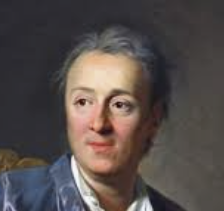
2 months 2 weeks ago
It is said that desire is a product of the will, but the converse is in fact true: will is a product of desire.
▼
Source
source
"Will, Freedom"

3 months 3 weeks ago
I want to be seen here in my simple, natural, ordinary fashion, without straining or artifice; for it is myself that I portray...I am myself the matter of my book. To the Reader
▼
Source
source
tr. Donald M. Frame, 1957
4 months 1 week ago
If Nietzsche and Hegel serve as alibis to the masters of Dachau and Karaganda, that does not condemn their entire philosophy. But it does lead to the suspicion that one aspect of their thought, or of their logic, can lead to these appalling conclusions.

3 months 2 weeks ago
Undoubtedly we have no questions to ask which are unanswerable. We must trust the perfection of the creation so far, as to believe that whatever curiosity the order of things has awakened in our minds, the order of things can satisfy. Every man's condition is a solution in hieroglyphic to those inquiries he would put. He acts it as life, before he apprehends it as truth.
▼
Source
source
Introduction

3 months 2 weeks ago
The real and effectual discipline which is exercised over a workman is that of his customers. It is the fear of losing their employment which restrains his frauds and corrects his negligence.
▼
Source
source
Chapter X, Part II.
2 months 2 weeks ago
Bad company is as instructive as licentiousness. One makes up for the loss of one's innocence with the loss of one's prejudices.
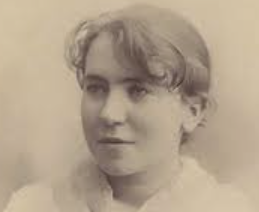
1 month 3 weeks ago
A young delicate tree, that is being clipped and cut by the gardener in order to give it an artificial form, will never reach the majestic height and the beauty as when allowed to grow in nature and freedom.
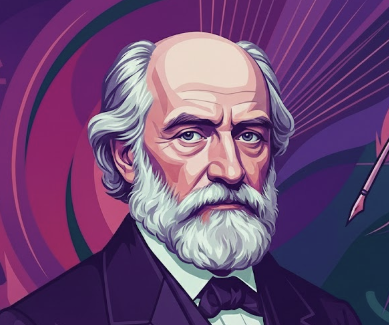
3 months 2 weeks ago
No doubt, when modesty was made a virtue, it was a very advantageous thing for the fools, for everybody is expected to speak of himself as if he were one.
▼
Source
source
Vol. 1, Ch. 3, Section 2: Pride
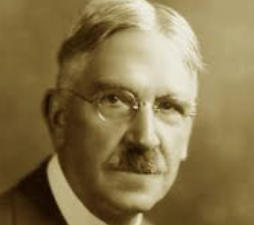
2 months 5 days ago
In most cases the esthetic objection to doses of morals and of economic or political propaganda in works of art will be found upon analysis to reside in the over-weighing of certain values at the expense of others until, except for those in a similar stare of one-sides enthusiasm, weariness rather than refreshment sets in.
▼
Source
source
p. 188

3 months 1 week ago
Reality is harsh to the feet of shadows.
▼
Source
source
Ch. 5
4 months 1 week ago
I do see one large and grievous kind of ignorance, separate from the rest, and as weighty as all the other parts put together. Thinking that one knows a thing when one does not know it. Through this, I believe, all the mistakes of the mind are caused in all of us.

4 months 1 day ago
Man reaches the highest point of his knowledge about God when he knows that he knows him not, inasmuch as he knows that that which is God transcends whatsoever he conceives of him.
▼
Source
source
q. 7, art. 5, ad 14

3 months 2 weeks ago
A spectre is haunting Europe; the spectre of Communism.
▼
Source
source
Preamble, paragraph 1, line 1.
1 month 2 weeks ago
Photography and cinema contributed in large part to the secularization of history, to fixing it in its visible, "objective" form at the expense of the myths that once traversed it. Today cinema can place all its talent, all its technology in the service of reanimating what it itself contributed to liquidating. It only resurrects ghosts, and it itself is lost therein.
▼
Source
source
"History: A Retro Scenario," p. 48
3 months 2 weeks ago
It is unjust that the whole of society should contribute towards an expence of which the benefit is confined to a part of the society.
▼
Source
source
Chapter I, Part IV, Conclusion, p. 881.

2 months 6 days ago
But yet they that have no Science, are in better, and nobler condition with their naturall Prudence; than men, that by their mis-reasoning, or by trusting them that reason wrong, fall upon false and absurd generall rules.
▼
Source
source
The First Part, Chapter 5, p. 21
3 months 2 weeks ago
A very poor man may be said in some sense to have a demand for a coach and six; he might like to have it; but his demand is not an effectual demand, as the commodity can never be brought to market in order to satisfy it.
▼
Source
source
Chapter VII, p. 67.
1 week 1 day ago
It is by logic that we prove, but by intuition that we discover. To know how to criticize is good, to know how to create is better.
▼
Source
source
Part II. Ch. 2 : Mathematical Definitions and Education, p. 129
4 months 1 week ago
Civilizations have always been pyramidal in structure. As one climbs toward the apex of the social edifice, there is increased leisure and increasing opportunity to pursue happiness. As one climbs, one finds also fewer and fewer people to enjoy this more and more. Invariably, there is a preponderance of the dispossessed. And remember this, no matter how well off the bottom layers of the pyramid might be on an absolute scale, they are always dispossessed in comparison with the apex.So there is always social friction in ordinary human societies. The action of social revolution and the reaction of guarding against such revolution or combating it once it has begun are the causes of a great deal of the human misery with which history is permeated.
2 months 1 week ago
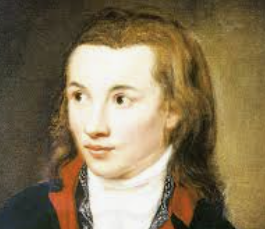
Morality must be the heart of our existence, if it is to be what it wants to be for us. ... The highest form of philosophy is ethics. Thus all philosophy begins with "I am." The highest statement of cognition must be an expression of that fact which is the means and ground for all cognition, namely, the goal of the I.
▼
Source
source
Fichte Studies § 556

3 months 2 weeks ago
If reason (I mean abstract reason, derived from inquiries a priori) be not alike mute with regard to all questions concerning cause and effect, this sentence at least it will venture to pronounce, That a mental world, or universe of ideas, requires a cause as much, as does a material world, or universe of objects; and, if similar in its arrangement, must require a similar cause. For what is there in this subject, which should occasion a different conclusion or inference? In an abstract view, they are entirely alike; and no difficulty attends the one supposition, which is not common to both of them.
▼
Source
source
Philo to Cleanthes, Part IV

1 month 1 week ago
It's misleading to suppose there's any basic difference between education & entertainment. This distinction merely relieves people of the responsibility of looking into the matter.
▼
Source
source
(1957) from "Classroom Without Walls", Explorations Vol. 7, 1957; reprinted in Explorations in Communication ed. E. Carpenter & M. McLuhan, (Boston: Beacon, 1960); and again in McLuhan: Hot and Cool ed. G. E. Stearn (NY: Dial, 1967).

3 months 1 week ago
Real culture lives by sympathies and admirations, not by dislikes and disdain - under all misleading wrappings it pounces unerringly upon the human core.
▼
Source
source
The Social Value of the College-Bred

3 months 1 week ago
I believe it might interest a philosopher, one who can think himself, to read my notes. For even if I have hit the mark only rarely, he would recognize what targets I had been ceaselessly aiming at.
4 months 1 week ago
If the only significant history of human thought were to be written, it would have to be the history of its successive regrets and its impotences.

2 months 2 weeks ago
I have no idea of a liberty unconnected with honesty and justice. Nor do I believe, that any good constitutions of government, or of freedom, can find it necessary for their security to doom any part of the people to a permanent slavery. Such a constitution of freedom, if such can be, is in effect no more than another name for the tyranny of the strongest faction; and factions in republics have been, and are, full as capable as monarchs, of the most cruel oppression and injustice.
▼
Source
source
Speech at Bristol Previous to the Election (6 September 1780), quoted in The Works of the Right Honourable Edmund Burke, Vol. II (1855), p. 163

3 months 2 weeks ago
The average man's opinions are much less foolish than they would be if he thought for himself: in science, at least, his respect for authority is on the whole beneficial.
▼
Source
source
On Education, Especially in Early Childhood (1926), Ch. 2: The Aims of Education, p. 63
3 months 3 weeks ago
I have seen no more evident monstrosity and miracle in the world than myself.
▼
Source
source
Ch. 11

1 week 3 days ago
A questioner asks: If human nature is evil, then where do ritual and rightness come from? I reply: ritual and rightness are always created by the conscious activity of the sages.
▼
Source
source
Sources of Chinese Tradition (1999), vol. 1, p. 180
1 month 2 weeks ago
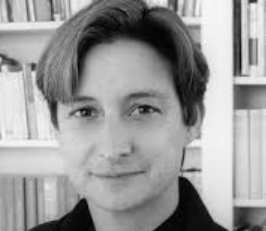
We do not have to love one another to be obligated to build a world in which all lives are sustainable. The right to persist can only be understood as a social right, as the subjective instance of a social and global obligation we bear toward one another.
▼
Source
source
p. 64
1 month 3 weeks ago
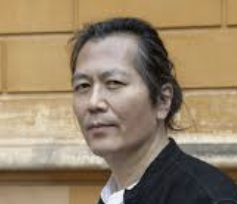
Time begins to emit a scent when it gains duration; when it is given a narrative or deep tension; when it gains depth and breadth, even space.

3 months 2 weeks ago
I am not sure but I should betake myself in extremities to the liberal divinities of Greece, rather than to my country's God. Jehovah, though with us he has acquired new attributes, is more absolute and unapproachable, but hardly more divine, than Jove. He is not so much of a gentleman, not so gracious and catholic, he does not exert so intimate and genial an influence on nature, as many a god of the Greeks.
3 months 2 weeks ago
To be without some of the things you want is an indispensable part of happiness.
4 months 1 week ago
"I conclude that all is well," says Oedipus, and that remark is sacred. It echoes in the wild and limited universe of man. It teaches that all is not, has not been, exhausted. It drives out of this world a god who had come into it with dissatisfaction and a preference for futile suffering. It makes of fate a human matter, which must be settled among men.
3 months 2 weeks ago
Genius borrows nobly. When Shakespeare is charged with debts to his authors, Landor replies: "Yet he was more original than his originals. He breathed upon dead bodies and brought them into life."
▼
Source
source
Quotation and Originality

1 month 4 weeks ago
Attention is the rarest and purest form of generosity.
▼
Source
source
From an April 13, 1942 letter to poet Joë Bousquet, published in their collected correspondence

2 months 1 week ago
When we know what words are worth, the amazing thing is that we try to say anything at all, and that we manage to do so. This requires, it is true, a supernatural nerve.

1 week 2 days ago
No place in the world has had a comparable role to that of the nameless mountain or valley where mankind first attained self-consciousness. Let us be proud ... of the old patriarchs who, at the foot of Imaiis, laid the foundations of what we are and of what we shall become.
▼
Source
source
Poliakov, L. (1974). The Aryan myth : a history of racist and nationalist ideas in Europe page 208
3 months 3 days ago
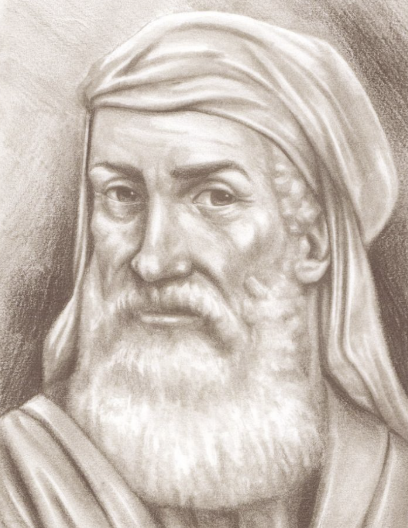
Fortunate is he who has acquired a wealth of divine understanding, but wretched the one whose interest lies in shadowy conjectures about divinities.
▼
Source
source
fr. 132
3 months 1 week ago
Form displays the relation itself as the state of original comportment toward beings, the festive state in which the being itself in its essence is celebrated and thus for the first time placed in the open.
▼
Source
source
p. 119
CivilSimian.com created by AxiomaticPanic, CivilSimian, Kalokagathia