


3 months 2 weeks ago
The mass of men lead lives of quiet desperation. What is called resignation is confirmed desperation.
▼
Source
source
p. 10
3 months 3 weeks ago
It may be observed, that provinces amid the vicissitudes to which they are subject, pass from order into confusion, and afterward recur to a state of order again; for the nature of mundane affairs not allowing them to continue in an even course, when they have arrived at their greatest perfection, they soon begin to decline. In the same manner, having been reduced by disorder, and sunk to their utmost state of depression, unable to descend lower, they, of necessity, reascend; and thus from good they gradually decline to evil, and from evil again return to good. The reason is, that valor produces peace; peace, repose; repose, disorder; disorder, ruin; so from disorder order springs; from order virtue, and from this, glory and good fortune.
▼
Source
source
Book V, Chapter 1
4 months 2 weeks ago
May not we then confidently pronounce that man happy who realizes complete goodness in action, and is adequately furnished with external goods? Or should we add, that he must also be destined to go on living not for any casual period but throughout a complete lifetime in the same manner, and to die accordingly, because the future is hidden from us, and we conceive happiness as an end, something utterly and absolutely final and complete? If this is so, we shall pronounce those of the living who possess and are destined to go on possessing the good things we have specified to be supremely blessed, though on the human scale of bliss.
4 months 3 days ago
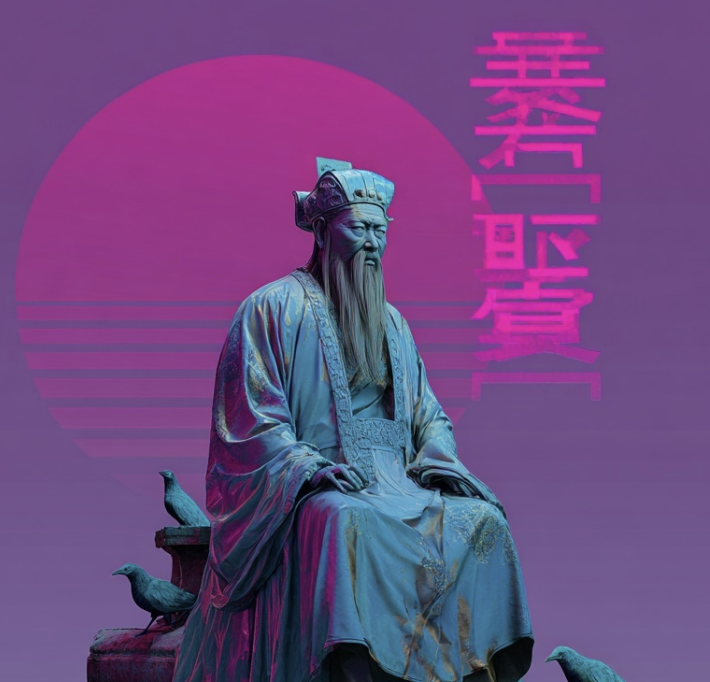
It is soft, smooth and shining like intelligence. Its edges seem sharp but do not cut like justice. It hangs down to the ground like humility. When struck, it gives a clear, ringing sound like music. The strains in it are not hidden and add to its beauty like truthfulness.' What imagination! Confucius extolled Jade's virtues this way.

4 months 1 week ago
The Autarch maintained his indifferent calm, but a certain lack of certainty was gathering, and he did not like to experience a lack of certainty. He liked nothing which made him aware of limitations. An Autarch should have no limitations, and on Lingane he had none that natural law did not impose.

3 months 2 weeks ago
First of all: what is work? Work is of two kinds: first, altering the position of matter at or near the earth's surface relatively to other such matter; second, telling other people to do so. The first kind is unpleasant and ill paid; the second is pleasant and highly paid.
▼
Source
source
Ch. 1: In Praise of Idleness

2 months 6 days ago
He that dippeth his hand with me in the dish, the same shall betray me. The Son of man goeth as it is written of him: but woe unto that man by whom the Son of man is betrayed! it had been good for that man if he had not been born.
▼
Source
source
26:23-24 (KJV)

3 months 2 weeks ago
All mortals are equal; it is not their birth,But virtue itself that makes the difference.
▼
Source
source
Ériphyle Act II, scene I (1732); these lines were also later used in Voltaire's Mahomet, Act I, scene IV (1741)
2 months 6 days ago
Therefore every scribe which is instructed unto the kingdom of heaven is like unto a man that is an householder, which bringeth forth out of his treasure things new and old.
▼
Source
source
13:52 (KJV)
2 weeks 6 days ago
Cheating ageing by a low-calorie diet, uploading one's mind into a super-computer, migrating into outer space ... Longing for everlasting life, humans show that they remain the death-defined animal.
▼
Source
source
Sweet Morality (p. 235)

2 months 2 weeks ago
The second half of a man's life is made up of nothing but the habits he has acquired during the first half.
▼
Source
source
As quoted in Peter's Quotations: Ideas for Our Time (1979) by Laurence J. Peter, p. 299

2 months 3 weeks ago
It is told that those who first brought out the irrationals from concealment into the open perished in shipwreck, to a man. For the unutterable and the formless must needs be concealed. And those who uncovered and touched this image of life were instantaneously destroyed and shall remain forever exposed to the play of the eternal waves.
▼
Source
source
As quoted by Tobias Dantzig, Number: The Language of Science (1930) also see Proclus, scholium to Book X of Euclid's Elements, vol. V.

6 days ago
The history of utopias is no less fascinating than the history of metallurgy or of chemical engineering.
▼
Source
source
New Preface, p. vi

3 months 1 week ago
It is too early to love. We will buy the right to do so by shedding blood.
▼
Source
source
Act 1

3 months 1 week ago
I believe it might interest a philosopher, one who can think himself, to read my notes. For even if I have hit the mark only rarely, he would recognize what targets I had been ceaselessly aiming at.
1 month 2 weeks ago
The telling of jokes is an art of its own, and it always rises from some emotional threat. The best jokes are dangerous, and dangerous because they are in some way truthful.
▼
Source
source
Interviewed by J. Rentilly, "The Best Jokes Are Dangerous", McSweeny's
4 months 3 days ago
When the Superior Man (Junzi) eats he does not try to stuff himself; at rest he does not seek perfect comfort; he is diligent in his work and careful in speech. He avails himself to people of the Tao and thereby corrects himself. This is the kind of person of whom you can say, "he loves learning."

4 days ago
They understood in their heart that it was indispensable to be brave; that Odin would have no favor for them, but despise and thrust them out, if they were not brave. Consider too whether there is not something in this! It is an everlasting duty, valid in our day as in that, the duty of being brave. Valor is still value. The first duty for a man is still that of subduing Fear. We must get rid of Fear; we cannot act at all till then.
4 months 2 weeks ago
That a woman is presented as a teacher, as a prototype of piety, cannot amaze anyone who knows that piety or godliness is fundamentally womanliness. ... from a woman you learn concern for the one thing needful, from Mary, sister of Lazarus, who sat silent at Christ's feet with her heart's choice: the one thing needful.
2 months 1 week ago
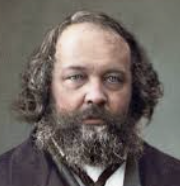
All religions, with their gods, their demigods, and their prophets, their messiahs and their saints, were created by the credulous fancy of men who had not attained the full development and full possession of their faculties. Consequently, the religious heaven is nothing but a mirage in which man, exalted by ignorance and faith, discovers his own image, but enlarged and reversed - that is, divinized. The history of religion, of the birth, grandeur, and decline of the gods who have succeeded one another in human belief, is nothing, therefore, but the development of the collective intelligence and conscience of mankind.

2 months 1 week ago
A self-respecting man is a man without a country. A fatherland is birdlime...
2 months 4 days ago
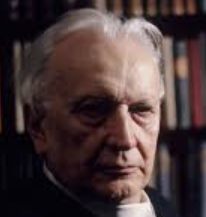
We are sorely deficient in talking with each other and listening to each other. We lack mobility, criticism and self-criticism. We incline to doctrinism. What makes it worse is that so many people do not really want to think. They want only slogans and obedience. They ask no questions and they give no answers, except by repeating drilled-in phrases. They can only assert and obey, neither probe nor apprehend. Thus they cannot be convinced, either. How shall we talk with people who will not go where others probe and think, where men seek independence in insight and conviction?
3 months 1 week ago
Monsieur ... I do not believe in God; his existence has been disproved by Science. But in the concentration camp, I learned to believe in men.

2 months 2 weeks ago
I pray you, magnificent Sir, do not trouble yourself to return to us, but await our coming to you.
▼
Source
source
Third Dialogue

2 months 2 weeks ago
If any ask me what a free Government is, I answer, that, for any practical purpose, it is what the people think so, - and that they, and not I, are the natural, lawful, and competent judges of this matter.

1 month 3 weeks ago
And at once I saw with great clarity that human beings possess two bodies. One is the physical body, the other -- just as real, just as self-contained -- is the emotional body. Like the physical body, the emotional body reaches a certain level of growth, and then stops. But it stops rather sooner than the physical body. So most of us possess the emotional body of a retarded adolescent.
▼
Source
source
p. 23

3 months 1 week ago
So long as men worship the Caesars and Napoleons, Caesars and Napoleons will duly rise and make them miserable.
▼
Source
source
Ch. 8, p. 99 [2012 reprint]
3 months 2 weeks ago
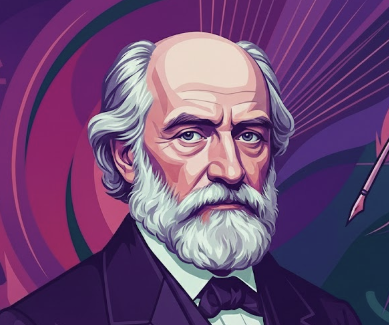
For the purpose of acquiring gain, everything else is pushed aside or thrown overboard, for example, as is philosophy by the professors of philosophy.
▼
Source
source
E. Payne, trans. (1974) Vol. 1, p. 347
1 month 3 weeks ago
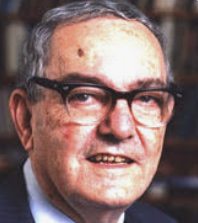
The techniques of the practitioner are usually called 'synthetic'. He designs by organizing known principles and devices into larger systems.
▼
Source
source
Simon (1945, p. 353); As cited in: Philosophy of Technology and Engineering Sciences (2009) p. 425.

3 months 2 weeks ago
The violence and injustice of the rulers of mankind is an ancient evil, for which, I am afraid, the nature of human affairs can scarce admit a remedy.
▼
Source
source
Chapter III, Part II, p. 531.
2 months 6 days ago
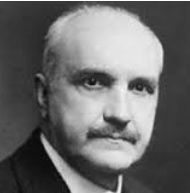
American life is a powerful solvent. As it stamps the immigrant, almost before he can speak English, with an unmistakable muscular tension, cheery self-confidence and habitual challenge in the voice and eyes, so it seems to neutralize every intellectual element, however tough and alien it may be, and to fuse it in the native good-will, complacency, thoughtlessness, and optimism.
▼
Source
source
"The Academic Environment" p. 47 (Hathi Trust)

3 months 2 weeks ago
Nature has pointed out a mixed kind of life as most suitable to the human race, and secretly admonished them to allow none of these biases to draw too much, so as to incapacitate them for other occupations and entertainments. Indulge your passion for science, says she, but let your science be human, and such as may have a direct reference to action and society. Abstruse thought and profound researches I prohibit, and will severely punish, by the pensive melancholy which they introduce, by the endless uncertainty in which they involve you, and by the cold reception which your pretended discoveries shall meet with, when communicated. Be a philosopher; but, amidst all your philosophy, be still a man.
▼
Source
source
Section 1 : Of The Different Species of Philosophy
2 months 2 weeks ago
Abstract liberty, like other mere abstractions, is not to be found.
2 months 1 week ago
What to think of other people? I ask myself this question each time I make a new acquaintance. So strange does it seem to me that we exist, and that we consent to exist.
3 months 2 weeks ago
Lands for the purposes of pleasure and magnificence, parks, gardens, public walks, &c. possessions which are every where considered as causes of expence, not as sources of revenue, seem to be the only lands which, in a great and civilized monarchy, ought to belong the crown.
▼
Source
source
Chapter II, Part I, p. 891.
2 months 1 week ago
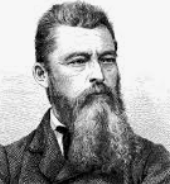
I have always taken as the standard of the mode of teaching and writing, not the abstract, particular, professional philosopher, but universal man, that I have regarded man as the criterion of truth, and not this or that founder of a system, and have from the first placed the highest excellence of the philosopher in this, that he abstains, both as a man and as an author, from the ostentation of philosophy, i.e., that he is a philosopher only in reality, not formally, that he is a quiet philosopher, not a loud and still less a brawling one.
▼
Source
source
Preface to Second Edition
3 months 1 week ago
The less somebody knows and understands himself the less great he is, however great may be his talent. For this reason our scientists are not great.
▼
Source
source
p. 51e
1 month 2 weeks ago
I never knew a writer's wife who wasn't beautiful.
▼
Source
source
Preface (p. xi)
3 months 2 weeks ago
Truth that is naked is the most beautiful, and the simpler its expression the deeper is the impression it makes; this is partly because it gets unobstructed hold of the hearer's mind without his being distracted by secondary thoughts, and partly because he feels that here he is not being corrupted or deceived by the arts of rhetoric, but that the whole effect is got from the thing itself.

3 months 3 weeks ago
I am firmly convinced, therefore, that to set up a republic which is to last a long time, the way to set about it is to constitute it as Sparta and Venice were constituted; to place it in a strong position, and so to fortify it that no one will dream of taking it by a sudden assault; and, on the other hand, not to make it so large as to appear formidable to its neighbors. It should in this way be able to enjoy its form of government for a long time. For war is made on a commonwealth for two reasons: to subjugate it, and for fear of being subjugated by it.
▼
Source
source
Book 1, Ch. 6 (as translated by LJ Walker and B Crick)
3 months 2 weeks ago
I knew a parson who frightened his congregation terribly by telling them that the second coming was very imminent indeed, but they were much consoled when they found that he was planting trees in his garden.
▼
Source
source
"Defects in Christ's Teaching"

4 months 1 week ago
We all have a weakness for beauty.

2 months 3 weeks ago
If thy fellows hurt thee in small things, suffer it! and be as bold with them!

2 months ago
Yes, I know well that others before me have felt what I feel and express; that many others feel it today, although they keep silence about it. ...And I do not keep silence about it because it is for many the thing which must not be spoken, the abomination of abominations - infandum - and I believe that it is necessary now and again to speak the thing which must not be spoken. ...Even if it should lead only to irritating the devotees of progress, those who believe that truth is consolation, it would lead to not a little. To irritating them and making them say: "Poor fellow! if he would only use his intelligence to better purpose!... Someone perhaps will add that I do not know what I say, to which I shall reply that perhaps he may be right - and being right is such a little thing! - but that I feel what I say and I know what I feel and that suffices me. And that it is better to be lacking in reason than to have too much of it.

3 months 2 weeks ago
The days .... come and go like muffled and veiled figures, sent from a distant friendly party; but they say nothing, and if we do not use the gifts they bring, they carry them as silently away.
▼
Source
source
Works and Days

1 month 1 week ago
An arrogant person considers himself perfect. This is the chief harm of arrogance. It interferes with a person's main task in life-becoming a better person.
▼
Source
source
p. 110

3 months 3 weeks ago
A constant element of enjoyment must be mingled with our studies, so that we think of learning as a game rather than a form of drudgery, for no activity can be continued for long if it does not to some extent afford pleasure to the participant.
▼
Source
source
Letter to Christian Northoff (1497), as translated in Collected Works of Erasmus (1974), p. 114
4 months 3 days ago
You [a disciple], shall I teach you about knowledge? What you know, you know, what you don't know, you don't know. This is true knowledge.
CivilSimian.com created by AxiomaticPanic, CivilSimian, Kalokagathia