


1 month 1 day ago
What concerns me most here are the ways in which contemporary voices considered to be leftist have abandoned the philosophical ideas that are central to any left-wing standpoint: a commitment to universalism over tribalism, a firm distinction between justice and power, and a belief in the possibility of progress.
▼
Source
source
Polity (2023), p. 5

3 months 1 week ago
She with one breath attunes the spheres, And also my poor human heart.
▼
Source
source
"Inspiration", in An American Anthology, 1900
2 months 2 days ago
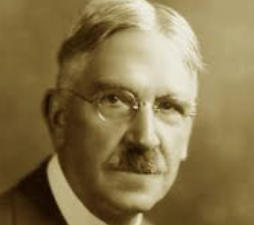
Well both original seizure and subsequent critical discrimination have equal claims, each to its own complete development and must not be forgotten that direct and unreasoned impression comes first. There is such occasions something of the quality of the wind that bloweth where it listeth. Sometimes it comes and sometimes it does not, even in the presence of the same object. It cannot be forced and when it does not arrive it is not wise to seek to recover by direct action the first fine rapture.
▼
Source
source
p. 151

3 months 4 weeks ago
The greatness of the human being consists in this: that it is capable of the universe.
▼
Source
source
q. 1, art. 2, ad 4

3 months 1 week ago
Olympian bards who sung Divine ideas below, Which always find us young And always keep us so.
▼
Source
source
Ode to Beauty, st. 2
3 months 1 week ago
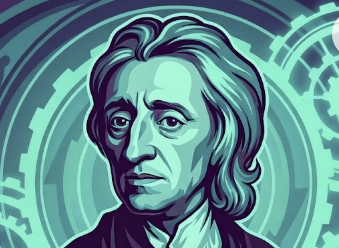
Stop Traveller! Near this place lieth John Locke. If you ask what kind of a man he was, he answers that he lived content with his own small fortune. Bred a scholar he made his learning subservient only to the cause of truth. This thou will learn from his writings, which will show thee everything else concerning him, with greater truth, than the suspect praises of an epitaph. His virtues, indeed, if he had any, were too little for him to propose as matter of praise to himself, or as an example to thee. Let his vices be buried together. As to an example of manners, if you seek that, you have it in the Gospels; of vices, to wish you have one nowhere; if mortality, certainly, (and may it profit thee), thou hast one here and everywhere.
▼
Source
source
Epitaph, as translated from the Latin.

4 months 1 week ago
Not merely in the realm of commerce but in the world of ideas as well our age is organizing a regular clearance sale. Everything is to be had at such a bargain that it is questionable whether in the end there is anybody who will want to bid. Every speculative price-fixer who conscientiously directs attention to the significant march of modern philosophy, every Privatdocent, tutor, and student, every crofter and cottar goes further. Perhaps it would be untimely and ill-timed to ask them where they are going.

2 months 2 weeks ago
Nothing tends to materialize man and to deprive his work of the faintest trace of mind more than the extreme division of labor.
▼
Source
source
Chapter XVIII.
3 months 5 days ago
How can one be late to the end of history? A question for today. It is serious because it obliges one to reflect again, as we have been doing since Hegel, on what happens and deserves the name of event, after history; it obliges one to wonder if the end of history is but the end of a certain concept of history.
▼
Source
source
Injunctions of Marx
3 weeks 2 days ago
No being can be what he is unless he is putting his essence into action in his field.
▼
Source
source
Vol. 3
2 months 1 week ago
This tendency towards a Christian-European Universal Monarchy has shown itself successively in the several States which could make pretensions to such a dominion, and, since the fall of the Papacy, it has become the sole animating principle of our History. We by no means seek to determine whether this notion of Universal Monarchy has ever been distinctly entertained as a definite plan .... Thus each State either strives to attain this Universal Christian Monarchy, or at least to acquire the power of striving after it;-to maintain the Balance of Power when it is in danger of being disturbed by another; and, in secret, for power, that it may eventually disturb it itself.
▼
Source
source
P. 213-214


3 months 1 week ago
What is there in 'Paradise Lost' to elevate and astonish like Herschel or Somerville?
▼
Source
source
Quoted in Robert D. Richardson, Jr., Emerson, the Mind On Fire (Univ. of Calif Press 1995), p. 124
3 months 1 week ago
It is the principle of antipathy which leads us to speak of offences as deserving punishment. It is the corresponding principle of sympathy which leads us to speak of certain actions as meriting reward. This word merit can only lead to passion and error. It is effects good or bad which we ought alone to consider.
▼
Source
source
MSS 29, 32, University College Collection
3 months 1 week ago
The imagination is always restless and suggests a variety of thoughts, and the will, reason being laid aside, is ready for every extravagant project; and in this State, he that goes farthest out of the way, is thought fittest to lead, and is sure of most followers: And when Fashion hath once Established, what Folly or craft began, Custom makes it Sacred, and 'twill be thought impudence or madness, to contradict or question it. He that will impartially survey the Nations of the World, will find so much of the Governments, Religion, and Manners brought in and continued amongst them by these means, that they will have but little Reverence for the Practices which are in use and credit amongst Men.
▼
Source
source
First Treatise of Government

2 weeks 4 days ago
No doubt markets transmit information in the way that Hayek claimed. But what reason is there to believe that - unlike any other social institution - they have a built-in capacity to correct their mistakes? History hardly supports the supposition. Moods of irrational exuberance and panic can, and often do, swamp the price-discovery functions of markets.

2 months 1 week ago
Since it is difficult to approve the reasons people invoke, each time we leave one of our 'fellow men', the question which comes to mind is invariably the same: how does he keep from killing himself?
2 weeks 3 days ago
In Kleist's essay humans are caught between the graceful automatism of the puppet and the conscious freedom of a god. The jerky, stuttering quality of their actions comes from their feeling that they must determine the course of their lives. Other animals live without having to choose their path through life. Whatever uncertainty they may feel sniffing their way through the world is not a permanent condition; once they reach a place of safety, they are at rest. In contrast, human life is spent anxiously deciding how to live.
▼
Source
source
The Faith of Puppets: Leopardi and the Souls of Machines (p.25-6)

3 months 1 week ago
Conversion is in its essence a normal adolescent phenomenon, incidental to the passage from the child's small universe to the wider intellectual and spiritual life of maturity.
▼
Source
source
Lecture IX, "Conversion"

2 months 1 week ago
The tyranny of a multitude is a multiplied tyranny.
▼
Source
source
Letter to Thomas Mercer

1 month 4 weeks ago
A man, in so far as he is an individual, may be very sharply detached from others, a sort of spiritual crustacean, and yet be very poor in differentiating content. And further, it is true on the other hand that the more personality a man has and the greater his interior riches and the more he is a society within himself, the less brusquely he is divided from his fellows.
2 months 1 week ago
Magnanimity in politics is not seldom the truest wisdom; and a great empire and little minds go ill together.

3 months 5 days ago
But let there be no misunderstanding: it is not that a real man, the object of knowledge, philosophical reflection or technological intervention, has been substituted for the soul, the illusion of theologians. The man described for us, whom we are invited to free, is already in himself the effect of a subjection more profound than himself. A 'soul' inhabits him and brings him to existence, which is itself a factor in the mastery that power exercises over the body. The soul is the effect and instrument of a political anatomy; the soul is the prison of the body.

4 months ago
The administration of government lies in getting proper men. Such men are to be got by means of the ruler's own character. That character is to be cultivated by his treading in the ways of duty. And the treading those ways of duty is to be cultivated by the cherishing of benevolence.

2 months 2 weeks ago
There is the world for you. Beauty, true beauty, is intangible. It is in the eye of the beholder. Something that we can lose at any moment, and the more you examine it, the more illusive it becomes. True happiness is virtue, and virtue is predicated on knowledge and righteous conduct.
▼
Source
source
The Alchemy of Happiness

3 months 1 week ago
That the outer man is a picture of the inner, and the face an expression and revelation of the whole character, is a presumption likely enough in itself, and therefore a safe one to go on; borne out as it is by the fact that people are always anxious to see anyone who has made himself famous .... Photography ... offers the most complete satisfaction of our curiosity.
▼
Source
source
Vol. 2, Ch. 29, § 377

3 months 1 week ago
Society is undergoing a silent revolution, which must be submitted to, and which takes no more notice of the human existences it breaks down than an earthquake regards the houses it subverts. The classes and the races, too weak to master the new conditions of life, must give way. But can there be anything more puerile, more short-sighted, than the views of those Economists who believe in all earnest that this woeful transitory state means nothing but adapting society to the acquisitive propensities of capitalists, both landlords and money-lords?
▼
Source
source
"Forced Emigration," New York Daily Tribune, 22 March 1853.

3 months 1 week ago
I conceive that the description so often given of a Benthamite, as a mere reasoning machine, though extremely inapplicable to most of those who have been designated by that title, was during two or three years of my life not altogether untrue of me. ...There is nothing very extraordinary in this fact: no youth of the age I then was, can be expected to be more than one thing, and this was the thing I happened to be. Ambition and desire of distinction, I had in abundance; and zeal for what I thought the good of mankind was my strongest sentiment, mixing with and colouring all others. But my zeal was as yet little else, at that period of my life, than zeal for speculative opinions. It had not its root in genuine benevolence, or sympathy with mankind; though these qualities held their due place in my ethical standard. Nor was it connected with any high enthusiasm for ideal nobleness.
▼
Source
source
(pp. 109-110)

2 months 3 days ago
Did ye never read in the scriptures, The stone which the builders rejected, the same is become the head of the corner: this is the Lord's doing, and it is marvellous in our eyes? Therefore say I unto you, The kingdom of God shall be taken from you, and given to a nation bringing forth the fruits thereof. And whosoever shall fall on this stone shall be broken: but on whomsoever it shall fall, it will grind him to powder.
▼
Source
source
21:27-42 and 44 (KJV)

3 months 1 week ago
The survival of democracy depends on the ability of large numbers of people to make realistic choices in the light of adequate information.
▼
Source
source
Chapter 6 (p. 47)

3 months 2 weeks ago
Sacred and inspired divinity, the sabaoth and port of all men's labours and peregrinations.
▼
Source
source
Book II
2 months 1 week ago
While all these are disturbed and divided by the multifarious objects to which their thoughts must be applied, the Philosopher pursues, in solitary silence and in unbroken concentration of mind, his single and undeviating course towards the Good, the Beautiful, and the True; and that is his daily labour, to which others can only resort at times for rest and refreshment after toil.
▼
Source
source
P. 17
1 month 3 weeks ago
Objectification is above all exteriorization, the alienation of spirit from itself.
▼
Source
source
p. 63
3 months 1 week ago
We inherit the warlike type; and for most of the capacities of heroism that the human race is full of we have to thank this cruel history. Dead men tell no tales, and if there were any tribes of other type than this they have left no survivors. Our ancestors have bred pugnacity into our bone and marrow, and thousands of years of peace won't breed it out of us. The popular imagination fairly fattens on the thought of wars. Let public opinion once reach a certain fighting pitch, and no ruler can withstand it. In the Boer war both governments began with bluff, but they couldn't stay there; the military tension was too much for them.
3 weeks 2 days ago
Good communication is as stimulating as black coffee, and just as hard to sleep after. Variant: Good communication is just as stimulating as...
3 months 1 week ago
I am well aware of how anarchic much of what I say may sound. Expressing myself thus abstractly and briefly, I may seem to despair of the very notion of truth. But I beseech you to reserve your judgment until we see it applied to the details which lie before us. I do indeed disbelieve that we or any other mortal men can attain on a given day to absolutely incorrigible and unimprovable truth about such matters of fact as those with which religions deal. But I reject this dogmatic ideal not out of a perverse delight in intellectual instability. I am no lover of disorder and doubt as such. Rather do I fear to lose truth by this pretension to possess it already wholly.
▼
Source
source
Lectures XIV and XV, "The Value of Saintliness"

4 months 1 week ago
The preceding merely defines a way of thinking. But the point is to live.
1 month 3 weeks ago
An ethos of freedom stops power from solidifying into domination and makes sure it remains an open game.
3 months 1 week ago
Thus parents, by humouring and cockering them when little, corrupt the principles of nature in their children, and wonder afterwards to taste the bitter waters, when they themselves have poison'd the fountain.
▼
Source
source
Sec. 35
4 weeks 1 day ago
As free constitutions are the strongest supports of governments, social order is the best safeguard of freedom. Liberty has no enemies so pernicious as those misguided friends whose ardour in her cause leads them to outrage the moral sense of mankind, and to arm against her the interests and feelings which are her natural allies. Even the prejudices of nations should be respected.
▼
Source
source
'Essay on the Life and Character of King William III' (1822), written for the Greaves Historical Prize at Cambridge, quoted in The Times Literary Supplement (1 May 1969), p. 469

1 month 1 week ago
He who helps the guilty, shares the crime.
▼
Source
source
Maxim 139
3 months 1 week ago
The little honesty that exists among authors is discernible in the unconscionable way they misquote from the writings of others.

3 months 1 week ago
What do we mean by saying that existence precedes essence? We mean that man first of all exists, encounters himself, surges up in the world-and defines himself afterwards. If man as the existentialist see him is not definable, it is because to begin with he is nothing. He will not be anything until later, and then he will be what he makes of himself. Thus, there is no human nature, because there is no God to have a conception of it. Man simply is. Not that he is simply what he conceives himself to be, but he is what he wills, and as he conceives himself after already existing - as he wills to be after that leap towards existence. Man is nothing else but that which he makes of himself. That is the first principle of existentialism.
▼
Source
source
p. 28
1 month 4 weeks ago
I will not say that the more or less poetical and unphilosophical doctrines that I am about to set forth are those which make me live; but I will venture to say that it is my longing to live and to live for ever that inspires these doctrines within me. And if by means of them I succeed in strengthening and sustaining this same longing in another, perhaps when it is all but dead, then I shall have performed a man's work, and above all, I shall have lived. In a word, be it with reason or without reason or against reason, I am resolved not to die. And if, when at last I die out, I die altogether, then I shall not have died out of myself - that is, I shall not have yielded myself to death, but my human destiny shall have killed me. Unless I come to lose my head, or rather my heart, I will not abdicate from life - life will be wrested from me.

1 month 4 days ago
All human accomplishment has the same origin, identically. Imagination is a force of nature. Is this not enough to make a person full of ecstasy? Imagination, imagination, imagination. It converts to actual. It sustains, it alters, it redeems!
▼
Source
source
Henderson the Rain King (1959) [Viking/Penguin, 1984, ISBN 0-140-07269-1], ch. XVIII, p. 271

2 months 1 week ago
Dreams, as we all know, are very queer things: some parts are presented with appalling vividness, with details worked up with the elaborate finish of jewellery, while others one gallops through, as it were, without noticing them at all, as, for instance, through space and time. Dreams seem to be spurred on not by reason but by desire, not by the head but by the heart, and yet what complicated tricks my reason has played sometimes in dreams, what utterly incomprehensible things happen to it!
3 months 1 week ago
When Descartes said, "Conquer yourself rather than the world," what he meant was, at bottom, - the same - that we should act without hope. Marxists, to whom I have said thus have answered: "Your action is limited, obviously, by your death: but you can rely upon the help of others.
▼
Source
source
p. 39

3 months 2 weeks ago
We do not, however, reckon that trade disadvantageous which consists in the exchange of the hard-ware of England for the wines of France;and yet hard-ware is a very durable commodity, and were it not for this continual exportation, might too be accumulated for ages together, to the incredible augmentation of the pots and pans of the country. But it readily occurs that the number of such utensils is in every country necessarily limited by the use which there is for them;that it would be absurd to have more pots and pans than were necessary for cooking the victuals usually consumed there;and that if the quantity of victuals were to increase, the number of pots and pans would readily increase along with it, apart of the increased quantity of victuals being employed in purchasing them, or in maintaining an additional number of workman whose business it was to make them.
▼
Source
source
Chapter I, p. 471.
3 months 2 weeks ago
There are and can be only two ways of searching into and discovering truth. The one flies from the senses and particulars to the most general axioms, and from these principles, the truth of which it takes for settled and immovable, proceeds to judgment and to the discovery of middle axioms. And this way is now in fashion. The other derives axioms from the senses and particulars, rising by a gradual and unbroken ascent, so that it arrives at the most general axioms last of all. This is the true way, but as yet untried.
▼
Source
source
Aphorism 19

2 months 2 weeks ago
The more man ascends through the past, and the more he launches into the future, the greater he will be, and all these philosophers and ministers and truth-telling men who have fallen victims to the stupidity of nations, the atrocities of priests, the fury of tyrants, what consolation was left for them in death? This: That prejudice would pass, and that posterity would pour out the vial of ignominy upon their enemies. O Posterity! Holy and sacred stay of the unhappy and the oppressed; thou who art just, thou who art incorruptible, thou who findest the good man, who unmaskest the hypocrite, who breakest down the tyrant, may thy sure faith, thy consoling faith never, never abandon me!
▼
Source
source
As quoted in "Diderot" in The Great Infidels (1881) by Robert Green Ingersoll; The Works of Robert G. Ingersoll Vol. III (1900), p. 367
CivilSimian.com created by AxiomaticPanic, CivilSimian, Kalokagathia