

2 months 4 weeks ago
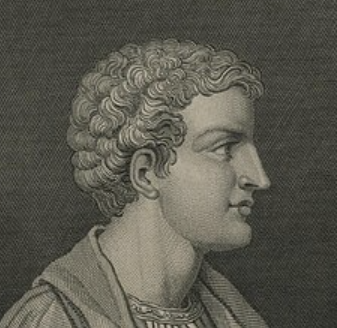
Tis not sufficient to combine well-chosen words in a well-ordered line.
▼
Source
source
Book I, satire iv, line 54 (translated by John Conington)

1 month 3 weeks ago
Government exists but to maintain special privilege and property rights; it coerces man into submission and therefore robs him of dignity, self-respect, and life.

3 months 2 weeks ago
No circumstance is ever so desperate that one cannot nurture some spark of hope.
▼
Source
source
Act I, scene i

2 months 1 week ago
Their principles always go to the extreme. They who go with the principles of the ancient Whigs, which are those contained in Mr. Burke's book, never can go too far. ... The opinions maintained in that book never can lead to an extreme, because their foundation is laid in an opposition to extremes.
▼
Source
source
p. 470
1 month 3 weeks ago
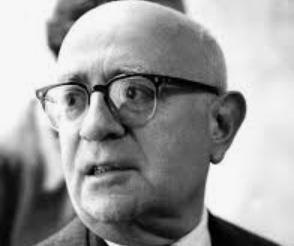
If philosophy is still necessary, it is so only in the way it has been from time immemorial: as critique, as resistance to the expanding heteronomy, even if only as thought's powerless attempt to remain its own master and to convict of untruth, by their own criteria, both a fabricated mythology and a conniving, resigned acquiescence. ... It is incumbent upon philosophy ... to provide a refuge for freedom. Not that there is any hope that it could break the political tendencies that are throttling freedom throughout the world both from within and without and whose violence permeates the very fabric of philosophical argumentation.
▼
Source
source
p. 10

2 weeks 2 days ago
With new technologies of surveillance, economies of scale overcome problems of cost. Since all their electronic communications can be accessed, it is no longer necessary to segregate the inmates from one another. As there is no outside world, escape becomes unimaginable. Technological progress has brought into being a system of surveillance more far-reaching than any Bentham could have conceived. Enclosing the entire population in a virtual Panopticon might seem the ultimate invasion of freedom. But universal confinement need not be experienced as a privation. If they know nothing else, most are likely to accept it as normal. If the technology through which surveillance operates also provides continuous entertainment, they may soon find any other way of living intolerable.
▼
Source
source
In the Puppet Theatre: A Universal Panopticon (p. 125)

3 months 1 week ago
If God has made us in his image, we have returned him the favor.
▼
Source
source
Notebooks, c.1735-c.1750

3 months 1 week ago
"Everything is both a trap and a display; the secret reality of the object is what the Other makes of it."

Just now
The young generations of the world, who had in them the freshness of young children, and yet the depth of earnest men, who did not think that they had finished off all things in Heaven and Earth by merely giving them scientific names, but had to gaze direct at them there, with awe and wonder: they felt better what of divinity is in man and Nature; they, without being mad, could worship Nature, and man more than anything else in Nature.
3 months 2 weeks ago
You must not murder. (Exodus 20:13) Q. What does this mean? A. We should fear and love God so that we may not hurt or harm our neighbor in his body, but help and befriend him in every bodily need [in every need and danger of life and body].
3 months 3 weeks ago
Times are bad. Children no longer obey their parents, and everyone is writing a book.
▼
Source
source
As quoted in InfoWorld, Vol. 23, No. 16, 16 April 2001, p. 49. This had been attributed previously to many other sources from 1908 on, according to this analysis by Quote Investigator.

2 months 2 weeks ago
Men sometimes submit to shame, to tyranny, to conquest, but they never long suffer anarchy. There is no people so barbarous that they escape this general law of humanity.
▼
Source
source
Second letter on Algeria (1837), Travels in Algeria p. 38
2 months 1 week ago
The Divine Existence (Daseyn),-his Existence, I say, which, according to the distinction already laid down, is his (Manifestation and Revelation of himself-is absolute- only through itself, and of necessity, LIGHT:-namely, y the inward and spiritual Light. This Light, left to itself, separates and divides itself into an infinite multiplicity of individual rays; and in this way, in these individual rays, becomes estranged from itself and its | original source. But this same Light may also again concentrate itself from out this separation, and conceive and comprehend itself as One, as that which it is in itself,-the Existence and Revelation of God; remaining indeed, even in this conception, that which it is in its form,-Light; but yet in this condition, and even by means of this very condition, announcing it-to self as having no real Being in itself, but as only the, Existence and Self-Manifestation of God.
▼
Source
source
p. 78

2 months 5 days ago
A human being possessed by a belief and not eager to pass it on to others is a phenomenon alien to the earth, where our mania for salvation makes life unbreathable.

3 months 1 week ago
Every man, wherever he goes, is encompassed by a cloud of comforting convictions, which move with him like flies on a summer day.
▼
Source
source
Ch. 2: Dreams and Facts
4 months 1 week ago
The greatest and noblest conceptions have no image wrought plainly for human vision, which he who wishes to satisfy the mind of the inquirer can apply to some one of his senses and by mere exhibition satisfy the mind. We must therefore endeavor by practice to acquire the power of giving and understanding a rational definition of each one of them; for immaterial things, which are the noblest and greatest, can be exhibited by reason only, and it is for their sake that all we are saying is said. But it is always easier to practice in small matters than in greater ones.
6 days ago
The person attempting to travel two roads at once will get nowhere.
▼
Source
source
Quoted in: Errick A. Ford (2010) Iron Sharpens Iron: Wisdom of the Ages, p. 48
2 months 4 weeks ago
Virtue is the same for a man and for a woman.
▼
Source
source
§ 5


3 months 4 weeks ago
Since it is every man's interest to be happy through the whole of life, it is the wisdom of every one to employ philosophy in the search of felicity without delay; and there cannot be a greater folly, than to be always beginning to live.
7 months 2 weeks ago
When we observe a thing, we see too much in it, we fall under the spell of the wealth of empirical detail which prevents us from clearly perceiving the notional determination which forms the core of the thing. The problem is thus not that of how to grasp the multiplicity of determinations, but rather to abstract from them, how to constrain our gaze and teach it to grasp only the notional determinism.

4 months 1 week ago
Just you think first, and don't bother to speak afterward, either.
3 months ago
To protest about bullfighting in Spain, the eating of dogs in South Korea, or the slaughter of baby seals in Canada while continuing to eat eggs from hens who have spent their lives crammed into cages, or veal from calves who have been deprived of their mothers, their proper diet, and the freedom to lie down with their legs extended, is like denouncing apartheid in South Africa while asking your neighbors not to sell their houses to blacks.
▼
Source
source
Ch. 4: Becoming a Vegetarian
2 months 5 days ago
How do you think the transition from the present situation to community of Property is to be effected? The first, fundamental condition for the introduction of community of property is the political liberation of the proletariat through a democratic constitution.
▼
Source
source
Draft of a Communist Confession of Faith

3 months 2 weeks ago
There must then be something that is better, and that must be God. When you see a stately and stupendous edifice, though you do not know who is the owner of it, you would yet conclude it was not built for rats. And this divine structure, that we behold of the celestial palace, have we not reason to believe that it is the residence of some possessor, who is much greater than we?
▼
Source
source
Ch. 12, tr. Cotton, rev. W. Carew Hazlitt, 1877

2 months 2 days ago
Master, we saw one casting out devils in thy name; and we forbad him, because he followeth not with us. And Jesus said unto him, Forbid him not: for he that is not against us is for us.
▼
Source
source
Luke 9:49-50 (KJV)
2 months 2 weeks ago
Are we not madder than those first inhabitants of the plain of Sennar? We know that the distance separating the earth from the sky is infinite, and yet we do not stop building our tower.
▼
Source
source
No. 4

1 month 1 week ago
All words at every level of prose and poetry and all devices of language and speech derive their meaning from figure / ground relation.
▼
Source
source
quoted in McLuhan: A Guide for the Perplexed by W. Terrence Gordon, 2010, p. 167
2 months 1 week ago
We are taught to believe that a desire of domineering over our countrymen is love to our country; and those who hate civil war abet rebellion, and that the amiable and conciliatory virtues of lenity, moderation, and tenderness to the privileges of those who depend on this kingdom are a sort of treason to the state. It is impossible that we should remain long in a situation, which breeds such notions and dispositions, without some great alteration in the national character.

3 months 1 week ago
In all ages of the world, priests have been enemies to liberty; and it is certain, that this steady conduct of theirs must have been founded on fixed reasons of interest and ambition. Liberty of thinking, and of expressing our thoughts, is always fatal to priestly power, and to those pious frauds, on which it is commonly founded; and, by an infallible connexion, which prevails among all kinds of liberty, this privilege can never be enjoyed, at least has never yet been enjoyed, but in a free government.
▼
Source
source
Part I, Essay 9: Of The Parties of Great Britain
1 month 1 week ago
Quite apart from assiduous efforts to restrict the use of violence as means rather than an end, the actualization of violence as a means can inadvertently become its own end, producing new violence, producing violence anew, reiterating the license, and licensing further violence. Violence does not exhaust itself in the realization of a just end; rather, it renews itself in directions that exceed both deliberate intention and instrumental schemes. In other words, by acting as if the use of violence can be a means to achieve a nonviolent end, one imagines that the practice of violence does not in the act posit violence as its own end. The technē is undermined by the praxis, and the use of violence only makes the world into a more violent place, by bringing more violence into the world.
▼
Source
source
p. 20
2 months 1 week ago
The power of perpetuating our property in our families is one of the most valuable and interesting circumstances belonging to it, and that which tends most to the perpetuation of society itself. It makes our weakness subservient to our virtue; it grafts benevolence even upon avarice. The possession of family wealth and of the distinction which attends hereditary possessions (as most concerned in it,) are the natural securities for this transmission.
2 weeks 4 days ago
Humans are prone to status quo bias. So let's do a thought-experiment. Imagine we stumble across an advanced civilisation that has abolished predation, disease, famine, and all the horrors of primitive Darwinian life. The descendants of archaic lifeforms flourish unmolested in their wildlife parks - free living, but not "wild". Should we urge scrapping their regime of compassionate stewardship of the living world - and a return to asphyxiation, disembowelling and being eaten alive? Or is a happy biosphere best conserved intact? Reply to "Should humans wipe out all carnivorous animals so the succeeding generations of herbivores can live in peace?"
▼
Source
source
, Quora, 16 Jun. 2018
2 months 4 weeks ago
Look round and round the man you recommend, for yours will be the shame should he offend.
▼
Source
source
Book I, epistle xviii, line 76 (translated by John Conington).

2 months 1 week ago
Every man is free to do that which he wills, provided he infringes not the equal freedom of any other man.
▼
Source
source
Ch. 6, The Formula of Justice
3 months 2 weeks ago
Even opinion is of force enough to make itself to be espoused at the expense of life.
▼
Source
source
Book I, Ch. 40. Of Good and Evil, tr. Cotton, rev. W. Hazlitt, 1842
1 month 5 days ago
Every man is his own doctor of divinity, in the last resort.
▼
Source
source
An Inland Voyage (1878).

1 month 3 weeks ago
Religion is the vision of something which stands beyond, behind and within the passing flux of immediate things; something which is real, and yet waiting to be realized; something which is a remote possibility, and yet the greatest of present facts; something that gives meaning to all that passes, and yet eludes apprehension; something whose possession is the final good, and yet is beyond all reach; something which is the ultimate ideal, and the hopeless quest.
▼
Source
source
Ch. 12: "Religion and Science", pp. 267-268
3 months 1 week ago
Any question of philosophy ... which is so obscure and uncertain, that human reason can reach no fixed determination with regard to it; if it should be treated at all; seems to lead us naturally into the style of dialogue and conversation.
▼
Source
source
Pamphilus to Hermippus, Prologue
2 weeks 4 days ago
If we already lived in a cruelty-free world, the notion of re-introducing suffering, exploitation and creatures eating each other would seem not so much frightful as unimaginable - no more seriously conceivable than reverting to surgery without anaesthesia today.
▼
Source
source
Reprogramming Predators, BLTC Research, 2009
1 week 6 days ago
Whatever arises from a just situation by just steps is itself just.
▼
Source
source
Ch. 7 : Distributive Justice, Section I, The Entitlement Theory, p. 151
3 months 1 week ago
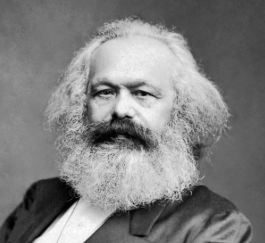
What chance has Vulcan against Roberts & Co., Jupiter against the lightning-rod and Hermes against the Credit Mobilier? All mythology overcomes and dominates and shapes the forces of nature in the imagination and by the imagination; it therefore vanishes with the advent of real mastery over them.
▼
Source
source
Introduction, p. 30.

3 months 4 days ago
The question here is the same as the question I addressed with regard to madness, disease, delinquency and sexuality. In all of these cases, it was not a question of showing how these objects were for a long time hidden before being finally discovered, nor of showing how all these objects are only wicked illusions or ideological products to be dispelled in the light of reason finally having reached its zenith. It was a matter of showing by what conjunctions a whole set of practices-from the moment they become coordinated with a regime of truth-was able to make what does not exist (madness, disease, delinquency, sexuality, etcetera), nonetheless become something.
▼
Source
source
Lecture 1, January 10, 1979, p. 19
Just now
A word spoken in season, at the right moment, is the mother of ages.
▼
Source
source
Reported in Josiah Hotchkiss Gilbert, Dictionary of Burning Words of Brilliant Writers (1895), p. 561.

3 months 1 week ago
Perfect humility dispenses with modesty.
1 month 3 weeks ago
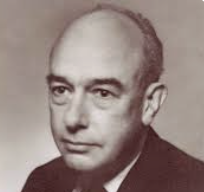
Life is agid. Life is fulgid. Life is a burgeoning, a quickening of the dim primordial urge in the murky wastes of time. Life is what the least of us make most of us feel the least of us make the most of.
▼
Source
source
Quine's response in 1988 when asked his philosophy of life. (He invented the word "agid".) It makes up the entire Chapter 54 in Quine in Dialogue (2008).

3 months 2 weeks ago
But by far the greatest obstacle to the progress of science and to the undertaking of new tasks and provinces therein is found in this - that men despair and think things impossible.
▼
Source
source
Aphorism 92
CivilSimian.com created by AxiomaticPanic, CivilSimian, Kalokagathia