


3 months 3 weeks ago
Our great democracies still tend to think that a stupid man is more likely to be honest than a clever man, and our politicians take advantage of this prejudice by pretending to be even more stupid than nature made them.
▼
Source
source
Part III: Man and Himself, Ch. 16: Ideas Which Have Become Obsolete, p. 158
2 weeks 3 days ago
Ours is a problem in which deception has become organized and strong; where truth is poisoned at its source; one in which the skill of the shrewdest brains is devoted to misleading a bewildered people.
▼
Source
source
Ch. IV: "The Golden Rule and After", p. 105.

5 days ago
Live among men as if God beheld you; speak with God as if men were listening.
▼
Source
source
Line 5.
2 months 1 week ago
History is full of religious wars; but, we must take care to observe, it was not the multiplicity of religions that produced these wars, it was the intolerating spirit which animated that one which thought she had the power of governing.
▼
Source
source
No. 65. (Usbek writing to his wives)

4 months 6 days ago
The superfluities of the rich are the necessaries of the poor. They who possess superfluities, possess the goods of others.
▼
Source
source
Patrologia Latina, vol. 37, p. 1922

1 month 2 weeks ago
Effects are perceived, whereas causes are conceived. Effects always preceed causes in the actual developmental order.
▼
Source
source
(p. 303)
2 months 1 week ago
The Value or WORTH of a man, is as of all other things, his Price; that is to say, so much as would be given for the use of his Power...
▼
Source
source
The First Part, Chapter 10, p. 42

3 months 1 week ago
Beware an act of avarice; it is bad and incurable disease.
▼
Source
source
Maxim no. 19.
1 month 2 weeks ago
Perpetual devotion to what a man calls his business, is only to be sustained by perpetual neglect of many other things.
▼
Source
source
An Apology for Idlers.
2 months 2 days ago
In erotic love, two people who were separate become one. In motherly love, two people who were one become separate. The mother must not only tolerate, she must wish and support the child's separation.
▼
Source
source
Ch. 2

4 months 2 weeks ago
The whole business of the kingly weaving is comprised in this and this alone: in never allowing the self-restrained characters to be separated from the courageous, but in weaving them together by common beliefs and honors and dishonors and opinions and interchanges of pledges, thus making of them a smooth and, as we say, well-woven fabric, and then entrusting to them in common forever the offices of the state.

4 months 1 week ago
Recompense hatred with justice, and recompense kindness with kindness.


3 months 1 week ago
Virtue is the same for a man and for a woman.
▼
Source
source
§ 5

1 week 5 days ago
Or indeed we may say again, it is in what I called Portrait-painting, delineating of men and things, especially of men, that Shakspeare is great. All the greatness of the man comes out decisively here. It is unexampled, I think, that calm creative perspicacity of Shakspeare. The thing he looks at reveals not this or that face of it, but its inmost heart and generic secret: it dissolves itself as in light before him, so that he discerns the perfect structure of it. Creative, we said: poetic creation, what is this too but seeing the thing sufficiently? The word that will describe the thing, follows of itself from such clear intense sight of the thing. And is not Shakspeare's morality, his valour, candour, tolerance, truthfulness; his whole victorious strength and greatness, which can triumph over such obstructions, visible there too? Great as the world!

2 months 3 weeks ago
Neither a person nor a nation can exist without some higher idea. And there is only one higher idea on earth, and it is the idea of the immortality of the human soul, for all other "higher" ideas of life by which humans might live derive from that idea alone.
▼
Source
source
A Writer's Diary, Vol. 1: 1873-1876, ed. Kenneth Lantz (1994), p. 734
3 months 3 weeks ago
Owing to the identification of religion with virtue, together with the fact that the most religious men are not the most intelligent, a religious education gives courage to the stupid to resist the authority of educated men, as has happened, for example, where the teaching of evolution has been made illegal. So far as I can remember, there is not one word in the Gospels in praise of intelligence; and in this respect ministers of religion follow gospel authority more closely than in some others.
▼
Source
source
p. 110
1 month 3 weeks ago
For nothing can be greater than seduction itself, not even the order that destroys it.
▼
Source
source
Seduction
2 months 1 week ago
In its relation to the reality of daily life, the high culture of the past was many things-opposition and adornment, outcry and resignation. But it was also the appearance of the realm of freedom: the refusal to behave.
▼
Source
source
p. 71

3 months 4 weeks ago
I'd rather be ruled by a competent Turk than an incompetent Christian.
▼
Source
source
The earliest published source for such a statement yet located is in Pat Robertson - Where He Stands (1988) by Hubert Morken, p. 42, where such a comment is attributed to Luther without citation.
1 month 3 weeks ago
Our entire linear and accumulative culture collapses if we cannot stockpile the past in plain view. "
▼
Source
source
The Precession of Simulacra," p. 10
1 month 2 weeks ago
Pain will force even the truthful to speak falsely.
▼
Source
source
Maxim 232
3 weeks 3 days ago
Some communities will be abandoned, others will struggle along, others will split, others will flourish, gain members, and be duplicated elsewhere. Each community must win and hold the voluntary adherence of its members. No pattern is imposed on everyone, and the result will be one pattern if and only if everyone voluntarily chooses to live in accordance with that pattern of community.
▼
Source
source
Ch. 10 : A Framework for Utopia; Design Devices and Filter Devices, p. 316
1 month 3 weeks ago
Boredom is like a pitiless zooming in on the epidermis of time. Every instant is dilated and magnified like the pores of the face.
▼
Source
source
Chapter 3
3 months 1 week ago
Philosophy is the childhood of the intellect, and a culture that tries to skip it will never grow up.
▼
Source
source
p. 12.
3 months 2 weeks ago
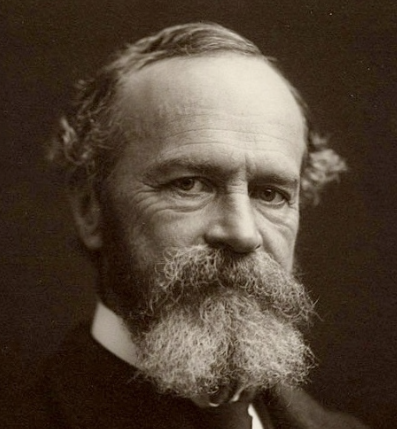
I am against bigness and greatness in all their forms, and with the invisible molecular moral forces that work from individual to individual, stealing in through the crannies of the world like so many soft rootlets, or like the capillary oozing of water, and yet rending the hardest monuments of man's pride, if you give them time. The bigger the unit you deal with, the hollower, the more brutal, the more mendacious is the life displayed. So I am against all big organizations as such, national ones first and foremost; against all big successes and big results; and in favor of the eternal forces of truth which always work in the individual and immediately unsuccessful way, under-dogs always, till history comes, after they are long dead, and puts them on top. - You need take no notice of these ebullitions of spleen, which are probably quite unintelligible to anyone but myself.
▼
Source
source
Letter to Mrs. Henry Whitman (7 June 1899), in The Letters of William James, ed. Henry James, vol. 2, p. 90, 1926
1 month 2 weeks ago
The artist is the person who invents the means to bridge biological inheritance and the environments created by technological innovation.
▼
Source
source
p. 98
2 months 1 week ago
Of all kind of authors there are none I despise more than compilers, who search every where for shreds of other men's works, which they join to their own, like so many pieces of green turf in a garden: they are not at all superior to compositors in a printing house, who range the types, which, collected together, make a book, towards which they contribute nothing but the labours of the hand. I would have original writers respected, and it seems to me a kind of profanation to take those pieces from the sanctuary in which they reside, and to expose them to a contempt they do not deserve. When a man hath nothing new to say, why does not he hold his tongue? What business have we with this double employment?"
▼
Source
source
No. 66.

3 months 3 weeks ago
The love of God consists in an ardent desire to procure the general welfare, and reason teaches me that there is nothing which contributes more to the general welfare of mankind than the perfection of reason.
▼
Source
source
Closing sentence of the Preface to the general science (1677) (in P. Wiener (ed.), Leibniz Selections, Macmilland Press Ltd, 1951).

3 weeks 6 days ago
The idea of a law of progress, or of an all but irresistible tendency to general improvement, is then merely a superstition, one of the tents of the modernist pseudo-religion of humanism. Even if such a law or tendency existed and were demonstrable, the liberal faith in progress would for Santayana be pernicious. For it leads to a corrupt habit of mind in which things are valued, not for their present excellence or perfection, but instrumentally, as leading to something better; and it insinuates into thought and feeling a sort of historical theodicy, in which past evil is justified as a means to present or future good. The idea of progress embodies a kind of time-worship (to adopt an expression used by Wyndham Lewis) in which the particularities of our world are seen and valued, not in themselves, but for what they might perhaps become, thereby leaving us destitute of the sense of the present and, at the same time, of the perspective of eternity.
▼
Source
source
'Santayana's Alternative' (p.67-8)

1 day ago
The first discipline modernity's originators imposed upon themselves was that of self-restraint, learning to live with vulgarity. Their high expectations for effectiveness were made possible by low expectations of what was to be.
▼
Source
source
Commerce and Culture, p. 285.

3 months 2 weeks ago
100 per cent of us die, and the percentage cannot be increased.
1 week 5 days ago
Fire is the best of servents; but what a master!
▼
Source
source
Bk. II, ch. 9.
1 month 6 days ago
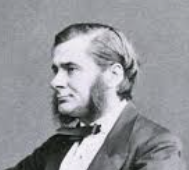
Education is the instruction of the intellect in the laws of Nature, under which name I include not merely things and their forces, but men and their ways; and the fashioning of the affections and of the will into an earnest and loving desire to move in harmony with those laws. For me, education means neither more nor less than this. Anything which professes to call itself education must be tried by this standard, and if it fails to stand the test, I will not call it education, whatever may be the force of authority, or of numbers, upon the other side.
2 months 2 weeks ago
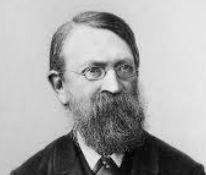
Personally, people know themselves very poorly.
▼
Source
source
Contributions to the analysis of the sensations (1897), translated by Cora May Williams, published by Open Court Publishing Company, p. 4

3 months 4 weeks ago
My appetite comes to me while eating.
▼
Source
source
Book III, Ch. 9. Of Vanity
1 week 5 days ago
Men, I say, never did believe idle songs, never risked their soul's life on allegories: men in all times, especially in early earnest times, have had an instinct for detecting quacks, for detesting quacks.
2 weeks 1 day ago
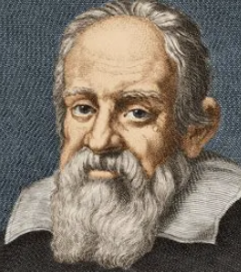
I have never met a man so ignorant that I could not learn something from him.
▼
Source
source
As quoted in The Story of Civilization : The Age of Reason Begins, 1558-1648 (1935) by Will Durant, p. 605

3 months 2 weeks ago
Before we as individuals are even conscious of our existence we have been profoundly influenced for a considerable time (since before birth) by our relationship to other individuals who have complicated histories, and are members of a society which has an infinitely more complicated and longer history than they do (and are members of it at a particular time and place in that history); and by the time we are able to make conscious choices we are already making use of categories in a language which has reached a particular degree of development through the lives of countless generations of human beings before us. . . . We are social creatures to the inmost centre of our being. The notion that one can begin anything at all from scratch, free from the past, or unindebted to others, could not conceivably be more wrong.
▼
Source
source
As quoted in Popper (1973) by Bryan Magee
3 months 4 weeks ago
One ought to fast, watch, and labor to the extent that such activities are needed to harness the body's desires and longings; however, those who presume that they are justified by works pay no attention to the need for self-discipline but see the works themselves as the way to righteousness. They believe that if they do a great number of impressive works all will be well and righteousness will be the result. Sometimes this is pursued with such zeal that they become mentally unstable and their bodies are sapped of all strength. Such disastrous consequences demonstrate that the belief that we are justified and saved by works without faith is extremely foolish.
▼
Source
source
p. 73

1 month 3 weeks ago
Every body continues in its state of rest, or of uniform motion in a right line, unless it is compelled to change that state by forces impressed upon it.
▼
Source
source
Laws of Motion, I
1 week 5 days ago
For the Scepticism, as I said, is not intellectual only; it is moral also; a chronic atrophy and disease of the whole soul. A man lives by believing something; not by debating and arguing about many things.

3 months 3 weeks ago
This bird sees the white man come and the Indian withdraw, but it withdraws not. Its untamed voice is still heard above the tinkling of the forge... It remains to remind us of aboriginal nature.
▼
Source
source
March 23, 1856; of the crow
2 months 1 week ago
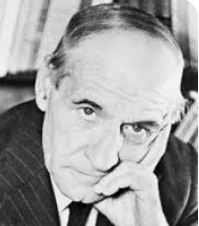
The man with the clear head is the man who frees himself from those fantastic "ideas" and looks life in the face, realises that everything in it is problematic, and feels himself lost. As this is the simple truth - that to live is to feel oneself lost - he who accepts it has already begun to find himself, to be on firm ground. Instinctively, as do the shipwrecked, he will look round for something to which to cling, and that tragic, ruthless glance, absolutely sincere, because it is a question of his salvation, will cause him to bring order into the chaos of his life.
▼
Source
source
Chapter XIV: Who Rules The World?

4 months 2 weeks ago
It happens that the stage sets collapse. Rising, streetcar, four hours in the office or the factory, meal, streetcar, four hours of work, meal, sleep and Monday Tuesday Wednesday Thursday Friday and Saturday according to the same rhythm this path is easily followed most of the time. But one day the "why" arises and everything begins in that weariness tinged with amazement.

3 months 3 weeks ago
In vain, therefore, should we pretend to determine any single event, or infer any cause or effect, without the assistance of observation and experience.
▼
Source
source
§ 4.11
2 months 2 days ago
People have committed suicide because of their failure to realize the passions for love, power, fame, revenge. Cases of suicide because of a lack of sexual satisfaction are virtually nonexistent.
▼
Source
source
p. 30
2 months 1 week ago
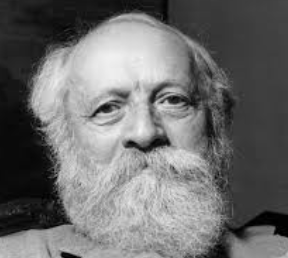
In philosophical anthropology, ... where the subject is man in his wholeness, the investigator cannot content himself, as in anthropology as an individual science, with considering man as another part of nature and with ignoring the fact that he, the investigator, is himself a man and experiences this humanity in his inner experience in a way that he simply cannot experience any part of nature.
▼
Source
source
p. 147

3 months 1 week ago
Education is an ornament for the prosperous, a refuge for the unfortunate.
▼
Source
source
Freeman (1948), p. 161
2 months 3 weeks ago
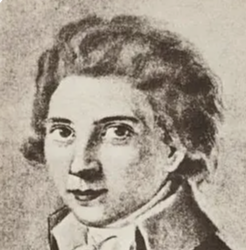
The most important subject, and the first problem of philosophy, is the restoration in man of the lost image of God; so far as this relates to science.Should this restoration in the internal consciousness be fully understood, and really brought about, the object of pure philosophy is attained.
CivilSimian.com created by AxiomaticPanic, CivilSimian, Kalokagathia