


3 months 2 weeks ago
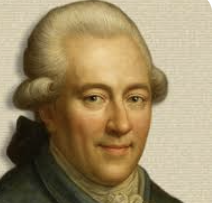
There cannot any one moral Rule be propos'd, whereof a Man may not justly demand a Reason.
▼
Source
source
Book I, Ch. 3, sec. 4
1 month 4 weeks ago
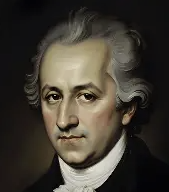
Man loves company - even if it is only that of a small burning candle.
▼
Source
source
K 40

3 months 2 weeks ago
I believe that the early success and reputation of Carlyle's French Revolution, were considerably accelerated by what I wrote about it in the Review. Immediately on its publication, and before the commonplace critics, all whose rules and modes of judgment it set at defiance, had time to preoccupy the public with their disapproval of it, I wrote and published a review of the book, hailing it as one of those productions of genius which are above all rules, and are a law to themselves.
▼
Source
source
(p. 217)

1 week 2 days ago
In that strange island Iceland,-burst up, the geologists say, by fire from the bottom of the sea; a wild land of barrenness and lava; swallowed many months of every year in black tempests, yet with a wild gleaming beauty in summertime; towering up there, stern and grim, in the North Ocean with its snow jokuls, roaring geysers, sulphur-pools and horrid volcanic chasms, like the waste chaotic battle-field of Frost and Fire;-where of all places we least looked for Literature or written memorials, the record of these things was written down.

4 months 6 days ago
The perfection of the effect demonstrates the perfection of the cause, for a greater power brings about a more perfect effect. But God is the most perfect agent. Therefore, things created by Him obtain perfection from Him. So, to detract from the perfection of creatures is to detract from the perfection of divine power.
▼
Source
source
III, 69, 15

2 months 2 weeks ago
Lucidity is not necessarily compatible with life, actually not at all.
1 month 4 weeks ago
It is almost everywhere the case that soon after it is begotten the greater part of human wisdom is laid to rest in repositories.
▼
Source
source
K 37

2 months 1 day ago
Like Fichte, Brentano had one simple and powerful insight. He declared: there is a basic difference between a mental and physical act. if I slip on the snow and fall flat on my back, that is an unintentional physical act. But there is no such thing as an unintentional mental act. When I think, I have to think about something; I have to focus my mind on it. You could compare all mental acts (thinking, willing, loving, trying to remember something) to a searchlight beam stabbing into the darkness. There is an element of will, of 'intentionality,' in all mental activity. So it is quite inaccurate to compare mental activity to chemistry, or to a kind of drifting, like leaves on a stream. It flows purposefully or not at all.
▼
Source
source
p. 35

3 months 2 weeks ago
In obedience to the feeling of reality, we shall insist that, in the analysis of propositions, nothing "unreal" is to be admitted. But, after all, if there is nothing unreal, how, it may be asked, could we admit anything unreal? The reply is that, in dealing with propositions, we are dealing in the first instance with symbols, and if we attribute significance to groups of symbols which have no significance, we shall fall into the error of admitting unrealities, in the only sense in which this is possible, namely, as objects described.
▼
Source
source
Ch. 16: Descriptions

2 months 2 weeks ago
I have seen the truth; I have seen and I know that people can be beautiful and happy without losing the power of living on earth. I will not and cannot believe that evil is the normal condition of mankind. And it is just this faith of mine that they laugh at. But how can I help believing it? I have seen the truth - it is not as though I had invented it with my mind, I have seen it, seen it, and the living image of it has filled my soul for ever. I have seen it in such full perfection that I cannot believe that it is impossible for people to have it.
3 months 2 weeks ago
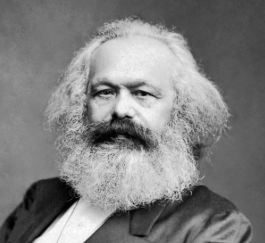
What strikes one here above all is the crudely empirical conception of profit derived from the outlook of the ordinary capitalist, which wholly contradicts the better esoteric understanding of Adam Smith.
▼
Source
source
Vol. II, Ch. X, p. 202.

4 months 2 weeks ago
Since the science of nature is conversant with magnitudes, motion, and time, each of which must necessarily be either infinite or finite...[we] should speculate the infinite, and consider whether it is or not; and if it is what it is. ...[A]ll those who appear to have touched on a philosophy of this kind... consider it as a certain principle of beings. Some, indeed, as the Pythagoreans and Plato, consider it, per se, not as being an accident to any thing else, but as having an essential subsistence... the Pythagoreans... consider the infinite as subsisting in sensibles; for they do not make number to be separate; and they assert that what is beyond the heavens is infinite; but Plato says that beyond the heavens there is not any body, nor ideas, because these are no where: he affirms, however, that the infinite is both in sensibles, and in ideas. ...Plato establishes two infinities, viz. the great and the small.

3 months 2 weeks ago
But what of the poor Ghosts who never get into the omnibus at all?' 'Everyone who wishes it does. Never fear. There are only two kinds of people in the end: those who say to God, "Thy will be done," and those to whom God says, in the end, "Thy will be done." All that are in Hell, choose it. Without that self-choice there could be no Hell. No soul that seriously and constantly desires joy will ever miss it. Those who seek find. To those who knock it is opened.
▼
Source
source
Ch. 9, p. 72; part of this has also been rendered in a variant form, and quoted as:
1 month 2 weeks ago
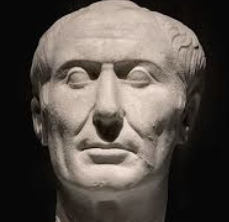
It is only the ignorant who despise education.
▼
Source
source
Maxim 571
2 months 1 week ago
Men have been released from [concentration] camps who have taken over the jargon of their jailers and with cold reason and mad consent (the price, as it were, of their survival) tell their story as if it could not have been otherwise than it was, contending that they have not been treated so badly after all.
▼
Source
source
p. 45.

3 months 1 week ago
He who is subjected to a field of visibility, and who knows it, assumes responsibility for the constraints of power; he makes them play spontaneously upon himself; he inscribes in himself the power relation in which he simultaneously plays both roles; he becomes the principle of his own subjection.
▼
Source
source
Part Three, Panopticism

3 weeks 4 days ago
The whole world is in some ways better than it's ever been in the past. And, indeed, I think for many people the meaning of their lives really depends on that belief. If you strip out that belief in progress, if you start thinking of the world in the way in which the ancient pre-Christian Europeans did, or the Buddhists and the Hindus or the Taoists of China do, many people think that's a kind of despair. I don't know how many times I've been told "If I thought that, John, I wouldn't get up in the morning" and "If I agreed with you, John, that history had no pattern of that kind, I wouldn't get up in the morning." I said, "Well, stay in bed a bit longer, you might find a better reason for getting up."
▼
Source
source
Quoted in John Gray at the Writers' Festival, part 1," The Philosopher's Zone, a discussion with Alan Saunders on ABC Radio National
3 months 2 weeks ago
All that is not eternal is eternally out of date.
▼
Source
source
"Charity"
1 week 2 days ago
The Noble in the high place, the Ignoble in the low; that is, in all times and in all countries, the Almighty Maker's Law.
1 month 4 weeks ago
It is a question whether, when we break a murderer on the wheel, we do not fall into the error a child makes when it hits the chair it has bumped into.
▼
Source
source
J 146

3 months 2 weeks ago
Science may be described as the art of systematic over-simplification - the art of discerning what we may with advantage omit.
▼
Source
source
The Open Universe : An Argument for Indeterminism (1992), p. 44
1 month 2 weeks ago
What should young people do with their lives today? Many things, obviously. But the most daring thing is to create stable communities in which the terrible disease of loneliness can be cured.
▼
Source
source
Commencement Address to Hobart and William Smith Colleges, May 26, 1974

3 months 2 weeks ago
That men do not learn very much from the lessons of history is the most important of all the lessons that history has to teach.
▼
Source
source
"A Case of Voluntary Ignorance" in Collected Essays, 1959

3 months 3 weeks ago
A good marriage would be between a blind wife and a deaf husband.
▼
Source
source
Book III, Ch. 5
1 week 2 days ago
Close thy Byron; open thy Goethe.
▼
Source
source
Bk. I, ch. 9.

3 months 2 weeks ago
I call upon you, young men, to obey your heart, and be the nobility of this land. In every age of the world, there has been a leading nation, one of a more generous sentiment, whose eminent citizens were willing to stand for the interests of general justice and humanity, at the risk of being called, by the men of the moment, chimerical and fantastic. Which should be that nation but these States? Which should lead that movement, if not New England? Who should lead the leaders, but the Young American?
2 months 2 weeks ago
Life inspires more dread than death - it is life which is the great unknown.
2 months 2 weeks ago
It is important to understand what I mean by semiosis. All dynamic action, or action of brute force, physical or psychical, either takes place between two subjects, - whether they react equally upon each other, or one is agent and the other patient, entirely or partially, - or at any rate is a resultant of such actions between pairs. But by "semiosis" I mean, on the contrary, an action, or influence, which is, or involves, a cooperation of three subjects, such as a sign, its object, and its interpretant, this tri-relative influence not being in any way resolvable into actions between pairs.
▼
Source
source
"Pragmatism" (1907) in The Essential Peirce : Selected Philosophical Writings (1998) edited by the Peirce Edition Project, Vol. 2, p. 411, Indiana University Press.
3 months 2 weeks ago
Liberty, as we all know, cannot flourish in a country that is permanently on a war footing, or even a near war footing. Permanent crisis justifies permanent control of everybody and everything by the agencies of central government.
▼
Source
source
Chapter 1 (p. 14)

3 months 2 weeks ago
If God had looked into our minds he would not have been able to see there whom we were speaking of.
▼
Source
source
Pt II, p. 217
3 months 2 weeks ago
If any philosopher had been asked for a definition of infinity, he might have produced some unintelligible rigmarole, but he would certainly not have been able to give a definition that had any meaning at all.
▼
Source
source
Ch. 5: Mathematics and the Metaphysicians

4 months 2 weeks ago
Knowledge is the food of the soul; and we must take care, my friend, that the Sophist does not deceive us when he praises what he sells, like the dealers wholesale or retail who sell the food of the body; for they praise indiscriminately all their goods, without knowing what are really beneficial or hurtful.


1 month 2 weeks ago
For the first half of geological time our ancestors were bacteria. Most creatures still are bacteria, and each one of our trillions of cells is a colony of bacteria.
2 months 2 weeks ago
What is the wisdom of a book compared with the wisdom of an angel?
3 months 2 weeks ago
Philosophy seems to me on the whole a rather hopeless business.
▼
Source
source
Letter to Gilbert Murray, December 28, 1902
1 week 2 days ago
Under all speech that is good for anything there lies a silence that is better.
▼
Source
source
Silence is deep as Eternity; speech is shallow as Time.

4 months 3 weeks ago
The man who is guided by concepts and abstractions only succeeds by such means in warding off misfortune, without ever gaining any happiness for himself from these abstractions. And while he aims for the greatest possible freedom from pain, the intuitive man, standing in the midst of a culture, already reaps from his intuition a harvest of continually inflowing illumination, cheer, and redemption in addition to obtaining a defense against misfortune. To be sure, he suffers more intensely, when he suffers; he even suffers more frequently, since he does not understand how to learn from experience and keeps falling over and over again into the same ditch.
3 months 1 week ago
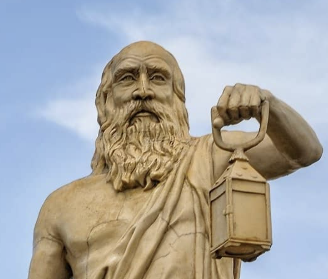
To the question what wine he found pleasant to drink, he replied, "That for which other people pay."
▼
Source
source
Diogenes Laërtius, vi. 54

4 months 1 week ago
If a man has no humaneness what can his propriety be like? If a man has no humaneness what can his happiness be like?

3 days ago
Nothing is hidden so much that it wouldn't be revealed through its fruit.
2 months 2 weeks ago
The romantic poetry is a progressive universal poetry.
▼
Source
source
Progressive Universalpoesie (1798)
2 months 2 weeks ago
The wrinkles of a nation are as visible as those of an individual.
3 months 2 weeks ago
If you read history you will find that the Christians who did most for the present world were just those who thought most of the next... It is since Christians have largely ceased to think of the other world that they have become so ineffective in this. Aim at Heaven and you will get earth "thrown in": aim at earth and you will get neither.
▼
Source
source
Book III, Chapter 10, "Hope"
3 months 2 weeks ago
Force is the midwife of every old society pregnant with a new one. It is itself an economic power.
▼
Source
source
Vol. I, Ch. 31, pg. 824
4 months 3 days ago
You are a little soul carrying a corpse around, as Epictetus used to say.
▼
Source
source
Fragment 26 (Oldfather translation). This fragment originates from Marcus Aurelius, Meditations, IV. 41.
2 months 1 week ago
Power as is really divided, and as dangerously to all purposes, by sharing with another an Indirect Power, as a Direct one.
▼
Source
source
The Third Part, Chapter 42, p. 315
3 months 2 weeks ago
Children should from the beginning be bred up in an abhorrence of killing or tormenting any living creature; and be taught not to spoil or destroy any thing, unless it be for the preservation or advantage of some other that is nobler.
▼
Source
source
Sec. 116

2 months 1 day ago
Without narration, life is purely additive.
CivilSimian.com created by AxiomaticPanic, CivilSimian, Kalokagathia