

3 months 1 week ago
No man can mortgage his injustice as a pawn for his fidelity.

4 months 6 days ago
The unitive knowledge of the Divine Ground has, as its necessary condition, self-abnegation and charity. Only by means of self-abnegation and charity can we clear away the evil, folly and ignorance which constitute the thing we call our personality and prevent us from becoming aware of the spark of divinity illuminating the inner man.


1 month 4 weeks ago
Everybody needs his memories. They keep the wolf of insignificance from the door.
▼
Source
source
Mr. Sammler's Planet (1970) [Penguin Classics, 2004, ISBN 0-142-43783-2], p. 156
3 months 3 weeks ago
Neither our distance from a preventable evil nor the number of other people who, in respect to that evil, are in the same situation as we are, lessens our obligation to mitigate or prevent that evil.
2 months 4 weeks ago
I Jesus have sent mine angel to testify unto you these things in the churches. I am the root and the offspring of David, and the bright and morning star.
▼
Source
source
Revelation 22:17

3 days ago
The cucumber is bitter? Then throw it out. There are brambles in the path? Then go around them. That's all you need to know.
▼
Source
source
(Hays translation) VIII, 50
2 months 1 week ago
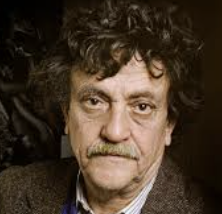
What television does is rent us friends and relatives who are quite satisfactory. The child watching TV loves these people, you know -- they're in color, and they're talking to the child. Why wouldn't a child relate to these people? And you know, if you can't sleep at 3 o'clock in the morning, you can turn on a switch, and there are your friends and relatives, and they obviously like you. And they're charming. Who wouldn't want Peter Jennings for a relative? This is quite something, to rent artificial friends and relatives right inside the house.
▼
Source
source
Interviewed by Frank Houston, "The Salon Interview: Kurt Vonnegut", Salon

3 months 2 days ago
The need to devour oneself absolves one of the need to believe.

4 months 1 week ago
When we have weighed everything, and when our relations in life permit us to choose any given position, we may take that one which guarantees us the greatest dignity, which is based on ideas of whose truth we are completely convinced, which offers the largest field to work for mankind and approach the universal goal for which every position is only a means: perfection.
▼
Source
source
Writings of the Young Marx on Philosophy and Society, L. Easton, trans. (1967), p. 38
3 days ago
How much time he gains who does not look to see what his neighbor says or does or thinks, but only at what he does himself, to make it just and holy.
▼
Source
source
IV, 18

4 months 6 days ago
A man contains all that is needful to his government within himself. He is made a law unto himself. All real good or evil that can befal him must be from himself. He only can do himself any good or any harm. Nothing can be given to him or can taken from him but always there is a compensation.. There is a correspondence between the human soul and everything that exists in the world; more properly, everything that is known to man. Instead of studying things without the principles of them, all may be penetrated unto with him. Every act puts the agent in a new position. The purpose of life seems to be to acquaint a man with himself. He is not to live the future as described to him but to live the real future to the real present. The highest revelation is that God is in every man.
▼
Source
source
September 8, 1833

3 months 3 weeks ago
One should emulate works and deeds of virtue, not arguments about it.

5 months 4 days ago
A fire eater must eat fire even if he has to kindle it himself.
1 week ago
To cleave that sea in the gentle autumnal season, murmuring the name of each islet, is to my mind the joy most apt to transport the heart of man into paradise.
▼
Source
source
On the Aegean Sea, in Ch. 2
3 months 2 days ago
Only those moments count when the desire to remain by yourself is so powerful that you'd prefer to blow your brains out than to exchange a word with someone.
1 month 4 weeks ago
In the greatest confusion there is still an open channel to the soul. It may be difficult to find because by midlife it is overgrown, and some of the wildest thickets that surround it grow out of what we describe as our education. But the channel is always there, and it is our business to keep it open, to have access to the deepest part of ourselves-to that part of us which is conscious. ... The independence of this consciousness, which has the strength to be immune to the noise of history and the distractions of our immediate surroundings, is what the life struggle is all about. The soul has to find and hold its ground against hostile forces, sometimes embodied in ideas which frequently deny its very existence, and which indeed often seem to be trying to annul it altogether.
▼
Source
source
pp. 16-17

4 months 2 weeks ago
The obliteration of the evil hath been practised by two means, some kind of redemption or expiation of that which is past, and an inception or account de novo for the time to come. But this part seemeth sacred and religious, and justly; for all good moral philosophy (as was said) is but a handmaid to religion.
▼
Source
source
Book II, xxii, 14
4 months 3 weeks ago
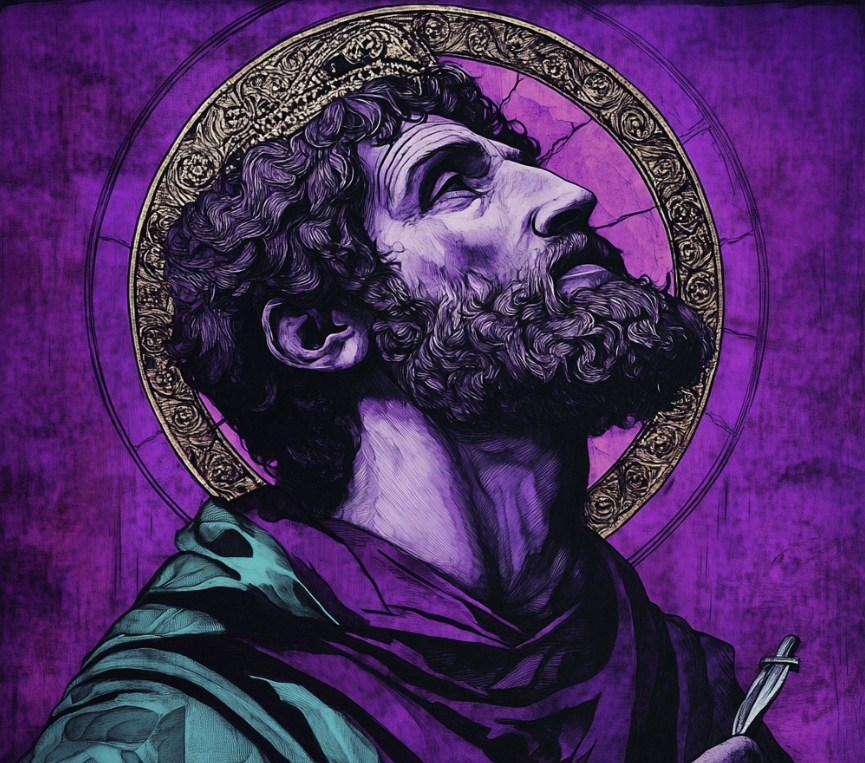
But if we discard this definition of a people, and, assuming another, say that a people is an assemblage of reasonable beings bound together by a common agreement as to the objects of their love, then, in order to discover the character of any people, we have only to observe what they love. Yet whatever it loves, if only it is an assemblage of reasonable beings and not of beasts, and is bound together by an agreement as to the objects of love, it is reasonably called a people; and it will be a superior people in proportion as it is bound together by higher interests, inferior in proportion as it is bound together by lower.
▼
Source
source
XIX, 24
2 weeks 3 days ago
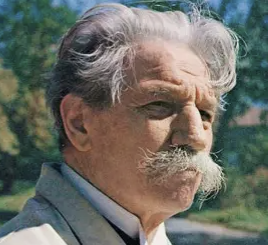
We do not have a complete and satisfying knowledge of the world. We are reduced to the simple conclusion that everywhere in the world there is life like ourselves and that all life is shrouded in mystery. A true acquaintance with the world consists in being filled with a sense of the mystery of existence and life. This mystery becomes only more mysterious with every advance in scientific research. To be filled with the mystery of life is like that which is called in the language of mysticism the "wise ignorance," an ignorance which is nonetheless knowledge of the essential.
▼
Source
source
p. 304

3 weeks 6 days ago
O reader, to what shifts is poor Society reduced, struggling to give still some account of herself, in epochs when Cash Payment has become the sole nexus of man to men!
▼
Source
source
Ch. 6, Laissez-Faire.

4 months 5 days ago
The history of science, like the history of all human ideas, is a history of irresponsible dreams, of obstinacy, and of error. But science is one of the very few human activities - perhaps the only one - in which errors are systematically criticized and fairly often, in time, corrected. This is why we can say that, in science, we often learn from our mistakes, and why we can speak clearly and sensibly about making progress there.
▼
Source
source
Ch. 1 "Science : Conjectures and Refutations"
2 months 2 weeks ago
These papers are all written from what is called a realist perspective. The statements of science are in my view either true or false (although it is often the case that we don't know which) and their truth or falsity does not consist in their being highly derived ways of describing regularities in human experience. Reality is not a part of the human mind; rather the human mind is a part - and a small part at that - of reality.
▼
Source
source
"Introduction: Science as approximation to truth"
1 week ago
Every man worthy of being called a son of man bears his cross and mounts his Golgotha. Many, indeed most, reach the first or second step, collapse pantingly in the middle of the journey, and do not attain the summit of Golgotha, in other words the summit of their duty: to be crucified, resurrected, and to save theirs souls. Afraid of crucifixion, they grow fainthearted; they do not know that the cross is the only path to resurrection. There is no other path.
▼
Source
source
Author's Introduction, p. 15
2 months 2 days ago
The successful scientist and the raving crank are separated by the quality of their inspirations. But I suspect that this amounts, in practice, to a difference, not so much in ability to notice analogies as in ability to reject foolish analogies and pursue helpful ones.
▼
Source
source
Chapter 8 "Explosions and Spirals" (pp. 195-196)
2 months 2 days ago
The river of my title is a river of DNA, and it flows through time, not space. It is a river of information, not a river of bones and tissues.
3 weeks ago
Meanwhile, hold fast to this thought, and grip it close: yield not to adversity; trust not to prosperity; keep before your eyes the full scope of Fortune's power, as if she would surely do whatever is in her power to do.

2 months 3 weeks ago
A society like the Church, which claims to be Divine is perhaps more dangerous on account of the ersatz good which it contains then on account of the evil which sullies it. Something of the social labelled divine: an intoxicating mixture which carries with it every sort of license.
▼
Source
source
Devil disguised. p. 122
2 months 1 week ago
Whatever it may be, animals have always had, until our era, a divine or sacrificial nobility that all mythologies recount. Even murder by hunting is still a symbolic relation, as opposed to an experimental dissection. Even domestication is still a symbolic relation, as opposed to industrial breeding. One only has to look at the status of animals in peasant society. And the status of domestication, which presupposes land, a clan, a system of parentage of which the animals are a part, must not be confused with the status of the domestic pet-the only type of animals that are left to us outside reserves and breeding stations-dogs, cats, birds, hamsters, all packed together in the affection of their master. The trajectory animals have followed, from divine sacrifice to dog cemeteries with atmospheric music, from sacred defiance to ecological sentimentality, speaks loudly enough of the vulgarization of the status of man himself.
▼
Source
source
"The Animals: Territory and Metamorphoses," p. 134

5 months 1 week ago
Be attentive therefore, according to the instruction of the Gospel, to learn obedience from the lily and the bird. Be not affrighted, do no despair, when thou comparest thy life with these teachers. There is nothing to despair about, for indeed thou shalt learn from them; and the Gospel first comforts thee by telling thee that God is the God of patience, and then it adds: 'Thou shalt learn from the lilies and the birds, learn to be absolutely obedient like the lilies and the birds, learn not to serve two masters; for no man can serve two masters, he must either ... or.

5 months 1 week ago
Because of the way that myth takes it for granted that miracles are always happening, the waking life of a mythically inspired people the ancient Greeks, for instance more closely resembles a dream than it does the waking world of a scientifically disenchanted thinker.
2 months 3 weeks ago
When I read the catechism of the Council of Trent, it seems as though I had nothing in common with the religion there set forth.

4 months 1 week ago
I cannot believe - and I say this with all the emphasis of which I am capable - that there can ever be any good excuse for refusing to face the evidence in favour of something unwelcome. It is not by delusion, however exalted, that mankind can prosper, but only by unswerving courage in the pursuit of truth.
▼
Source
source
"The Pursuit of Truth" in The Collected Papers of Bertrand Russell, 1993

6 days ago
Our opinion here is that that place has been so deeply concerned in smuggling, that if it wants it is because it has illegally sent away what it ought to have retained for its own consumption.
▼
Source
source
Letter to Lieutenant Governor Levi Lincoln of Massachusetts (November 13, 1808) concerning a petition from the island of Nantucket for food during the American embargo.

4 months 1 week ago
The real and effectual discipline which is exercised over a workman is that of his customers. It is the fear of losing their employment which restrains his frauds and corrects his negligence.
▼
Source
source
Chapter X, Part II.
3 weeks ago
As you talk, so is your heart.
3 months 3 days ago
...the relatively unconscious man driven by his natural impulses because, imprisoned in his familiar world, he clings to the commonplace, the obvious, the probable, the collectively valid, using for his motto: 'Thinking is difficult. Therefore, let the herd pronounce judgement.'
▼
Source
source
Frequently misquoted as "Thinking is difficult, that's why most people judge" and close variants. Flying Saucers: A Modern Myth of Things Seen in the Sky. (1959), C.G. Jung, R.F.C. Hull (translator) (Princeton Press, 1979, ISBN 9780691018225

2 months 2 weeks ago
There is no such thing as data-driven thinking.
4 weeks ago
In the past you rivalled the Achaians and the Macedonians, peoples of your own race, and Philip, their commander, for the hegemony and glory, but now that the freedom of the Hellenes is at stake at a war against an alien people (Romans), ...And does it worth to ally with the barbarians, to take the field with them against the Epeirotans, the Achaians, the Akarnanians, the Boiotians, the Thessalians, in fact with almost all the Hellenes with the exception of the Aitolians who are a wicked nation... ...So Lakedaimonians it is good to remember your ancestors,... be afraid of the Romans... and do ally yourselves with the Achaians and Macedonians. But if some the most powerful citizens are opposed to this policy at least stay neutral and do not side with the unjust.
▼
Source
source
Histories, IX, 37:7-39:7 (Loeb)
3 months 2 days ago
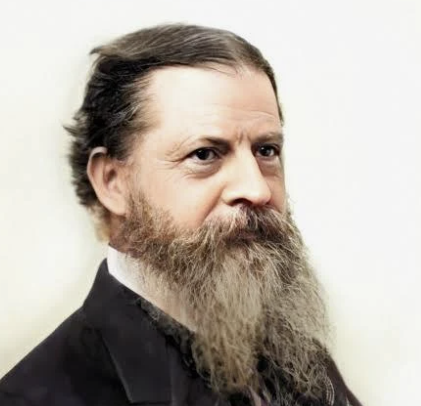
True science is distinctively the study of useless things. For the useful things will get studied without the aid of scientific men.

2 months 2 weeks ago
The dominant, almost general, idea of revolution - particularly the Socialist idea - is that revolution is a violent change of social conditions through which one social class, the working class, becomes dominant over another class, the capitalist class. It is the conception of a purely physical change, and as such it involves only political scene shifting and institutional rearrangements. Bourgeois dictatorship is replaced by the "dictatorship of the proletariat" - or by that of its "advance guard," the Communist Party. Lenin takes the seat of the Romanovs, the Imperial Cabinet is rechristened Soviet of People's Commissars, Trotsky is appointed Minister of War, and a labourer becomes the Military Governor General of Moscow. That is, in essence, the Bolshevik conception of revolution, as translated into actual practice.
3 weeks 6 days ago
Whatsoever is not beaverish seems to go forth in the shape of talk. To such length is human intellect wasted or suppressed in this world!
1 month 3 weeks ago
If some great Power would agree to make me always think what is true and do what is right, on condition of being turned into a sort of clock and wound up every morning before I got out of bed, I should instantly close with the offer. The only freedom I care about is the freedom to do right; the freedom to do wrong I am ready to part with on the cheapest terms to any one who will take it of me.
▼
Source
source
"On Descartes' Discourse touching the method of using one's reason rightly and of seeking scientific truth"

2 months 2 weeks ago
Men and women meet now to be idle. Is it extraordinary that they do not know each other, and that, in their mutual ignorance, they form no surer friendships? Did they meet to do something together, then indeed they might form some real tie. But, as it is, they are not there, it is only a mask which is there - a mouth-piece of ready-made sentences about the "topics of the day"; and then people rail against men for choosing a woman "for her face" - why, what else do they see?
4 months 6 days ago
The alleged power to charm down insanity, or ferocity in beasts, is a power behind the eye.
▼
Source
source
Behavior
2 months 2 weeks ago
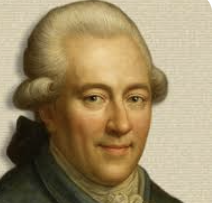
It is in the gift for employing all the vicissitudes of life to one's own advantage and to that of one's craft that a large part of genius consists.
▼
Source
source
K 48
4 months 5 days ago
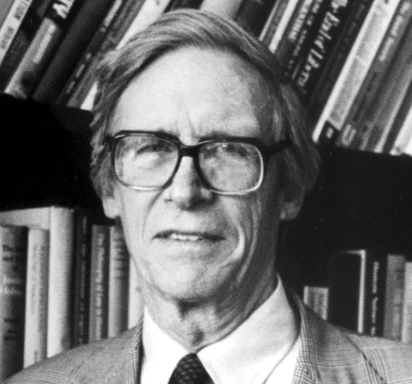
First of all, no one knows his place in society, his class position or social status; nor does he know his fortune in the distribution of natural assets and abilities, his intelligence and strength, and the like. Nor, again, does anyone know his conception of the good, the particulars of his rational plan of life, or even the special features of psychology such as his aversion to risk or liability to optimism or pessimism. More than this, I assume that the parties do not know the particular circumstances of their own society. That is, they do not know its particular economic or political situation, or the level of civilization and culture it has been able to achieve. The persons in the original position have no information as to which generation they belong.
▼
Source
source
p. 117
2 months 2 weeks ago
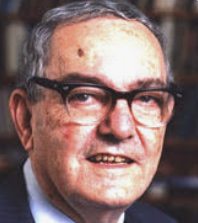
In Administrative Behavior, bounded rationality is largely characterized as a residual category - rationality is bounded when it falls short of omniscience. And the failures of omniscience are largely failures of knowing all the alternatives, uncertainty about relevant exogenous events, and inability to calculate consequences. There was needed a more positive and formal characterization of the mechanisms of choice under conditions of bounded rationality... Two concepts are central to the characterization: search and satisficing.
▼
Source
source
p. 502; As cited in Barros (2010, p. 464-5).

4 months 2 weeks ago
The true Gospel has it that we are justified by faith alone, without the deeds of the Law.
▼
Source
source
Chapter 2
CivilSimian.com created by AxiomaticPanic, CivilSimian, Kalokagathia