


3 days ago
At any rate, if you wish to sift doubtful meanings of this kind, teach us that the happy man is not he whom the crowd deems happy, namely, he into whose coffers mighty sums have flowed, but he whose possessions are all in his soul, who is upright and exalted, who spurns inconstancy, who sees no man with whom he wishes to change places, who rates men only at their value as men, who takes Nature for his teacher, conforming to her laws and living as she commands, whom no violence can deprive of his possessions, who turns evil into good, is unerring in judgment, unshaken, unafraid, who may be moved by force but never moved to distraction, whom Fortune when she hurls at him with all her might the deadliest missile in her armoury, may graze, though rarely, but never wound.

3 months ago
Do not even think of doing what ought not to be done.
▼
Source
source
Pythagorean Ethical Sentences From Stobæus

3 months 3 weeks ago
They who have compared our lives to a dream were, perhaps, more in the right than they were aware of. When we dream, the soul lives, works, and exercises all its faculties, neither more nor less than when awake; but more largely and obscurely, yet not so much, neither, that the difference should be as great as betwixt night and the meridian brightness of the sun, but as betwixt night and shade; there she sleeps, here she slumbers; but, whether more or less, 'tis still dark, and Cimmerian darkness. We wake sleeping, and sleep waking.
▼
Source
source
tr. Cotton, rev. W. Carew Hazlitt, 1877

3 months 2 weeks ago
Choose your parents wisely.
▼
Source
source
On the recipe for longevity; Collected Papers of Bertrand Russell, Vol. 29, 2012

2 months 2 weeks ago
...what was done in France was a wild attempt to methodize anarchy; to perpetuate and fix disorder. That it was a foul, impious, monstrous thing, wholly out of the course of moral nature. He undertook to prove, that it was generated in treachery, fraud, falsehood, hypocrisy, and unprovoked murder. ... That by the terror of assassination they had driven away a very great number of the members, so as to produce a false appearance of a majority.-That this fictitious majority had fabricated a constitution, which as now it stands, is a tyranny far beyond any example that can be found in the civilized European world of our age.
▼
Source
source
p. 376

2 months 5 days ago
Perhaps there is nobody who would sacrifice his life for the sake of maintaining that the three angles of a triangle are together equal to two right angles, for such a truth does not demand the sacrifice of our life; but, on the other hand, there are many who have lost their lives for the sake of maintaining their religious faith. Indeed, it is truer to say that martyrs make faith than that faith makes martyrs. For faith is not the mere adherence of the intellect to an abstract principle; it is not the recognition of a theoretical truth, the process in which the will merely sets in motion our faculty of comprehension; faith is an act of the will - it is a movement of the soul towards a practical truth, towards a person, towards something that makes us not merely comprehend life, but that makes us live.

1 week 2 days ago
We are no longer instinctively driven to apprehend, and lay to heart, what is Good and Lovely, but rather to inquire, as onlookers, how it is produced, whence it comes, whither it goes. Our favourite Philosophers have no love and no hatred; they stand among us not to do, nor to create anything, but as a sort of Logic mills, to grind out the true causes and effects of all that is done and created.

2 months 3 days ago
For the kingdom of heaven is with us today.
1 week 5 days ago
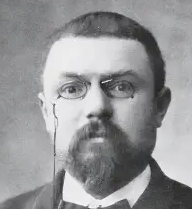
The Scientist must set in order. Science is built up with facts, as a house is with stones. But a collection of facts is no more a science than a heap of stones is a house.
▼
Source
source
Ch. IX: Hypotheses in Physics, Tr. George Bruce Halsted

3 months 3 weeks ago
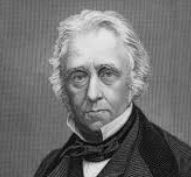
They are ill discoverers that think there is no land, when they can see nothing but sea.
▼
Source
source
Book II, vii, 5
1 month 1 week ago
It seems that the creative faculty, and the critical faculty, cannot exist together in their highest perfection.
▼
Source
source
p. 186
2 months 1 week ago
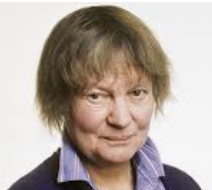
A bad review is even less important than whether it is raining in Patagonia.
▼
Source
source
Quoted in The Times (6 July 1989).

3 months 2 weeks ago
In our science and philosophy, even, there is commonly no true and absolute account of things. The spirit of sect and bigotry has planted its hoof amid the stars. You have only to discuss the problem, whether the stars are inhabited or not, in order to discover it.
▼
Source
source
p. 490
1 week 5 days ago
We have not a direct intuition of the equality of two intervals of time.

2 months 1 week ago
Thou hast said: nevertheless I say unto you, Hereafter shall ye see the Son of man sitting on the right hand of power, and coming in the clouds of heaven.
▼
Source
source
26:64 (KJV) Said to Caiaphas, the high priest.

2 months 3 weeks ago
The main business of religions is to purify, control, and restrain that excessive and exclusive taste for well-being which men acquire in times of equality.
▼
Source
source
Book One, Chapter V.
3 days ago
Socrates was ennobled by the hemlock draught. Wrench from Cato's hand his sword, the vindicator of liberty, and you deprive him of the greatest share of his glory.

3 months 2 weeks ago
When the rich make war, it's the poor that die.

1 month 2 weeks ago
The inherent contradiction of human life has now reached an extreme degree of tension: on the one side there is the consciousness of the beneficence of the law of love, and on the other the existing order of life which has for centuries occasioned an empty, anxious, restless, and troubled mode of life, conflicting as it does with the law of love and built on the use of violence. This contradiction must be faced, and the solution will evidently not be favourable to the outlived law of violence, but to the truth which has dwelt in the hearts of men from remote antiquity: the truth that the law of love is in accord with the nature of man. But men can only recognize this truth to its full extent when they have completely freed themselves from all religious and scientific superstitions and from all the consequent misrepresentations and sophistical distortions by which its recognition has been hindered for centuries.
▼
Source
source
VI
2 months 1 week ago
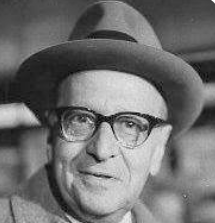
Logical empiricism holds the view, notwithstanding some its assertions, that the forms of knowledge and consequently the relations of man to nature and to other men never change. According to rationalism, too, all subjective and objective potentialities are rooted in insights which the individual already possesses, but rationality uses existing objects as well as the active inner striving and ideas of man to construct standards for the future. In this regard, it is not so closely associated with the present order as is empiricism.
▼
Source
source
p. 148.
7 months 3 weeks ago
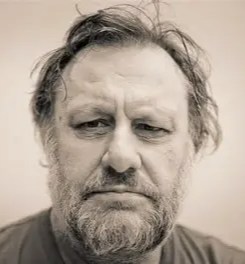
What is really disturbing about The Name of the Rose, however, is the underlying belief in the liberating, anti-totalitarain force of laughter, of ironic distance. Our thesis here is almost the exact opposite of the underlying premise of Eco's novel: in contemporary socities, democratic or totalitarian, that cynical distance, laughter, irony, are so to speak, part of the game. The ruling ideology is not meant to be taken seriously or literally. Perhaps the greatest danger for totalitarianism is people who take ideology seriously.
4 weeks ago
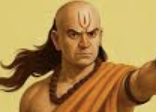
Don't judge the future of a person based on his present conditions, because time has the power to change black coal to shiny diamond.

3 months 2 weeks ago
Is anything more certain than that in all those vast times and spaces, if I were allowed to search them, I should nowhere find her face, her voice, her touch? She died. She is dead. Is the word so difficult to learn?

2 months 2 weeks ago
My faculty for disappointment surpasses understanding. It is what lets me comprehend Buddha, but also what keeps me from following him.
1 month 4 weeks ago
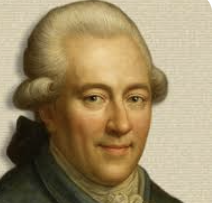
There are people who believe everything is sane and sensible that is done with a solemn face. ... It is no great art to say something briefly when, like Tacitus, one has something to say; when one has nothing to say, however, and none the less writes a whole book and makes truth ... into a liar - that I call an achievement.
▼
Source
source
E 59 Variant translation: There are people who think that everything one does with a serious face is sensible…
3 months 2 weeks ago
A man who is free is like a mangy sheep in a herd. He will contaminate my entire kingdom and ruin my work.
▼
Source
source
King Aegistheus, Act 2
3 months 2 weeks ago
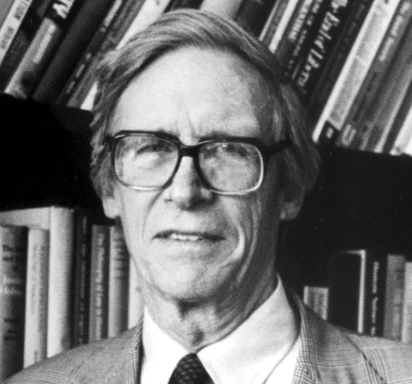
No one deserves his greater natural capacity nor merits a more favorable starting place in society.
▼
Source
source
Chapter II, Section 17, pg. 102
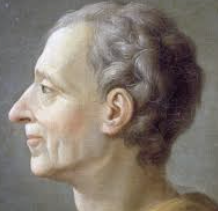
2 months 5 days ago
Not to be loved is a misfortune, but it is an insult to be loved no longer.
▼
Source
source
No. 3. (Zachi writing to Usbek)
3 months 3 weeks ago
Why may not a goose say thus: "All the parts of the universe I have an interest in: the earth serves me to walk upon, the sun to light me; the stars have their influence upon me; I have such an advantage by the winds and such by the waters; there is nothing that yon heavenly roof looks upon so favourably as me. I am the darling of Nature! Is it not man that keeps and serves me?"
▼
Source
source
Book II, Ch. 12. Apology for Raimond Sebond
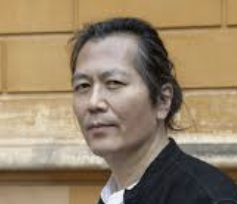
2 months 1 day ago
The liturgy of emptiness dispels the capitalist economy of the commodity.
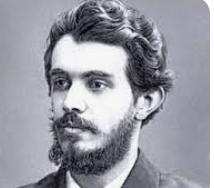
2 months 4 days ago
It must be recognized that man in his limited and relative earthly life is capable of bringing about the beautiful and the valuable only when he believes in another life, unlimited, absolute, eternal. That is a law of his being. A contact with this mortal life exclusive of any other ends in the wearing-away of effective energy and a self-satisfaction that makes one useless and superficial. Only the spiritual man, striking his roots deep in infinite and eternal life, can be a true creator. But Humanism denied the spiritual man, handed over the eternal to the temporal, and took its stand by the natural man within the limited confines of the earth.
▼
Source
source
p. 34
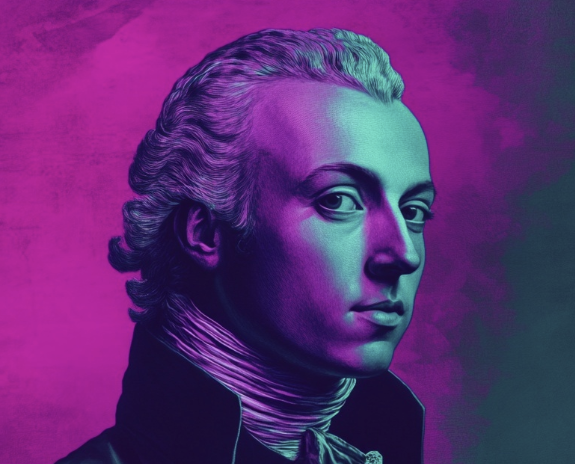
3 months 3 weeks ago
The means employed by Nature to bring about the development of all the capacities of men is their antagonism in society, so far as this is, in the end, the cause of a lawful order among men.
▼
Source
source
Fourth Thesis
1 week 4 days ago
Pragmatism starts from assumptions similar to those of empiriocriticism, but differs from the latter by its striking formulations, loose aphorisms, and analytical unscrupulousness.
▼
Source
source
Chapter Seven, Pragmatism and Positivism, p. 166

3 months 3 weeks ago
A speech comes alive only if it rises from the heart, not if it floats on the lips.
▼
Source
source
in The Erasmus Reader (1990), p. 130.
2 months 2 weeks ago
I have all the defects of other people yet everything they do seems to me inconceivable.
3 months 2 weeks ago
On est ce qu'on veut. A man is what he wills himself to be.

3 months 3 weeks ago
A man must be perfectly crazy who, where there is tolerable security, does not employ all the stock which he commands…
▼
Source
source
Chapter I, p. 313 (see opportunity cost).

2 months 5 days ago
I do not understand these men who tell me that the prospect of the yonder side of death has never tormented them, that the thought of their own annihilation never disquiets them. For my part I do not wish to make peace between my heart and my head, between my faith and my reason - I wish rather that there should be war between them.
3 months 1 week ago
The circle of day and night is the law of the classical world: the most restricted but most demanding of the necessities of the world, the most inevitable but the simplest of the legislations of nature.This was a law that excluded all dialectics and all reconciliation, consequently laying the foundations for the smooth unity of knowledge as well as the uncompromising division of tragic existence. It reigns on a world without darkness, which knows neither effusiveness nor the gentle charms of lyricism. All is waking or dreams, truth or error, the light of being or the nothingness of shadow.
▼
Source
source
Part Two: 2. The Transcendence of Delirium
4 months 2 weeks ago
Nature does not do anything in vain.

4 months 2 weeks ago
Certain success evicts one from the paradise of winning against the odds.
2 months 2 weeks ago
A great revolution is on the point of being accomplished. It is a revolution not in human affairs, but in man himself.
▼
Source
source
p. 2
4 months 2 weeks ago
A person might fairly doubt also what in the world they mean by the absolute - this that or the other, since, as they would themselves allow, the account of the humanity is one and the same in the absolute man, and in any individual man: for so far as the individual and the absolute man are both man, they will not differ at all: and if so, then the essential good and any particular good will not differ, in so far as both are good. Nor will it do to say that the eternity of the absolute good makes it to be more good; for a white thing which has lasted white ever so long, is no whiter than that which only lasts for a day.
3 months 3 weeks ago
We seek and offer ourselves to be gulled.
▼
Source
source
Book III, Ch. 11. Of Cripples
3 months 2 weeks ago
Poetry is the mysticism of mankind.
1 month 4 days ago
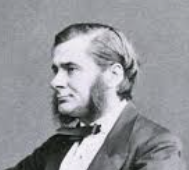
The method of scientific investigation is nothing but the expression of the necessary mode of working of the human mind.
▼
Source
source
Our Knowledge of the Causes of the Phenomena of Organic Nature
4 months 2 weeks ago
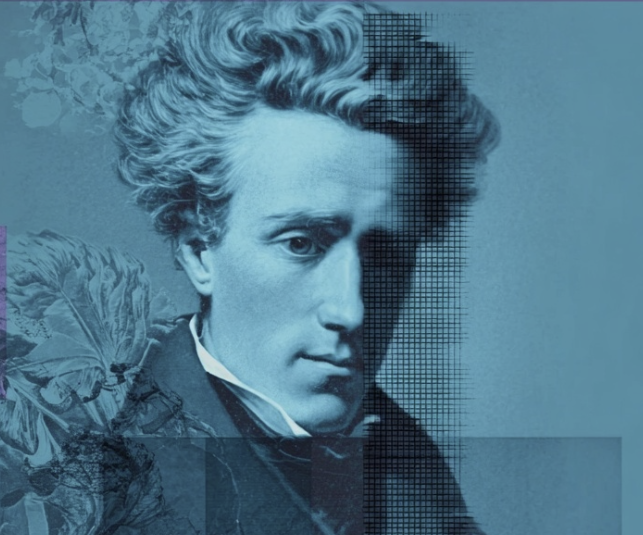
A genius and an Apostle are qualitatively different, they are definitions which each belong in their own spheres: the sphere of immanence, and the sphere of transcendence.
2 months 2 weeks ago
In this choice of inheritance we have given to our frame of polity the image of a relation in blood, binding up the constitution of our country with our dearest domestic ties, adopting our fundamental laws into the bosom of our family affections, keeping inseparable and cherishing with the warmth of all their combined and mutually reflected charities our state, our hearths, our sepulchres, and our altars.
4 months 1 week ago
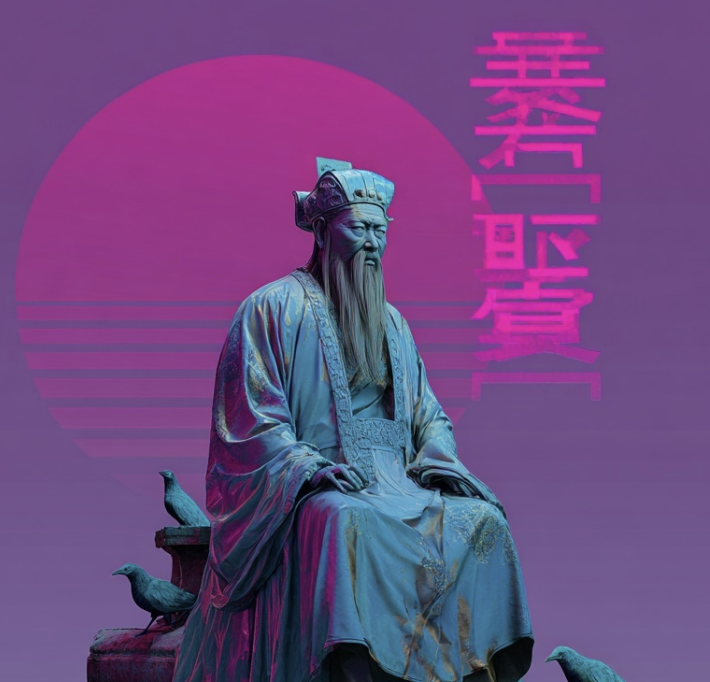
When one cultivates to the utmost the principles of his nature, and exercises them on the principle of reciprocity, he is not far from the path. What you do not like when done to yourself, do not do to others.
CivilSimian.com created by AxiomaticPanic, CivilSimian, Kalokagathia