



5 months ago
No matter how outrageous a lie may be, it will be accepted if stated loudly enough and often enough.

2 months 4 weeks ago
In order to conceive, and to steep ourselves in, unreality, we must have it constantly present to our minds. The day we feel it, see it, everything becomes unreal, except that unreality which alone makes existence tolerable.

4 months 2 days ago
The process of being brought up, however well it is done, cannot fail to offend.
1 month 1 week ago
Everyone knows that time is Death, that Death hides in clocks. Imposing another time powered by the Clock of the Imagination, however, can refuse his law. Here, freed of the Grim Reaper's scythe, we learn that pain is knowledge and all knowledge pain.
▼
Source
source
"Death"

2 months ago
I don't explain-I explore.
2 months 2 weeks ago
The pathos of it all is that the America which is to be protected by a huge military force is not the America of the people, but that of the privileged class; the class which robs and exploits the masses, and controls their lives from the cradle to the grave. No less pathetic is it that so few people realize that preparedness never leads to peace, but that it is indeed the road to universal slaughter.

3 months 1 week ago
The lowest degree of education is to distinguish oneself from the ignorant ordinary man. The educated man does not loathe honey even if he finds it in the surgeon's cupping-glass; he realizes that the cupping glass does not essentially alter the honey. The natural aversion from it in such a case rests on popular ignorance, arising from the fact that the cupping-glass is made only for impure blood. Men imagine that the blood is impure because it is in the cupping-glass, and are not aware that the impurity is due to a property.
▼
Source
source
III. The Classes of Seekers, p. 31.
1 week 6 days ago
The highest activities are always essentially lonely and private, and these men had a robust sense of their independence and the ultimate self-sufficiency of the mind. In this they were just like Socrates. The only change they operated was to bring philosophy out of the closet into the open, instead of seeking protection behind a little wall like men in a storm. Of course, in so doing they made philosophy, on the one hand, more vulnerable to the public if the hopes of controlling the public are not fulfilled, and, on the other, put at risk that inner intransigence which is the necessary condition of the quest for truth. Not only the rewards but the new responsibilities might prove irresistible temptations to compromise.
▼
Source
source
"Commerce and Culture," p. 290.
3 days ago
You have your brush, you have your colours, you paint paradise, then, in you go.
▼
Source
source
As quoted in Journal of Modern Literature Vol. 2, No. 2, Nikos Kazantzakis

4 months 1 week ago
I am further of opinion that it would be better for us to have [no laws] at all than to have them in so prodigious numbers as we have.
▼
Source
source
Book III, Ch. 13. Of Experience

4 months 4 days ago
I wish to propose for the reader's favourable consideration a doctrine which may, I fear, appear wildly paradoxical and subversive. The doctrine in question is this: that it is undesirable to believe a proposition when there is no ground whatever for supposing it true.
▼
Source
source
Ch. 1: The Value of Scepticism
2 months 4 weeks ago
Lord, give me the capacity of never praying, spare me the insanity of all worship, let this temptation of love pass from me which would deliver me forever unto You. Let the void spread between my heart and heaven! I have no desire to people my deserts by Your presence, to tyrannize my nights by Your light, to dissolve my Siberias beneath Your sun.

4 months 6 days ago
Does a man of sense run after every silly tale of hobgoblins or fairies, and canvass particularly the evidence? I never knew anyone, that examined and deliberated about nonsense who did not believe it before the end of his enquiries.
▼
Source
source
Letters
4 months 5 days ago
That which has no existence cannot be destroyed - that which cannot be destroyed cannot require anything to preserve it from destruction. Natural rights is simple nonsense: natural and imprescriptible rights, rhetorical nonsense - nonsense upon stilts. But this rhetorical nonsense ends in the old strain of mischievous nonsense for immediately a list of these pretended natural rights is given, and those are so expressed as to present to view legal rights. And of these rights, whatever they are, there is not, it seems, any one of which any government can, upon any occasion whatever, abrogate the smallest particle. The often-quoted phrase 'nonsense upon stilts' is often modernised to 'nonsense on stilts'.
3 weeks 3 days ago
He who exerts his mind to the utmost knows his nature.
▼
Source
source
7A:1, as translated by Wing-tsit Chan in A Source Book in Chinese Philosophy (1963), p. 62

4 months 3 days ago
Considering the optimistic turn taken by world trade AT THIS MOMENT...it is some consolation at least that the revolution has begun in Russia, for I regard the convocation of 'notables' to Petersburg as such a beginning. ... On the Continent revolution is imminent and will, moreover, instantly assume a socialist character.
▼
Source
source
Letter to Friedrich Engels (8 October 1858), quoted in The Collected Works of Karl Marx and Friedrich Engels: Volume 40. Letters 1856-59 (2010), pp. 346-347
1 day ago
I propose in this inquiry to take nothing for granted, but to bring even accepted theories to the test of first principles, and should they not stand the test, freshly to interrogate facts in the endeavor to discover their law. I propose to beg no question, to shrink from no conclusion, but to follow truth wherever it may lead. Upon us is the responsibility of seeking the law, for in the very heart of our civilization to-day women faint and little children moan. But what that law may prove to be is not our affair. If the conclusions that we reach run counter to our prejudices, let us not flinch; if they challenge institutions that have long been deemed wise and natural, let us not turn back.
▼
Source
source
Introductory : The Problem
Just now
In a word, the mass of the people counts for nothing in every political creation. A people even respects a government only because it is not its own creation. This feeling is engraved on its heart in profound characters. It submits to sovereignty because it senses that it is something sacred it can neither create nor destroy. If, as a consequence of corruption and perfidious suggestions, this preventive sentiment is somehow effaced, if it has the misfortune of believing itself called as a body to reform the State, all is lost. This is why, even in free States, it is extremely important that the men who govern be separated from the mass of the people by that personal respect stemming from birth and wealth.
▼
Source
source
p. 73
2 months 5 days ago
We do not have to love one another to be obligated to build a world in which all lives are sustainable. The right to persist can only be understood as a social right, as the subjective instance of a social and global obligation we bear toward one another.
▼
Source
source
p. 64
3 months 3 weeks ago
Being asked what learning is the most necessary, he replied, "How to get rid of having anything to unlearn.
▼
Source
source
" § 7
4 months 4 days ago
The reason that I call my doctrine logical atomism is because the atoms that I wish to arrive at as the sort of last residue in analysis are logical atoms and not physical atoms. Some of them will be what I call "particulars" - such things as little patches of color or sounds, momentary things - and some of them will be predicates or relations and so on.
3 months 1 week ago
Doth the reality of sensible things consist in being perceived? or, is it something distinct from their being perceived, and that bears no relation to the mind?
▼
Source
source
Philonous to Hylas

1 month 1 week ago
The most important feature of natural selection is that it is a process of drift. Evolution has no end-point or direction, so if the development of society is an evolutionary process it is one that is going nowhere.
▼
Source
source
An Old Chaos: Humanism and Flying Saucers (p. 78)
2 months 4 weeks ago
The more intense a spiritual leader's appetite for power, the more he is concerned to limit it to others.
1 month 2 weeks ago
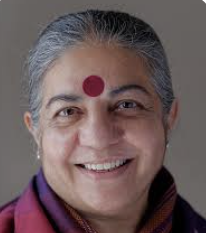
Instead of water belonging to millions of local communities, water too is to be controlled by five or six global water giants. These are recipes that use economic systems to appropriate for the few the base of survival of the majority.
4 months 1 week ago
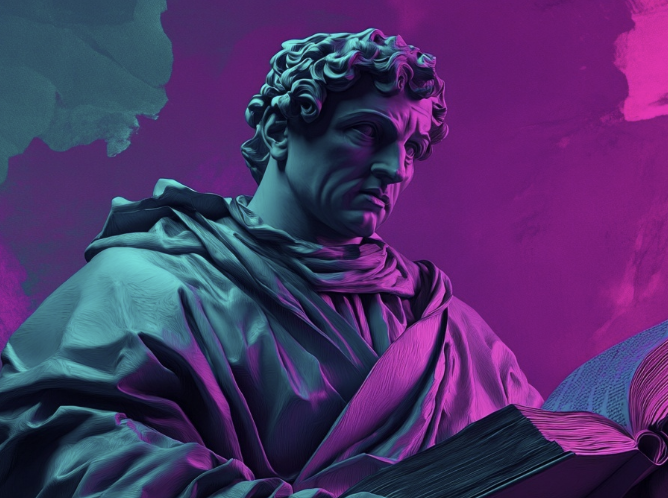
All seed except Mary was vitiated [by original sin].
▼
Source
source
Weimar edition of Martin Luther's Works, English translation edited by J. Pelikan [Concordia: St. Louis], Vol. 11, WA, 39, II:107
4 months 2 days ago
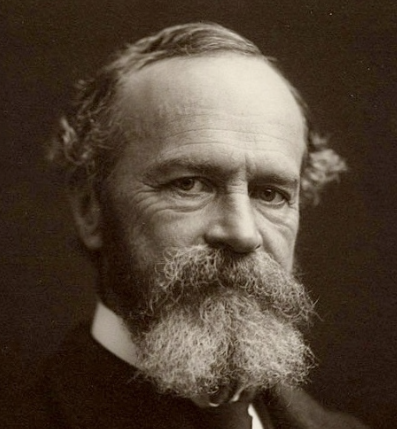
Without risks or prizes for the darer, history would be insipid indeed; and there is a type of military character which every one feels that the race should never cease to breed, for everyone is sensitive to its superiority. The duty is incumbent on mankind, of keeping military character in stock - if keeping them, if not for use, then as ends in themselves and as pure pieces of perfection, - so that Roosevelt's weaklings and mollycoddles may not end by making everything else disappear from the face of nature.
Just now
It is irreverent to the Gods to give you this demonstration, but for your sakes it shall be done.
▼
Source
source
As quoted in The Lives of the Sophists by Eunapius
2 months 4 weeks ago
Nothing is a better proof of how far humanity has regressed than the impossibility of finding a single nation, a single tribe, among whom birth still provokes mourning and lamentations.
4 months 2 days ago
"'Are the gods not just?' 'Oh no, child. What would become of us if they were?'"
▼
Source
source
Orual & The Fox

4 months 4 days ago
Men will always be mad, and those who think they can cure them are the maddest of all.
▼
Source
source
Letter to Louise Dorothea of Meiningen, duchess of Saxe-Gotha Madame, 30 January 1762
2 months ago
It is the medium that shapes and controls the scale and form of human association and action.
▼
Source
source
(p. 9)

2 months 3 weeks ago
The will is a unity of two different aspects or moments: first, the individual's ability to abstract from every specific condition and, by negating it, to return to the absolute liberty of the pure ego; secondly, the individual's act of freely adopting a concrete condition, freely affirming his existence as a particular, limited ego.
▼
Source
source
P. 185
2 months 2 weeks ago
Rituals are symbolic acts. They represent, and pass on, the values and orders on which a community is based. They bring forth a community without communication; today, however, communication without community prevails.
1 month 3 weeks ago
National loyalty is founded in the love of place, of the customs and traditions that have been inscribed in the landscape and of the desire to protect these good things through a common law and a common loyalty.

2 months 2 weeks ago
Might is that which makes a thing of anybody who comes under its sway. When exercised to the full, it makes a thing of man in the most literal sense, for it makes him a corpse.
▼
Source
source
in The Simone Weil Reader, p. 153
3 months ago
There is but one Temple in the World; and that is the Body of Man. Nothing is holier than this high form. Bending before men is a reverence done to this Revelation in the Flesh. We touch Heaven, when we lay our hand on a human body. Variant translation: There is but one temple in the Universe and that is the Body of Man.
▼
Source
source
As inscribed on the Library of Congress, quoted in Handbook of the New Library of Congress (1897) by Herbert Small, p. 53
4 months 4 days ago
...it [is] possible to suppose that, if Russia is allowed to have peace, an amazing industrial development may take place, making Russia a rival of the United States.
▼
Source
source
Part I, Ch. 5: Communism and the Soviet Constitution
3 weeks 4 days ago
From the point of view of the development of Marx's theories, his early journalistic writings are important for two main reasons. In his sharp attacks on the censorship law he spoke out unequivocally for the freedom of the Press, against the levelling effect of government restriction ('You don't expect a rose to smell like a violet; why then should the human spirit, the richest thing we have, exist only in a single form?'), and also expressed views concerning the whole nature of the state and the essence of freedom. Pointing out that the vagueness and ambiguity of the Press law placed arbitrary power in the hands of officials, Marx went on to argue that censorship was contrary not only to the purposes of the Press, but to the nature of the state as such.
▼
Source
source
(pp. 120-1)
3 weeks 6 days ago
Time and Space ... It is not nature which imposes them upon us, it is we who impose them upon nature because we find them convenient.

3 weeks 3 days ago
A man perfects himself by work much more than by reading.
1 month 2 weeks ago
Whether we take these characters then, or such minor ones as those which are derivable from the proportional length of the spines in the cervical vertebrae, and the like, there is no doubt whatsoever as to the marked difference between Man and the Gorilla; but there is as little, that equally marked differences, of the very same order, obtain between the Gorilla and the lower apes.
▼
Source
source
Ch.2, p. 92

2 months 2 weeks ago
What is necessary at this stage in our evolution is not a 'return' to the psychic powers of our ancestors, but an expansion of our own potential powers, based upon the certain knowledge that such powers exist.
▼
Source
source
p. 290

2 weeks 3 days ago
Pain he endures, death he awaits.
2 months 5 days ago
I will argue that in the literal sense the programmed computer understands what the car and the adding machine understand, namely, exactly nothing.
4 months 1 week ago
Sir Henry Wotton used to say that critics are like brushers of noblemen's clothes.
▼
Source
source
No. 64

3 months 1 week ago
Men sometimes submit to shame, to tyranny, to conquest, but they never long suffer anarchy. There is no people so barbarous that they escape this general law of humanity.
▼
Source
source
Second letter on Algeria (1837), Travels in Algeria p. 38
2 weeks 3 days ago
Whatever can happen at any time can happen today.

3 months 3 weeks ago
Good means not [merely] not to do wrong, but rather not to desire to do wrong.
CivilSimian.com created by AxiomaticPanic, CivilSimian, Kalokagathia