


2 months 1 week ago
Such abstraction which refuses to accept the given universe of facts as the final context of validation, such "transcending" analysis of the facts in the light of their arrested and denied possibilities, pertains to the very structure of social theory.
▼
Source
source
p. xliii

2 months 1 day ago
It repudiates, as something vile and sinful, our deepest feelings; but being absolutely ignorant as to the real functions of human emotions, Puritanism is itself the creator of the most unspeakable vices.

3 months 2 weeks ago
A man cannot become a child again, or he becomes childish.
▼
Source
source
Introduction, p. 31.
1 month 1 day ago
Lost time was like a run in a stocking. It always got worse.
▼
Source
source
The Steep Ascent
3 weeks 1 day ago
Is there really someone who, searching for a group of wise and sensitive persons to regulate him for his own good, would choose that group of people that constitute the membership of both houses of Congress?
▼
Source
source
Ch. 2 : The State of Nature; Protective Associations, p. 14

3 months 2 weeks ago
What is there in 'Paradise Lost' to elevate and astonish like Herschel or Somerville?
▼
Source
source
Quoted in Robert D. Richardson, Jr., Emerson, the Mind On Fire (Univ. of Calif Press 1995), p. 124
1 month 3 weeks ago
Modem mainstream economic theory bravely assumes that people make their decisions in such a way as to maximize their utility. Accepting this assumption enables economics to predict a great deal of behavior (correctly or incorrectly) without ever making empirical studies of human actors.
▼
Source
source
Simon (1990) "Invariants of Human Behavior" in: Annu. Rev. Psychol. 41: p. 6.
4 months 1 day ago
Rules necessary for axioms. Not to demand in axioms any but things perfectly evident.
2 months 2 weeks ago
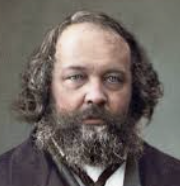
There can be no revolution without widespread and passionate destruction, a destruction salutary and fruitful precisely because out of it, and by means of it alone, new worlds are born and arise.
1 month 4 days ago
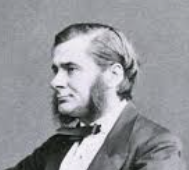
A small beginning has led us to a great ending. If I were to put the bit of chalk with which we started into the hot but obscure flame of burning hydrogen, it would presently shine like the sun. It seems to me that this physical metamorphosis is no false image of what has been the result of our subjecting it to a jet of fervent, though nowise brilliant, thought to-night. It has become luminous, and its clear rays, penetrating the abyss of the remote past, have brought within our ken some stages of the evolution of the earth. And in the shifting "without haste, but without rest" of the land and sea, as in the endless variation of the forms assumed by living beings, we have observed nothing but the natural product of the forces originally possessed by the substance of the universe.

3 months ago
It is better wither to be silent, or to say things of more value than silence. Sooner throw a pearl at hazard than an idle or useless word; and do not say a little in many words, but a great deal in a few.
▼
Source
source
As quoted in A Dictionary of Thoughts: Being a Cyclopedia of Laconic Quotations from the Best Authors of the World, both Ancient and Modern (1908) by Tyron Edwards, p. 525
3 months 3 weeks ago
Insurrection ... never brings about the desired improvement. For insurrection lacks discernment; it generally harms the innocent more than the guilty. Hence, no insurrection is ever right, no matter how right the cause it seeks to promote.
▼
Source
source
pp. 62-63

1 week 2 days ago
The science of the age, in short, is physical, chemical, physiological; in all shapes mechanical. Our favourite Mathematics, the highly prized exponent of all these other sciences, has also become more and more mechanical. Excellence in what is called its higher departments depends less on natural genius than on acquired expertness in wielding its machinery. Without undervaluing the wonderful results which a Lagrange or Laplace educes by means of it, we may remark, that their calculus, differential and integral, is little else than a more cunningly-constructed arithmetical mill; where the factors, being put in, are, as it were, ground into the true product, under cover, and without other effort on our part than steady turning of the handle. We have more Mathematics than ever; but less Mathesis.

2 months 2 weeks ago
I think I can hardly overrate the malignity of the principles of Protestant ascendancy, as they affect Ireland; or of Indianism, as they affect these countries, and as they affect Asia; or of Jacobinism, as they affect all Europe, and the state of human society itself. The last is the greatest evil.
▼
Source
source
Letter to Sir Hercules Langrishe (26 May 1795), quoted in R. B. McDowell (ed.)
1 month 2 weeks ago
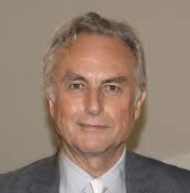
If you want to do evil, science provides the most powerful weapons to do evil; but equally, if you want to do good, science puts into your hands the most powerful tools to do so. The trick is to want the right things, then science will provide you with the most effective methods of achieving them.

3 months 3 weeks ago
They are ill discoverers that think there is no land, when they can see nothing but sea.
▼
Source
source
Book II, vii, 5
2 months 2 weeks ago
There is no problem in all mathematics that cannot be solved by direct counting. But with the present implements of mathematics many operations can be performed in a few minutes which without mathematical methods would take a lifetime.
▼
Source
source
p. 197; On mathematics and counting.
2 months 2 weeks ago
A great profusion of things, which are splendid or valuable in themselves, is magnificent. The starry heaven, though it occurs so very frequently to our view, never fails to excite an idea of grandeur. This cannot be owing to the stars themselves, separately considered. The number is certainly the cause. The apparent disorder augments the grandeur, for the appearance of care is highly contrary to our idea of magnificence. Besides, the stars lie in such apparent confusion, as makes it impossible on ordinary occasions to reckon them. This gives them the advantage of a sort of infinity.
▼
Source
source
Part II Section XIII
3 months 1 week ago
Usually, when we are told that X is Y we know how it is supposed to be true, but that depends on a conceptual or theoretical background and is not conveyed by the 'is' alone. ... But when the two terms of the identification are very disparate it may not be so clear how it could be true ... and a theoretical framework may have to be supplied to enable us to understand this. Without the framework, an air of mysticism surrounds the identification.This explains the magical flavor of popular presentations of fundamental scientific discoveries, given out as propositions to which one must subscribe without really understanding them. For example, people are now told at an early age that all matter is really energy. But despite the fact that they know what 'is' means, most of them never form a conception of what makes this claim true, because they lack the theoretical background.
▼
Source
source
pp. 176-177.

2 months 1 week ago
And that servant, which knew his lord's will, and prepared not himself, neither did according to his will, shall be beaten with many stripes.
▼
Source
source
Luke 12:47 (KJV)
1 month 2 weeks ago
The popularity of the paranormal, oddly enough, might even be grounds for encouragement. I think that the appetite for mystery, the enthusiasm for that which we do not understand, is healthy and to be fostered. It is the same appetite which drives the best of true science, and it is an appetite which true science is best qualified to satisfy.
▼
Source
source
"Science Delusion and the Appetite for Wonder", John Brockman, Edge.org, December 29, 1996
3 months 3 weeks ago
We are much beholden to Machiavel and others, that write what men do, and not what they ought to do.
▼
Source
source
Book II, xxi, 9

1 month 2 weeks ago
Media are means of extending and enlarging our organic sense lives into our environment.
▼
Source
source
"The Care and Feeding of Communication Innovation", Dinner Address to Conference on 8 mm Sound Film and Education, Teachers College, Columbia University, 8 November 1961

1 month 2 weeks ago
And therefore just as a brigand caught in broad daylight in the act cannot persuade us that he did not lift his knife in order to rob his victim of his purse, and had no thought of killing him, we too, it would seem, cannot persuade ourselves or others that the soldiers and policemen around us are not to guard us, but only for defense against foreign foes, and to regulate traffic and fetes and reviews; we cannot persuade ourselves and others that we do not know that the men do not like dying of hunger, bereft of the right to gain their subsistence from the earth on which they live; that they do not like working underground, in the water, or in the stifling heat, for ten to fourteen hours a day, at night in factories to manufacture objects for our pleasure. One would imagine it impossible to deny what is so obvious. Yet it is denied.
▼
Source
source
Chapter XII, Conclusion-Repent Ye, for the Kingdom of Heaven is at Hand
3 months 2 weeks ago
I doubt not, but from self-evident Propositions, by necessary Consequences, as incontestable as those in Mathematics, the measures of right and wrong might be made out.
▼
Source
source
Book IV, Ch. 3, sec. 18

3 months 2 weeks ago
I cannot get from the nature of the proposition to the individual logical operations!!! That is, I cannot bring out how far the proposition is the picture of the situation. I am almost inclined to give up all my efforts.
▼
Source
source
Journal entries (12 March 1915 and 15 March 1915) p. 41
3 months 2 weeks ago
In everything well known something worthy of thought still lurks.
▼
Source
source
p. xxxix
2 months 2 weeks ago
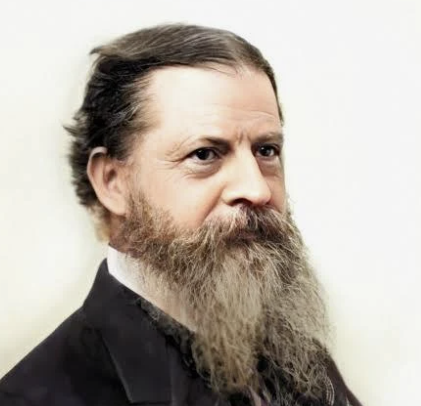
A pair of statements may be taken conjunctively or disjunctively; for example, "It lightens and it thunders," is conjunctive, "It lightens or it thunders" is disjunctive. Each such individual act of connecting a pair of statements is a new monad for the mathematician.
▼
Source
source
p. 268
3 months 2 weeks ago
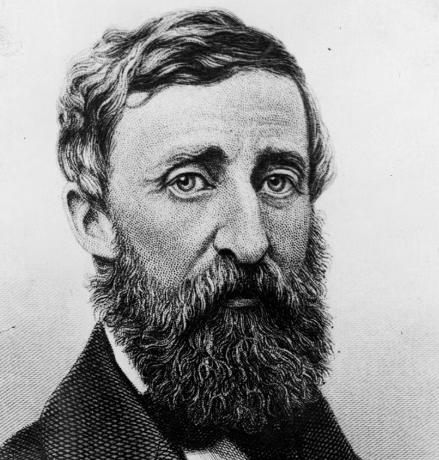
Merely to come into the world the heir of a fortune is not to be born, but to be still-born, rather. To be supported by the charity of friends, or a government-pension, - provided you continue to breathe, - by whatever fine synonymes you describe these relations, is to go into the almshouse.
▼
Source
source
p. 487

3 months 3 weeks ago
There is, nevertheless, a certain respect and a general duty of humanity that ties us, not only to beasts that have life and sense, but even to trees and plants.
▼
Source
source
Book II, Ch. 11. Of Cruelty
1 month 4 days ago
If some great Power would agree to make me always think what is true and do what is right, on condition of being turned into a sort of clock and wound up every morning before I got out of bed, I should instantly close with the offer. The only freedom I care about is the freedom to do right; the freedom to do wrong I am ready to part with on the cheapest terms to any one who will take it of me.
▼
Source
source
"On Descartes' Discourse touching the method of using one's reason rightly and of seeking scientific truth"
2 months 2 weeks ago
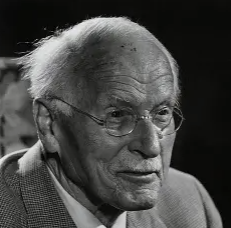
Every archetype is capable of endless development and differentiation. It is therefore possible for it to be more developed or less. In an outward form of religion where all the emphasis is on the outward figure (hence where we are dealing with a more or less complete projection) the archetype is identical with externalized ideas but remains unconscious as a psychic factor. When an unconscious content is replaced by a projected image to that extent, it is cut off from all participation in an influence on the conscious mind. Hence it largely forfeits its own life, because prevented from exerting the formative influence on consciousness natural to it; what is more, it remains in its original form - unchanged, for nothing changes in the unconscious.

3 months 3 weeks ago
Look round this universe. What an immense profusion of beings, animated and organised, sensible and active! You admire this prodigious variety and fecundity. But inspect a little more narrowly these living existences, the only beings worth regarding. How hostile and destructive to each other! How insufficient all of them for their own happiness! How contemptible or odious to the spectator! The whole presents nothing but the idea of a blind Nature, impregnated by a great vivifying principle, and pouring forth from her lap, without discernment or parental care, her maimed and abortive children!
▼
Source
source
Philo to Cleanthes, Part XI
3 weeks 4 days ago
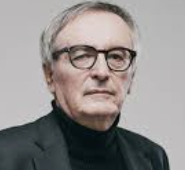
Throughout the years in which the US was punishing countries that departed from fiscal prudence, it was borrowing on a colossal scale to finance tax cuts and fund its over-stretched military commitments. Now, with federal finances critically dependent on continuing large inflows of foreign capital, it will be the countries that spurned the American model of capitalism that will shape America's economic future.

2 months 1 day ago
Once again, I experienced that overwhelming joy in the universe that I had felt in London outside the V and A. But this time, my consciousness of the world seemed larger, more complex. It was the mystic's sensation of oneness, of everything blending into everything else. Everything I looked at reminded me of something else, which also became present to my consciousness, as if I were simultaneously seeing a million worlds and smelling a million scents and hearing a million sounds-- not mixed up, but each separate and clear. I was overwhelmed with a sense of my smallness in the face of this vast, beautiful, objective universe, this universe whose chief miracle is that it exists, as well as myself. It is no dream, but a great garden in which life is trying to obtain a foothold. I experienced a desire to burst into tears of gratitude; then I controlled it, and the feeling subsided into a calm sense of immense, infinite beauty.
▼
Source
source
pp. 237-238
2 months 1 week ago
The office of the sovereign, be it a monarch or an assembly, consisteth in the end for which he was trusted with the sovereign power, namely the procuration of the safety of the people, to which he is obliged by the law of nature, and to render an account thereof to God, the Author of that law, and to none but Him. But by safety here is not meant a bare preservation, but also all other contentments of life, which every man by lawful industry, without danger or hurt to the Commonwealth, shall acquire to himself. And this is intended should be done, not by care applied to individuals, further than their protection from injuries when they shall complain; but by a general providence, contained in public instruction, both of doctrine and example; and in the making and executing of good laws to which individual persons may apply their own cases.
▼
Source
source
The Second Part, Chapter 30: Of the Office of the Sovereign Representative

3 months 1 week ago
A utopia of judicial reticence: take away life, but prevent the patient from feeling it; deprive the prisoner of all rights, but do not inflict pain; impose penalties free of all pain. Recourse to psycho-pharmacology and to various physiological 'disconnectors', even if it is temporary, is a logical consequence of this 'non-corporal' penalty.
▼
Source
source
Chapter One, The Spectacle of the Scaffold
1 month 2 weeks ago
The world and the universe is an extremely beautiful place, and the more we understand about it the more beautiful does it appear. It is an immensely exciting experience to be born in the world, born in the universe, and look around you and realise that before you die you have the opportunity of understanding an immense amount about that world and about that universe and about life and about why we're here. We have the opportunity of understanding far, far more than any of our predecessors ever. That is such an exciting possibility, it would be such a shame to blow it and end your life not having understood what there is to understand.
4 months 2 weeks ago
The Sophist demonstrates that everything is true and nothing is true.
3 months 3 weeks ago
Fashion is the science of appearances, and it inspires one with the desire to seem rather than to be.
3 months 2 weeks ago
The fundament upon which all our knowledge and learning rests is the inexplicable.
▼
Source
source
Vol. 2, Ch. 1, § 1
2 months 4 days ago
When I speak of 'negative dialectics' not the least important reason for doing so is my desire to dissociate myself from this fetishization of the positive.
▼
Source
source
p. 18
3 months ago
Neither will the horse be adjudged to be generous, that is sumptuously adorned, but the horse whose nature is illustrious; nor is the man worthy who possesses great wealth, but he whose soul is generous.
▼
Source
source
Pythagorean Ethical Sentences From Stobæus

3 months 2 weeks ago
You never know how much you really believe anything until its truth or falsehood becomes a matter of life and death to you. It is easy to you believe a rope to be strong and sound as long as you are merely using it to cord a box. But suppose that you had to hang by that rope over a precipice. Wouldn't you then first discover how much you really trusted it? ... Only a real risk tests the reality of a belief.
3 months 2 weeks ago
He needs no library, for he has not done thinking; no church, for he is himself a prophet; no statute book, for he hath the Lawgiver; no money, for he is value itself; no road, for he is at home where he is.
▼
Source
source
December 26, 1839

4 months 2 weeks ago
A sub-clerk in the post office is the equal of a conqueror if consciousness is common to them. All experiences are indifferent in this regard. There are some that do either a service or a disservice to man. They do him a service if he is conscious. Otherwise, that has no importance: a man's failures imply judgment, not of circumstances, but of himself.
3 weeks 6 days ago
Too many of our preferences reflect nasty behaviours and states of mind that were genetically adaptive in the ancestral environment. Instead, wouldn't it be better if we rewrote our own corrupt code?
▼
Source
source
The Abolitionist Project, Talks given at the FHI (Oxford University) and the Charity International Happiness Conference, 2007
3 months 1 week ago
I should not really object to dying if it were not followed by death.
▼
Source
source
"Death" (1970), p. 3 footnote.
1 month 1 week ago
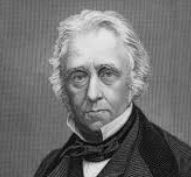
Our liberty is neither Greek nor Roman; but essentially English. It has a character of its own,-a character which has taken a tinge from the sentiments of the chivalrous ages, and which accords with the peculiarities of our manners and of our insular situation. It has a language, too, of its own, and a language singularly idiomatic, full of meaning to ourselves, scarcely intelligible to strangers.
▼
Source
source
History', The Edinburgh Review (May 1828), quoted in The Miscellaneous Writings of Lord Macaulay, Vol. I (1860), pp. 252-253
3 months 3 weeks ago
One should hasten to put such witches to death. Statement of 20 August 1538;
▼
Source
source
as quoted in Conversations With Martin Luther (1915), translated and edited by Preserved Smith and Herbert Percival Gallinger, p. 163
CivilSimian.com created by AxiomaticPanic, CivilSimian, Kalokagathia