

1 month 3 weeks ago
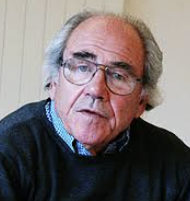
The end of history is, alas, also the end of the dustbins of history. There are no longer any dustbins for disposing of old ideologies, old regimes, old values. Where are we going to throw Marxism, which actually invented the dustbins of history? (Yet there is some justice here since the very people who invented them have fallen in.) Conclusion: if there are no more dustbins of history, this is because History itself has become a dustbin. It has become its own dustbin, just as the planet itself is becoming its own dustbin.
▼
Source
source
The Illusion of the End (1992) (L'Illision de la Fin) Tr. Chris Turner, 1994, Stanford University Press, ISBN 0804725012, p. 26, "The Event Strike"
1 month 1 week ago
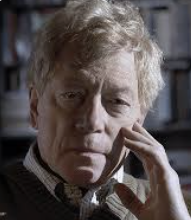
The modern world gives proof at every point that it is far easier to destroy institutions than to create them. Nevertheless, few people seem to understand this truth.
▼
Source
source
Rousseau & the origins of liberalism, The New Criterion

2 months 2 weeks ago
Were we to undertake an exhaustive self-scrutiny, disgust would paralyze us, we would be doomed to a thankless existence.

3 months 2 weeks ago
In the old dramas it was love that had to be sacrificed to painful duty. In the modern instance the sacrifice is at the shrine of what William James called "the Bitch Goddess, Success." Love is to be abandoned for the stern pursuit of newspaper notoriety and dollars.
▼
Source
source
"Silence is Golden," p. 61

3 months 2 weeks ago
If in this book harsh words are spoken about some of the greatest among the intellectual leaders of mankind, my motive is not, I hope, the wish to belittle them. It springs rather from my conviction that, if our civilization is to survive, we must break with the habit of deference to great men. Great men may make great mistakes; and as the book tries to show, some of the greatest leaders of the past supported the perennial attack on freedom and reason. Their influence, too rarely challenged, continues to mislead those on whose defence civilization depends, and to divide them. The responsibility of this tragic and possibly fatal division becomes ours if we hesitate to be outspoken in our criticism of what admittedly is a part of our intellectual heritage. By reluctance to criticize some of it, we may help to destroy it all.
▼
Source
source
Preface to the First Edition

2 months 4 days ago
The thought of being under absolute compulsion, the plaything of another, is unendurable for a human being. Hence, if every way of escape from the constraint is taken from him, there is nothing left for him to do but to persuade himself that he does the things he is forced to do willingly, that is to say, to substitute devotion for obedience. ... It is by this twist that slavery debases the soul: this devotion is in fact based on a lie, since the reasons for it cannot bear investigation. ... Moreover, the master is deceived too by the fallacy of devotion.
▼
Source
source
p. 142

2 months 2 weeks ago
It is better to be unhappy and know the worst, than to be happy in a fool's paradise!
▼
Source
source
Part 4, Chapter 5
1 month 2 weeks ago
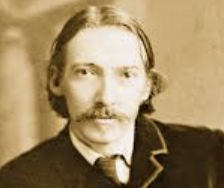
Sanity itself is a kind of convention.
▼
Source
source
The Hunter's Family

2 months 3 weeks ago
The Universe is one, infinite, immobile. The absolute potential is one, the act is one, the form or soul is one, the material or body is one, the thing is one, the being in one, one is the maximum and the best... It is not generated, because there is no other being it could desire or hope for, since it comprises all being. It does not grow corrupt. because there is nothing else into which it could change, given that it is itself all things. It cannot diminish or grow, since it is infinite.
▼
Source
source
As translated by Paul Harrison
1 month 1 week ago
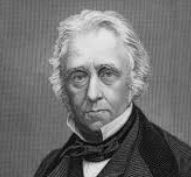
That is the best government which desires to make the people happy, and knows how to make them happy.
▼
Source
source
p. 160



3 months 2 weeks ago
But there is a devil of a difference between barbarians who are fit by nature to be used for anything, and civilized people who apply them selves to everything.
▼
Source
source
Introduction, p. 25.

2 months 5 days ago
We must needs believe in the other life, in the eternal life beyond the grave. ...And we must needs believe in that other life, perhaps, in order that we may deserve it, in order that we may obtain it, for it may be that he neither deserves it nor will obtain it who does not passionately desire it above reason and, if need be, against reason.

3 months 2 weeks ago
Man is condemned to be free; because once thrown into the world, he is responsible for everything he does.
3 months 1 week ago
It is now generally accepted that the roots of our ethics lie in patterns of behavior that evolved among our pre-human ancestors, the social mammals and that we retain within our biological nature elements of these evolved responses. We have learned considerably more about these responses, and we are beginning to to understand how they interact with our capacity to reason.
▼
Source
source
Preface To The 2011 edition, p. xi
3 months 2 weeks ago
Similarly, individual acts of aristocratic generosity do not eliminate pauperism; they perpetuate it.
▼
Source
source
p. 219

1 week 2 days ago
The Hero as Divinity, the Hero as Prophet, are productions of old ages; not to be repeated in the new. They presuppose a certain rudeness of conception, which the progress of mere scientific knowledge puts an end to. There needs to be, as it were, a world vacant, or almost vacant of scientific forms, if men in their loving wonder are to fancy their fellow-man either a god or one speaking with the voice of a god. Divinity and Prophet are past.
4 days ago
The state is God, deifies arms and prisons. The worship of the state is the worship of force. There is no more dangerous menace to civilization than a government of incompetent, corrupt, or vile men. The worst evils which mankind ever had to endure were inflicted by bad governments. The state can be and has often been in the course of history the main source of mischief and disaster.
▼
Source
source
Chapter III: Etatism

3 months 3 weeks ago
Make your educational laws strict and your criminal ones can be gentle; but if you leave youth its liberty you will have to dig dungeons for ages.

4 months 1 week ago
The superior man, while there is anything he has not studied, or while in what he has studied there is anything he cannot understand, Will not intermit his labor. While there is anything he has not inquired about, or anything in what he has inquired about which he does not know, he will not intermit his labor. While there is anything which he has not reflected on, or anything in what he has reflected on which he does not apprehend, he will not intermit his labor. While there is anything which he has not discriminated or his discrimination is not clear, he will not intermit his labor. If there be anything which he has not practiced, or his practice fails in earnestness, he will not intermit his labor. If another man succeed by one effort, he will use a hundred efforts. If another man succeed by ten efforts, he will use a thousand. Let a man proceed in this way, and, though dull, he will surely become intelligent; though weak, he will surely become strong.

3 months 2 weeks ago
If anyone would like to acquire humility, I can, I think, tell him the first step. The first step is to realise that one is proud. And a biggish step, too. At least, nothing whatever can be done before it. If you think you are not conceited, it means you are very conceited indeed.
▼
Source
source
Book III, Chapter 8, "The Great Sin"
3 months 2 weeks ago
Democracy is the road to socialism.
▼
Source
source
Attributed to Marx in recent years, including in Communism (2007) by Tom Lansford, p. 48
1 month 1 week ago
A single breaker may recede; but the tide is evidently coming in.
▼
Source
source
pp. 266-267
3 months 3 weeks ago
In order to seek truth, it is necessary once in the course of our life, to doubt, as far as possible, of all things.
▼
Source
source
Descartes, René (1644). Principles of Philosophy.

2 months 2 weeks ago
Volumes might be written upon the impiety of the pious.
▼
Source
source
Pt. I, The Unknowable; Ch. V, The Reconciliation

3 months 2 weeks ago
Change is one thing, progress is another.
3 months 3 weeks ago
There is a plague on Man, the opinion that he knows something.

1 month 2 weeks ago
The world and the universe is an extremely beautiful place, and the more we understand about it the more beautiful does it appear. It is an immensely exciting experience to be born in the world, born in the universe, and look around you and realise that before you die you have the opportunity of understanding an immense amount about that world and about that universe and about life and about why we're here. We have the opportunity of understanding far, far more than any of our predecessors ever. That is such an exciting possibility, it would be such a shame to blow it and end your life not having understood what there is to understand.
3 months 2 weeks ago
We have to learn to think in a new way. We have to learn to ask ourselves, not what steps can be taken to give military victory to whatever group we prefer, for there no longer are such steps; the question we have to ask ourselves is: what steps can be taken to prevent a military contest of which the issue must be disastrous to all parties?
3 months 1 week ago
A person may be greedy, envious, cowardly, cold, ungenerous, unkind, vain, or conceited, but behave perfectly by a monumental effort of will.
▼
Source
source
"Moral Luck" (1976), p. 32.

3 months 1 week ago
Maybe the target nowadays is not to discover what we are but to refuse what we are.
▼
Source
source
p. 785

3 months 2 weeks ago
Many of these were not prisoners of war, and redeemed from savage conquerors, as some plead; and they who were such prisoners, the English, who promote the war for that very end, are the guilty authors of their being so; and if they were redeemed, as is alleged, they would owe nothing to the redeemer but what he paid for them.
3 months 2 weeks ago
If A were not allowed his better position, B would be even worse off than he is.
▼
Source
source
Chapter II, Section 17, pg. 103
1 month 2 weeks ago
There is but one art, to omit.
▼
Source
source
As cited in The Harper Book of Quotations, Revised Edition (1993), Ed. R. Fitzhenry, HarperCollins, p. 498 : ISBN 0062732137, 9780062732132
2 months 2 weeks ago
It is comparatively easy for the philosopher in his closet to invent imaginary schemes of policy, and to shew how mankind, if they were without passions and without prejudices, might best be united in the form of a political community. But, unfortunately, men in all ages are the creatures of passions, perpetually prompting them to defy the rein, and break loose from the dictates of sobriety and speculation.
▼
Source
source
History of the Commonwealth of England. From its Commencement, to the Restoration of Charles the Second. Volume the Fourth. Oliver, Lord Protector (1828), p. 579
4 months 3 days ago
For it is not death or pain that is to be feared, but the fear of pain or death.
▼
Source
source
(Book II, ch. 1) Book II, ch. 1, 13.
2 months 1 week ago
Even the most elevated psychological understanding is not a loving understanding.
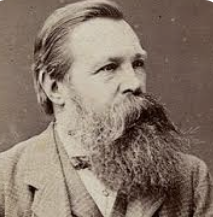
2 months 1 week ago
The proletarian works with the instruments of production of another, for the account of this other, in exchange for a part of the product. ... The proletarian liberates himself by abolishing competition, private property, and all class differences.
3 months 1 week ago
The chief function of the disciplinary power is to 'train', rather than to select and to levy; or, no doubt, to train in order to levy and select all the more. It does not link forces together in order to reduce them; it seeks to bind them together in such a way as to multiply and use them.
▼
Source
source
Part Three, The Means of Correct Training
3 months 2 weeks ago
Man is a rational animal - so at least I have been told. Throughout a long life, I have looked diligently for evidence in favor of this statement, but so far I have not had the good fortune to come across it, though I have searched in many countries spread over three continents. Often paraphrased as "It has been said that man is a rational animal. All my life I have been searching for evidence which could support this."

3 months 2 weeks ago
The yogi, absorbed in contemplation, contributes in his degree to creation: he breathes a divine perfume, he hears wonderful things. Divine forms traverse him without tearing him, and, united to the nature which is proper to him, he goes, he acts as animating original matter. To some extent, and at rare intervals even I am a yogi .
▼
Source
source
Quoted in R. Malhotra and V. Viswanathan, Snakes in the Ganga: Breaking India 2.0., 2022
1 month 2 weeks ago
For his purposes (and mine), scientific medicine is defined as the set of practices which submit themselves to the ordeal of being tested. Alternative medicine is defined as that set of practices which cannot be tested, refuse to be tested, or consistently fail tests. If a healing technique is demonstrated to have curative properties in properly controlled double-blind trials, it ceases to be alternative. It simply, as Diamond explains, becomes medicine. Conversely, if a technique devised by the President of the Royal College of Physicians consistently fails in double-blind trials, it will cease to be a part of 'orthodox' medicine. Whether it will then become 'alternative' will depend upon whether it is adopted by a sufficiently ambitious quack (there are always sufficiently gullible patients).
▼
Source
source
Foreword to Snake Oil and Other Preoccupations by John Diamond, Vintage, 2001.

3 months 2 weeks ago
If God has made us in his image, we have returned him the favor.
▼
Source
source
Notebooks, c.1735-c.1750

1 month 2 weeks ago
If the slave-owner of our times has no slave, John, whom he can send to the cesspool, he has five shillings, of which hundreds of such Johns are in such need that the slave-owner of our times may choose any one out of hundreds of Johns and be a benefactor to him by giving him the preference, and allowing him, rather than another, to climb down into the cesspool.
▼
Source
source
Chapter 8: Slavery Exists Among Us

3 months 1 week ago
'Tis well to restrain the wicked, and in any case not to join him in his wrong-doing.
3 months 2 days ago
Soul, indeed, is a certain medium between an impartible essence, and an essence which is divisible about bodies. But intellect is an impartible essence alone. And qualities and material forms are divisible about bodies. Not everything which acts on another, effects that which it does effect by approximation and contact; but those natures which effect any thing by approximation and contact, use approximation accidentally.
2 months 2 weeks ago
There exists, I grant you, a clinical depression, upon which certain remedies occasionally have effect; but there exists another kind, a melancholy underlying our very outbursts of gaiety and accompanying us everywhere, without leaving us alone for a single moment. And there is nothing that can rid us of this lethal omnipresence: the self forever confronting itself.
3 months 2 weeks ago
The principles of justice are chosen behind a veil of ignorance.
▼
Source
source
Chapter I, Section 3, pg. 12
4 months 1 week ago
It is better to conceal ignorance than to expose it.
1 month 1 week ago
As free constitutions are the strongest supports of governments, social order is the best safeguard of freedom. Liberty has no enemies so pernicious as those misguided friends whose ardour in her cause leads them to outrage the moral sense of mankind, and to arm against her the interests and feelings which are her natural allies. Even the prejudices of nations should be respected.
▼
Source
source
'Essay on the Life and Character of King William III' (1822), written for the Greaves Historical Prize at Cambridge, quoted in The Times Literary Supplement (1 May 1969), p. 469
CivilSimian.com created by AxiomaticPanic, CivilSimian, Kalokagathia