


3 weeks 2 days ago
He seldom or never spoke except actually to convey an idea. Measured by quantity of words, he was a talker of fully average copiousness; by extent of meaning communicated, he was the most copious I have listened to. How in few sentences he would sketch you off an entire biography, an entire object or transaction, keen, clear, rugged, genuine, completely rounded In! His words came direct from the heart by the inspiration of the moment.

3 months 2 days ago
The formula 'two plus two equals five' is not without its attractions.
▼
Source
source
Part 1, Chapter 9 (tr. ?)

2 months 2 weeks ago
What is patriotism? Is it love of one's birthplace, the place of childhood's recollections and hopes, dreams and aspirations? Is it the place where, in childlike naïveté, we would watch the passing clouds, and wonder why we, too, could not float so swiftly? The place where we would count the milliard glittering stars, terror-stricken lest each one "an eye should be," piercing the very depths of our little souls?

2 months 4 weeks ago
We are afraid of the enormity of the possible.

3 months 3 weeks ago
Now as of old the gods give men all good things, excepting only those that are baneful and injurious and useless. These, now as of old, are not gifts of the gods: men stumble into them themselves because of their own blindness and folly.
2 months 4 weeks ago
This whole creation is essentially subjective, and the dream is the theater where the dreamer is at once scene, actor, prompter, stage manager, author, audience, and critic.
▼
Source
source
General Aspects of Dream Psychology
2 months 3 weeks ago
So long as you "have" yourself, have yourself as an object, your experience of man is only as of a thing among things.
▼
Source
source
p. 148
4 months ago
If a victory is told in detail, one can no longer distinguish it from a defeat.
▼
Source
source
Act 1

4 months 4 weeks ago
If Nietzsche and Hegel serve as alibis to the masters of Dachau and Karaganda, that does not condemn their entire philosophy. But it does lead to the suspicion that one aspect of their thought, or of their logic, can lead to these appalling conclusions.

4 months 2 days ago
The greatest compliment that was ever paid me was when one asked me what I thought, and attended to my answer. I am surprised, as well as delighted, when this happens, it is such a rare use he would make of me, as if he were acquainted with the tool.
▼
Source
source
p. 484
2 months 3 weeks ago
The happy consciousness is shaky enough-a thin surface over fear, frustration, and disgust.
▼
Source
source
p. 76
1 month 2 weeks ago
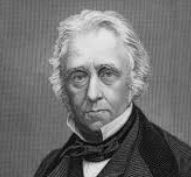
If...we look at the essential characteristics of the Whig and the Tory, we may consider each of them as the representative of a great principle, essential to the welfare of nations. One is, in an especial manner, the guardian of liberty, and the other, of order. One is the moving power, and the other the steadying power of the state. One is the sail, without which society would make no progress, the other the ballast, without which there would be small safety in a tempest.
▼
Source
source
The Earl of Chatham', The Edinburgh Review (October 1844), quoted in T. B. Macaulay, Critical and Historical Essays Contributed to The Edinburgh Review: A New Edition (1852), p. 725

4 months 5 days ago
...the competition of the poor takes away from the reward of the rich.
▼
Source
source
Chapter X, Part II, p. 154.
4 months ago
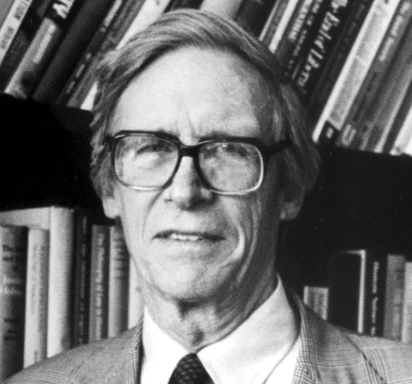
At best the principles that economists have supposed the choices of rational individuals to satisfy can be presented as guidelines for us to consider when we make our decisions.
▼
Source
source
Chapter IX, Section 84, p. 558
4 months 5 days ago
It is the highest impertinence and presumption, therefore, in kings and ministers, to pretend to watch over the economy of private people, and to restrain their expence, either by sumptuary laws, or by prohibiting the importation of foreign luxuries. They are themselves always, and without any exception, the greatest spendthrifts in the society. Let them look well after their own expence, and they may safely trust private people with theirs. If their own extravagance does not ruin the state, that of their subjects never will.
▼
Source
source
Chapter III, p. 381.
2 months 2 weeks ago
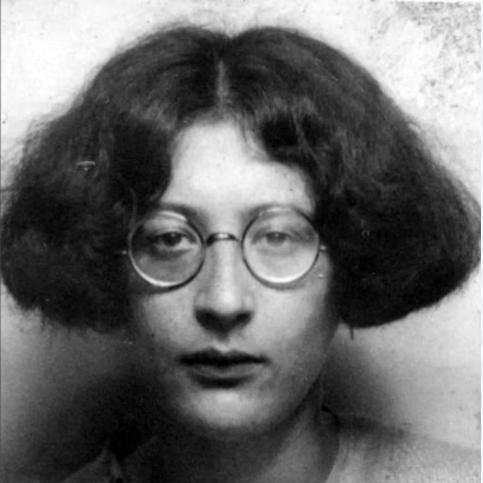
It is not religion but revolution which is the opium of the people.
▼
Source
source
p. 159

2 weeks 2 days ago
Socrates is reported to have replied, when a certain person complained of having received no benefit from his travels: "It serves you right! You travelled in your own company!"
4 months 1 week ago
As we divided natural philosophy in general into the inquiry of causes, and productions of effects: so that part which concerneth the inquiry of causes we do subdivide according to the received and sound division of causes. The one part, which is physic, inquireth and handleth the material and efficient causes; and the other, which is metaphysic, handleth the formal and final causes.
▼
Source
source
Book VII, 3
1 month 2 weeks ago
I must write it all out, at any cost. Writing is thinking. It is more than living, for it is being conscious of living.
▼
Source
source
Locked Rooms and Open Doors
3 weeks 2 days ago
Can the man say, Fiat lux, Let there be light; and out of chaos make a world? Precisely as there is light in himself, will he accomplish this.
1 week 5 days ago
We do not "come into" this world; we come out of it, as leaves from a tree. As the ocean "waves," the universe "peoples." Every individual is an expression of the whole realm of nature, a unique action of the total universe. This fact is rarely, if ever, experienced by most individuals. Even those who know it to be true in theory do not sense or feel it, but continue to be aware of themselves as isolated "egos" inside bags of skin.
▼
Source
source
Inside Information

3 months 1 day ago
Thus poetry, regarded as a vehicle of thought, is especially impressive partly because it obeys all the laws of effective speech, and partly because in so doing it imitates the natural utterances of excitement.
▼
Source
source
Pt. I, sec. 6, "The Effect of Poetry Explained"


1 month 4 weeks ago
God looks at the clean hands, not the full ones.
▼
Source
source
Maxim 715

4 months 2 days ago
A mind does not receive truth as a chest receives jewels that are put into it, but as the stomach takes up food into the system. It is no longer food, but flesh, and is assimilated. The appetite and the power of digestion measure our right to knowledge. He has it who can use it. As soon as our accumulation overruns our invention or power to use, the evils of intellectual gluttony begin,- congestion of the brain, apoplexy, and strangulation.
▼
Source
source
"The Natural History of Intellect", p. 30
4 months 5 days ago
I have no great faith in political arithmetic, and I mean not to warrant the exactness of either of these computations.
▼
Source
source
Chapter V, p. 577.
2 months 1 week ago
One of the principal motifs of Nietzsche's work is that Kant had not carried out a true critique because he was not able to pose the problem of critique in terms of values.
▼
Source
source
p. 1

4 months ago
For me, reason is the natural organ of truth; but imagination is the organ of meaning. Imagination, producing new metaphors or revivifying old, is not the cause of truth, but its condition.
▼
Source
source
"Bluspels and Flalansferes: A Semantic Nightmare", Rehabilitations and Other Essays, 1939

4 months ago
There is no history of mankind, there is only an indefinite number of histories of all kinds of aspects of human life. And one of these is the history of political power. This is elevated into the history of the world. But this, I hold, is an offence against every decent conception of mankind. It is hardly better than to treat the history of embezzlement or of robbery or of poisoning as the history of mankind. For the history of power politics is nothing but the history of international crime and mass murder (including it is true, some of the attempts to suppress them). This history is taught in schools, and some of the greatest criminals are extolled as heroes.
▼
Source
source
Vol 2, Ch. 25 "Has History any Meaning?" Variant: There is no history of mankind, there are only many histories of all kinds of aspects of human life. And one of these is the history of political power. This is elevated into the history of the world.

1 month 4 weeks ago
The new media are not bridges between man and nature: they are nature.
▼
Source
source
(p. 14)
3 weeks 2 days ago
There is no heroic poem in the world but is at bottom a biography, the life of a man; also, it may be said, there is no life of a man, faithfully recorded, but is a heroic poem of its sort, rhymed or unrhymed.
1 month 1 week ago
Like other human freedoms, the freedoms embodied in market institutions are justified inasmuch as they meet human needs. Insofar as they fail to do this they can reasonably be altered. This is true not only of the rights that are involved in market institutions. It is true of all human rights.
▼
Source
source
'Modus Vivendi' (p.36)

2 months 1 day ago
I cannot recall those years without horror, loathing, and heart-rending pain. I killed people in war, challenged men to duels with the purpose of killing them, and lost at cards; I squandered the fruits of the peasants' toil and then had them executed; I was a fornicator and a cheat. Lying, stealing, promiscuity of every kind, drunkenness, violence, murder - there was not a crime I did not commit... Thus I lived for ten years.
▼
Source
source
Pt. I, ch. 2

3 months 1 week ago
Burden not the back of Aries, Leo, or Taurus, with thy faults, nor make Saturn, Mars, or Venus, guilty of thy Follies.
▼
Source
source
Part III, Section VII

3 weeks 6 days ago
A multitude is irreducible multiplicity; the singular social differences that constitute the multitude must always be expressed and can never be flattened into sameness, unity, identity, or indifference. ... the compact identities of factory workers in the dominant countries have been undermined with the rise of short-term contracts and forced mobility of new forms of work; how migration has challenged traditional notions of national identity; how family identity has changed and so forth.
▼
Source
source
105

4 months 1 week ago
You venerate the saints, and you take pleasure in touching their relics. But you disregard their greatest legacy, the example of a blameless life. No devotion is more pleasing to Mary than the imitation of Mary's humility. No devotion is more acceptable and proper to the saints than striving to imitate their virtues.
▼
Source
source
The Erasmus Reader (1990), p. 144.

2 months 4 weeks ago
It is the man of science, eager to have his every opinion regenerated, his every idea rationalized, by drinking at the fountain of fact, and devoting all the energies of his life to the cult of truth, not as he understands it, but as he does not yet understand it, that ought properly to be called a philosopher. To an earlier age knowledge was power - merely that and nothing more; to us it is life and the summum bonum. Emancipation from the bonds of self, of one's own prepossessions, importunately sought at the hands of that rational power before which all must ultimately bow, - this is the characteristic that distinguishes all the great figures of nineteenth-century science from those of former periods.
▼
Source
source
"The Century's Great Men in Science" in The 19th Century : A Review of Progress During the Past One Hundred Years in the Chief Departments of Human Activity (1901), published by G. P. Putnam's Sons.

4 months 1 week ago
We are born to inquire after truth; it belongs to a greater power to possess it. It is not, as Democritus said, hid in the bottom of the deeps, but rather elevated to an infinite height in the divine knowledge.
▼
Source
source
Book III, Ch. 8. Of the Art of Conversation

4 months 2 days ago
The history of all hitherto existing society is the history of class struggles.
▼
Source
source
Section 1, paragraph 1, lines 1-2.

3 months 3 weeks ago
Kierkegaard writes: If Christianity were so easy and cozy, why should God in his Scriptures have set Heaven and Earth in motion and threatened eternal punishments? - Question: But then in that case why is this Scriptures so unclear?
▼
Source
source
p. 31e

4 months 2 days ago
My father was as well aware as anyone that Christians do not, in general, undergo the demoralizing consequences which seem inherent in such a creed, in the manner or to the extent which might have been expected from it. The same slovenliness of thought, and subjection of the reason to fears, wishes, and affections, which enable them to accept a theory involving a contradiction in terms, prevents them from perceiving the logical consequences of the theory. Such is the facility with which mankind believe at one and the same time things inconsistent with one another, and so few are those who draw from what they receive as truths, any consequences but those recommended to them by their feelings, that multitudes have held the undoubting belief in an Omnipotent Author of Hell, and have nevertheless identified that being with the best conception they were able to form of perfect goodness.
▼
Source
source
(pp. 41-42)

2 months 3 weeks ago
Do not judge according to appearance, but judge with righteous judgment.
▼
Source
source
(John 7:24) (NASB) Variant translation: Stop judging by mere appearances, and make a right judgment. (NIV)
2 months 2 weeks ago
Promising, committment, and fidelity, for instance, are genuinely temporal practices.

4 months 2 days ago
No man is liberated from fear who dare not see his place in the world as it is; no man can achieve the greatness of which he is capable until he has allowed himself to see his own littleness.
▼
Source
source
Dreams and Facts, 1919
4 months 2 weeks ago
As to the objection that these rules are common in the world, that it is necessary to define every thing and to prove every thing, and that logicians themselves have placed them among their art, I would that the thing were true and that it were so well known... But so little is this the case, that, geometricians alone excepted, who are so few in number that they are a single in a whole nation and long periods of time, we see no others that know it.
2 months 4 weeks ago
We can never legitimately cut loose from our archetypal foundations unless we are prepared to pay the price of a neurosis, any more than we can rid ourselves of our body and its organs without committing suicide.
▼
Source
source
J.B. Priestley, Times Literary Supplement, London
3 months 3 weeks ago
Deconstruction never had meaning or interest, at least in my eyes, than as a radicalization, that is to say, also within the tradition of a certain Marxism, in a certain spirit of Marxism.
▼
Source
source
Specters of Marx. Routledge, 1994. p. 115
1 month 2 weeks ago
It cannot be doubted, I think, that Mr. Darwin has satisfactorily proved that what he terms selection, or selective modification, must occur, and does occur, in nature; and he has also proved to superfluity that such selection is competent to produce forms as distinct, structurally, as some genera even are. If the animated world presented us with none but structural differences, I should have no hesitation in saying that Mr. Darwin has demonstrated the existence of a true physical cause, amply competent to account for the origin of living species, and of man among the rest.
▼
Source
source
Ch.2, p. 126
4 months 2 days ago
Not to be absolutely certain is, I think, one of the essential things in rationality.
▼
Source
source
"Don't Be Too Certain!"
CivilSimian.com created by AxiomaticPanic, CivilSimian, Kalokagathia