


3 months 1 week ago
If you want to deserve Hell, you need only stay in bed. The world is iniquity; if you accept it, you are an accomplice, if you change it you are an executioner.
▼
Source
source
Act 3, sc. 6

3 months 1 week ago
Let me suggest a theme for you: to state to yourself precisely and completely what that walk over the mountains amounted to for you, - returning to this essay again and again, until you are satisfied that all that was important in your experience is in it. Give this good reason to yourself for having gone over the mountains, for mankind is ever going over a mountain. Don't suppose that you can tell it precisely the first dozen times you try, but at 'em again, especially when, after a sufficient pause, you suspect that you are touching the heart or summit of the matter, reiterate your blows there, and account for the mountain to yourself. Not that the story need be long, but it will take a long while to make it short.
▼
Source
source
Letter to Harrison Blake, November 16, 1857
2 weeks 3 days ago
Too many of our preferences reflect nasty behaviours and states of mind that were genetically adaptive in the ancestral environment. Instead, wouldn't it be better if we rewrote our own corrupt code?
▼
Source
source
The Abolitionist Project, Talks given at the FHI (Oxford University) and the Charity International Happiness Conference, 2007

3 months 1 week ago
The best is the enemy of the good.

3 months 1 week ago
That men do not learn very much from the lessons of history is the most important of all the lessons that history has to teach.
▼
Source
source
"A Case of Voluntary Ignorance" in Collected Essays, 1959
2 months 1 week ago
The romantic poetry is a progressive universal poetry.
▼
Source
source
Progressive Universalpoesie (1798)

2 months 1 week ago
Talking nonsense is man's only privilege that distinguishes him from all other organisms.

1 month 3 weeks ago
The Outsider cannot accept life as it is, who cannot consider his own existence or anyone else's necessary. He sees 'too deep and too much'. It is still a question of self-expression.
▼
Source
source
Chapter Four The Attempt to Gain Control
3 months 4 weeks ago
He that in his studies wholly applies himself to labour and exercise, and neglects meditation, loses his time, and he that only applies himself to meditation, and neglects labour and exercise, only wanders and loses himself.
2 months 6 days ago
In order to touch the heart and gain the confidence, the assent, the adhesion, and the co-operation of the illiterate legions of the proletariat - and the vast majority of proletarians unfortunately still belong in this category - it is necessary to begin to speak to those workers not of the general sufferings of the international proletariat as a whole but of their particular, daily, altogether private misfortunes. It is necessary to speak to them of their own trade and the conditions of their work in the specific locality where they live; of the harsh conditions and long hours of their daily work, of the small pay, the meanness of their employer, the high cost of living, and how impossible it is for them properly to support and bring up a family.
▼
Source
source
Founding of the Workers' International
1 month 2 weeks ago
When land and its tillage are the basis of taxation, one need not care exactly how many people there are.
▼
Source
source
Chapter 12, Political Arithmetic, p. 103.
7 months 2 weeks ago
The age of philosophy in the sense again that we are confronted more and more often with philosophical problems at an everyday level. It is not that you withdraw from daily life into a world of philosophical contemplation. On the contrary, you cannot find your way around daily life itself without answering certain philosophical questions. It is a unique time when everyone is, in a way, forced to be some kind of philosopher.

2 months 4 days ago
Word - that invisible dagger.

1 month 2 weeks ago
What is called an acute knowledge of human nature is mostly nothing but the observer's own weaknesses reflected back from others.
▼
Source
source
G 7
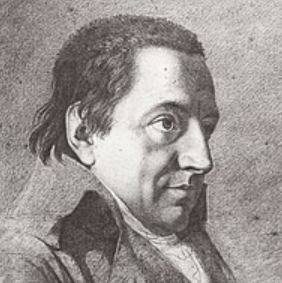
2 months 1 week ago
Only through blind Instinct, in which the only possible guidance of the Imperative is awanting, does the Power in Intuition remain undetermined; where it is schematised as absolute it becomes infinite; and where it is presented in a determinate form, as a principle, it becomes at least manifold. By the above-mentioned act of Intelligising, the Power liberates itself from Instinct, to direct itself towards Unity.
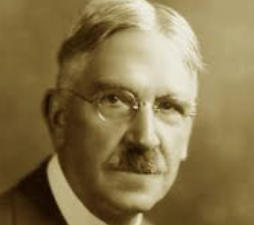
2 months ago
Even the eye that is artificially trained to see color as color, apart from things that colors qualify, cannot shut out the resonances and transfers of value.
▼
Source
source
p. 126

1 month 3 weeks ago
It is the furious longing to give finality to the Universe, to make it conscious and personal, that has brought us to believe in God, to wish that God may exist, to create God, in a word. To create Him, yes! This saying ought not to scandalize even the most devout theist. For to believe in God is, in a certain sense, to create Him, although He first creates us. It is He who is continually creating Himself.
3 months 1 week ago
How significant is the enormous heightening, under mescalin, of the perception of color! ... Man's highly developed color sense is a biological luxury-inestimably precious to him as an intellectual and spiritual being, but unnecessary to his survival as an animal. ... Mescalin raises all colors to a higher power and makes the percipient aware of innumerable fine shades of difference, to which, at ordinary times, he is completely blind. It would seem that, for Mind at Large, the so-called secondary characters of things are primary.
▼
Source
source
describing his experiment with mescaline, pp. 26-27

4 months 5 days ago
The essential is to cease being free and to obey, in repentance, a greater rogue than oneself. When we are all guilty, that will be democracy.
2 months 4 days ago
For a long time - always, in fact - I have known that life here on earth is not what I needed and that I wasn't able to deal with it; for this reason and for this reason alone, I have acquired a touch of spiritual pride, so that my existence seems to me the degradation and the erosion of a psalm.
2 months 1 day ago
This organization of functional discourse is of vital importance; it serves as a vehicle of coordination and subordination. The unified, functional language is an irreconcilably anti-critical and anti-dialectical language. In it, operational and behavioral rationality absorbs the transcendent, negative, oppositional elements of Reason.
▼
Source
source
p. 97

3 months 1 week ago
Of all evils of war the greatest is the purely spiritual evil: the hatred, the injustice, the repudiation of truth, the artificial conflict.
▼
Source
source
Justice in War-Time (1916), p. 27

2 months 1 week ago
Learning will be cast into the mire and trodden down under the hoofs of a swinish multitude.
▼
Source
source
Volume iii, p. 335
2 months 4 days ago
Not to be born is undoubtedly the best plan of all. Unfortunately, it is within no one's reach.
2 months 4 days ago
The only interesting philosophers are the ones who have stopped thinking and have begun to search for happiness.

3 months 1 week ago
We have just seen that, apart from money-capital, circulating capital is only another name for commodity-capital. But to the extent that labour power circulates in the market,it is not capital, no form of commodity-capital. It is not capital at all; the labourer is not a capitalist, although he brings a commodity to market, namely his own skin.
▼
Source
source
Vol. II, Ch. X, p. 211.
2 months 4 days ago
What am I, other than a chance in the infinite probabilities of not having been!
4 months 5 days ago
It happens that the stage sets collapse. Rising, streetcar, four hours in the office or the factory, meal, streetcar, four hours of work, meal, sleep and Monday Tuesday Wednesday Thursday Friday and Saturday according to the same rhythm this path is easily followed most of the time. But one day the "why" arises and everything begins in that weariness tinged with amazement.

3 months 2 weeks ago
A constant element of enjoyment must be mingled with our studies, so that we think of learning as a game rather than a form of drudgery, for no activity can be continued for long if it does not to some extent afford pleasure to the participant.
▼
Source
source
Letter to Christian Northoff (1497), as translated in Collected Works of Erasmus (1974), p. 114
3 months 1 week ago
A man cannot become a child again, or he becomes childish.
▼
Source
source
Introduction, p. 31.

3 months 1 week ago
I conceive that the description so often given of a Benthamite, as a mere reasoning machine, though extremely inapplicable to most of those who have been designated by that title, was during two or three years of my life not altogether untrue of me. ...There is nothing very extraordinary in this fact: no youth of the age I then was, can be expected to be more than one thing, and this was the thing I happened to be. Ambition and desire of distinction, I had in abundance; and zeal for what I thought the good of mankind was my strongest sentiment, mixing with and colouring all others. But my zeal was as yet little else, at that period of my life, than zeal for speculative opinions. It had not its root in genuine benevolence, or sympathy with mankind; though these qualities held their due place in my ethical standard. Nor was it connected with any high enthusiasm for ideal nobleness.
▼
Source
source
(pp. 109-110)
2 months 1 week ago
In this choice of inheritance we have given to our frame of polity the image of a relation in blood, binding up the constitution of our country with our dearest domestic ties, adopting our fundamental laws into the bosom of our family affections, keeping inseparable and cherishing with the warmth of all their combined and mutually reflected charities our state, our hearths, our sepulchres, and our altars.
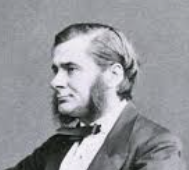
3 weeks 3 days ago
If some great Power would agree to make me always think what is true and do what is right, on condition of being turned into a sort of clock and wound up every morning before I got out of bed, I should instantly close with the offer. The only freedom I care about is the freedom to do right; the freedom to do wrong I am ready to part with on the cheapest terms to any one who will take it of me.
▼
Source
source
"On Descartes' Discourse touching the method of using one's reason rightly and of seeking scientific truth"

2 months 2 weeks ago
As long as Man continues to be the ruthless destroyer of lower living beings, he will never know health or peace. For as long as men massacre animals, they will kill each other. Indeed, he who sows the seed of murder and pain cannot reap joy and love.
▼
Source
source
Attribution to Pythagoras by Ovid, as quoted in The Extended Circle: A Dictionary of Humane Thought (1985) by Jon Wynne-Tyson, p. 260; also in Vegetarian Times, No. 168 (August 1991), p. 4

1 month 1 week ago
You worldly-minded people are most unfortunate! You are surrounded with sorrows and troubles overhead and underfoot and to the right and to the left, and you are enigmas even to yourselves.
▼
Source
source
p. 37
2 months 4 weeks ago
From Richard McKeon and Robert Brumsbaugh I learned to view the history of philosophy as a series, not of alternative solutions to the same problems, but of quite different sets of problems. From Rudolph Carnap and Carl Hempel I learned how pseudo-problems could be revealed as such by restarting them in the formal mode of speech. From Charles Hartshorne and Paul Weiss I learned how they could be so revealed by being translated into Whiteheadian or Hegelian terms.
▼
Source
source
Preface
1 month 4 days ago
Man is a creature who lives not upon bread alone, but principally by catchwords; and the little rift between the sexes is astonishingly widened by simply teaching one set of catchwords to the girls and another to the boys.
▼
Source
source
Virginibus Puerisque, Ch. 2.

3 months 1 week ago
As there is a use in medicine for poisons, so the world cannot move without rogues.
▼
Source
source
Power
2 months 1 day ago
No man's error becomes his own Law; nor obliges him to persist in it.
▼
Source
source
The Second Part, Chapter 26, p. 144
2 months 6 days ago
This means that no state, howsoever democratic its forms, not even the reddest political republic - a people's republic only in the sense of the lie known as popular representation - is capable of giving the people what they need: the free organization of their own interests from below upward, without any interference, tutelage, or coercion from above. That is because no state, not even the most republican and democratic, not even the pseudo-popular state contemplated by Marx, in essence represents anything but government of the masses from above downward, by an educated and thereby privileged minority which supposedly understands the real interests of the people better than the people themselves.
1 month 4 days ago
Scientific beliefs are supported by evidence, and they get results. Myths and faiths are not and do not.
2 months 4 weeks ago
Even if I could by gradual degrees be transformed into a bat, nothing in my present constitution enables me to imagine what the experiences of such a future stage of myself thus metamorphosed would be like. The best evidence would come from the experience of bats, if we only knew what they were like.
▼
Source
source
p. 169.
2 months 6 days ago
Everywhere we seek the Absolute, and always we find only things.
▼
Source
source
Fragment No. 1; Variant: We seek the absolute everywhere and only ever find things.

1 month 6 days ago
America is 100% 18th Century. The 18th century had chucked out the principle of metaphor and analogy - the basic fact that as A is to B so is C to D. AB:CD. It can see AB relations. But relations in four terms are still verboten. This amounts to deep occultation of nearly all human thought for the USA.
▼
Source
source
Letter to Ezra Pound
2 months 4 weeks ago
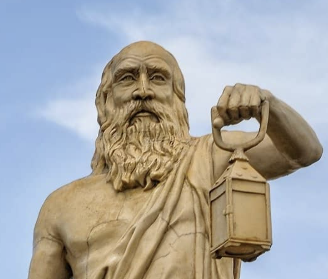
To the question what wine he found pleasant to drink, he replied, "That for which other people pay."
▼
Source
source
Diogenes Laërtius, vi. 54
2 months 1 week ago
What is all that men have done and thought over thousands of years, compared with one moment of love. But in all Nature, too, it is what is nearest to perfection, what is most divinely beautiful! There all stairs lead from the threshold of life. From there we come, to there we go.

2 months 1 day ago
Do not tell lies, and do not do what you hate, for all things are plain in the sight of Heaven. For nothing hidden will not become manifest, and nothing covered will remain without being uncovered.
3 months 1 week ago
There are a thousand hacking at the branches of evil to one who is striking at the root, and it may be that he who bestows the largest amount of time and money on the needy is doing the most by his mode of life to produce that misery which he strives in vain to relieve.
▼
Source
source
p. 87
3 months 1 week ago
Europeans are awakening more and more to a sense that beasts have rights, in proportion as the strange notion is being gradually overcome and outgrown, that the animal kingdom came into existence solely for the benefit and pleasure of man. This view, with the corollary that non-human living creatures are to be regarded merely as things, is at the root of the rough and altogether reckless treatment of them, which obtains in the West.
▼
Source
source
Part III, Ch. VIII, 7, p. 225
CivilSimian.com created by AxiomaticPanic, CivilSimian, Kalokagathia