


4 months 2 days ago
I don't like the spirit of socialism - I think freedom is the basis of everything.
▼
Source
source
Letter to Constance Malleson (Colette), September 29, 1916

3 months 2 days ago
Prejudice is of ready application in the emergency; it previously engages the mind in a steady course of wisdom and virtue and does not leave the man hesitating in the moment of decision sceptical, puzzled, and unresolved. Prejudice renders a man's virtue his habit, and not a series of unconnected acts. Through just prejudice, his duty becomes a part of his nature.

2 months 3 weeks ago
I'd rather offer my life as a sacrifice than be necessary to anything.
1 week 2 days ago
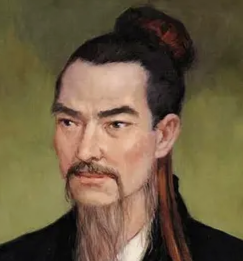
Suppose we try to locate the cause of disorder, we shall find it lies in the want of mutual love.
▼
Source
source
Book 4; Universal Love I

4 months 1 day ago
In the practical use of our intellect, forgetting is as important a function as recollecting.
▼
Source
source
Ch. 16
2 days ago
I strive to discover how to signal my companions before I die, how to give them a hand, how to spell out for them in time one complete word at least, to tell them what I think this procession is, and toward what we go. And how necessary it is for all of us together to put our steps and hearts in harmony. To say in time a simple word to my companions, a password, like conspirators. Yes, the purpose of Earth is not life, it is not man. Earth has existed without these, and it will live on without them. They are but the ephemeral sparks of its violent whirling. Let us unite, let us hold each other tightly, let us merge our hearts, let us create - so long as the warmth of this earth endures, so long as no earthquakes, cataclysms, icebergs or comets come to destroy us - let us create for Earth a brain and a heart, let us give a human meaning to the superhuman struggle. This anguish is our second duty.
2 months 3 weeks ago
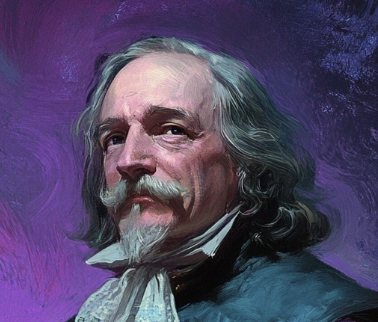
Another doctrine repugnant to Civill Society, is that whatsoever a man does against his Conscience, is Sinne; and it dependeth on the presumption of making himself judge of Good and Evill. For a man's Conscience and his Judgement are the same thing, and as the Judgement, so also the Conscience may be erroneous.
▼
Source
source
The Second Part, Chapter 29, p. 168

3 months 6 days ago
In America, conscription is unknown; men are enlisted for payment. Compulsory recruitment is so alien to the ideas and so foreign to the customs of the people of the United States that I doubt whether they would ever dare to introduce it into their law.
▼
Source
source
Chapter XIII.

4 months 1 day ago
Never give children a chance of imagining that anything exists in isolation. Make it plain from the very beginning that all living is relationship. Show them relationships in the woods, in the fields, in the ponds and streams, in the village and in the country around it. Rub it in.

2 months 2 weeks ago
Little can be hoped for from a ruler... who has not at some time or other been preoccupied, even if only confusedly, with the first beginning and ultimate end of all things, and above all of man, with the "why" of his origin and the "wherefore" of his destiny.
2 weeks 2 days ago
The State's behavior is violence, and it calls its violence "law"; that of the individual, "crime." The state calls its own violence law, but that of the individual, crime.
▼
Source
source
As quoted in The Great Quotations (1960) by George Seldes, p. 664
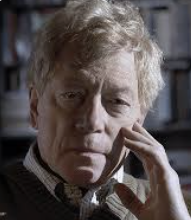
1 month 3 weeks ago
An international socialism is the stated ideal of most socialists; an international liberalism is the unstated tendency of the liberal. To neither system is it thinkable that men live, not by universal aspirations but by local attachments; not by a "solidarity" that stretches across the globe from end to end, but by obligations that are understood in terms which separate men from most of their fellows-in terms such as national history, religion, language, and the customs that provide the basis of legitimacy.
▼
Source
source
How to be a Non-Liberal, Anti-Socialist Conservative, Intercollegiate Review: A Journal of Scholarship and Opinion

4 months 1 day ago
A nation never falls but by suicide.
▼
Source
source
1861
2 days ago
Two equally steep and bold paths may lead to the same peak. To act as if death did not exist, or to act thinking every minute of death, is perhaps the same thing.
▼
Source
source
Ch. 3
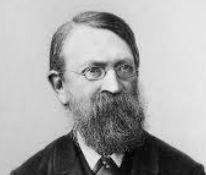
2 months 3 weeks ago
Mathematical and physiological researches have shown that the space of experience is simply an actual case of many conceivable cases, about whose peculiar properties experience alone can instruct us.
▼
Source
source
p. 205; On the space of experience.

1 day ago
Our liberty depends on the freedom of the press, and that cannot be limited without being lost.
▼
Source
source
Letter to Dr. James Currie (28 January 1786) Lipscomb & Bergh 18:ii
4 months 1 day ago
In actions of enthusiasm, this drawback appears: but in those lower activities, which have no higher aim than to make us more comfortable and more cowardly, in actions of cunning, actions that steal and lie, actions that divorce the speculative from the practical faculty, and put a ban on reason and sentiment, there is nothing else but drawback and negation.
▼
Source
source
Goethe; or, The Writer

3 weeks 1 day ago
Battles, in these ages, are transacted by mechanism; with the slightest possible development of human individuality or spontaneity: men now even die, and kill one another, in an artificial manner.
▼
Source
source
Pt. I, Bk. VII, ch. 4.

1 month 1 week ago
Why expect a false theory of the world, i.e. classical physics, to yield a true account of consciousness?
▼
Source
source
Social Media Unsorted Postings 2016
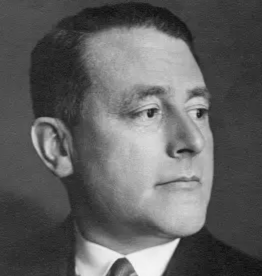
Just now
All significant concepts of the modern theory of the state are secularized theological concepts not only because of their historical development-in which they were transferred from theology to the theory of the state, whereby, for example, the omnipotent God became the omnipotent lawgiver-but also because of their systematic structure, the recognition of which is necessary for a sociological consideration of these concepts. The exception in jurisprudence is analogous to the miracle in theology.

2 months 4 days ago
I do not define time, space, place, and motion, as being well known to all. Only I must observe, that the common people conceive those quantities under no other notions but from the relation they bear to sensible objects. And thence arise certain prejudices, for the removing of which it will be convenient to distinguish them into absolute and relative, true and apparent, mathematical and common.
▼
Source
source
Definitions - Scholium
4 months 2 weeks ago
Hence, as Narcissus, by catching at the shadow, plunged himself in the stream and disappeared, so he who is captivated by beautiful bodies, and does not depart from their embrace, is precipitated, not with his body, but with his soul, into a darkness profound and repugnant to intellect (the higher soul), through which, remaining blind both here and in Hades, he associates with shadows.

2 weeks 2 days ago
Dumb creatures have not human feelings, but have certain impulses which resemble them: for if it were not so, if they could feel love and hate, they would likewise be capable of friendship and enmity, of disagreement and agreement. Some traces of these qualities exist even in them, though properly all of them, whether good or bad, belong to the human breast alone.

4 months 4 weeks ago
"In the light, the earth remains our first and our last love. Our brothers are breathing under the same sky as we; justice is a living thing. Now is born that strange joy which helps one live and die, and which we shall never again postpone to a later time."

4 months 1 day ago
Everyone who knows anything of history also knows that great social revolutions are impossible without the feminine ferment. Social progress may be measured precisely by the social position of the fair sex (plain ones included).
▼
Source
source
Letter to Ludwig Kugelmann, dated 12 December 1868.

4 months 4 days ago
It is a mistake to classify the passions as lawful and unlawful, so as to yield to the one and refuse the other. All alike are good if we are their masters; all alike are bad if we abandon ourselves to them. Nature forbids us to extend our relations beyond the limits of our strength; reason forbids us to want what we cannot get, conscience forbids us, not to be tempted, but to yield to temptation. To feel or not to feel a passion is beyond our control, but we can control ourselves. Every sentiment under our own control is lawful; those which control us are criminal. A man is not guilty if he loves his neighbour's wife, provided he keeps this unhappy passion under the control of the law of duty; he is guilty if he loves his own wife so greatly as to sacrifice everything to that love.
4 months 2 days ago
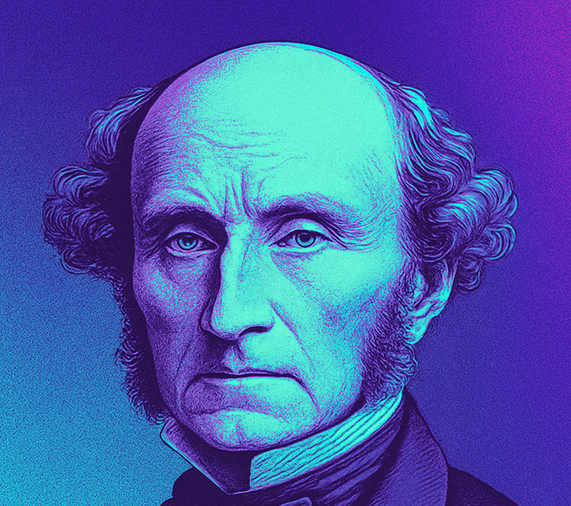
I regard utility as the ultimate appeal on all ethical questions; but it must be utility in the largest sense, grounded on the permanent interests of man as a progressive being.
▼
Source
source
Ch. 1: Introductory
2 months 3 weeks ago
What to think of other people? I ask myself this question each time I make a new acquaintance. So strange does it seem to me that we exist, and that we consent to exist.

2 months 3 days ago
I do feel that evolution is being controlled by some sort of divine engineer. I can't help thinking that. And this engineer knows exactly what he or she is doing and why, and where evolution is headed. That's why we've got giraffes and hippopotami and the clap.
▼
Source
source
On evolution vs. "intelligent design", interviewed by Jon Stewart, The Daily Show
1 month 1 week ago
Any plea ... for institutionalized risk-assessment, beefed-up bioethics panels, academic review bodies, worse-case scenario planning, more intensive computer simulations, systematic long-term planning and the institutionalized study of existential risks is admirable. But so is urgent action to combat the global pandemic of suffering. "The easiest pain to bear is someone else's"
▼
Source
source
Objections, No 34
2 months 3 weeks ago
We must suffer to the end, to the moment when we stop believing in suffering.

4 months 2 weeks ago
It is on account neither of God's weakness nor ignorance that evil comes into the world, but rather it is due to the order of his wisdom and the greatness of his goodness that diverse grades of goodness occur in things, many of which would be lacking if no evil were permitted. Indeed, the good of patience would not exist without the evil of persecution; nor the good of preservation of life in a lion if not for the evil of the destruction of the animals on which it lives.
▼
Source
source
q. 3, art. 6, ad 4

2 months 3 weeks ago
I will destroy this house, and no one will be able to build it....

4 months 2 days ago
Whate'er we leave to God, God doesAnd blesses us.
▼
Source
source
"Inspiration", in An American Anthology, 1900
3 weeks 1 day ago
Every candid eye, I think, will read the Koran far otherwise than so. It is the confused ferment of a great rude human soul; rude, untutored, that cannot even read; but fervent, earnest, struggling vehemently to utter itself in words. With a kind of breathless intensity he strives to utter himself; the thoughts crowd on him pell-mell: for very multitude of things to say, he can get nothing said. The meaning that is in him shapes itself into no form of composition, is stated in no sequence, method, or coherence;-they are not shaped at all, these thoughts of his; flung out unshaped, as they struggle and tumble there, in their chaotic inarticulate state.
1 day ago
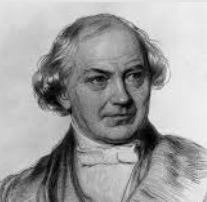
The two processes by which Science is constructed are the 'Explication of Conceptions' and the 'Colligation of Facts'.
2 months 3 weeks ago
I ask myself; Why is it that only some people suffer? Why are only some selected from the ranks of normal people and put on the torture rack? Some religions maintain that God is trying us through suffering, or that we expiate evil and unbelief through it. If such an explanation can satisfy the religious man, it is not sufficient for anyone who notices that suffering is arbitrary and unjust, because the innocent often suffer most. There is no valid justification for suffering. Suffering has no hierarchy of values.
▼
Source
source
in essay: the monopoly of suffering
4 months 2 days ago
If I had been by nature extremely quick of apprehension, or had possessed a very accurate and retentive memory or were of a remarkably active and energetic character, the trial would not be conclusive; but in all these natural gifts I am rather below than above par; what I could do, could assuredly be done by any boy or girl of average capacity and healthy physical constitution: and if I have accomplished anything, I owe it, among other fortunate circumstances, to the fact that through the early training bestowed on me by my father, I started, I may fairly say, with an advantage of a quarter of a century over my contemporaries.
▼
Source
source
(pp. 30-31)

4 months 1 week ago
The only good histories are those that have been written by the persons themselves who commanded in the affairs whereof they write.
▼
Source
source
Book II, Ch. 10. Of Books
2 months 3 weeks ago
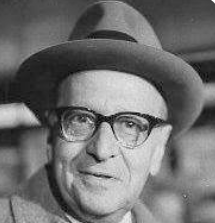
We cannot credit our enjoyment of a flower or of the atmosphere of a room to an autonomous esthetic instinct. Man's esthetic responsiveness relates in its prehistory to various forms of idolatry; his belief in the goodness or sacredness of a thing precedes his enjoyment of its beauty. The applies no less to such concepts as freedom and humanity.
▼
Source
source
p. 36.

4 months ago
Absurd, irreducible; nothing - not even a profound and secret delirium of nature - could explain it. Obviously I did not know everything, I had not seen the seeds sprout, or the tree grow. But faced with this great wrinkled paw, neither ignorance nor knowledge was important: the world of explanations and reasons is not the world of existence. A circle is not absurd, it is clearly explained by the rotation of a straight segment around one of its extremities. But neither does a circle exist. This root, on the other hand, existed in such a way that I could not explain it. Reflections on a chestnut tree root.
4 months 1 day ago
In order to abolish the idea of private property, the idea of communism is completely sufficient. It takes actual communist action to abolish actual private property. History will com to it; and this movement, which in theory we already know to be a self-transcending movement, will constitute in actual fact a very severe and protracted process. But we must regard it as a real advance to have gained beforehand a consciousness of the limited character a well as of the goal of this historical movement - and a consciousness which reaches out beyond it.
▼
Source
source
p. 99, The Marx-Engels Reader
3 months 6 days ago
Men sometimes submit to shame, to tyranny, to conquest, but they never long suffer anarchy. There is no people so barbarous that they escape this general law of humanity.
▼
Source
source
Second letter on Algeria (1837), Travels in Algeria p. 38
4 months 2 days ago
Now, what is 'unrighteousness' in practice? It is in practice behavior of a kind disliked by the herd. By calling it unrighteousness, and by arranging an elaborate system of ethics around this conception, the herd justifies itself in wreaking punishment upon the objects of its own dislike, while at the same time, since the herd is righteous by definition, it enhances its own self-esteem at the very moment when it lets loose its impulse to cruelty. This is the psychology of lynching, and of the other ways in which criminals are punished. The essence of the conception of righteousness, therefore, is to afford an outlet for sadism by cloaking cruelty as justice.
▼
Source
source
"The Idea of Righteousness"
4 months 2 weeks ago
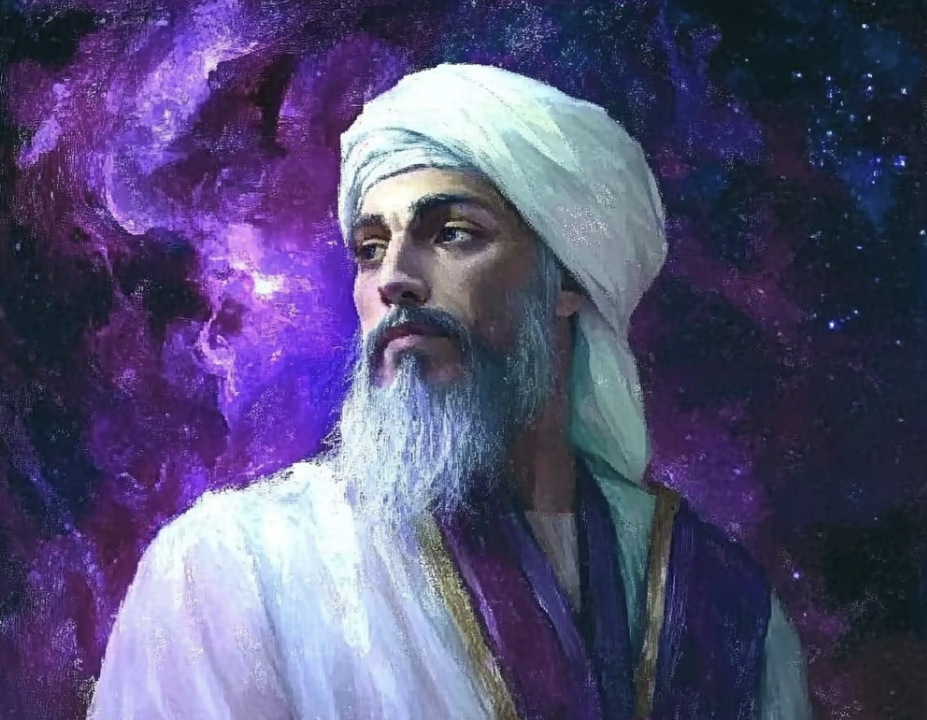
The world is divided into men who have wit and no religion and men who have religion and no wit.
2 months 3 weeks ago
We say: he has no talent, only tone. But tone is precisely what cannot be invented - we're born with it. Tone is an inherited grace, the privilege some of us have of making our organic pulsations felt - tone is more than talent, it is its essence.
4 months 2 days ago
The principal source of the harm done by the State is the fact that power is its chief end.
▼
Source
source
Principles of Social Reconstruction (1917), Ch. II: The State

3 months 3 weeks ago
Like everything metaphysical the harmony between thought and reality is to be found in the grammar of the language.
▼
Source
source
§ 112
4 months 4 days ago
Remorse sleeps during a prosperous period but wakes up in adversity.
▼
Source
source
Variant translations: Remorse sleeps during prosperity but awakes bitter consciousness during adversity. Remorse goes to sleep during a prosperous period and wakes up in adversity.
1 month 2 weeks ago
As civilization advances, poetry almost necessarily declines.
▼
Source
source
p. 5
CivilSimian.com created by AxiomaticPanic, CivilSimian, Kalokagathia