


4 months ago
Imagine yourself as a living house. God comes in to rebuild that house. At first, perhaps, you can understand what He is doing. He is getting the drains right and stopping the leaks in the roof and so on: you knew that those jobs needed doing and so you are not surprised. But presently he starts knocking the house about in a way that hurts abominably and does not seem to make sense. What on earth is He up to? The explanation is that He is building quite a different house from the one you thought of-throwing out a new wing here, putting on an extra floor there, running up towers, making courtyards. You thought you were going to be made into a decent little cottage: but He is building a palace. He intends to come and live in it Himself.
▼
Source
source
Book IV, Chapter 9, "Counting the Cost"
2 months 3 weeks ago
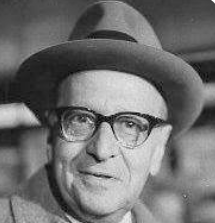
At present, when the prevailing forms of society have become hindrances to the free expression of human powers, it is precisely the abstract branches of science, mathematics and theoretical physics, which ... offer a less distorted form of knowledge than other branches of science which are interwoven with the pattern of daily life, and the practicality of which seemingly testifies to their realistic character.
▼
Source
source
p. 133.

2 months 3 weeks ago
The moment we believe we've understood everything grants us the look of a murderer.

3 months 6 days ago
We vainly accuse the fury of guns, and the new inventions of death; it is in the power of every hand to destroy us, and we are beholden unto every one we meet he doth not kill us.
▼
Source
source
Section 44

5 months 3 days ago
A thinker sees his own actions as experiments and questions as attempts to find out something. Success and failure are for him answers above all.
2 months 2 weeks ago
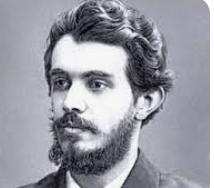
The life of Berdyaev spans the momentous events of the first half of the twentieth century in Europe. He was no ivory tower philosopher but was intimately affected by these events throughout his life and drew his inspirations from them regarding the nature of the human condition. His writings bear the imprint of the catastrophic situations within which he was destined to live.
▼
Source
source
Richard Schain, in In Love with Eternity : Philosophical Essays and Fragments (2005), Ch. 7 : Nikolai Alexandrovich Berdyaev - A Champion of the Spirit, p. 43
4 months 2 weeks ago
When I, who conduct this inquiry, love something, then three things are found: I, what I love, and the love itself. There are, therefore three things: the lover, the beloved and the love.
▼
Source
source
(Cambridge: 2002), Book 9, Chapter 2, Section 2, p. 26

2 months 3 weeks ago
Suppose ye that I am come to give peace on earth? I tell you, Nay; but rather division: For from henceforth there shall be five in one house divided, three against two, and two against three. The father shall be divided against the son, and the son against the father; the mother against the daughter, and the daughter against the mother; the mother in law against her daughter in law, and the daughter in law against her mother in law. And he said also to the people, When ye see a cloud rise out of the west, straightway ye say, There cometh a shower; and so it is. And when ye see the south wind blow, ye say, There will be heat; and it cometh to pass. Ye hypocrites, ye can discern the face of the sky and of the earth; but how is it that ye do not discern this time? Yea, and why even of yourselves judge ye not what is right?
▼
Source
source
12:51-57 (KJV) Variant translation of 12:57: Why do you not judge for yourselves what is right?

2 weeks 2 days ago
1) Preserve Life
2) State of war (opportunism)
3) Relativism
4) Confusion
Civilization, goodness, justice, fairness all contained inside the first option. Under # 1 (Universal Humanism):
1) Survive.
2) Don't prevent another from surviving.
3) Help the less fortunate.
4 months 4 weeks ago
Now in this island of Atlantis there was a great and wonderful empire which had rule over the whole island and several others, and over parts of the continent and, furthermore, the men of Atlantis had subjected the parts of Libya within the columns of Heracles as far as Egypt, and of Europe as far as Tyrrhenia. This vast power, gathered into one, endeavored to subdue at a blow our country and yours and the whole of the region within the straits, and then, Solon, your country shone forth, in the excellence of her virtue and strength, among all mankind.

3 months 5 days ago
The arbitrary rule of a just and enlightened prince is always bad. His virtues are the most dangerous and the surest form of seduction: they lull a people imperceptibly into the habit of loving, respecting, and serving his successor, whoever that successor may be, no matter how wicked or stupid.
▼
Source
source
Refutation of Helvétius

4 months 1 day ago
I have been quoted as saying captious things about travel; but I mean to do justice. I think, there is a restlessness in our people, which argues want of character. All educated Americans, first or last, go to Europe; - perhaps, because it is their mental home, as the invalid habits of this country might suggest. An eminent teacher of girls said, "the idea of a girl's education, is, whatever qualifies them for going to Europe." Can we never extract this tape-worm of Europe from the brain of our countrymen?
▼
Source
source
Culture
2 months 3 days ago
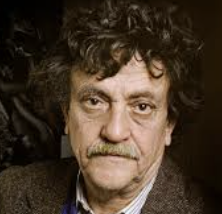
[When Vonnegut tells his wife he's going out to buy an envelope] Oh, she says, well, you're not a poor man. You know, why don't you go online and buy a hundred envelopes and put them in the closet? And so I pretend not to hear her. And go out to get an envelope because I'm going to have a hell of a good time in the process of buying one envelope. I meet a lot of people. And, see some great looking babes. And a fire engine goes by. And I give them the thumbs up. And, and ask a woman what kind of dog that is. And, and I don't know. The moral of the story is, is we're here on Earth to fart around. And, of course, the computers will do us out of that. And, what the computer people don't realize, or they don't care, is we're dancing animals. You know, we love to move around. And, we're not supposed to dance at all anymore.
▼
Source
source
Interview by David Brancaccio, NOW (PBS)
1 month 3 weeks ago
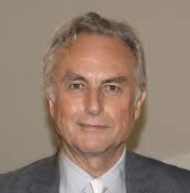
It is fashionable to wax apocalyptic about the threat to humanity posed by the AIDS virus, "mad cow" disease, and many others, but I think a case can be made that faith is one of the world's great evils, comparable to the smallpox virus but harder to eradicate.
▼
Source
source
Is Science a Religion?, The Humanist

4 months 1 day ago
Since the state must necessarily provide subsistence for the criminal poor while undergoing punishment, not to do the same for the poor who have not offended is to give a premium on crime.
▼
Source
source
Book V, Chapter XI, §13
3 weeks 2 days ago
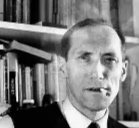
It would be silly, of course, to be either 'for' or 'against' modernity tout court, not only because it is pointless to try to stop the development of technology, science, and economic rationality, but because both modernity and antimodernity may be expressed in barbarous and antihuman terms.
▼
Source
source
"Modernity on Endless Trial"

3 months 1 day ago
The objects of a financier are, then, to secure an ample revenue; to impose it with judgment and equality; to employ it economically; and, when necessity obliges him to make use of credit, to secure its foundations in that instance, and for ever, by the clearness and candour of his proceedings, the exactness of his calculations, and the solidity of his funds.
2 months 3 days ago
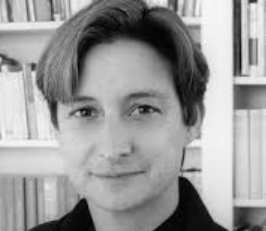
To subdue destruction is one of the most important affirmations of which we are capable in this world. It is the affirmation of this life, bound up with yours, and with the realm of the living: an affirmation caught up with a potential for destruction and its countervailing force.
▼
Source
source
p. 65
1 day ago
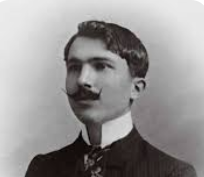
To SEE and accept the boundaries of the human mind without vain rebellion, and in these severe limitations to work ceaselessly without protest - this is where man's first duty lies.
3 months 6 days ago
Life itself is but the shadow of death, and souls departed but the shadows of the living: All things fall under this name. The Sun itself is but the dark simulacrum, and the light but the shadow of God.
▼
Source
source
Ch. 4
1 month 4 weeks ago
Money alone sets all the world in motion.
▼
Source
source
Maxim 656
Just now
According to the technical language of old writers, a thing and its qualities are described as subject and attributes; and thus a man's faculties and acts are attributes of which he is the subject. The mind is the subject in which ideas inhere. Moreover, the man's faculties and acts are employed upon external objects; and from objects all his sensations arise. Hence the part of a man's knowledge which belongs to his own mind, is subjective: that which flows in upon him from the world external to him, is objective.
▼
Source
source
Part I Of Ideas, Book I Of Ideas in General, Chap. 4 Of the Difference and Opposition of Sensation and Ideas
Just now
War as the most extreme political means discloses the possibility which underlies every political idea, namely, the distinction of friend and enemy.

4 months 2 weeks ago
Moderation, in the pursuit of honors or riches, is the only security against disappointment and vexation. A wise man, therefore, will prefer the simplicity of rustic life to the magnificence of courts.
3 months 3 weeks ago
The critique of the highest values hitherto does not simply refute them or declare them invalid. It is rather a matter of displaying their origins as impositions which must affirm precisely what ought to be negated by the values established.
▼
Source
source
p. 26
2 months 3 weeks ago
I am the door: by me if any man enter in, he shall be saved, and shall go in and out, and find pasture. The thief cometh not, but for to steal, and to kill, and to destroy: I am come that they might have life, and that they might have it more abundantly. I am the good shepherd: the good shepherd giveth his life for the sheep.
▼
Source
source
10:9-11
4 months 1 day ago
The sublime is excited in me by the great stoical doctrine, Obey thyself.
▼
Source
source
p. 14

4 months 4 days ago
The establishment of any new manufacture, of any new branch of commerce, or any new practice in agriculture, is always a speculation, from which the projector promises himself extraordinary profits. These profits sometimes are very great, and sometimes, more frequently, perhaps, they are quite otherwise; but in general they bear no regular proportion to those of other older trades in the neighbourhood. If the project succeeds, they are commonly at first very high. When the trade or practice becomes thoroughly established and well known, the competition reduces them to the level of other trades.
▼
Source
source
Chapter X, Part I, p. 136 (tendency of the rate of profit to fall).

4 months 1 week ago
A strong memory is commonly coupled with infirm judgment.
▼
Source
source
Ch. 9. Of Liars, tr. Cotton, rev. W. Carew Hazlitt, 1877
2 months 1 week ago
An elaborated culture has a density, complexity, and historical-semantic value that is so strong as to make politics possible... Gramsci's insight is to have recognised that subordination, fracturing, diffusion, reproducing, as much as producing, creating, forcing, guiding, are necessary aspects of elaboration.
▼
Source
source
Quoted in Richard Middleton, Studying Popular Music (Philadelphia: Open University Press, 1990, ISBN 0-335-15275-9), p. 248
2 months 4 weeks ago
Ah! why do women condescend to receive a degree of attention and respect from strangers different from that reciprocation of civility which the dictates of humanity and the politeness of civilization authorize between man and man? And why do they not discover, when, "in the noon of beauty's power", that they are treated like queens only to be deluded by hollow respect. Confined, then, in cages like the feathered race, they have nothing to do but to plume themselves, and stalk with mock majesty from perch to perch.
▼
Source
source
Ch. 4
1 month 3 weeks ago
A great deal of intelligence can be invested in ignorance when the need for illusion is deep. To Jerusalem and Back: A Personal Account (1976), p. 127 Compare: It's a point so blindingly obvious that only an extraordinarily clever and sophisticated person could fail to grasp it.
▼
Source
source
John Bercow, 2016.
2 months 3 weeks ago
Doutbless, revenge is not always sweet, once it is consummated we feel inferior to our victim, or else we are tangled in the subtleties of remorse; so vengeance too has its venom, though it comes closer to what we are, to what we feel, to the very law of the self; it is also healthier than magnanimity. The Furies were held to antedate the gods, Zeus included. Vengeance before Divinity! This is the Major intuition of ancient mythology. p. 70.
4 months 2 weeks ago
We make a ladder of our vices, if we trample those same vices underfoot.
▼
Source
source
3
2 weeks 2 days ago
The goal of liberalism is the peaceful cooperation of all men. It aims at peace among nations too. When there is private ownership of the means of production everywhere and when laws, the tribunals and the administration treat foreigners and citizens on equal terms, it is of little importance where a country's frontiers are drawn. Nobody can derive any profit from conquest, but many can suffer losses from fighting. War no longer pays; there is no motive for aggression. The population of every territory is free to determine to which state it wishes to belong, or whether it prefers to establish a state of its own. All nations can coexist peacefully, because no nation is concerned about the size of its state.
▼
Source
source
Omnipotent Government : The Rise of the Total State and Total War

4 months 3 weeks ago
I leave Sisyphus at the foot of the mountain! One always finds one's burden again. But Sisyphus teaches the higher fidelity that negates the gods and raises rocks. He too concludes that all is well. This universe henceforth without a master seems to him neither sterile nor futile. Each atom of that stone, each mineral flake of that night filled mountain, in itself forms a world. The struggle itself toward the heights is enough to fill a man's heart. One must imagine Sisyphus happy.

3 weeks 1 day ago
The Philosopher of this age is not a Socrates, a Plato, a Hooker, or Taylor, who inculcates on men the necessity and infinite worth of moral goodness, the great truth that our happiness depends on the mind which is within us, and not on the circumstances which are without us; but a Smith, a De Lolme, a Bentham, who chiefly inculcates the reverse of this,-that our happiness depends entirely on external circumstances; nay, that the strength and dignity of the mind within us is itself the creature and consequence of these. Were the laws, the government, in good order, all were well with us; the rest would care for itself! Dissentients from this opinion, expressed or implied, are now rarely to be met with; widely and angrily as men differ in its application, the principle is admitted by all.
4 months 1 day ago
Is not marriage an open question, when it is alleged, from the beginning of the world, that such as are in the institution wish to get out, and such as are out wish to get in?
▼
Source
source
Montaigne; or, The Skeptic

4 months 4 days ago
I know my heart, and have studied mankind; I am not made like any one I have been acquainted with, perhaps like no one in existence; if not better, I at least claim originality, and whether Nature did wisely in breaking the mould with which she formed me, can only be determined after having read this work.
▼
Source
source
Variant translations: I may not be better than other people, but at least I am different. If I am not better, at least I am different.
2 months 3 weeks ago
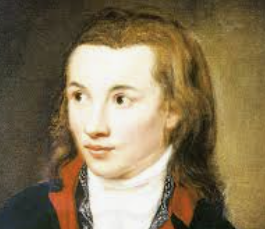
For a writer, to change languages is to write a love letter with a dictionary.
2 months 4 weeks ago
Many counterrevolutionary books have been written in favor of the Revolution. But Burke has written a revolutionary book against the Revolution.
▼
Source
source
Fragment No. 104; on Edmund Burke's Reflections on the Revolution in France (1790).
3 weeks 2 days ago
...shall we say that the difference between a vegetarian and a cannibal is just a matter of taste?
▼
Source
source
"The Idolatry of Politics", New Republic, 1986-June-16, page 31.
2 months 3 weeks ago
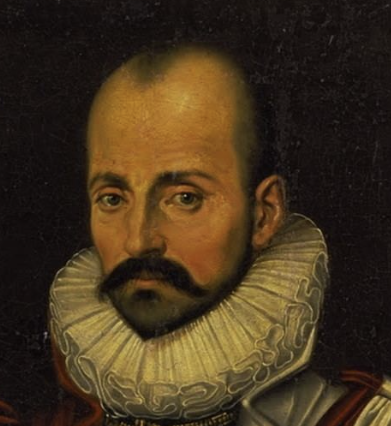
Creation is in fact a fault, man's famous sin thereby appearing as a minor version of a much graver one. What are we guilty of, except of having followed, more or less slavishly, the Creator's example? Easy to recognize in ourselves the fatality which was His: not for nothing have we issued from the hands of a wicked and woebegone god, a god accursed.
3 weeks 5 days ago
There is in our souls some native seed of reason, which, if nourished by good counsel and training, flowers into virtue, but which, on the other hand, if unable to resist the vices surrounding it, is stifled and blighted.
▼
Source
source
Part 2
4 months 1 day ago
He who knows only his own side of the case, knows little of that. His reasons may be good, and no one may have been able to refute them. But if he is equally unable to refute the reasons on the opposite side; if he does not so much as know what they are, he has no ground for preferring either opinion.
▼
Source
source
Ch. II: Of the Liberty of Thought and Discussion
2 months 3 weeks ago
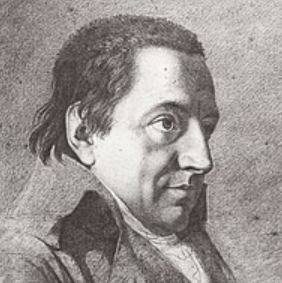
To act is to anchor in the imminent future.
3 months ago
Among other men Reason awakes in another form-as the impulse towards Personal Freedom, which, although it never opposes the mild rule of the inward Instinct which it loves, yet rises in rebellion against the pressure of a stranger Instinct which has usurped its rights; and in this awakening it breaks the chains,-not of Reason as Instinct itself, but of the Instinct of foreign natures clothed in the garb of external power.
▼
Source
source
p. 8
CivilSimian.com created by AxiomaticPanic, CivilSimian, Kalokagathia