


3 months 2 weeks ago
Good breeding in cattle depends on physical health, but in men on a well-formed character.
▼
Source
source
Freeman (1948), p. 151
2 weeks 1 day ago
Everything sacred is a tie, a fetter.
▼
Source
source
Cambridge 1995, p. 192
2 months 1 week ago
The function of knowledge in the decision-making process is to determine which consequences follow upon which of the alternative strategies. It is the task of knowledge to select from the whole class of possible consequences a more limited subclass, or even (ideally) a single set of consequences correlated with each strategy.
▼
Source
source
p. 78.

2 months 3 weeks ago
Bach: a scale of tears upon which our desires for God ascend.

2 months 2 weeks ago
A further turn is to be found in some "unmasking" accounts of natural science, which aim to show that its pretensions to deliver the truth are unfounded, because of social forces that control its activities. Unlike the case of history, these do not use truths of the same kind; they do not apply science to the criticism of science. They apply the social sciences, and typically depend on the remarkable assumption that the sociology of knowledge is in a better position to deliver truth about science than science is to deliver truth about the world.
▼
Source
source
p. 2
1 month 3 weeks ago
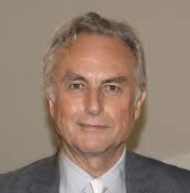
I don't believe you until you tell me, do you really believe, for example, if they say they are Catholic, "Do you really believe that when a priest blesses a wafer, it turns into the body of Christ? Are you seriously telling me you believe that? Are you seriously saying that wine turns into blood?" Mock them. Ridicule them. In public. Don't fall for the convention that we're all too polite to talk about religion. Religion is not off the table. Religion is not off limits. Religion makes specific claims about the universe which need to be substantiated and need to be challenged and, if necessary, need to be ridiculed with contempt.
▼
Source
source
Reason Rally, National Mall, Washington, DC, 2012-03-24 Richard Dawkins and his Foundation at the Reason Rally, YouTube, 7 April 2012

3 months 4 weeks ago
Indeed, if we consider the unblushing promises of reward and the staggering nature of the rewards promised in the Gospels, it would seem that Our Lord finds our desires, not too strong, but too weak. We are half-hearted creatures, fooling about with drink and sex and ambition when infinite joy is offered us, like an ignorant child who wants to go on making mud pies in a slum because he cannot imagine what is meant by the offer of a holiday at the sea. We are far too easily pleased.
1 month 1 week ago
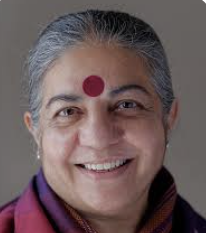
Many conflicts within Third World countries are related to the practice of exploiting resources faster than nature can renew them or diverting them away from where people need them. Dams in every society have become major sources of conflict. As water scarcity grows, neighbors, families turn against each other.

1 month 3 weeks ago
By electricity we have not been driven out of our senses so much as our senses have been driven out of us.
▼
Source
source
(p. 375)

4 months ago
Do not hire a man who does your work for money, but him who does it for love of it.
▼
Source
source
p. 486
4 months 3 weeks ago
A punishment that penalizes without forestalling is indeed called revenge.
4 months 3 weeks ago
It is the failing of a certain literature to believe that life is tragic because it is wretched. Life can be magnificent and overwhelming that is its whole tragedy. Without beauty, love, or danger it would be almost easy to live. And M. Sartre's hero does not perhaps give us the real meaning of his anguish when he insists on those aspects of man he finds repugnant, instead of basing his reasons for despair on certain of man's signs of greatness. The realization that life is absurd cannot be an end, but only a beginning. This is a truth nearly all great minds have taken as their starting point. It is not this discovery that is interesting, but the consequences and rules of action drawn from it.

3 months ago
People will not look forward to posterity, who never look backward to their ancestors.
▼
Source
source
Volume iii, p. 274

4 months ago
Whatever is known to us by consciousness, is known beyond possibility of question. What one sees or feels, whether bodily or mentally, one cannot but be sure that one sees or feels. No science is required for the purpose of establishing such truths; no rules of art can render our knowledge of them more certain than it is in itself. There is no logic for this portion of our knowledge.
▼
Source
source
p. 4

2 months 2 weeks ago
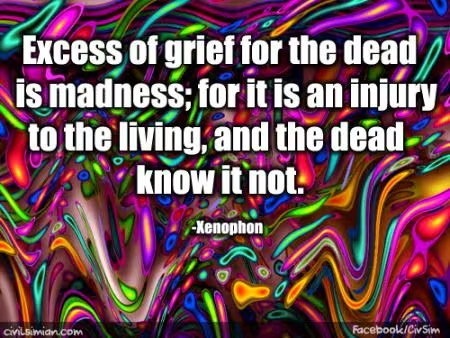
And neither ought we to be surprised by the affirmation that the consciousness of the Universe is composed and integrated by the consciousnesses of the beings which form the Universe, by the consciousnesses of all the beings that exist, and that nevertheless it remains a personal consciousness distinct from those which compose it. Only thus is it possible to understand how in God we live, move, and have our being.

4 months 1 day ago
A physicist looks for causes; that does not necessarily imply that there are causes everywhere. A man may look for gold without assuming that there is gold everywhere; if he finds gold, well and good, if he doesn't he's had bad luck. The same is true when the physicists look for causes.
▼
Source
source
BBC Radio Debate on the Existence of God, Russell vs. Copleston, 1948
4 months 2 days ago
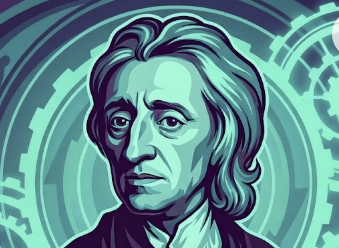
To teach him betimes to love and be good-natur'd to others, is to lay early the true foundation of an honest man; all injustice generally springing from too great love of ourselves and too little of others.
▼
Source
source
Sec. 139
4 months 1 week ago
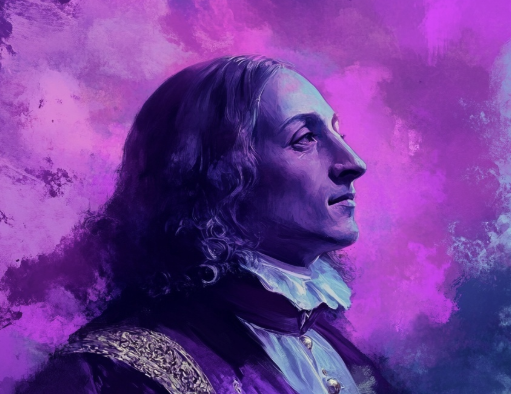
Thus he had a double thought: the one by which he acted as king, the other by which he recognized his true state, and that it was accident alone that had placed him in his present condition.

4 months ago
Wherever Macdonald sits, there is the head of the table.
▼
Source
source
par. 37
2 months 3 weeks ago
The pessimist has to invent new reasons to exist every day: he is a victim of the "meaning" of life.
1 month 3 weeks ago
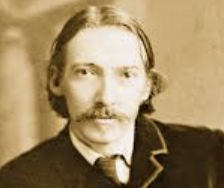
A woman can earn her pardon for a good year of disobedience by a single adroit submission.
▼
Source
source
The Rajah's Diamond, Story of the Bandbox.
2 months 2 weeks ago
The greatest height of heroism to which an individual, like a people, can attain is to know how to face ridicule; better still, to know how to make oneself ridiculous and not to shrink from the ridicule.

3 months 4 weeks ago
The Beatific Vision, Sat Chit Ananda, Being-Awareness-Bliss-for the first time I understood, not on the verbal level, not by inchoate hints or at a distance, but precisely and completely what those prodigious syllables referred to. And then I remembered a passage I had read in one of Suzuki's essays. "What is the Dharma-Body of the Buddha?" ('"the Dharma-Body of the Buddha" is another way of saying Mind, Suchness, the Void, the Godhead.) The question is asked in a Zen monastery by an earnest and bewildered novice. And with the prompt irrelevance of one of the Marx Brothers, the Master answers, "The hedge at the bottom of the garden." "And the man who realizes this truth," the novice dubiously inquires, "what, may I ask, is he?" Groucho gives him a whack over the shoulders with his staff and answers, "A golden-haired lion."
3 months 2 weeks ago
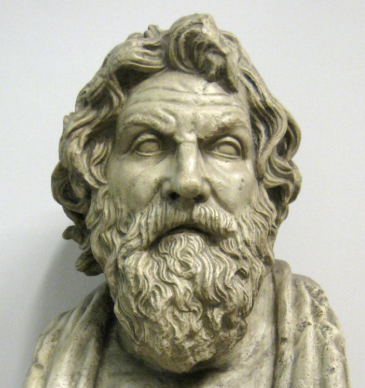
When he was asked what advantage had accrued to him from philosophy, his answer was, "The ability to hold converse with myself."
▼
Source
source
§ 4
2 months 1 week ago
How very little can be done under the spirit of fear.
▼
Source
source
As quoted in The Book of Positive Quotations (2007) by John Cook, p. 479
1 month 3 weeks ago
There are no passengers on Spaceship Earth. We are all crew.
▼
Source
source
Statement in 1965, in reference to Operating Manual for Spaceship Earth (1963) by Buckminster Fuller
4 months ago
We are born believing. A man bears beliefs as a tree bears apples.
▼
Source
source
Worship

4 months ago
The total possible consciousness may be split into parts which co-exist but mutually ignore each other.
▼
Source
source
Ch. 8
1 month 3 weeks ago
Atheists have the intellectual courage to accept reality for what it is: wonderfully and shockingly explicable. As an atheist, you have the moral courage to live to the full the only life you're ever going to get: to fully inhabit reality, rejoice in it, and do your best finally to leave it better than you found it.
▼
Source
source
The Intellectual and Moral Courage of Atheism

3 months 6 days ago
Knowledge that is not Infallible is not certain knowledge.
▼
Source
source
I. Introduction, p. 7.
4 months 1 day ago
When the intensity of emotional conviction subsides, a man who is in the habit of reasoning will search for logical grounds in favour of the belief which he finds in himself.
▼
Source
source
Ch. 1: Mysticism and Logic
4 months 3 weeks ago
Can one be a saint without God?, that's the problem, in fact the only problem, I'm up against today.

4 months 2 weeks ago
Since, of desires some are natural and necessary; others natural, but not necessary; and others neither natural nor necessary, but the offspring of false judgment; it must be the office of temperance to gratify the first class, as far as nature requires: to restrain the second within the bounds of moderation; and, as to the third, resolutely to oppose, and, if possible, entirely repress them.

3 months 4 days ago
We swallow greedily any lie that flatters us, but we sip only little by little at a truth we find bitter.
2 months 2 weeks ago
Even after his conversion, the true 'apostate' is not primarily committed to the positive contents of his new belief and to the realization of its aims. He is motivated by the struggle against the old belief and lives on for its negation. The apostate does not affirm his new convictions for their own sake; he is engaged in a continuous chain of acts of revenge against his own spiritual past. In reality he remains a captive of this past, and the new faith is merely a handy frame of reference for negating and rejecting the old. As a religious type, the apostate is therefore at the opposite pole from the 'resurrected,' whose life is transformed by a new faith which is full of intrinsic meaning and value.
▼
Source
source
L. Coser, trans. (1973), pp. 66-67
3 months ago
You have the representatives of that [Christian] religion which says that their God is love, that the very vital spirit of their institution is charity,-a religion which so much hates oppression, that, when the God whom we adore appeared in human form, He did not appear in a form of greatness and majesty, but in sympathy with the lowest of the people, and thereby made it a firm and ruling principle that their welfare was the object of all government, since the Person who was the Master of Nature chose to appear Himself in a subordinate situation. These are the considerations which influence them, which animate them, and will animate them, against all oppression,-knowing that He who is called first among them, and first among us all, both of the flock that is fed and of those who feed it, made Himself "the servant of all."
▼
Source
source
Speech in opening the impeachment of Warren Hastings (19 February 1788), quoted in The Works of the Right Honourable Edmund Burke, Volume the Tenth (1899), p. 144
1 week 1 day ago
The world I believe is far too serious, and being far too serious, is it has need of a wise and merry philosophy.
▼
Source
source
Ch. I : The Awakening, p. 13
4 months 2 weeks ago
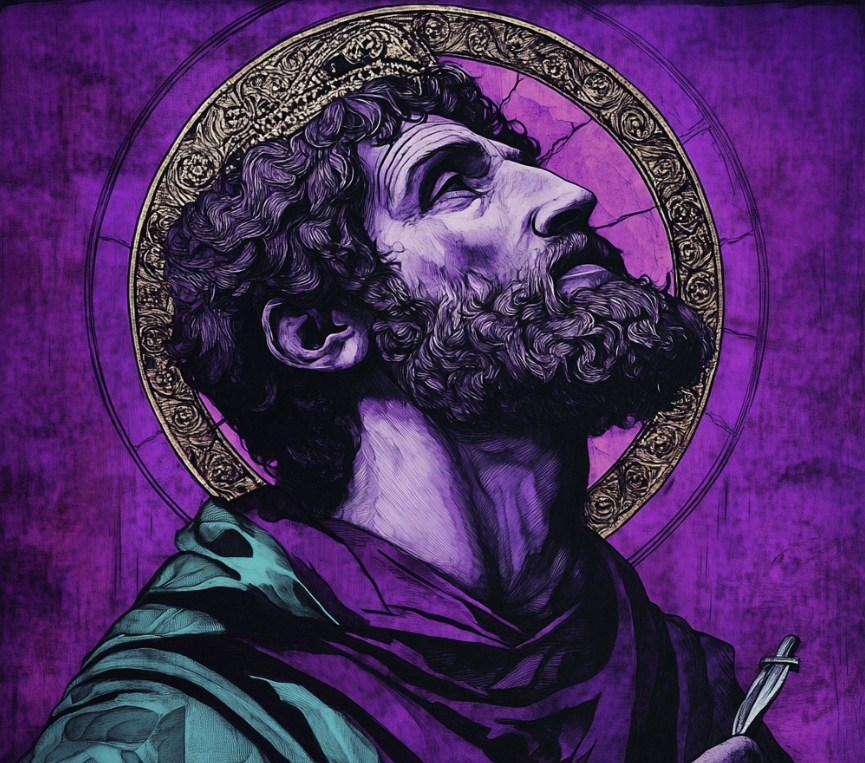
I became evil for no reason. I had no motive for my wickedness except wickedness itself. It was foul, and I loved it. I loved the self-destruction, I loved my fall, not the object for which I had fallen but my fall itself. My depraved soul leaped down from your firmament to ruin. I was seeking not to gain anything by shameful means, but shame for its own sake.
▼
Source
source
II, 4
2 months 3 weeks ago
No position is so false as having understood and still remaining alive.
4 months 1 week ago
Rules for Definitions. I. Not to undertake to define any of the things so well known of themselves that the clearer terms cannot be had to explain them. II. Not to leave any terms that are at all obscure or ambiguous without definition. III. Not to employ in the definition of terms any words but such as are perfectly known or already explained.
3 weeks 3 days ago
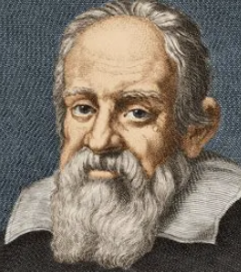
I have been in my bed for five weeks, oppressed with weakness and other infirmities from which my age, seventy four years, permits me not to hope release.
▼
Source
source
Compiled primarily from his correspondence and that of his eldest daughter, Sister Maria Celeste (1870) by Mary Allan-Olney, p. 278
4 months 3 days ago
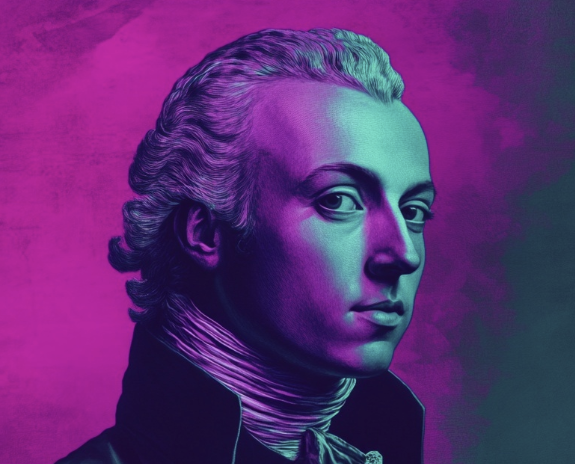
By a lie a man throws away and, as it were, annihilates his dignity as a man. A man who himself does not believe what he tells another ... has even less worth than if he were a mere thing. ... makes himself a mere deceptive appearance of man, not man himself.
▼
Source
source
Doctrine of Virtue as translated by Mary J. Gregor (1964), p. 93
3 months 4 weeks ago
In the course of evolution nature has gone to endless trouble to see that every individual is unlike every other individual.... Physically and mentally, each one of us is unique. Any culture which, in the interests of efficiency or in the name of some political or religious dogma, seeks to standardize the human individual, commits an outrage against man's biological nature.
▼
Source
source
Chapter 3 (p. 21)
3 months ago
I have never yet seen any plan which has not been mended by the observation of those who were much inferior in understanding to the person who took the lead in the business.
2 months 2 weeks ago
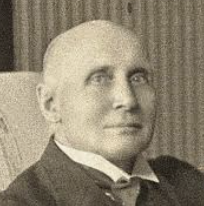
Nature is a structure of evolving processes. The reality is the process.
▼
Source
source
Ch. 4: "The Eighteenth Century", p. 102
3 months 4 weeks ago
But why,' (some ask), 'why, if you have a serious comment to make on the real life of men, must you do it by talking about a phantasmagoric never-never land of your own?' Because, I take it, one of the main things the author wants to say is that the real life of men is of that mythical and heroic quality. One can see the principle at work in his characterization. Much that in a realistic work would be done by 'character delineation' is here done simply by making the character an elf, a dwarf, or a hobbit. The imagined beings have their insides on the outside; they are visible souls. And Man as a whole, Man pitted against the universe, have we seen him at all till we see that he is like a hero in a fairy tale?
▼
Source
source
p. 89
4 months 1 week ago
I am firmly convinced, therefore, that to set up a republic which is to last a long time, the way to set about it is to constitute it as Sparta and Venice were constituted; to place it in a strong position, and so to fortify it that no one will dream of taking it by a sudden assault; and, on the other hand, not to make it so large as to appear formidable to its neighbors. It should in this way be able to enjoy its form of government for a long time. For war is made on a commonwealth for two reasons: to subjugate it, and for fear of being subjugated by it.
▼
Source
source
Book 1, Ch. 6 (as translated by LJ Walker and B Crick)

CivilSimian.com created by AxiomaticPanic, CivilSimian, Kalokagathia