


2 months 3 weeks ago
And that servant, which knew his lord's will, and prepared not himself, neither did according to his will, shall be beaten with many stripes.
▼
Source
source
Luke 12:47 (KJV)
2 months 1 week ago
Before a science can develop principles, it must possess concepts. Before a law of gravitation could be formulated, it was necessary to have the notions of "acceleration" and "weight."
▼
Source
source
p. 43.

3 months 4 weeks ago
What do we mean by saying that existence precedes essence? We mean that man first of all exists, encounters himself, surges up in the world-and defines himself afterwards. If man as the existentialist see him is not definable, it is because to begin with he is nothing. He will not be anything until later, and then he will be what he makes of himself. Thus, there is no human nature, because there is no God to have a conception of it. Man simply is. Not that he is simply what he conceives himself to be, but he is what he wills, and as he conceives himself after already existing - as he wills to be after that leap towards existence. Man is nothing else but that which he makes of himself. That is the first principle of existentialism.
▼
Source
source
p. 28
2 months 4 weeks ago
Each citizen of a state promises, in the original compact, that he will promote, as far as lies in his power, all the conditions of the possibility of the state ; hence, also, the condition just mentioned. This he can best do by educating children who may grow up to realize various ends of reason. The state has the right to make this education of children a condition of the state-compact, and thus education becomes an external, legal obligation, which the parents owe to the state.
▼
Source
source
P. 459

4 months ago
Mathematics takes us still further from what is human, into the region of absolute necessity, to which not only the world, but every possible world, must conform.
2 months 2 weeks ago
I remember well a junior seminar I gave with Paul Tillich shortly before the outbreak of the Third Reich. A participant spoke out against the idea of the meaning of existence. She said life did not seem very meaningful to her and she didn't know whether it had a meaning. The very voluble Nazi contingent became very excited by this and scraped the floor noisily with their feet. Now, I do not wish to maintain that this Nazi foot-shuffling proves or refutes anything in particular, but I do find it highly significant. I would say it is a touchstone for the relation of thinking to freedom. It raises the question whether thought can bear the idea that a given reality is meaningless and that mind is unable to orientate itself; or whether the intellect has become so enfeebled that it finds itself paralysed by the idea that all is not well with the world.
▼
Source
source
pp. 19-20

3 weeks ago
By awakening the Heroic that slumbers in every heart, can any Religion gain followers.
3 months 2 weeks ago
The universe itself is God and the universal outpouring of its soul.
▼
Source
source
As quoted in De Natura Deorum by Cicero, i. 15.
2 months 1 week ago
There is no getting around authority and power, and no getting around the intellectual's relationship to them. How does the intellectual address authority: as a professional supplicant or as its unrewarded, amateurish conscience?
▼
Source
source
p. 83
1 week 3 days ago
Truth has no special time of its own. Its hour is now - always, and indeed then most truly when it seems most unsuitable to actual circumstances. Care for distress at home and care for distress elsewhere do but help each other if, working together, they wake men in sufficient numbers from their thoughtlessness, and call into life a new spirit of humanity.
▼
Source
source
Ch. XI : Conclusion

2 weeks ago
And we cannot change this order of things; but what we can do is to acquire stout hearts, worthy of good men, thereby courageously enduring chance and placing ourselves in harmony with Nature.

2 months 1 week ago
Eros and depression are opposites.
2 months 2 weeks ago
For the kingdom of heaven is with us today.
4 months 2 weeks ago
Don't you know that a good and excellent person does nothing for the sake of appearances, but only for the sake of having acted right?
▼
Source
source
Book III, ch. 24, 50.
4 months 1 week ago
There are hardly any truths upon which we always remain agreed, and still fewer objects of pleasure which we do not change every hour, I do not know whether there is a means of giving fixed rules for adapting discourse to the inconstancy of our caprices.

2 months 3 weeks ago
When we know what words are worth, the amazing thing is that we try to say anything at all, and that we manage to do so. This requires, it is true, a supernatural nerve.
4 months 1 week ago
These five rules [above] form all that is necessary to render proofs convincing, immutable, and to say all, geometrical; and the eight rules together render them even more perfect.
2 months 4 weeks ago
The history of philosophical system is the picture gallery of reason.
▼
Source
source
Z. Hanfi, trans., in The Fiery Brook (1972), p. 68
1 week 3 days ago
Awakening of Western thought will not be complete until that thought steps outside itself and comes to an understanding with the search for a world-view as this manifests itself in the thought of mankind as a whole. We have too long been occupied with the developing series of our own philosophical systems, and have taken no notice of the fact that there is a world-philosophy of which our Western philosophy is only a part. If, however, one conceives philosophy as being a struggle to reach a view of the world as a whole, and seeks out the elementary convictions which are to deepen it and give it a sure foundation, one cannot avoid setting our own thought face to face with that of the Hindus, and of the Chinese in the Far East. ... Our Western philosophy, if judged by its own latest pronouncements, is much naiver than we admit to ourselves, and we fail to perceive this only because we have acquired the art of expressing what is simple in a pedantic way.

4 months ago
England has to fulfill a double mission in India: one destructive, the other regenerating - the annihilation of old Asiatic society, and the laying the material foundations of Western society in Asia... When a great social revolution shall have mastered the results of the bourgeois epoch... and subjected them to the common control of the most advanced peoples, then only will human progress cease to resemble that hideous, pagan idol, who would not drink the nectar but from the skulls of the slain.
▼
Source
source
"The Future Results of British Rule in India," New York Daily Tribune, 08 August 1853
4 months 2 days ago
As to the having and possessing of things, teach them to part with what they have, easily and freely to their friends, and let them find by experience that the most liberal has always the most plenty, with esteem and commendation to boot, and they will quickly learn to practise it.
▼
Source
source
Sec. 110

3 months 4 weeks ago
The most violent revolutions in an individual's beliefs leave most of his old order standing. Time and space, cause and effect, nature and history, and one's own biography remain untouched. New truth is always a go-between, a smoother-over of transitions. It marries old opinion to new fact so as ever to show a minimum of jolt, a maximum of continuity.
▼
Source
source
"What Pragmatism Means," Pragmatism, pp. 60-61 (1931); lectures delivered at the Lowell Institute, Boston, Massachusetts
3 months 2 weeks ago
To look for a single general theory of how to decide the right thing to do is like looking for a single theory of how to decide what to believe.
▼
Source
source
"The Fragmentation of Value" (1977), p. 135.
4 months 2 weeks ago
Pleasure and distress, fear and courage, desire and aversion, where have these affections and experiences their seat? Clearly, either in the Soul alone, or in the Soul as employing the body, or in some third entity deriving from both. And for this third entity, again, there are two possible modes: it might be either a blend or a distinct form due to the blending.
2 months 3 weeks ago
The dynamic principle of fantasy is play, a characteristic also of the child, and as such it appears inconsistent with the principle of serious work. But without this playing with fantasy no creative work has ever yet come to birth. The debt we owe to the play of imagination is incalculable. It is therefore short-sighted to treat fantasy, on account of its risky or unacceptable nature, as a thing of little worth.
▼
Source
source
Ch. 1, p. 82
3 weeks ago
The only method of learning to bear with dignity the vicissitudes of fortune is to recall the catastrophes of others.
▼
Source
source
Polybius. The Histories of Polybius, trans. Evelyn S. Shuckburgh. London, New York: Macmillan and Co., 1889. Book I, Chapter 1
2 months 2 weeks ago
In a sense, all explanation must end in an ultimate arbitrariness.
▼
Source
source
Ch. 5: "The Romantic Reaction", p. 130

3 months ago
Laws, like houses, lean on one another.
▼
Source
source
From the Tracts Relative to the Laws Against Popery in Ireland (c. 1766), not published during Burke's lifetime.
3 months ago
So to be patriots as not to forget we are gentlemen.
3 months 3 weeks ago
We do not "have" a body; rather, we "are" bodily.
▼
Source
source
p. 99

2 months 2 weeks ago
And what has Don Quixote left, do you ask? I answer, he has left himself, and a man, a living and eternal man, is worth all the theories and all the philosophies. Other peoples have left chiefly institutions, books; we have left souls; St. Teresa is worth any institution, any Critique of Pure Reason.
3 months 2 weeks ago
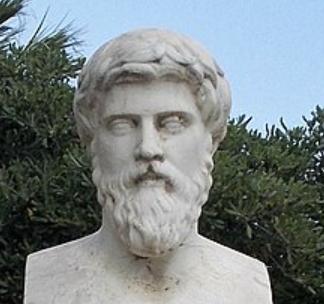
The measure of a man's life is the well spending of it, and not the length.
3 months 2 weeks ago
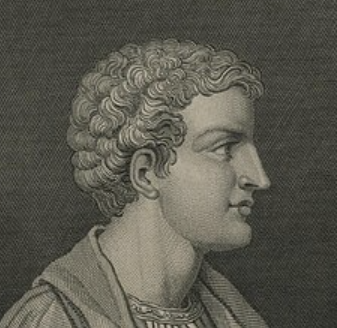
When you wish to instruct, be brief; that men's minds may take in quickly what you say, learn its lesson, and retain it faithfully. Every word that is unnecessary only pours over the side of a brimming mind.
▼
Source
source
Lines 335-337; Edward Charles Wickham translation

4 months 3 weeks ago
To work and create "for nothing," to sculpture in clay, to know one's creation has no future, to see one's work destroyed in a day while being aware that fundamentally this has no more importance than building for centuries, this is the difficult wisdom that absurd thought sanctions. Performing these two tasks simultaneously, negating on the one hand and magnifying on the other, it the way open to the absurd creator. He must give the void its colors.
2 months 3 weeks ago
To get up in the morning, wash and then wait for some unforeseen variety of dread or depression. I would give the whole universe and all of Shakespeare for a grain of ataraxy.
3 months 4 weeks ago
Tout existant naît sans raison, se prolonge par faiblesse et meurt par rencontre. Every existing thing is born without reason, prolongs itself out of weakness and dies by chance.
4 months 2 days ago
Virtue is harder to be got than knowledge of the world; and, if lost in a young man, is seldom recovered.
▼
Source
source
Sec. 70
1 month 3 weeks ago
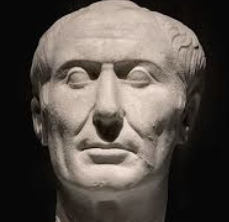
When Fortune flatters, she does it to betray.
▼
Source
source
Maxim 277
3 weeks ago
What is all Knowledge too but recorded Experience, and a product of History; of which, therefore, Reasoning and Belief, no less than Action and Passion, are essential materials?
▼
Source
source
Carlyle, Essays, On History. Quote reported in Hoyt's New Cyclopedia Of Practical Quotations (1922), p. 419-23.
3 weeks 1 day ago
We sometimes imagine, under the influence of Spenglerian philosophy or some other kind of "historical morphology," that we live in a similar age [to the Romans], the last witnesses of a condemned civilization. But condemned by whom? Not by God, but by some supposed "historical laws." For although we do not know any historical laws, we are in fact able of inventing them quite freely, and such laws, once invented, can then be realized in the form of self-fulfilling prophecies.
▼
Source
source
Looking for the Barbarians
2 weeks 6 days ago
In all European countries, especially in England, one class of Captains and commanders of men, recognizable as the beginning of a new real and not imaginary "Aristocracy," has already in some measure developed itself: the Captains of Industry;-happily the class who above all, or at least first of all, are wanted in this time. In the doing of material work, we have already men among us that can command bodies of men. And surely, on the other hand, there is no lack of men needing to be commanded: the sad class of brother-men whom we had to describe as "Hodge's emancipated horses," reduced to roving famine,-this too has in all countries developed itself; and, in fatal geometrical progression, is ever more developing itself, with a rapidity which alarms every one. On this ground, if not on all manner of other grounds, it may be truly said, the "Organization of Labor" (not organizable by the mad methods tried hitherto) is the universal vital Problem of the world.

2 months 2 weeks ago
The respect inspired by the link between man and the reality alien to this world can make itself evident to that part of man which belongs to the reality of this world. The reality of this world is necessity. The part of man which is in this world is the part which is in bondage to necessity and subject to the misery of need. The one possibility of indirect expression of respect for the human being is offered by men's needs, the needs of the soul and of the body, in this world.
1 month 1 week ago
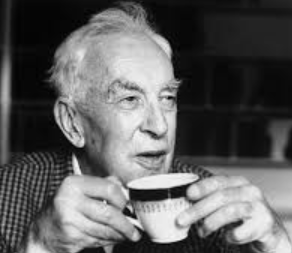
Right and wrong are the same in Palestine as anywhere else. What is peculiar about the Palestine conflict is that the world has listened to the party that has committed the offence and has turned a deaf ear to the victims.
▼
Source
source
Foreword to The Transformation of Palestine
3 weeks ago
We have the greatest admiration for this learned doctor: with what scientific stoicism he walks through the land of wonders, unwondering; like a wise man through some huge, gaudy, imposing Vauxhall, whose fire-works, cascades and symphonies, the vulgar may enjoy and believe in,-but where he finds nothing real but the saltpetre, pasteboard and catgut.

4 months ago
The sublime is excited in me by the great stoical doctrine, Obey thyself.
▼
Source
source
p. 14
1 month 1 week ago
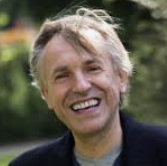
If we want eternal life, then we'll need to rewrite our bug-ridden genetic code and become god-like. "May all that have life be delivered from suffering", said Gautama Buddha. It's a wonderful sentiment. Sadly, only hi-tech solutions can ever eradicate suffering from the living world. Compassion alone is not enough.
▼
Source
source
Interview with Nick Bostrom and David Pearce, Dec. 2007

2 months 1 week ago
There certainly is self division. The man who watches a woman undressing has the red eyes of an ape; yet the man who sees two young lovers, really alone for the first time, who brings out all the pathos, the tenderness and uncertainty when he tells about it, is no brute; he is very much human. And the ape and the man exist in one body; and when the ape's desires are about to be fulfilled, he disappears and is succeeded by the man, who is disgusted with the ape's appetite.
▼
Source
source
Chapter one, The Country of the Blind
2 months 3 weeks ago
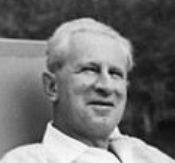
Marx explains the alienation of labor as exemplified in, first, the relation of the worker to the product of his labor and, second, the relation of the worker to his own activity. P. 276
5 months ago
There are three lines of life which stand out prominently to view: the life of pleasure, the political life, and the life of reflection.
4 months ago
Philosophy seems to me on the whole a rather hopeless business.
▼
Source
source
Letter to Gilbert Murray, December 28, 1902
CivilSimian.com created by AxiomaticPanic, CivilSimian, Kalokagathia