


3 months 3 weeks ago
For the prevision is allied Unto the thing so signified; Or say, the foresight that awaits Is the same Genius that creates.
▼
Source
source
Fate

3 months 4 weeks ago
They who know of no purer sources of truth, who have traced up its stream no higher, stand, and wisely stand, by the Bible and the Constitution, and drink at it there with reverence and humility; but they who behold where it comes trickling into this lake or that pool, gird up their loins once more, and continue their pilgrimage toward its fountain-head.

3 months 4 days ago
The lowest degree of education is to distinguish oneself from the ignorant ordinary man. The educated man does not loathe honey even if he finds it in the surgeon's cupping-glass; he realizes that the cupping glass does not essentially alter the honey. The natural aversion from it in such a case rests on popular ignorance, arising from the fact that the cupping-glass is made only for impure blood. Men imagine that the blood is impure because it is in the cupping-glass, and are not aware that the impurity is due to a property.
▼
Source
source
III. The Classes of Seekers, p. 31.

3 months 4 days ago
For nature is not merely present, but is implanted within things, distant from none; naught is distant from her except the false, and that which existed never and nowhere-nullity. And while the outer face of things changeth so greatly, there flourisheth the origin of being more intimately within all things than they themselves. The fount of all kinds, Mind, God, Being, One, Truth, Destiny, Reason, Order.
▼
Source
source
VIII 10 as translated by Dorothea Waley Singer

2 months 3 weeks ago
Espousing the melancholy of ancient symbols, I would have freed myself.

4 months 1 week ago
These five rules [above] form all that is necessary to render proofs convincing, immutable, and to say all, geometrical; and the eight rules together render them even more perfect.
2 months 3 weeks ago
If a man has not, by the time he is 30, yielded to the fascination of every form of extremism, I don't know if he is to be admired or scorned - a saint or a corpse.
3 weeks 3 days ago
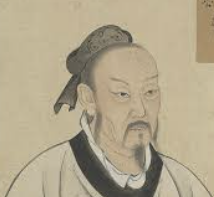
Learning proceeds until death and only then does it stop. ... Its purpose cannot be given up for even a moment. To pursue it is to be human, to give it up to be a beast.
▼
Source
source
Readings in Classical Chinese Philosophy (2001), p. 258
1 week 1 day ago
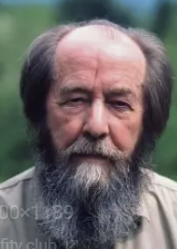
For us in Russia, communism is a dead dog, while, for many people in the West, it is still a living lion.
▼
Source
source
BBC Radio broadcast, Russian service, as quoted in The Listener

3 weeks 1 day ago
The other big issue is an emotional one. We tend to feel the greatest bonds of solidarity with people that are close to us. There are very few true citizens of the world. We're citizens of individual countries and we really feel the closest bonds to people that live within our nation, and therefore... the nation becomes a kind of social glue. But if you're going to make a national identity compatible with liberalism, it has to be the right kind of national identity. It has to be one that is open to all of the citizens that actually live in the territory of the nation. It can't exclude certain groups by race, by ethnicity, by religious belief and the like, and therefore it needs to be an open identity that is based on essentially liberal ideas.
▼
Source
source
24:46:00

2 weeks 4 days ago
Books-there is a good kind of a book and a bad kind of a book. I am not to assume that you are all ill acquainted with this; but I may remind you that it is a very important consideration at present. It casts aside altogether the idea that people have that if they are reading any book-that if an ignorant man is reading any book, he is doing rather better than nothing at all.
2 months 3 weeks ago
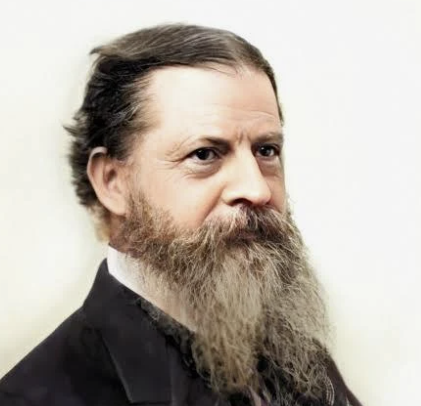
Some minds will jump here jump to the conclusion that a past idea cannot in any sense be present. But that is hasty and illogical. How extravagant too, to pronounce our whole knowledge of the past to be mere delusion! Yet it would seem that the past is completely beyond the bounds of possible experience as a Kantian thing-in-itself.

4 months 1 week ago
I have read in Plato and Cicero sayings that are very wise and very beautiful; but I never read in either of them, "Come unto me, all ye that labor and are heavy laden."
▼
Source
source
p. 62

2 months 2 weeks ago
You have heard that it was said to those of old, 'You shall not commit adultery.' But I say to you that whoever looks at a woman to lust for her has already committed adultery with her in his heart. If your right eye causes you to sin, pluck it out and cast it from you; for it is more profitable for you that one of your members perish, than for your whole body to be cast into hell. And if your right hand causes you to sin, cut it off and cast it from you; for it is more profitable for you that one of your members perish, than for your whole body to be cast into hell.
▼
Source
source
Exodus 20:14, Seventh Commandment Matthew 5:27-30 (NKJV)
1 month 6 days ago
Today, status quo bias runs deep. Conservation biology is an ideology masquerading as a science. Many researchers seek to extend the tenets of conservation biology to humans. By contrast, a benevolent superintelligence might view Darwinian life on Earth as an infestation of biological malware and act accordingly. The amount of suffering caused by Homo sapiens is hard to quantify. But the suffering is immense and growing daily with the spread of industrialised animal abuse. Reply to "Why would someone want to end humanity?"
▼
Source
source
, Quora, 10 Mar. 2018

3 months 3 weeks ago
You must picture me alone in that room in Magdalen, night after night, feeling, whenever my mind lifted even for a second from my work, the steady, unrelenting approach of Him whom I so earnestly desired not to meet. That which I greatly feared had at last come upon me. In the Trinity Term of 1929 I gave in, and admitted that God was God, and knelt and prayed: perhaps, that night, the most dejected and reluctant convert in all England.
2 months 3 weeks ago
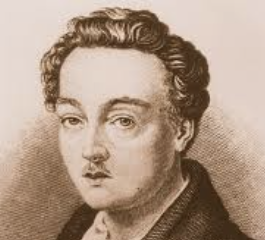
The power of the people and the power of reason are one.
▼
Source
source
Act III.
2 months 1 week ago
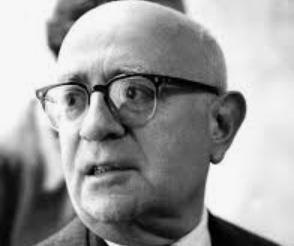
When I speak of 'negative dialectics' not the least important reason for doing so is my desire to dissociate myself from this fetishization of the positive.
▼
Source
source
p. 18
1 month 1 week ago
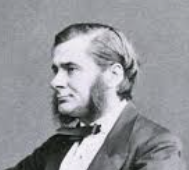
We have always thought that Mr. Darwin has unnecessarily hampered himself by adhering so strictly to his favourite "Natura non facit saltum." We greatly suspect that she does make considerable jumps in the way of variation now and then, and that these saltations give rise to some of the gaps which appear to exist in the series of known forms.
2 months 3 weeks ago
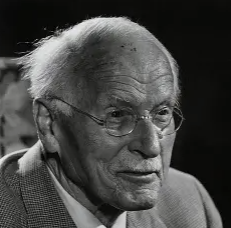
Man needs difficulties; they are necessary for health.
▼
Source
source
The Transcendent Function ("Die Transzendente Funktion") (1916) Volume 8: Structure & Dynamics of the Psyche, The Collected Works of C. G. Jung
4 months 4 weeks ago
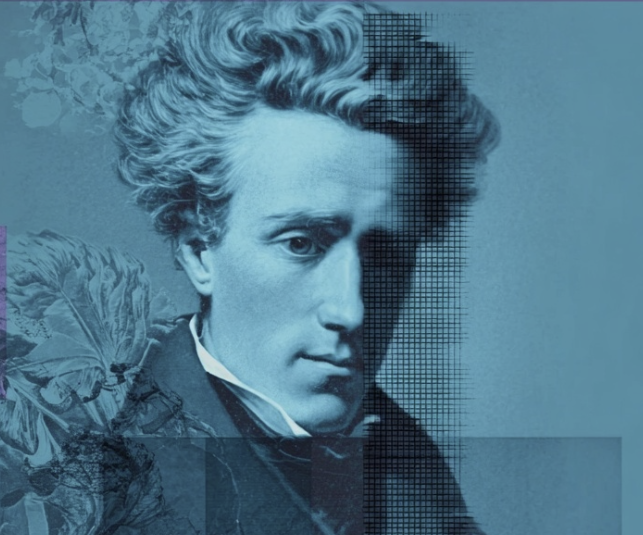
People are scarcely aware that it is a slavery they are creating; they forget this in their zeal to make people free by overthrowing dominions. They are scarcely aware that it is slavery; how could it be possible to be a slave in relation to equals?
2 months 1 week ago
With the sense of sight, the idea communicates the emotion, whereas, with sound, the emotion communicates the idea, which is more direct and therefore more powerful.
▼
Source
source
Ch. 29, June 10, 1943.


2 months 2 weeks ago
Greatness by nature includes a power, but not a will to power.
▼
Source
source
p. 150
3 weeks ago
We have not a direct intuition of simultaneity, nor of the equality of two durations. If we think we have this intuition, this is an illusion. We replace it by the aid of certain rules which we apply almost always without taking count of them....We ...choose these rules, not because they are true, but because they are the most convenient, and we may recapitulate them as follows: "The simultaneity of two events, or the order of their succession, the equality of two durations, are to be so defined that the enunciation of the natural laws may be as simple as possible. In other words, all these rules, all these definitions, are only the fruit of an unconscious opportunism."
2 months 6 days ago
In the process of decision those alternatives are chosen which are considered to be appropriate means of reaching desired ends. Ends themselves, however, are often merely instrumental to more final objectives. We are thus led to the conception of a series, or hierarchy, of ends. Rationality has to do with the construction of means-ends chains of this kind.
▼
Source
source
p. 62.
2 months 1 week ago
We do not obtain the most precious gifts by going in search of them but by waiting for them. Man cannot discover them by his own powers, and if he sets out to seek for them he will find in their place counterfeits of which he will be unable to discern falsity.
4 months 2 weeks ago
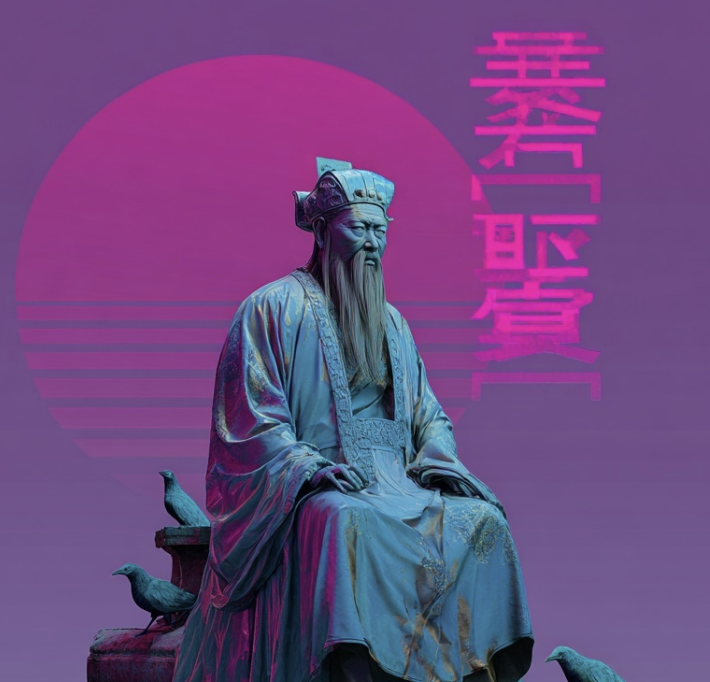
A man's character is formed by the Odes, developed by the Rites and perfected by music.
2 months 2 weeks ago
Put up again thy sword into his place: for all they that take the sword shall perish with the sword. Thinkest thou that I cannot now pray to my Father, and he shall presently give me more than twelve legions of angels? But how then shall the scriptures be fulfilled, that thus it must be?

1 week 5 days ago
Whoever complains about the death of anyone, is complaining that he was a man. Everyone is bound by the same terms: he who is privileged to be born, is destined to die.
2 months 3 weeks ago
Death is too exact; it has all the reasons on its side. Mysterious for our instincts, it takes shape, to our reflection, limpid, without glamor, and without the false lures of the unknown. By dint of accumulating non-mysteries and monopolizing non-meanings, life inspires more dread than death: it is life which is the Great Unknown.

4 months 3 weeks ago
Then we may begin by assuming that there are three classes of men—lovers of wisdom, lovers of honor, lovers of gain?

3 weeks 2 days ago
The fact of being within capital and sustaining capital is what defines the proletariat as a class.
▼
Source
source
53

4 months 5 days ago
The souls of emperors and cobblers are cast in the same mould.... The same reason that makes us wrangle with a neighbour causes a war betwixt princes.
▼
Source
source
Book II, Ch. 12. Apology for Raimond Sebond
1 week 1 day ago
The only originality I claim is that for me this truth goes hand in hand with the intellectual certainty that the human spirit is capable of creating in our time a new mentality, an ethical mentality. Inspired by this certainty, I too proclaim this truth in the hope that my testimony may help to prevent its rejection as an admirable sentiment but a practical impossibility. Many a truth has lain unnoticed for a long time, ignored simply because no one perceived its potential for becoming reality.

4 months 6 days ago
As to the people; in all these countries the greater part of the people certainly detest war, and most devoutly wish for peace. A very few of them, indeed, whose unnatural happiness depends upon the public misery, may wish for war; but be it yours to decide, whether it is equitable or not, that the unprincipled selfishness of such wretches should have more weight than the anxious wishes of all good men united.
2 months ago
The Intentionality of the mind not only creates the possibility of meaning, but limits its forms.
▼
Source
source
P. 166.

4 months 1 week ago
The living force of his soul gained the day: on he passed far beyond the flaming walls of the world and traversed throughout in mind and spirit the immeasurable universe.
▼
Source
source
Book I, lines 72-74 (tr. H. A. J. Munro); of Epicurus.

3 months 3 weeks ago
Is it surprising that prisons resemble factories, schools, barracks, hospitals, which all resemble prisons?
▼
Source
source
Discipline and Punish (1977) as translated by Alan Sheridan, p. 228

3 months 3 weeks ago
The proper study of mankind is books.
▼
Source
source
Ch. XXVIII

4 months 6 days ago
Cosmus, Duke of Florence, was wont to say of perfidious friends, that "We read that we ought to forgive our enemies; but we do not read that we ought to forgive our friends."
▼
Source
source
No. 206
4 months 1 week ago
It is not among extraordinary and fantastic things that excellence is to be found, of whatever kind it may be. We rise to attain it and become removed from it: it is oftenest necessary to stoop for it.

3 months 3 weeks ago
I shall develop the thesis that anyone acting communicatively must, in performing any speech act, raise universal validity claims and suppose that they can be vindicated.
▼
Source
source
p. 22
3 months 4 weeks ago
I am here to plead his cause with you. I plead not for his life, but for his character - his immortal life; and so it becomes your cause wholly, and is not his in the least. Some eighteen hundred years ago Christ was crucified; this morning, perchance, Captain Brown was hung. These are the two ends of a chain which is not without its links. He is not Old Brown any longer; he is an angel of light.
2 months 2 weeks ago
But our Don Quixote, the inward, the immortal Don Quixote, conscious of his own comicness, does not believe that his doctrines will triumph in this world, because they are not of it. And it is better that they should not triumph. And if the world wished to make Don Quixote king, he would retire alone to the mountain, fleeing from the king-making crowds, as Christ retired alone to the mountain when, after the miracle of the loaves and fishes, they sought to proclaim him king. He left the title of king for the inscription written over the cross.

3 months 4 weeks ago
Physics is mathematical not because we know so much about the physical world, but because we know so little: it is only its mathematical properties that we can discover.
▼
Source
source
An Outline of Philosophy Ch.15 The Nature of our Knowledge of Physics, 1927
3 months 4 weeks ago
Free in this world as the birds in the air, disengaged from every kind of chains, those who have practiced the Yoga gather in Brahmin the certain fruit of their works. Depend upon it; rude and careless as I am, I would fain practice the yoga faithfully. This Yogi, absorbed in contemplation, contributes in his degree to creation; he breathes a divine perfume, he heard wonderful things. Divine forms traverse him without tearing him and he goes, he acts as animating original matter. To some extent, and at rare intervals, even I am a Yogi.
▼
Source
source
Letter to H. G. O. Blake, November 20, 1849

1 month 3 weeks ago
Just then another visitor entered the drawing room: Prince Andrew Bolkónski, the little princess' husband. He was a very handsome young man, of medium height, with firm, clearcut features. Everything about him, from his weary, bored expression to his quiet, measured step, offered a most striking contrast to his quiet, little wife. It was evident that he not only knew everyone in the drawing room, but had found them to be so tiresome that it wearied him to look at or listen to them. And among all these faces that he found so tedious, none seemed to bore him so much as that of his pretty wife. He turned away from her with a grimace that distorted his handsome face, kissed Anna Pávlovna's hand, and screwing up his eyes scanned the whole company.
▼
Source
source
Bk. I, Ch. IV
CivilSimian.com created by AxiomaticPanic, CivilSimian, Kalokagathia