

2 months 2 weeks ago
Ressentiment is always to some degree a determinant of the romantic type of mind. At least this is so when the romantic nostalgia for some past era (Hellas, the Middle Ages, etc.) is not primarily based on the values of that period, but on the wish to escape from the present. Then all praise of the "past" has the implied purpose of downgrading present-day reality.
▼
Source
source
L. Coser, trans. (1973), p. 68
2 months 3 weeks ago
And whereas many men, by accident unevitable, become unable to maintain themselves by their labour; they ought not to be left to the Charity of private persons; but to be provided for, (as far-forth as the necessities of Nature require,) by the Lawes of the Common-wealth. For as it is Unchariablenesse in any man, to neglect the impotent; so it is in the Soveraign of a Common-wealth, to expose them to the hazard of such uncertain Charity.
▼
Source
source
The Second Part, Chapter 30, p. 181


4 months 2 weeks ago
The superior man, extensively studying all learning, and keeping himself under the restraint of the rules of propriety, may thus likewise not overstep what is right.
3 months 3 weeks ago
Nevertheless, the ultimate business of philosophy is to preserve the force of the most elemental words in which Dasein expresses itself, and to keep the common understanding from levelling them off to that unintelligibility which functions in turn as a source of pseudo-problems.
▼
Source
source
Macquarrie & Robinson translation

2 weeks 5 days ago
Literature, the strange entity so called,-that indeed is here. If Literature continue to be the haven of expatriated spiritualisms, and have its Johnsons, Goethes and true Archbishops of the World, to show for itself as heretofore, there may be hope in Literature. If Literature dwindle, as is probable, into mere merry-andrewism, windy twaddle, and feats of spiritual legerdemain, analogous to rope-dancing, opera-dancing, and street-fiddling with a hat carried round for halfpence, or for guineas, there will be no hope in Literature.
2 weeks 5 days ago
Battles, in these ages, are transacted by mechanism; with the slightest possible development of human individuality or spontaneity: men now even die, and kill one another, in an artificial manner.
▼
Source
source
Pt. I, Bk. VII, ch. 4.

3 months 3 weeks ago
"Ah, Psyche," I said, "have I made you so little happy as that?"
▼
Source
source
Orual
2 months 3 weeks ago
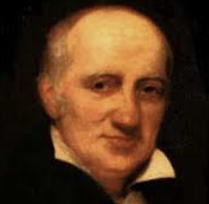
I took some pains to convince you that the Whigs, as a party in the state, were of the highest value to the public welfare, and constituted the party to which a liberal-minded and enlightened man would adhere.
▼
Source
source
Letter to H. B. Rosser (7 March 1820), quoted in C. Kegan Paul, William Godwin: His Friends and Contemporaries, Vol. II (1876), p. 263

1 month 3 weeks ago
Radical changes of identity, happening suddenly and in very brief intervals of time, have proved more deadly and destructive of human values than wars fought with hardware weapons.
▼
Source
source
p. 97
1 month 3 weeks ago
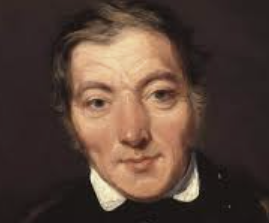
It is the interest of the individual and of all society, that he should be made, at the earliest period, to understand his own construction, the proper use of its parts, and how to keep them at all times in a state of health; and especially that he should be taught to observe the varied effects of different kinds of food, and different quantities, upon his own constitution. He should be taught the general and individual laws of health, thus early, that he may know how to prevent the approach of disease. And the knowledge of the particular diet best suited to his constitution, is one of the most essential laws of health.
▼
Source
source
3rd Part

4 months 2 days ago
This great increase of the quantity of work which, in consequence of the division of labour, the same number of people are capable of performing, is owing to three different circumstances; first, to the increase of dexterity in every particular workman; secondly, to the saving of the time which is commonly lost in passing from one species of work to another; and lastly, to the invention of a great number of machines which facilitate and abridge labour, and enable one man to do the work of many.
▼
Source
source
Chapter I

1 month 1 week ago
All art is autobiographical; the pearl is the oyster's autobiography.
▼
Source
source
On the autobiographical nature of his films, in The Atlantic
3 weeks 1 day ago
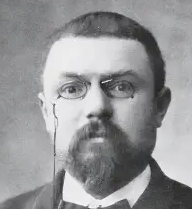
Is the position tenable, that certain phenomena, possible in Euclidean space, would be impossible in non-Euclidean space, so that experience, in establishing these phenomena, would directly contradict the non-Euclidean hypothesis? For my part I think no such question can be put. To my mind it is precisely equivalent to the following, whose absurdity is patent to all eyes: are there lengths expressible in meters and centimeters, but which can not be measured in fathoms, feet, and inches, so that experience, in ascertaining the existence of these lengths, would directly contradict the hypothesis that there are fathoms divided into six feet?
▼
Source
source
Ch. V: Experiment and Geometry (1905) Tr. George Bruce Halstead

4 months 6 days ago
For truth itself has not the privilege to be spoken at all times and in all sorts.
▼
Source
source
Book III, Ch. 13. Of Experience
2 months 2 weeks ago
No one is guiltless...But no one is beyond the pale of human existence, provided he pays for his guilt.
2 months 3 weeks ago
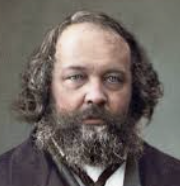
Of escape there are but three methods - two chimerical and a third real. The first two are the dram-shop and the church, debauchery of the body or debauchery of the mind; the third is social revolution.
2 months 1 week ago
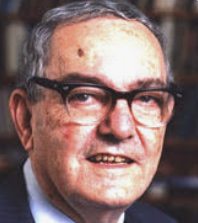
The behaviour of individuals is the tool with which the organisation achieves its targets.
▼
Source
source
p. 108.

1 week 6 days ago
Impurity is caused by attitude, not events.
▼
Source
source
(trans. Emily Wilson)

3 months 4 weeks ago
The reader is nowhere raised into and sustained in a bigger, purer or rarer region of thought than in the Bhagavad Gita. The Gita's sanity and sublimity have impressed the minds of even soldiers and merchants.
▼
Source
source
A Tribute to Hinduism, 2008

2 months 1 week ago
Feminism in the United States has never emerged from the women who are most victimized by sexist oppression; women who are daily beaten down, mentally, physically, and spiritually-women who are powerless to change their condition in life. They are a silent majority. A mark of their victimization is that they accept their lot in life without visible question, without organized protest, without collective anger or rage.
▼
Source
source
p. 1.
4 months 6 days ago
Live as long as you please, you will strike nothing off the time you will have to spend dead.
▼
Source
source
Ch. 20. Of the Force of Imagination

3 months 4 weeks ago
In all affairs - love, religion, politics, or business - it's a healthy idea, now and then, to hang a question mark on the things you have long taken for granted.
▼
Source
source
As quoted in The Reader's Digest, Vol. 37 (1940), p. 90; no specific source given.

1 month 5 days ago
Human rights are not just cultural or legal constructions, as fashionable western relativists are fond of claiming. They are universal values. To deny the benefits of the new regime of rights to other cultures is to patronise them in a way that is reminiscent of the colonial era. If the new regime on torture is good enough for the US, who can say that it is not good for everyone?

1 month 4 weeks ago
Understand then all of you, especially the young, that to want to impose an imaginary state of government on others by violence is not only a vulgar superstition, but even a criminal work. Understand that this work, far from assuring the well-being of humanity is only a lie, a more or less unconscious hypocrisy, camouflaging the lowest passions we possess.
▼
Source
source
Passage written for for The Law of Love and the Law of Violence (1908), released in 1917

3 months 3 weeks ago
Technically speaking, since our complex societies are highly susceptible to interferences and accidents,they certainly offer ideal opportunities for a prompt disruption of normal activities. These disruptions can, with minimum expense, have considerably destructive consequences. Global terrorism is extreme both in its lack of realistic goals and in its cynical exploitation of the vulnerability of complex systems.
▼
Source
source
Habermas (2004) in: Giovanna Borradori (2004) Philosophy in a Time of Terror: : Dialogues with Jurgen Habermas and Jacques Derrida. p. 34

8 months 4 days ago
In his seminar on The Ethic of Psychoanalysis, Lacan speaks of the role of the Chorus in classical tragedy: we, the spectators, came to the theatre worried, full of everyday problems, unable to adjust without reserve to the problems of the play, that is to feel the required fears and compassions - but not problem, there is a chorus, who feels the sorrow and the compassion instead of us - or, more precisely, we feel the required emotions through the medium of the chorus: 'You are then relieved of all worries, even if you do not feel anything, the Chorus will do so in your place.'

2 months 1 week ago
No man, not even a doctor, ever gives any other definition of what a nurse should be than this - "devoted and obedient." This definition would do just as well for a porter. It might even do for a horse. It would not do for a policeman.
▼
Source
source
Notes on Nursing

2 months 1 week ago
Capitalism lacks narrativity.

4 months 1 week ago
For we have in Latin only a few small streams and muddy puddles, while they have pure springs and rivers flowing in gold. I see that it is utter madness even to touch with the little finger that branch of theology that deals chiefly with the divine mysteries, unless one is also provided with the equipment of Greek.
▼
Source
source
As quoted in Martin Luther: The Man Who Rediscovered God and Changed the World (2017) by By Eric Metaxas, p. 85
2 months 2 weeks ago
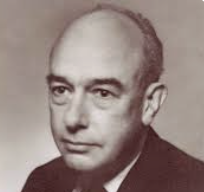
It is within science itself, and not in some prior philosophy, that reality is to be identified and described.
▼
Source
source
Theories and Things, Cambridge, MA: Harvard University Press. 1981
3 months 4 weeks ago
Owing to the identification of religion with virtue, together with the fact that the most religious men are not the most intelligent, a religious education gives courage to the stupid to resist the authority of educated men, as has happened, for example, where the teaching of evolution has been made illegal. So far as I can remember, there is not one word in the Gospels in praise of intelligence; and in this respect ministers of religion follow gospel authority more closely than in some others.
▼
Source
source
p. 110

2 months 3 weeks ago
First then, we find that when we regard ideas from a nominalistic, individualistic, sensualistic way, the simplest facts of mind become utterly meaningless. That one idea should resemble another or influence another, or that one state of mind should so much as be thought of in another is, from that standpoint, sheer nonsense.

4 months 2 days ago
After experience had taught me that all the usual surroundings of social life are vain and futile; seeing that none of the objects of my fears contained in themselves anything either good or bad, except in so far as the mind is affected by them, I finally resolved to inquire whether there might be some real good having power to communicate itself, which would affect the mind singly, to the exclusion of all else: whether, in fact, there might be anything of which the discovery and attainment would enable me to enjoy continuous, supreme, and unending happiness.
▼
Source
source
I, 1

5 months 1 day ago
Where there is happiness, there is found pleasure in nonsense. The transformation of experience into its opposite, of the suitable into the unsuitable, the obligatory into the optional (but in such a manner that this process produces no injury and is only imagined in jest), is a pleasure; ...

2 months 3 weeks ago
Without will, no conflict: no tragedy among the abulic. Yet the failure of will can be experienced more painfully than a tragic destiny.
3 months 4 weeks ago
Belief in God and a future life makes it possible to go through life with less of stoic courage than is needed by skeptics. A great many young people lose faith in these dogmas at an age at which despair is easy, and thus have to face a much more intense unhappiness than that which falls to the lot of those who have never had a religious upbringing. Christianity offers reasons for not fearing death or the universe, and in so doing it fails to teach adequately the virtue of courage. The craving for religious faith being largely an outcome of fear, the advocates of faith tend to think that certain kinds of fear are not to be deprecated. In this, to my mind, they are gravely mistaken. To allow oneself to entertain pleasant beliefs as a means of avoiding fear is not to live in the best way. In so far as religion makes its appeal to fear, it is lowering to human dignity.
▼
Source
source
p. 107

2 months 4 weeks ago
There ought to be system of manners in every nation which a well-formed mind would be disposed to relish. To make us love our country, our country ought to be lovely.

2 months 3 weeks ago
The man old in days will not hesitate to ask a small child seven days old about the place of life, and he will live. For many who are first will become last, and they will become one and the same.
2 weeks 5 days ago
Adversity is sometimes hard upon a man; but for one man who can stand prosperity, there are a hundred that will stand adversity. (Often shortened to "can't stand prosperity" as an unknown quote).
2 months 3 weeks ago
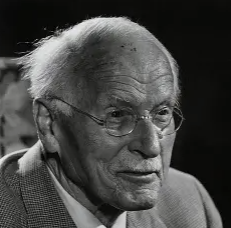
When animus and anima meet, the animus draws his sword of power and the anima ejects her poison of illusion and seduction. The outcome need not always be negative, since the two are equally likely to fall in love (a special instance of love at first sight).
▼
Source
source
Aion (1951). CW 9, Part II: P.338.30

4 months 2 weeks ago
Therefore let every Christian, yea, let the whole body of Christ everywhere cry out, despite the tribulations it endures, despite temptations and countless scandals, saying: "Preserve my soul, for I am holy; save Thy servant, O my God, that trusteth in thee" (Ps. 85:2) No, this holy one is not proud, for he trusts in God.
▼
Source
source
p.429
3 months 4 weeks ago
This bird sees the white man come and the Indian withdraw, but it withdraws not. Its untamed voice is still heard above the tinkling of the forge... It remains to remind us of aboriginal nature.
▼
Source
source
March 23, 1856; of the crow
2 months 3 weeks ago
Master, we saw one casting out devils in thy name; and we forbad him, because he followeth not with us. And Jesus said unto him, Forbid him not: for he that is not against us is for us.
▼
Source
source
Luke 9:49-50 (KJV)
2 months 3 weeks ago
I ask myself; Why is it that only some people suffer? Why are only some selected from the ranks of normal people and put on the torture rack? Some religions maintain that God is trying us through suffering, or that we expiate evil and unbelief through it. If such an explanation can satisfy the religious man, it is not sufficient for anyone who notices that suffering is arbitrary and unjust, because the innocent often suffer most. There is no valid justification for suffering. Suffering has no hierarchy of values.
▼
Source
source
in essay: the monopoly of suffering
3 months 4 weeks ago
Truth never turns to rebuke falsehood; her own straightforwardness is the severest correction.
▼
Source
source
Pearls of Thought (1881) p. 264

3 months 3 weeks ago
As soon as we cease to believe in such an engineer and in a discourse which breaks with the received historical discourse, and as soon as we admit that every finite discourse is bound by a certain bricolage and that the engineer and the scientist are also species of bricoleurs, then the very idea of bricolage is menaced and the difference in which it took on its meaning breaks down.
▼
Source
source
"Structure, Sign, and Play in the Discourse of the Human Sciences," Writing and Difference, tr. w/ intro & notes by Alan Bass. The University of Chicago Press. Chicago, 1978. p. 285

3 months 2 weeks ago
Now, that we do not really know of what sort each thing is, or is not, has often been shown.
4 months 2 days ago
A man must always live by his work, and his wages must at least be sufficient to maintain him. They must even upon most occasions be somewhat more, otherwise it would be impossible for him to bring up a family, and the race of such workmen could not last beyond the first generation.
▼
Source
source
Chapter VIII, p. 81.
2 months 3 weeks ago
The erotic instinct is something questionable, and will always be so whatever a future set of laws may have to say on the matter. It belongs, on the one hand, to the original animal nature of man, which will exist as long as man has an animal body. On the other hand, it is connected with the highest forms of the spirit. But it blooms only when the spirit and instinct are in true harmony. If one or the other aspect is missing, then an injury occurs, or at least there is a one-sided lack of balance which easily slips into the pathological. Too much of the animal disfigures the civilized human being, too much culture makes a sick animal.
CivilSimian.com created by AxiomaticPanic, CivilSimian, Kalokagathia