

1 month 3 weeks ago
You need to know at least one foreign language well enough so that you can read the best literature that that language has produced in the original, and so you carry on a reasonable conversation and have dreams in that language. There are several reasons why this is crucial, but the most important is perhaps this: you can never understand one language until you understand at least two.

3 months 2 weeks ago
The only thing that will redeem mankind is co-operation, and the first step towards co-operation lies in the hearts of individuals.
▼
Source
source
p. 212
Just now
It is the fate of every truth to be an object of ridicule when it is first acclaimed. It was once considered foolish to suppose that black men were really human beings and ought to be treated as such. What was once foolish has now become a recognized truth. Today it is considered as exaggeration to proclaim constant respect for every form of life as being the serious demand of a rational ethic. But the time is coming when people will be amazed that the human race existed so long before it recognized that thoughtless injury to life is incompatible with real ethics. Ethics is in its unqualified form extended responsibility to everything that has life.
2 months 1 week ago
Every philosophical, ethical, and political idea-its lifeline connecting it with its historical origins having been severed-has a tendency to become the nucleus of a new mythology, and this is one of the reasons why the advance of enlightenment tends at certain points to revert to superstition and paranoia. The majority principle ... has become the sovereign force to which thought must cater. It is a new god, not in the sense in which the heralds of the great revolutions conceived it, namely, as a power of resistance to existing injustice, but as a power of resistance to anything that does not conform.
▼
Source
source
p. 30.
5 days ago
All rational action is economic. All economic activity is rational action. All rational action is in the first place individual action. Only the individual thinks. Only the individual reasons. Only the individual acts.
▼
Source
source
Part II : The Economics of a Socialist Community, § I : The Economics of an Isolated Socialist Community, Ch. 5 : The Nature of Economic Activity, p. 97
4 months 2 weeks ago
"What on earth prompted you to take a hand in this?""I don't know. My... my code of morals, perhaps.""Your code of morals. What code, if I may ask?" "Comprehension."
4 months 2 weeks ago
Now just as the historical gives occasion for the contemporary to become a disciple, but only it must be noted through receiving the condition from the God himself, since otherwise we speak Socratically, so the testimony of contemporaries gives occasion for each successor to become a disciple, but only it must be noted through receiving the condition from the God himself.
3 months 2 weeks ago
There are but few points in which the English, as a people, are entitled to the moral pre-eminence with which they are accustomed to compliment themselves at the expense of other nations: but, of these points, perhaps the one of greatest importance is, that the higher classes do not lie, and the lower, though mostly habitual liars, are ashamed of lying. To run any risk of weakening this feeling, a difficult one to create, or, when once gone, to restore, would be a permanent evil too great to be incurred for so very temporary a benefit as the ballot would confer, even on the most exaggerated estimate necessity.
▼
Source
source
Thoughts on Parliamentary Reform (1859), pp. 48-49
1 month 2 weeks ago
Amid a multitude of projects, no plan is devised.
▼
Source
source
Maxim 319

2 months 2 days ago
Could it be that sexual perversion and romanticism sprang from the same longing for distant horizons?
▼
Source
source
p. 17
1 month 1 week ago
Schopenhauer argues that the empirical world exists only as a representation: 'every object, whatever its origin, is, as object, already conditioned by the subject, and thus is essentially only the subject's representation.' A representation is a subjective state that has been ordered according to space, time and causality - the primary forms of sensibility and understanding. So long as we turn our thoughts towards the natural world, and search for the thing-in-itself behind the representation is futile. Every argument and every experience leads only to the same end: the system of representations, standing like a veil between the subject and the thing-in-itself. No scientific investigation can penetrate the veil; and yet it is only a veil, Schopenhauer affirms, a tissue of illusions which we can, if we choose, penetrate by other means. The way to penetrate the veil was stumbled upon by Kant.
▼
Source
source
A Short History of Modern Philosophy (1981; 2nd ed. 1995), p. 177
2 months 2 weeks ago
How is it possible that the poorer classes can remain healthy and have a reasonable expectation of life under such conditions? What can one expect but that they should suffer from continual outbreaks of epidemics and an excessively low expectation of life? The physical condition of the workers shows a progressive deterioration.

2 months 1 week ago
Go into the city to such a man, and say unto him, The Master saith, My time is at hand; I will keep the passover at thy house with my disciples.
▼
Source
source
26:18 (KJV)

2 months 2 weeks ago
No passion so effectually robs the mind of all its powers of acting and reasoning as fear.
▼
Source
source
Part II Section II

1 month 2 weeks ago
My reason will still not understand why I pray, but I shall still pray, and my life, my whole life, independently of anything that may happen to me, is every moment of it no longer meaningless as it was before, but has an unquestionable meaning of goodness with which I have the power to invest it.
▼
Source
source
Pt. VIII, ch. 19
1 month 2 weeks ago
Mankind was never so happily inspired as when it made a cathedral.
▼
Source
source
An Inland Voyage (1878).
1 month 2 weeks ago
Saying that what we call our "selves" consist only of our bodies and that reason, soul, and love arise only from the body, is like saying that what we call our body is equivalent to the food that feeds the body. It is true that my body is only made up of digested food and that my body would not exist without food, but my body is not the same as food. Food is what the body needs for life, but it is not the body itself. The same thing is true of my soul. It is true that without my body there would not be that which I call my soul, but my soul is not my body. The soul may need the body, but the body is not the soul.
▼
Source
source
p. 12
3 months 3 weeks ago
Mother love is stronger than the filth and scabbiness on a child, and so the love of God toward us is stronger than the dirt that clings to us.
▼
Source
source
94
1 month 4 weeks ago
Astronomy is perhaps the science whose discoveries owe least to chance, in which human understanding appears in its whole magnitude, and through which man can best learn how small he is.
▼
Source
source
C 23

3 months 2 weeks ago
There can be no difference anywhere that doesn't make a difference elsewhere - no difference in abstract truth that doesn't express itself in a difference in concrete fact and in conduct consequent upon that fact, imposed on somebody, somehow, somewhere and somewhen.
▼
Source
source
Lecture II, What Pragmatism Means

1 week 3 days ago
The battling Reformer too is, from time to time, a needful and inevitable phenomenon. Obstructions are never wanting: the very things that were once indispensable furtherances become obstructions; and need to be shaken off, and left behind us,-a business often of enormous difficulty.
3 months 3 weeks ago
...God commanded in the law [Deut. 22:22-24] that adulterers be stoned . . . The temporal sword and government should therefore still put adulterers to death . . . Where the government is negligent and lax, however, and fails to inflict the death penalty, the adulterer may betake himself to a far country and there remarry if he is unable to remain continent. But it would be better to put him to death, lest a bad example be set . . .
3 months 3 weeks ago
The guidelines for achieving wisdom consist of three leading maxims: 1) Think for yourself; 2) (in communication with other people) Put yourself in the place of the other person; 3) Always think by remaining faithful to your own self.
▼
Source
source
Kant, Immanuel (1996), page 95
2 months 2 weeks ago
The proletariat is that class in society which lives entirely from the sale of its labor and does not draw profit from any kind of capital; whose weal and woe, whose life and death, whose sole existence depends on the demand for labor - hence, on the changing state of business, on the vagaries of unbridled competition.
4 months 1 week ago
Leaving virtue without proper cultivation; not thoroughly discussing what is learned; not being able to move towards righteousness of which a knowledge is gained; and not being able to change what is not good: these are the things which occasion me solicitude.
5 days ago
No social co-operation under the division of labour is possible when some people or unions of people are granted the right to prevent by violence and the threat of violence other people from working. When enforced by violence, a strike in vital branches of production or a general strike are tantamount to a revolutionary destruction of society.
3 weeks 5 days ago
While the Marxist faith in central planning is now confined to a few dingy sects, a quasi-religious belief in free markets continues to shape the policies of governments.Many writers have pointed to the havoc and ruin that have accompanied the imposition of free markets across the world. Whether in Africa, Asia, Latin America or post-communist Europe, policies of wholesale privatisation and structural adjustment have led to declining economic activity and social dislocation on a massive scale.
▼
Source
source
"The end of the world as we know it," The Guardian
3 months 2 weeks ago
We are speaking on this occasion, not as members of this or that nation, continent, or creed, but as human beings, members of the species Man, whose continued existence is in doubt.
2 months 2 weeks ago
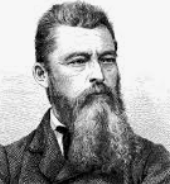
Hegel determines and presents only the most striking differences of various religions, philosophies, time and peoples, and in a progressive series of stages, but he ignores all that is common and identical in all of them. ... His system knows only subordination and succession; coordination and coexistence are unknown to it.
▼
Source
source
Z. Hanfi, trans., in The Fiery Brook (1972), p. 54

2 months 2 weeks ago
The first thinker was, without a doubt, the first man obsessed by why. An unaccustomed mania, not at all contagious: rare indeed are those who suffer from it, who are a prey to questioning, and who can accept no given because they were born in consternation.
2 months 1 week ago
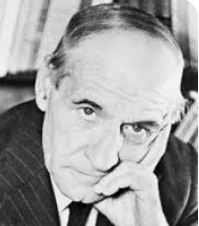
Tell me to what you pay attention and I will tell you who you are.
▼
Source
source
p. 94.
3 months 2 weeks ago
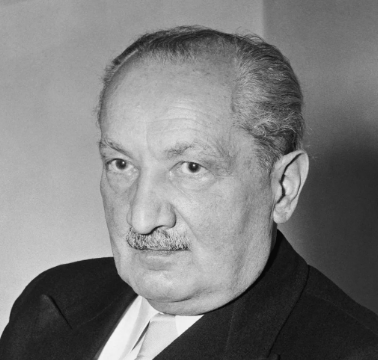
In Nietzsche's view nihilism is not a Weltanschauung that occurs at some time and place or another; it is rather the basic character of what happens in Occidental history.
▼
Source
source
p. 26
3 months 2 weeks ago
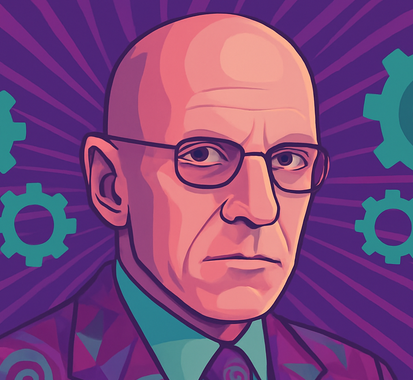
Nietzsche was the first to release the desire to know from the sovereignty of knowledge itself: to re-establish the distance and exteriority that Aristotle cancelled.
▼
Source
source
p. 5

3 months 2 weeks ago
I wanted for the moments in my life to follow each other and order themselves like those of a life remembered. It would be just as well to try to catch time by the tail.
2 months 2 weeks ago
The irony of world history turns everything upside down. We, the "revolutionaries," the "rebels"-we are thriving far better on legal methods than on illegal methods and revolt. The parties of order, as they call themselves, are perishing under the legal conditions created by themselves. They cry despairingly with Odilon Barrot: la légalité notes tue, legality is the death of us; whereas we, under this legality, get firm muscles and rosy cheeks and look like eternal life.
▼
Source
source
Introduction (1895) to Marx's The Class Struggles in France (1848-50), p. 27
4 months 1 week ago
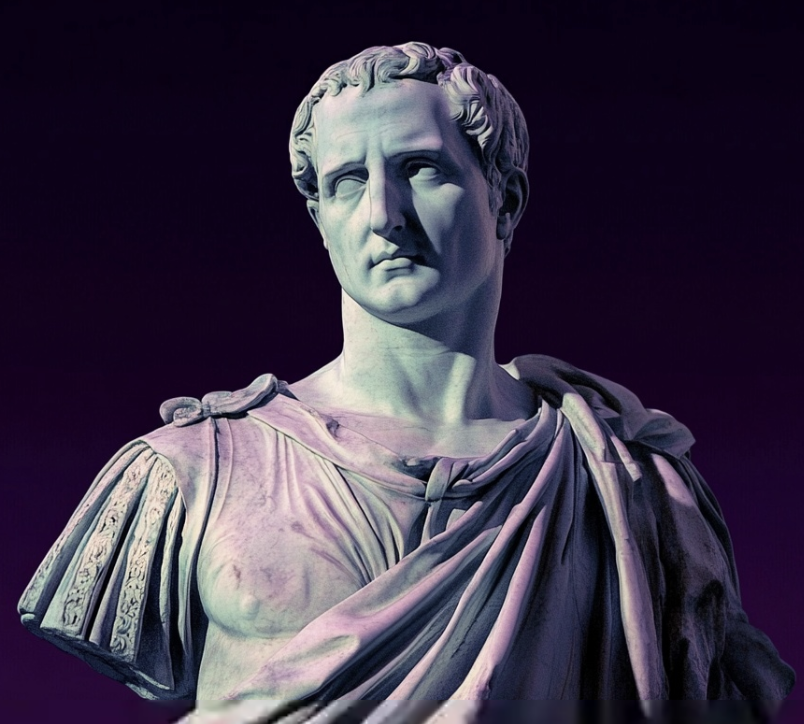
Study carefully, the character of the one you recommend, lest their misconduct bring you shame.
▼
Source
source
from Horace, Epistles I.xviii.76
1 month 3 weeks ago
THERE IS NEVER ANYTHING TO PRO-DUCE. In spite of all its materialist efforts, production remains a utopia. We can wear ourselves out in materializing things, in rendering them visible, but we will never cancel the secret.
▼
Source
source
(p. 65)
2 months 3 weeks ago
We do not know nature; causes hidden in her breast might have produced everything. In your turn, observe the polyp of Trembley: does it not contain in itself the causes which bring about regeneration? Why then would it be absurd to think that there are physical causes by reason of which everything has been made, and to which the whole chain of this vast universe is so necessarily bound and held that, nothing which happens, could have failed to happen,-causes, of which we are so invincibly ignorant that we have had recourse to a God, who, as some aver, is not so much as a logical entity? Thus to destroy chance is not to prove the existence of a supreme being, since there may be some other thing which is neither chance nor God-I mean, nature. It follows that the study of nature can make only unbelievers; and the way of thinking of all its more successful investigators proves this.
▼
Source
source
As quoted by Julien Offray de La Mettrie, Man a Machine (1747) Tr. Gertrude Carman Bussey
4 weeks ago
Human intuitions are systematically biased. Evolutionary psychology explains how our moral intuitions and the rationalisations they spawn have been shaped by millennia of natural selection to maximise the inclusive fitness of our genes, not to track the welfare of other sentient beings impartially conceived. Many human cultures have found nothing intuitively wrong with aggressive warfare, slavery, wife-beating, infanticide or female genital mutilation. Ultimately, folk morality is a doomed enterprise as hopeless as folk physics. A mature posthuman ethics, I'd argue, must be committed to the well-being of all sentient life; and mature posthuman technology offers the means to deliver that commitment.
▼
Source
source
"Post-Darwinian Ethics?", H+ Magazine, May 2009
4 months 5 days ago
Yes, you see the Trinity if you see charity.
▼
Source
source
De Trinitate VIII 8,12.
3 months 2 weeks ago
Immediate luminousness, in short, philosophical reasonableness and moral helpfulness are the only available criteria. Saint Teresa might have had the nervous system of the placidest cow, and it would not now save her theology, if the trial of the theology by these other tests should show it to be contemptible. And conversely if her theology can stand these other tests, it will make no difference how hysterical or nervously off balance Saint Teresa may have been when she was with us here below.
▼
Source
source
Lecture I, "Religion and Neurology"
1 month 5 days ago
The absolute justice of the system of things is as clear to me as any scientific fact. The gravitation of sin to sorrow is as certain as that of the earth to the sun, and more so-for experimental proof of the fact is within reach of us all-nay, is before us all in our own lives, if we had but the eyes to see it.

4 months 2 weeks ago
It built itself up endlessly, like a chess game, and the telemetrists began to use a computer to program the computer that designed the program for the computer that programmed the robot-controlling computer.
2 months 2 weeks ago
Philosophy ... bears witness to the deepest love of reflection, to absolute delight in wisdom.
▼
Source
source
"Logological Fragments," Philosophical Writings, M. Stolijar, trans. (Albany: 1997) #12

1 week 3 days ago
He seldom or never spoke except actually to convey an idea. Measured by quantity of words, he was a talker of fully average copiousness; by extent of meaning communicated, he was the most copious I have listened to. How in few sentences he would sketch you off an entire biography, an entire object or transaction, keen, clear, rugged, genuine, completely rounded In! His words came direct from the heart by the inspiration of the moment.
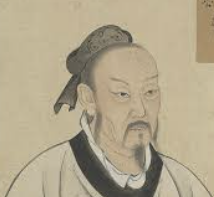
2 weeks 2 days ago
Human nature is evil, and goodness is caused by intentional activity.
▼
Source
source
Quoted in: Fayek S. Hourani (2012) Daily Bread for Your Mind and Soul, p. 336
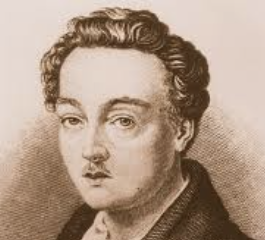
2 months 2 weeks ago
The world is chaos. Nothingness is the yet-to-be-born god of the world.
▼
Source
source
Act IV
3 months 2 weeks ago
Since Adam and Eve ate the apple, man has never refrained from any folly of which he was capable. The End.
▼
Source
source
Full text of Russell's book History of the World in Epitome , written in 1959
1 month 5 days ago
It is quite true that, to the best of my judgment, the argumentation which applies to brutes holds equally good of men; and, therefore, that all states of consciousness in us, as in them, are immediately caused by molecular changes of the brain-substance. It seems to me that in men, as in brutes, there is no proof that any state of consciousness is the cause of change in the motion of the matter of the organism. If these positions are well based, it follows that our mental conditions are simply the symbols in consciousness of the changes which takes place automatically in the organism; and that, to take an extreme illustration, the feeling we call volition is not the cause of a voluntary act, but the symbol of that state of the brain which is the immediate cause of that act.
CivilSimian.com created by AxiomaticPanic, CivilSimian, Kalokagathia