

1 month 1 week ago
The doctrine that all men are, in any sense, or have been, at any time, free and equal, is an utterly baseless fiction.
▼
Source
source
On The Natural Inequality of Men

1 month 4 weeks ago
The other part of the true religion is our duty to man. We must love our neighbour as our selves, we must be charitable to all men for charity is the greatest of graces, greater then even faith or hope & covers a multitude of sins. We must be righteous & do to all men as we would they should do to us.
▼
Source
source
Of Humanity
4 months 1 week ago
Bad times, hard times, this is what people keep saying; but let us live well, and times shall be good. We are the times: Such as we are, such are the times.
▼
Source
source
80:8

2 months 1 week ago
Sex also concentrates the mind wonderfully, and that is why civilised man is so obsessed by it. It enables him to "savour every fraction of an inch," not merely of the act of sexual intercourse, but of living itself. But that, of course, only underlines the basic problem: after coitus, "man becomes sad," because he quickly returns to his unconcentrated and defocused state. In sexual excitement, it is the spirit itself that becomes erect, and becomes capable of penetrating the meaning of life. Normal consciousness is limp and flaccid; its attitude towards reality is defensive. This is what Sartre called contingency, that feeling of being at the mercy of chance.
▼
Source
source
pp. 45-46

2 months 3 weeks ago
There are few with whom I can communicate so freely as with Pope. But Pope cannot bear every truth. He has a timidity which hinders the full exertion of his faculties, almost as effectually as bigotry cramps those of the general herd of mankind. But whoever is a genuine follower of truth keeps his eye steady upon his guide, indifferent whither he is led, provided that she is the leader. And, my Lord, if it may be properly considered, it were infinitely better to remain possessed by the whole legion of vulgar mistakes, than to reject some, and, at the same time, to retain a fondness for others altogether as absurd and irrational. The first has at least a consistency, that makes a man, however erroneously, uniform at least; but the latter way of proceeding is such an inconsistent chimera and jumble of philosophy and vulgar prejudice, that hardly anything more ridiculous can be conceived.
3 months 2 weeks ago
Critical social science attempts to determine when theoretical statements grasp invariant regularities of social action as such and when they express ideologically frozen relations of dependence that can in principle be transformed.
▼
Source
source
p. 310 as cited in: Dominick LaCapra (1983) Rethinking Intellectual History: Texts, Contexts, Language. p. 170
3 months ago
There are three principal means of acquiring knowledge available to us: observation of nature, reflection, and experimentation. Observation collects facts; reflection combines them; experimentation verifies the result of that combination. Our observation of nature must be diligent, our reflection profound, and our experiments exact. We rarely see these three means combined; and for this reason, creative geniuses are not common.
▼
Source
source
No. 15

3 months 3 weeks ago
Most people would sooner die than think; in fact, they do so.

2 months 2 weeks ago
Behold, we go up to Jerusalem; and the Son of man shall be betrayed unto the chief priests and unto the scribes, and they shall condemn him to death, And shall deliver him to the Gentiles to mock, and to scourge, and to crucify him: and the third day he shall rise again.
▼
Source
source
20:18-19 (KJV)

3 months 3 weeks ago
I have described religion as the metaphysics of the people.
▼
Source
source
E. Payne, trans. (1974) Vol. 1, p. 140
3 months 3 weeks ago
When I come to my own beliefs, I find myself quite unable to discern any purpose in the universe, and still more unable to wish to discern one.
▼
Source
source
"Is There a God?", 1952
1 month 3 weeks ago
A faculty for idleness implies a catholic appetite and a strong sense of personal identity.
▼
Source
source
An Apology for Idlers.

3 months 3 weeks ago
For what avail the plough or sail, Or land or life, if freedom fail?
▼
Source
source
Boston
3 months 2 weeks ago
Commit no slander; so that infamy and wickedness may not happen unto thee.
▼
Source
source
(p. 59)
3 months 3 weeks ago
I see the situation of man in the world of planetary technicity not as an inexitricable and inescapable destiny, but I see the task of thought precisely in this, that within its own limits it helps man as such achieve a satisfactory relationship to the essence of technicity. National Socialism did indeed go in this direction. Those people, however, were far too poorly equipped for thought to arrive at a really explicit relationship to what is happening today and has been underway for the past 300 years.
▼
Source
source
As translated by William Richardson in Risk and Meaning, Nicolas Bouleau (translated by Dené Oglesby and Martin Crossley), ed. Springer, 2011

3 months 2 weeks ago
The political triumph of Donald Trump is a symbol and symptom-not cause or origin-of our imperial meltdown. Trump is neither alien nor extraneous to American culture and history. In fact, he is as American as apple pie. Yet he is a sign of our spiritual bankruptcy-all spectacle and no substance, all narcissism and no empathy, all appetite and greed and no wisdom and maturity. Yet his triumph flows from the implosion of a Republican Party establishment beholden to big money, big military, and big scapegoating of vulnerable peoples of color, LGBTQ peoples, immigrants, Muslims, and women; from a Democratic Party establishment beholden to big money, big military, and the clever deployment of peoples of color, LGBTQ peoples, immigrants, Muslims, and women to hide and conceal the lies and crimes of neoliberal policies here and abroad; and from a corporate media establishment that aided and abetted Trump owing to high profits and revenues.
▼
Source
source
2017 introduction

1 month 3 weeks ago
To attain this end we must secure a preponderance of virtue over vice and must endeavor to secure that the honest man may, even in this world, receive a lasting reward for his virtue. But in these great endeavors we are gravely hampered by the political institutions of today. What is to be done in these circumstances? To favor revolutions, overthrow everything, repel force by force?... No! We are very far from that. Every violent reform deserves censure, for it quite fails to remedy evil while men remain what they are, and also because wisdom needs no violence.
▼
Source
source
Book V, Ch. 7
3 months 3 weeks ago
Man is a credulous animal, and must believe something; in the absence of good grounds for belief, he will be satisfied with bad ones.

1 week 4 days ago
The mind must be indulged, and leisure must be given from time to time, which is the place of food and strength.
1 week 4 days ago
Fortune has taken away, but Fortune has given.
3 months 3 weeks ago
Thus mathematics may be defined as the subject in which we never know what we are talking about, nor whether what we are saying is true.
▼
Source
source
Ch. 5: Mathematics and the Metaphysicians
2 months 2 weeks ago
The doctrine of Right and Wrong, is perpetually disputed, both by Pen and the Sword: Whereas the doctrine of Lines, and Figures, is not so; because men care not, in that subject what be truth, as a thing that crosses no mans ambition, profit, or lust. For I doubt not, but if it had been a thing contrary to any mans right of dominion, or to the interest of men that have dominion, That the three Angles of a Triangle, should be equall to two Angles of a Square; that doctrine should have been, if not disputed, yet by the burning of all books of Geometry, suppressed, as far as he whom it concerned was able.
▼
Source
source
The First Part, Chapter 11, p. 80-81
3 weeks 1 day ago
Wisdom, virtue, morality, all these have fallen out of fashion: everybody worships at the shrine of commerce.
▼
Source
source
The Theory of the Four Movements (1808), G. Jones, ed. (1966), p. 269
3 months 3 weeks ago
My difficulty is only an - enormous - difficulty of expression.
▼
Source
source
Journal entry (8 March 1915) p. 40
2 months 2 weeks ago
The present stage redefines the possibilities of man and nature in accordance with the new means available for their realization.
▼
Source
source
p. 65
1 week 4 days ago
Inflation is an increase in the quantity of money without a corresponding increase in the demand for money, i.e., for cash holdings.
▼
Source
source
The Free Market and Its Enemies, speech to the Foundation for Economic Education
4 months 3 weeks ago
They do not know the penalty of unrighteousness, which is the thing they most ought to know. For it is not what they think it is scourgings and death, which they sometimes escape entirely when they have done wrong but a penalty which it is impossible to escape. Two patterns, my friend, are set up in the world, the divine, which is most blessed, and the godless, which is most wretched, and their silliness and extreme foolishness blind them to the fact that through their unrighteous acts they are made like the one and unlike the other. They therefore pay the penalty for this by living a life that conforms to the pattern they resemble.
2 weeks 6 days ago
Sociology is the science which has the most methods and the least results.
▼
Source
source
Part I. Ch. 1 : The Selection of Facts, p. 19
3 months 3 weeks ago
The difficulty in philosophy is to say no more than we know.
▼
Source
source
p. 45
2 months 1 week ago
During his lifetime Gurdjieff did not publish any books on the techniques of his teaching, and his pupils were bound to secrecy on the subject. Since his death in Paris in 1949, however, many of his works have been published, and there has been a flood of memoirs by disciples and admirers. Gurdjieff was in almost ever respect the antithesis of Aleister Crowley. Whereas Crowley craved publicity, Gurdjieff shunned it. Crowley was forgotten for two decades after his death; Gurdjieff on the contrary, has become steadily better known, and his influence continues to grow. One of the main reasons for this is that there was so little of the charlatan about him. He is no cult figure with hordes of gullible disciples. What he has to teach makes an appeal to the intelligence, and can be fully understood only by those who are prepared to make a serious effort.

3 months 3 weeks ago
Friendship is unnecessary, like philosophy, like art, like the universe itself (for God did not need to create). It has no survival value; rather it is one of those things which give value to survival.
1 week 4 days ago
What then? Shall I not follow in the footsteps of my predecessors? I shall indeed use the old road, but if I find one that makes a shorter cut and is smoother to travel, I shall open the new road. Men who have made these discoveries before us are not our masters, but our guides. Truth lies open for all; it has not yet been monopolized. And there is plenty of it left even for posterity to discover.

4 months 3 weeks ago
Now, in the solemn silence before God with the lilies and the birds, where accordingly there is nobody at all present, where accordingly there is no other intercourse for thee but with God-there indeed the rule holds good: either hold to Him/or despise Him. There is no excuse, for no one else is present, in any case no one is present in such a wise that thou canst hold to him without despising God; for precisely there in the silence it is clear how close God is to thee.

2 weeks 3 days ago
Clever men are good, but they are not the best.
▼
Source
source
Goethe.
3 months 2 weeks ago
Science can only be comprehended epistemologically, which means as one category of possible knowledge, as long as knowledge is not equated either effusively with the absolute knowledge of a great philosophy or blindly with scientistic self-understanding of the actual business of research.
▼
Source
source
p. 4

1 month 3 weeks ago
By surpassing writing, we have regained our wholeness, not on a national or cultural but cosmic plane.
1 month 1 week ago
Economic reforms based on the idea of limitless growth in a limited world, can only be maintained by the powerful grabbing the resources of the vulnerable. The resource grab that is essential for "growth" creates a culture of rape-the rape of the earth, of local self-reliant economies, and of women.
▼
Source
source
On economic reforms in India and rape in India, from "Vandana Shiva: Our Violent Economy is Hurting Women " article in Yes Magazine
2 months 3 weeks ago
It is easy to see that this problem can be solved neither in theoretical nor in practical philosophy, but only in a higher discipline, which is the link that combines them, and neither theoretical nor practical, but both at once.

3 months 3 weeks ago
My life is like a stroll upon the beach, As near the ocean's edge as I can go.
▼
Source
source
"The Fisher's Boy", in Edmund Clarence Stedman (ed.) An American Anthology, 1787-1900, Boston and New York: Houghton, Mifflin and Co., 1900
1 month 2 weeks ago
To teach virtue we must educate the emotions, and this means learning "what to feel" in the various circumstances that prompt them.
▼
Source
source
"Knowledge and Feeling" (p. 37)
4 days ago
As a social bond, now one does not find even a faith of the warrior kind, that is, relationships of loyalty and honour. The social bond assumes a utilitarian and economic character; it is an agreement based on convenience and material interest - a type only a merchant would accept.
▼
Source
source
p. 34
3 months 3 weeks ago
Philosophy unravels the knots in our thinking; hence its results must be simple, but its activity is as complicated as the knots that it unravels.
▼
Source
source
Ch. 9 : Philosophy, p. 183
2 months 1 week ago
In fact, the real problem with the thesis of A Genealogy of Morals is that the noble and the aristocrat are just as likely to be stupid as the plebeian. I had noted in my teens that major writers are usually those who have had to struggle against the odds -- to "pull their cart out of the mud," as I put it -- while writers who have had an easy start in life are usually second rate -- or at least, not quite first-rate. Dickens, Balzac, Dostoevsky, Shaw, H. G. Wells, are examples of the first kind; in the twentieth century, John Galsworthy, Graham Greene, Evelyn Waugh, and Samuel Beckett are examples of the second kind. They are far from being mediocre writers; yet they tend to be tinged with a certain pessimism that arises from never having achieved a certain resistance against problems.
▼
Source
source
p. 188
4 months 1 week ago
Remember that you ought to behave in life as you would at a banquet. As something is being passed around it comes to you; stretch out your hand, take a portion of it politely. It passes on; do not detain it. Or it has not come to you yet; do not project your desire to meet it, but wait until it comes in front of you. So act toward children, so toward a wife, so toward office, so toward wealth.
▼
Source
source
(15).

1 month 3 days ago
Not everything in religion is precious or deserving of reverence. There is an inheritance of anthropocentrism, the ugly fantasy that the Earth exists to serve humans, which most secular humanists share. There is the claim of religious authorities, also made by atheist regimes, to decide how people can express their sexuality, control their fertility and end their lives, which should be rejected categorically. Nobody should be allowed to curtail freedom in these ways, and no religion has the right to break the peace.
3 months 2 weeks ago
I will now tell you who are assembled here the wise sayings of Mazda, the praises of Ahura and the hymns of the Good Spirit, the sublime truth which I see rising out of these flames. You shall therefore harken to the Soul of Nature. Contemplate the beams of fire with a most pious mind. Every one, both men and women, ought to-day to choose his creed. Ye offspring of renowned ancestors, awake to agree with us. So preached Zoroaster, the proph of the Parsis, in one of his earliest sermons nearly 3,500 years ago.
▼
Source
source
p. 15 (Introduction), S. A. Kapadia
2 months 3 weeks ago
The true Poet is all-knowing; he is an actual world in miniature.
2 months 3 weeks ago
And having looked to Government for bread, on the very first scarcity they will turn and bite the hand that fed them.
1 month 3 days ago
The modern world inherits the Christian view in which salvation is played out in history. In Christian myth human events follow a design known only to God; the history of humankind is an ongoing story of redemption. This is an idea that informs virtually all of western thought - not least when it is intensely hostile to religion. From Christianity onwards, human salvation would be understood (at least in the west) as involving movement through time. All modern philosophies in which history is seen as a process of human emancipation - whether through revolutionary change or incremental improvement - are garbled versions of this Christian narrative, itself a garbled version of the original message of Jesus.
▼
Source
source
The Faith of Puppets: The Revelation of Philip K. Dick (p. 60)
1 month 5 days ago
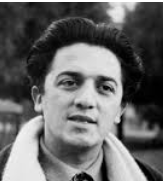
What is an artist? A provincial who finds himself somewhere between a physical reality and a metaphysical one... It's this in-between that I'm calling a province, this frontier country between the tangible world and the intangible one - which is really the realm of the artist.
▼
Source
source
Every Time We Say Goodbye in Sight and Sound [London]
CivilSimian.com created by AxiomaticPanic, CivilSimian, Kalokagathia