


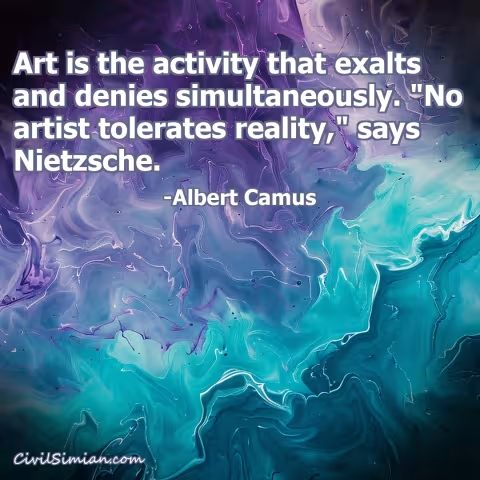

2 months 2 weeks ago
A character is a completely fashioned will.
▼
Source
source
(vollkommen gebildeter Wille).

3 months 3 weeks ago
If you don't know how to die, don't worry; Nature will tell you what to do on the spot, fully and adequately. She will do this job perfectly for you; don't bother your head about it.

1 month 2 weeks ago
I can't be sure God does not exist... On a scale of seven, where one means I know he exists, and seven I know he doesn't, I call myself a six... That doesn't mean I'm absolutely confident, that I absolutely know, because I don't.
▼
Source
source
Dawkins on The Telegraph, 2012-02-24.

3 months 2 weeks ago
Every poet has trembled on the verge of science.
▼
Source
source
July 18, 1852

1 week 1 day ago
No, the Great Man does not boast himself sincere, far from that; perhaps does not ask himself if he is so: I would say rather, his sincerity does not depend on himself; he cannot help being sincere! The great Fact of Existence is great to him. Fly as he will, he cannot get out of the awful presence of this Reality. His mind is so made; he is great by that, first of all. Fearful and wonderful, real as Life, real as Death, is this Universe to him. Though all men should forget its truth, and walk in a vain show, he cannot. At all moments the Flame-image glares in upon him; undeniable, there, there!-I wish you to take this as my primary definition of a Great Man. A little man may have this, it is competent to all men that God has made: but a Great Man cannot be without it.
1 month 1 day ago
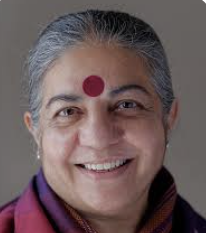
I've learned from the Bhagavad Gita and other teachings of our culture to detach myself from the results of what I do, because those are not in my hands. The context is not in your control, but your commitment is yours to make, and you can make the deepest commitment with a total detachment about where it will take you. You want it to lead to a better world, and you shape your actions and take full responsibility for them, but then you have detachment. And that combination of deep passion and deep detachment allows me always to take on the next challenge because I don't cripple myself, I don't tie myself in knots. I function like a free being. I think getting that freedom is a social duty because I think we owe it to each other not to burden each other with prescription and demands. I think what we owe each other is a celebration of life and to replace fear and hopelessness with fearlessness and joy.

3 months 2 weeks ago
In early times, the great majority of the male sex were slaves, as well as the whole of the female. And many ages elapsed, some of them ages of high cultivation, before any thinker was bold enough to question the rightfulness, and the absolute social necessity, either of the one slavery or of the other.
▼
Source
source
Ch. 1

4 months 2 weeks ago
Men grew desperate and the border between bitter frustration and wild destruction is sometimes easily crossed.

3 months 3 weeks ago
The violence and injustice of the rulers of mankind is an ancient evil, for which, I am afraid, the nature of human affairs can scarce admit a remedy.
▼
Source
source
Chapter III, Part II, p. 531.

4 months 1 week ago
A true friend will partake of the wants and sorrows of his friend, as if they were his own; if he be in want, he will relieve him; if he be in prison, he will visit him; if he be sick, he will come to him; nay-situations may occur, in which he would not scruple to die for him. It cannot then be doubted, that friendship is one of the most useful means of procuring a secure, tranquil, and happy life.

3 months 2 weeks ago
Every way of classifying a thing is but a way of handling it for some particular purpose.

3 months 3 weeks ago
Nature is satisfied with little; and if she is, I am also.
▼
Source
source
As quoted in The Story of Philosophy (1933) by Will Durant, p. 176

4 months 3 days ago
Who dismisses his adulterous wife and marries another woman, whereas his first wife still lives, remains perpetually in the state of adultery. Such a man does not any efficacious penance while he refuses to abandon the new wife. If he is a catechumen, he cannot be admitted to baptism, because his will remains rooted in the evil. If he is a (baptized) penitent, he cannot receive the (ecclesiastical) reconciliation as long as he does not break with his bad attitude.
▼
Source
source
De adulterinis coniugiis, 2, 16, in Bishop Athanasius Schneider, Reaction to Synod Door to communion for divorced & remarried officially kicked open, November 2nd, 2015

3 months 2 weeks ago
A young man before he leaves the shelter of his father's house, and the guard of a tutor, should be fortify'd with resolution, and made acquainted with men, to secure his virtues, lest he should be led into some ruinous course, or fatal precipice, before he is sufficiently acquainted with the dangers of conversation, and his steadiness enough not to yield to every temptation.
▼
Source
source
Sec. 70
1 week ago
Life is that which is discontent, which struggles and seeks, which suffers and creates.
▼
Source
source
Ch. 1 : Our life begins

3 weeks 3 days ago
I may not be as unambiguously hostile to capitalism as many people are, but what I don't like about it is the commodification of personal experiences, it turns everyone into actors.
▼
Source
source
Quoted in Will Self, "John Gray: Forget everything you know," The Independent
1 month 1 week ago
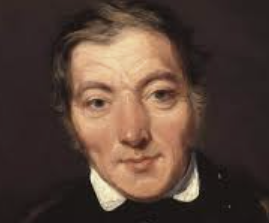
The end of government is to make the governed and the governors happy. That government then is thebest, which in practice produces the greatest happiness to the greatest number; including those who govern, and those who obey.
▼
Source
source
Essay Fourth, The Principles of the Former Essays Applied to Government

2 months 3 weeks ago
All those who seek to destroy the liberties of a democratic nation ought to know that war is the surest and shortest means to accomplish it.
▼
Source
source
Book Three, Chapter XXII.

3 months 2 weeks ago
...inversion...is an outlet that a child discovers when he is suffocating.
▼
Source
source
p. 91
3 months 2 weeks ago
...the reality of society involves the socialization of certain unrealities.
▼
Source
source
p. 455

2 months 2 weeks ago
I could never stand more than three months of dreaming at a time without feeling an irresistible desire to plunge into society. To plunge into society meant to visit my superior, Anton Antonich Syetochkin. He was the only permanent acquaintance I have had in my life, and I even wonder at the fact myself now. But I even went to see him only when that phase came over me, and when my dreams had reached such a point of bliss that it became essential to embrace my fellows and all mankind immediately. And for that purpose I needed at least one human being at hand who actually existed. I had to call on Anton Antonich, however, on Tuesday - his at-home day; so I always had to adjust my passionate desire to embrace humanity so that it might fall on a Tuesday.
▼
Source
source
Part 2, Chapter 2

4 months 2 weeks ago
He who humbleth himself wants to be exalted.
2 months 1 week ago
I leave you but the sound of many a word In mocking echoes haply overheard, I sang to heaven. My exile made me free,from world to world, from all worlds carried me.
▼
Source
source
The Poet's Testament
1 week 4 days ago
The principal aim of mathematical education is to develop certain faculties of the mind, and among these intuition is not the least precious. It is through it that the mathematical world remains in touch with the real world, and even if pure mathematics could do without it, we should still have to have recourse to it to fill up the gulf that separates the symbol from reality.
▼
Source
source
Part II. Ch. 2 : Mathematical Definitions and Education, p. 128

2 months 1 week ago
History shows that the thinkers who mounted on the top of the ladder of questions, who set their foot on the last rung, that of the absurd, have bequeathed to posterity only an example of sterility.

3 months 1 week ago
The meaning of a question is the method of answering it: then what is the meaning of 'Do two men really mean the same by the word "white"?' Tell me how you are searching, and I will tell you what you are searching for.
▼
Source
source
Philosophical Remarks (1991), Part III (27), pp.66-67

3 months 3 weeks ago
Heaven and Hell suppose two distinct species of men, the good and the bad; but the greatest part of mankind float betwixt vice and virtue. -- Were one to go round the world with an intention of giving a good supper to the righteous, and a sound drubbing to the wicked, he would frequently be embarrassed in his choice, and would find that the merits and the demerits of most men and women scarcely amount to the value of either.
▼
Source
source
Essay on the Immortality of the Soul
4 months 3 days ago
He who created you without you will not justify you without you.
▼
Source
source
169
2 months 2 weeks ago
To kill someone for committing murder is a punishment incomparably worse than the crime itself. Murder by legal sentence is immeasurably more terrible than murder by brigands.
▼
Source
source
Part 1, Chapter 2
3 months 3 weeks ago
It is good to rub and polish our brain against that of others.
▼
Source
source
Book I, Ch. 26
2 months 1 week ago
Word - that invisible dagger.

3 months 3 weeks ago
Even in the games of children there are things to interest the greatest mathematician.
▼
Source
source
1688-1690

3 months 2 weeks ago
In actions of enthusiasm, this drawback appears: but in those lower activities, which have no higher aim than to make us more comfortable and more cowardly, in actions of cunning, actions that steal and lie, actions that divorce the speculative from the practical faculty, and put a ban on reason and sentiment, there is nothing else but drawback and negation.
▼
Source
source
Goethe; or, The Writer
1 month 6 days ago
The highest proof of virtue is to possess boundless power without abusing it.
▼
Source
source
The Life and Writings of Addison', The Edinburgh Review (July 1843), quoted in T. B. Macaulay, Critical and Historical Essays Contributed to The Edinburgh Review: A New Edition (1852), p. 706

3 months 2 weeks ago
The fundamental cause of the trouble is that in the modern world the stupid are cocksure while the intelligent are full of doubt.
2 months 1 week ago
Nothing is indefensible - from the absurdest proposition to the most monstrous crime.
1 week 3 days ago
We sometimes imagine, under the influence of Spenglerian philosophy or some other kind of "historical morphology," that we live in a similar age [to the Romans], the last witnesses of a condemned civilization. But condemned by whom? Not by God, but by some supposed "historical laws." For although we do not know any historical laws, we are in fact able of inventing them quite freely, and such laws, once invented, can then be realized in the form of self-fulfilling prophecies.
▼
Source
source
Looking for the Barbarians
3 months 2 weeks ago
There is always a certain meanness in the argument of conservatism, joined with a certain superiority in its fact.


3 months 2 weeks ago
We must plan for freedom, and not only for security, if for no other reason than that only freedom can make security secure.
▼
Source
source
Vol. 2, Ch. 21 "An Evaluation of the Prophecy"

2 months 1 week ago
Be of good courage, and if you are discouraged, still take courage over against the various forms of nature. He who has ears to hear, let him hear.
▼
Source
source
Chapter 4.
1 month 3 weeks ago
Until the seventeenth century there was no concept of evidence with which to pose the problem of induction!
▼
Source
source
Chapter 4, Evidence, p. 31.
1 month 3 weeks ago
The function of knowledge in the decision-making process is to determine which consequences follow upon which of the alternative strategies. It is the task of knowledge to select from the whole class of possible consequences a more limited subclass, or even (ideally) a single set of consequences correlated with each strategy.
▼
Source
source
p. 78.
3 months 2 weeks ago
A genuine first-hand religious experience like this is bound to be a heterodoxy to its witnesses, the prophet appearing as a mere lonely madman. If his doctrine prove contagious enough to spread to any others, it becomes a definite and labeled heresy. But if it then still prove contagious enough to triumph over persecution, it becomes itself an orthodoxy; and when a religion has become an orthodoxy, its day of inwardness is over: the spring is dry; the faithful live at second hand exclusively and stone the prophets in their turn. The new church, in spite of whatever human goodness it may foster, can be henceforth counted on as a staunch ally in every attempt to stifle the spontaneous religious spirit, and to stop all later bubblings of the fountain from which in purer days it drew its own supply of inspiration.
▼
Source
source
Lectures XIV and XV, "The Value of Saintliness"

3 months 2 weeks ago
Force is the midwife of every old society pregnant with a new one. It is itself an economic power.
▼
Source
source
Vol. I, Ch. 31, pg. 824
2 months 1 week ago
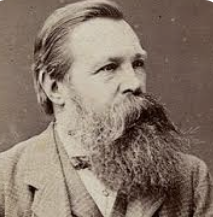
Education will enable young people quickly to familiarize themselves with the whole system of production and to pass from one branch of production to another in response to the needs of society or their own inclinations. It will, therefore, free them from the one-sided character which the present-day division of labor impresses upon every individual. Communist society will, in this way, make it possible for its members to put their comprehensively developed faculties to full use. But, when this happens, classes will necessarily disappear. It follows that society organized on a communist basis is incompatible with the existence of classes on the one hand, and that the very building of such a society provides the means of abolishing class differences on the other.

4 months 2 weeks ago
Even before the bomb, one did not breathe too easily in this tortured world. Now we are given a new source of anguish; it has all the promise of being our greatest anguish ever. There can be no doubt that humanity is being offered its last chance. Perhaps this is an occasion for the newspapers to print a special edition. More likely, it should be cause for a certain amount of reflection and a great deal of silence.

2 months 4 days ago
Absolute relativism, which is neither more nor less than skepticism, in the most modern sense of the term, is the supreme triumph of the reasoning reason.
CivilSimian.com created by AxiomaticPanic, CivilSimian, Kalokagathia