

1 month 4 weeks ago
Subjective reason ... is inclined to abandon the fight with religion by setting up two different brackets, one for science and philosophy, and one for institutionalized mythology, thus recognizing both of them. For the philosophy of objective reason there is no such way out. Since it hold to the concept of objective truth, it must take a positive or a negative stand with regard to the content of established religion.
▼
Source
source
p. 12.
2 months ago
When two, or more men, know of one and the same fact, they are said to be CONSCIOUS of it one to another; which is as much as to know it together.
▼
Source
source
The First Part, Chapter 7, p. 31
1 month 4 weeks ago
Before his death, Rabbi Zusya said, "In the coming world, they will not ask me: 'Why were you not Moses?' They will ask me: 'Why were you not Zusya?'"
▼
Source
source
Tales of the Hasidim (1947), 1991 Ebook edition, p.251, as quoted in Jewish Currents.
2 months ago
The people are led to find in the productive apparatus the effective agent of thought and action to which their personal thought and action can and must be surrendered. And in this transfer, the apparatus also assumes the role of a moral agent.
▼
Source
source
Conscience is absolved by reification. p. 79
3 months 1 week ago
A man who has no mental needs, because his intellect is of the narrow and normal amount, is, in the strict sense of the word, what is called a philistine.
▼
Source
source
Personality; or, What a Man Is
3 months 3 weeks ago
Whatever you would make habitual, practice it; and if you would not make a thing habitual, do not practice it, but accustom yourself to something else.
▼
Source
source
Book II, ch. 18, 4.
2 months 3 weeks ago
O Fortune, cruellest of heavenly powers, why make such game of this poor life of ours?
▼
Source
source
Book II, satire viii, line 61 (trans. Conington)
4 months 1 week ago
All men by nature desire to know. An indication of this is the delight we take in our senses; for even apart from their usefulness they are loved for themselves; and above all others the sense of sight. For not only with a view to action, but even when we are not going to do anything, we prefer sight to almost everything else. The reason is that this, most of all the senses, makes us know and brings to light many differences between things.
3 months 1 week ago
The problem of establishing a perfect civic constitution is dependent upon the problem of a lawful external relation among states and cannot be solved without a solution of the latter problem.
▼
Source
source
Seventh Thesis

1 month 2 weeks ago
From that point, my universe went on crumbling; new cracks appeared all the time. I could see that the pleasant securities of childhood, all of those warm little human emotions, all of those trivial aims and purposes that we allow to rule our lives, were an illusion. We were like sheep munching grass, unaware that the butcher's lorry is already on its way. I got used to living with a deep, underlying feeling of uncertainty that no one around me seemed to share. It was rather like living on death row.
▼
Source
source
pp. 12-13
2 months 3 weeks ago
But, when the elements have been mingled in the fashion of a man and come to the light of day, or in the fashion of the race of wild beasts or plants or birds, then men say that these come into being; and when they are separated, they call that woeful death. They call it not aright; but I too follow the custom, and call it so myself.
▼
Source
source
fr. 9 As quoted by John Burnet, Early Greek philosophy (1908) p. 240

4 months 1 week ago
Our destiny exercises its influence over us even when, as yet, we have not learned its nature: it is our future that lays down the law of our today.

1 month 2 weeks ago
Every daring attempt to make a great change in existing conditions, every lofty vision of new possibilities for the human race, has been labelled Utopian.
▼
Source
source
"Socialism: Caught in the Political Trap", a lecture (c. 1912), published in Red Emma Speaks, Part 1 (1972) edited by Alix Kates Shulman
1 month 1 week ago
To dissimulate is to pretend not to have what one has. To simulate is to feign to have what one doesn't have. One implies a presence, the other an absence. But it is more complicated than that because simulating is not pretending: "Whoever fakes an illness can simply stay in bed and make everyone believe he is ill. Whoever simulates an illness produces in himself some of the symptoms" (Littré). Therefore, pretending, or dissimulating, leaves the principle of reality intact: the difference is always clear, it is simply masked, whereas simulation threatens the difference between the "true" and the "false," the "real" and the "imaginary."
▼
Source
source
"The Precession of Simulacra," p. 3
1 month 1 week ago
Nonviolence is not an absolute principle, but an open-ended struggle with violence and its countervailing forces.
▼
Source
source
p. 56
1 month ago
A novel is balanced between a few true impressions and the multitude of false ones that make up most of what we call life. It tells us that for every human being there is a diversity of existences, that the single existence is itself an illusion in part, that these many existences signify something, tend to something, fulfill something; it promises us meaning, harmony, and even justice.
▼
Source
source
Nobel Prize lecture

2 months 4 days ago
Woe to the book you can read without constantly wondering about the author!

3 months 1 week ago
There is no logical impossibility in the hypothesis that the world sprang into being five minutes ago, exactly as it then was, with a population that "remembered" a wholly unreal past. There is no logically necessary connection between events at different times; therefore nothing that is happening now or will happen in the future can disprove the hypothesis that the world began five minutes ago.
▼
Source
source
The Analysis of Mind (1921), Lecture IX: Memory, p. 159

1 month 4 days ago
If you want to do evil, science provides the most powerful weapons to do evil; but equally, if you want to do good, science puts into your hands the most powerful tools to do so. The trick is to want the right things, then science will provide you with the most effective methods of achieving them.
2 months 5 days ago
Taught from their infancy that beauty is woman's sceptre, the mind shapes itself to the body, and roaming round its gilt cage, only seeks to adorn its prison.
▼
Source
source
Ch. 3
2 months 1 week ago
All those countless battles-those endless, and... for the greater part, useless wars, of which... fills up for so many thousand years... are but little atoms compared with the great whole of human destiny.

3 months 1 week ago
As for my own business, even that kind of surveying which I could do with most satisfaction my employers do not want. They would prefer that I should do my work coarsely and not too well, ay, not well enough. When I observe that there are different ways of surveying, my employer commonly asks which will give him the most land, not which is most correct.
▼
Source
source
p. 486
1 month 2 weeks ago
Prejudices are so to speak the mechanical instincts of men: through their prejudices they do without any effort many things they would find too difficult to think through to the point of resolving to do them.
▼
Source
source
A 58

3 months 6 days ago
Science must begin with myths, and with the criticism of myths.
▼
Source
source
Ch. 1 "Science : Conjectures and Refutations", Section VII
3 months 2 weeks ago
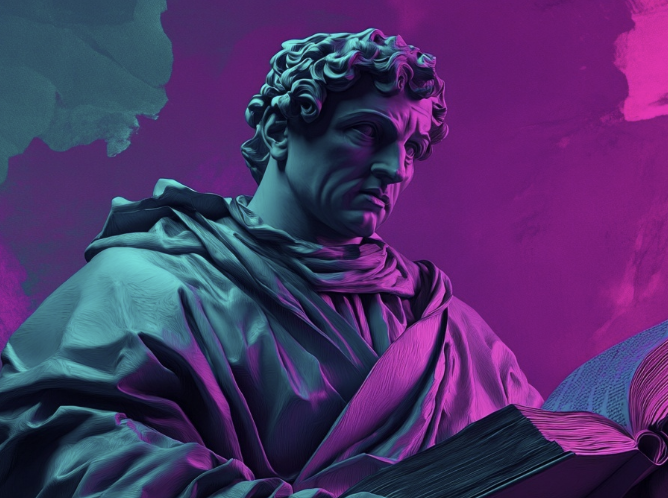
Faith is a living, bold trust in God's grace, so certain of God's favor that it would risk death a thousand times trusting in it. Such confidence and knowledge of God's grace makes you happy, joyful and bold in your relationship to God and all creatures. The Holy Spirit makes this happen through faith. Because of it, you freely, willingly and joyfully do good to everyone, serve everyone, suffer all kinds of things, love and praise the God who has shown you such grace.
▼
Source
source
An Introduction to St. Paul's Letter to the Romans fromDr. Martin Luthers Vermischte Deutsche Schriften. Johann K. Irmischer, ed. Vol. 63(Erlangen: Heyder and Zimmer, 1854), pp. 124-125. (EA 63:124-125)

3 months 1 week ago
As for the Soothsayer, although I am certain no one feels the true beauties of that work better than I, I am far from finding these beauties in the same places as the infatuated public does. They are not the products of study and knowledge, but rather are inspired by taste and sensitivity.
▼
Source
source
First Dialogue; translated by Judith R. Bush, Christopher Kelly, Roger D. Masters

1 month 5 days ago
Media are means of extending and enlarging our organic sense lives into our environment.
▼
Source
source
"The Care and Feeding of Communication Innovation", Dinner Address to Conference on 8 mm Sound Film and Education, Teachers College, Columbia University, 8 November 1961
2 months 4 days ago
Who does not believe in Fate proves that he has not lived.
3 months 6 days ago
Clearly when the liberties are left unrestricted they collide with one another.
▼
Source
source
Chapter IV, Section 32, p. 203

3 months 2 weeks ago
Marriage is like a cage; one sees the birds outside desperate to get in, and those inside equally desperate to get out.
▼
Source
source
Book III, Ch. 5

3 months 3 weeks ago
The reason, however, why the philosopher may be likened to the poet is this: both are concerned with the marvellous.
▼
Source
source
Commentary on the Metaphysics (c. 1270-1272), 1, 3; quoted in Josef Pieper, Leisure, the Basis of Culture (New York, 1952), p. 88
1 month 5 days ago
The sculptural qualities of the image dim down the purely personal identity.
▼
Source
source
(p. 369)
3 months 1 week ago
Character means that the person derives his rules of conduct from himself and from the dignity of humanity. Character is the common ruling principle in man in the use of his talents and attributes. Thus it is the nature of his will, and is good or bad. A man who acts without settled principles, with no uniformity, has no character. A man may have a good heart and yet no character, because he is dependent upon impulses and does not act according to maxims. Firmness and unity of principle are essential to character.
▼
Source
source
Part III : Selection on Education from Kant's other Writings, Ch. I Pedagogical Fragments, # 14
3 weeks 5 days ago
We hold that the most wonderful and splendid proof of genius is a great poem produced in a civilized age.
▼
Source
source
p. 5

2 months 1 week ago
This reasonable moderator, and equal piece of justice, Death.
▼
Source
source
Section 38
Just now
Carnap made a detailed analysis of Heidegger's statement, "Nothing nihilates," in order to show that it is purely verbal, devoid of empirical meaning. (Incidentally, this is the only sentence from existentialist philosophy the majority of contemporary positivists appear familiar with.)
▼
Source
source
Chapter Eight, Logical Empiricism, p. 187
4 months 4 days ago
Those who need myths are indeed poor. Here the gods serve as beds or resting places as the day races across the sky.

2 months 1 week ago
Why count the days, when even one days is enough for a man to know all happiness?
3 weeks 2 days ago
That mysterious independent variable of political calculation, Public Opinion.
▼
Source
source
Universities, Actual and Ideal
3 months 1 week ago
There is a connected set of events (light-waves) travelling outward from a centre... there are some respects in which all events are alike, and others in which they differ... We must not think of a light-wave as a 'thing', but as a connected group of rhythmical events. The mathematical characteristics of such a group can be inferred by physics, but the intrinsic character of the component events cannot be inferred.
▼
Source
source
An Outline of Philosophy Ch.15 The Nature of our Knowledge of Physics, 1927
1 month 4 weeks ago
Human life, by its very nature, has to be dedicated to something, an enterprise glorious or humble, a destiny illustrious or trivial. We are faced with a condition, strange but inexorable, involved in our very existence.
▼
Source
source
Chapter XIV: Who Rules The World?
1 month 1 week ago
Nonviolence is perhaps best described as a practice of resistance that becomes possible, if not mandatory, precisely at the moment when doing violence seems most justified and obvious. In this way, it can be understood as a practice that not only stops a violent act, or a violent process, but requires a form of sustained action, sometimes aggressively pursued. So, one suggestion I will make is that we can think of nonviolence not simply as the absence of violence, or as the act of refraining from committing violence, but as a sustained commitment, even a way of rerouting aggression for the purposes of affirming ideals of equality and freedom.
▼
Source
source
p. 27

3 months 2 days ago
The blues is relevant today because when we look down through the corridors of time, the black American interpretation of tragicomic hope in the face of dehumanizing hate and oppression will be seen as the only kind of hope that has any kind of maturity in a world of overwhelming barbarity and bestiality. That barbarity is found not just in the form of terrorism but in the form of the emptiness of our lives - in terms of the wasted human potential that we see around the world. In this sense, the blues is a great democratic contribution of black people to world history.
▼
Source
source
(p20)
3 months 1 week ago
The principal source of the harm done by the State is the fact that power is its chief end.
▼
Source
source
Principles of Social Reconstruction (1917), Ch. II: The State
3 months 1 week ago
Hatred, as well as love, renders its votaries credulous.
▼
Source
source
V
2 months 1 week ago
We do not know nature; causes hidden in her breast might have produced everything. In your turn, observe the polyp of Trembley: does it not contain in itself the causes which bring about regeneration? Why then would it be absurd to think that there are physical causes by reason of which everything has been made, and to which the whole chain of this vast universe is so necessarily bound and held that, nothing which happens, could have failed to happen,-causes, of which we are so invincibly ignorant that we have had recourse to a God, who, as some aver, is not so much as a logical entity? Thus to destroy chance is not to prove the existence of a supreme being, since there may be some other thing which is neither chance nor God-I mean, nature. It follows that the study of nature can make only unbelievers; and the way of thinking of all its more successful investigators proves this.
▼
Source
source
As quoted by Julien Offray de La Mettrie, Man a Machine (1747) Tr. Gertrude Carman Bussey
3 months 1 week ago
Metaphysics has as the proper object of its enquiries three ideas only: God, freedom, and immortality.
▼
Source
source
B 395

2 months ago
I came to set fire to the earth, and I wish it were already on fire!
▼
Source
source
12:49 (CEV)

3 months 1 week ago
The most violent, mean and malignant passions of the human breast, the Furies of private interest.
▼
Source
source
Author's prefaces to the First Edition.
2 months 4 weeks ago
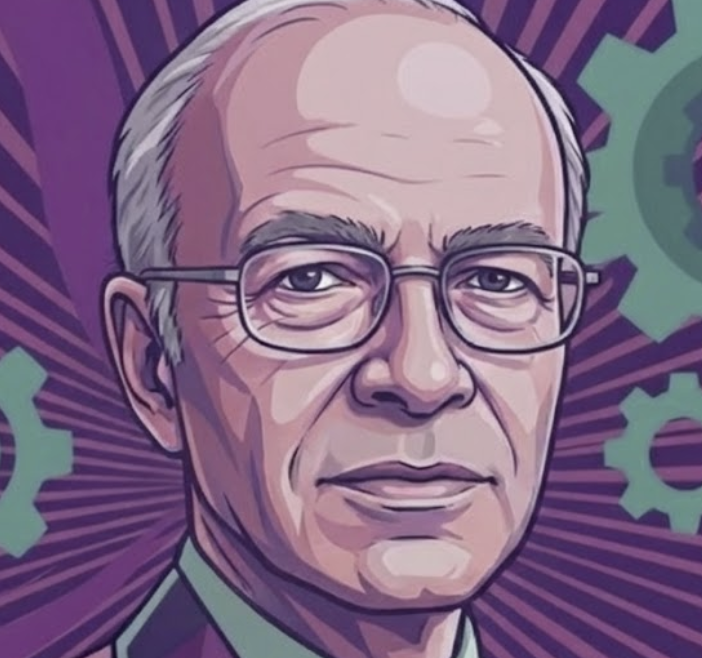
Living a minimally acceptable ethical life involves using a substantial part of our spare resources to make the world a better place. Living a fully ethical life involves doing the most good we can.
▼
Source
source
Preface (p. vii)
CivilSimian.com created by AxiomaticPanic, CivilSimian, Kalokagathia