

2 weeks ago
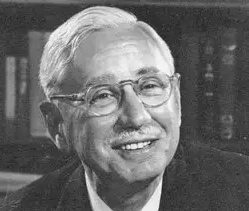
Wisdom, if it were young, would cherish love, nursing it with devotion, deepening it with sacrifice, vitalizing with parentage, making all things subordinate to it till the end. Even though it consumes us in its service and overwhelms us with tragedy, even though it breaks us down with separations, let it be first. How can it matter what price we pay for love?
▼
Source
source
Ch. 2 : On Youth

2 months 1 week ago
Capitalism dislikes silence.
3 days ago
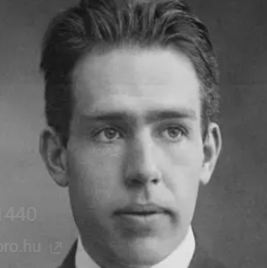
Truth and clarity are complementary.
▼
Source
source
As quoted in Quantum Theory and the Flight from Realism : Philosophical Responses to Quantum Mechanics (2000) by Christopher Norris, p. 234
3 months 3 weeks ago
And if he be too forward to venture upon his own strength and skill, and perplexity and trouble of a misadventure now and then, that reaches not his innocence, his health, or reputation, may not be an ill way to teach him more caution.
▼
Source
source
Sec. 94

2 months 3 weeks ago
I used to ask myself, over a coffin: "What good did it do the occupant to be born?," I now put the same question about anyone alive.

1 month 3 weeks ago
Natural selection is an extremely simple process, in the sense that very little machinery needs to be set up in order for it to work. Of course the effects and consequences of natural selection are complex in the extreme. But in order to set natural selection going on a real planet, all that is required is the existence of inherited information.
▼
Source
source
Chapter 2, "Silken Fetters" (p. 68)
3 months 3 weeks ago
In youth it is the outward aspect of things that most engages us; while in age, thought or reflection is the predominating quality of the mind. Hence, youth is the time for poetry, and age is more inclined to philosophy. In practical affairs it is the same: a man shapes his resolutions in youth more by the impression that the outward world makes upon him; whereas, when he is old, it is thought that determines his actions.

4 months 2 weeks ago
The superior man thinks of virtue; the small man thinks of comfort. The superior man thinks of the sanctions of law; the small man thinks of favors which he may receive.
3 months 2 weeks ago
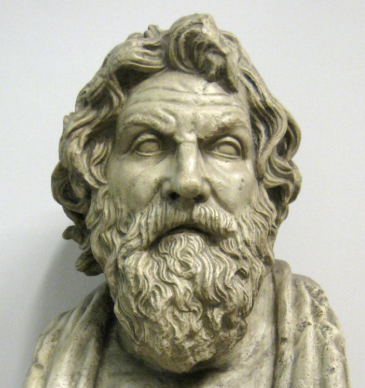
The investigation of the meaning of words is the beginning of education.
▼
Source
source
Arrian, Discourses of Epictetus, i. 17
3 months 3 weeks ago
This freedom from absolute, arbitrary power, is so necessary to, and closely joined with a man's preservation, that he cannot part with it, but by what forfeits his preservation and life together: for a man, not having the power of his own life, cannot, by compact, or his own consent, enslave himself to any one, nor put himself under the absolute, arbitrary power of another, to take away his life, when he pleases.
▼
Source
source
Second Treatise of Civil Government, Ch. IV, sec. 23
3 months 3 weeks ago
None of the things they learn, should ever be made a burthen to them, or impos's on them as a task. Whatever is so proposed, presently becomes irksome; the mind takes an aversion to it, though before it were a thing of delight or indifferency. Let a child but be ordered to whip his top at a certain time every day, whether he has or has not a mind to it; let this be but requir'd of him as a duty, wherein he must spend so many hours morning and afternoon, and see whether he will not soon be weary of any play at this rate. Is it not so with grown men?
▼
Source
source
Sec. 73

3 months 3 weeks ago
[Mortals] say of some temporal suffering, "No future bliss can make up for it," not knowing Heaven, once attained, will work backwards and turn even that agony into a glory. And of some sinful pleasure they say "Let me have but this and I'll take the consequences": little dreaming how damnation will spread back and back into their past and contaminate the pleasure of the sin. Both processes begin even before death.
▼
Source
source
Ch. 9
1 week 3 days ago
It is a fact that Mussolini entered the scene of world politics as an ally of the democracies, while Lenin entered it as a virtual ally of imperial Germany.
3 months 3 weeks ago
For a work to become immortal it must possess so many excellences that it will not be easy to find a man who understands and values them all; so that there will be in all ages men who recognise and appreciate some of these excellences; by this means the credit of the work will be retained throughout the long course of centuries and ever-changing interests, for, as it is appreciated first in this sense, then in that, the interest is never exhausted.
4 months 1 week ago
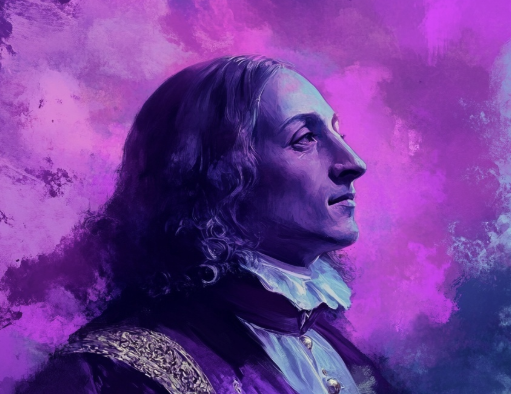
People almost invariably arrive at their beliefs not on the basis of proof but on the basis of what they find attractive.
▼
Source
source
De l'Art de persuader ["On the Art of Persuasion"], written 1658; published posthumously.

4 months 4 days ago
Since my logic aims to teach and instruct the understanding, not that it may with the slender tendrils of the mind snatch at and lay hold of abstract notions (as the common logic does), but that it may in very truth dissect nature, and discover the virtues and actions of bodies, with their laws as determined in matter; so that this science flows not merely from the nature of the mind, but also from the nature of things.
▼
Source
source
Aphorism 52
1 week 3 days ago
As you talk, so is your heart.

1 week 3 days ago
A thatched roof once covered free men; under marble and gold dwells slavery.

2 weeks 2 days ago
Why not? What is to hinder this Samson from governing? There is in him what far transcends all apprenticeships; in the man himself there exists a model of governing, something to govern by! There exists in him a heart-abhorrence of whatever is incoherent, pusillanimous, unveracious,-that is to say, chaotic, _un_governed; of the Devil, not of God. A man of this kind cannot help governing! He has the living ideal of a governor in him; and the incessant necessity of struggling to unfold the same out of him.

1 month 4 days ago
It's easy to support the status quo if one is not another of its victims.
▼
Source
source
Reply to Meet the people who want to turn predators into herbivores, TreeHugger, 4 Dec. 2015
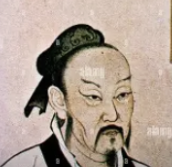
2 weeks 3 days ago
If you let people follow their feelings, they will be able to do good. This is what is meant by saying that human nature is good.
▼
Source
source
Book 6, pt. 1, v. 6

3 months 3 weeks ago
The Hindoos are most serenely and thoughtfully religious than the Hebrews. They have perhaps a purer, more independent and impersonal knowledge of God. Their religious books describe the first inquisitive and contemplative access to God; the Hebrew bible a conscientious return, a grosser and more personal repentance. Repentance is not a free and fair highway to God. A wise man will dispense with repentance. It is shocking and passionate. God prefers that you approach him thoughtful, not penitent, though you are chief of sinners. It is only by forgetting yourself that you draw near to him. The calmness and gentleness with which the Hindoo philosophers approach and discourse on forbidden themes is admirable. In 1853.
▼
Source
source
A Tribute to Hinduism, 2008
2 months 3 weeks ago
There are no arguments. Can anyone who has reached the limit bother with arguments, causes, effects, moral considerations, and so forth? Of course not. For such a person there are only unmotivated motives for living. On the heights of despair, the passion for the absurd is the only thing that can still throw a demonic light on chaos. When all the current reasons - moral, esthetic, religious, social, and so on - no longer guide one's life, how can one sustain life without succumbing to nothingness? Only by a connection with the absurd, by love of absolute uselessness, loving something which does not have substance but which simulates an illusion of life. I live because the mountains do not laugh and the worms do not sing.
2 months 2 days ago
The similarity between Marxism and neoconservativism might be expressed in the following way: both perspectives say that certain injustices can't be cured under our present system of political democracy and mixed economy. The Marxist concludes that we have to overthrow the present system and the neoconservative concludes that we have to live with the injustices. But they are both wrong.
▼
Source
source
How Not to Solve Ethical Problems

2 months 3 weeks ago
We have, indeed, in the part taken by many scientific men in this controversy of "Law versus Miracle," a good illustration of the tenacious vitality of superstitions. Ask one of our leading geologists or physiologists whether he believes in the Mosaic account of the creation, and he will take the question as next to an insult. Either he rejects the narrative entirely, or understands it in some vague non-natural sense. ...Whence ...this notion of "special creations"...Why, after rejecting all the rest of the story, he should strenuously defend this last remnant of it, as though he had received it on valid authority, he would be puzzled to say.
1 month 3 weeks ago
We are not arrogant, not hubristic, to celebrate the sheer bulk and detail of what we know through science. We are simply telling the honest and irrefutable truth. Also honest is the frank admission of how much we don't yet know - how much more work remains to be done. That is the very antithesis of hubristic arrogance. Science combines a massive contribution, in volume and detail, of what we do know with humility in proclaiming what we don't. Religion, by embarrassing contrast, has contributed literally zero to what we know, combined with huge hubristic confidence in the alleged facts it has simply made up.
▼
Source
source
The Intellectual and Moral Courage of Atheism
2 weeks 2 days ago
How does the poet speak to men with power, but by being still more a man than they?
▼
Source
source
Burns.

2 months 3 weeks ago
These principles it is necessary strictly to attend to, because they will serve much to explain the whole course both of government and real property, wherever the German nations obtained a settlement; the whole of their government depending for the most part upon two principles in our nature,-ambition, that makes one man desirous, at any hazard or expense, of taking the lead amongst others; and admiration, which makes others equally desirous of following him from the mere pleasure of admiration, and a sort of secondary ambition, one of the most universal passions among men. These two principles, strong both of them in our nature, create a voluntary inequality and dependence.
▼
Source
source
An Essay towards an Abridgment of English History (1757-c. 1763), quoted in The Works of the Right Honourable Edmund Burke, Vol. VI (1856), p. 282

3 months 3 weeks ago
Too much consistency is as bad for the mind as it is for the body. Consistency is contrary to nature, contrary to life. The only completely consistent people are the dead. Consistent intellectualism and spirituality may be socially valuable, up to a point; but they make, gradually, for individual death.
▼
Source
source
"Wordsworth in the Tropics" in Do What You Will, 1929
2 months 3 weeks ago
The arrogance of age must submit to be taught by youth.
▼
Source
source
Letter to Frances Burney
1 week 3 days ago
The much occupied man has no time for wantonness, and it is an obvious commonplace that the evils of leisure can be shaken off by hard work.
▼
Source
source
Line 9
4 months 3 weeks ago
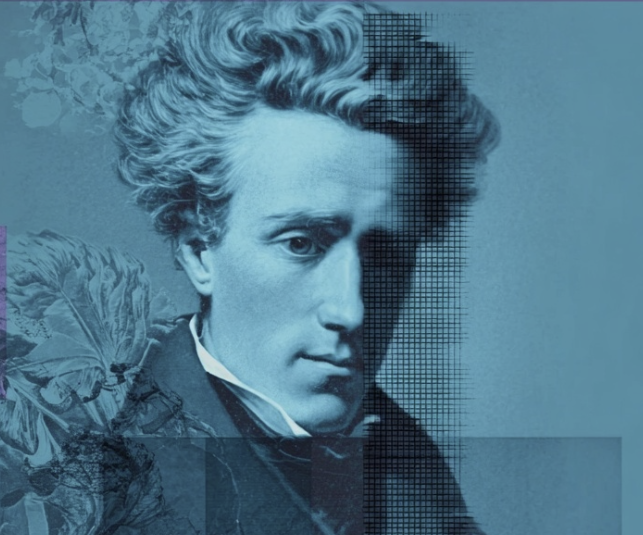
People are scarcely aware that it is a slavery they are creating; they forget this in their zeal to make people free by overthrowing dominions. They are scarcely aware that it is slavery; how could it be possible to be a slave in relation to equals?
2 months 3 weeks ago
In their nomination to office they will not appoint to the exercise of authority as to a pitiful job, but as to a holy function.
▼
Source
source
Volume iii, p. 356
4 months 3 weeks ago
As soon as the discourse is about a holy spirit, about believing in the holy spirit, how many do you think believe in that? Or when the discourse is about an evil spirit that should be renounced: how many do you think believe in such a thing? How can this be? Is it perhaps because the subject becomes too earnest when it is the holy spirit? For I can talk about, believe in, the spirit of the age, the spirit of the world, and the like and do not thereby need to think of anything specific. It is a kind of spirit, but I am not absolutely bound by what I say. And not being bound by what one says is highly prized.

3 months ago
There is surely a piece of Divinity within us, something that was before the Elements, and owes no homage unto the Sun.
▼
Source
source
Section 11
2 months 3 weeks ago
A man full of warm, speculative benevolence may wish his society otherwise constituted than he finds it, but a good patriot and a true politician always considers how he shall make the most of the existing materials of his country. A disposition to preserve and an ability to improve, taken together, would be my standard of a statesman. Everything else is vulgar in the conception, perilous in the execution.
2 months 3 weeks ago
Philosophy offers an antidote to melancholy. And many still believe in the depth of philosophy!

3 months 3 weeks ago
The entire process seems simple and natural, i.e., possesses the naturalness of a shallow rationalism.
▼
Source
source
Vol. II, Ch. III, p. 95.
1 month 1 week ago
The doctrine that all men are, in any sense, or have been, at any time, free and equal, is an utterly baseless fiction.
▼
Source
source
On The Natural Inequality of Men

2 months 1 week ago
But as I listened to him, I felt a touch of coldness inside of me, as if I had suddenly become aware of the eyes of some dangerous creature. It passed in a moment, but I found myself shuddering.
▼
Source
source
p. 29
2 months 1 week ago
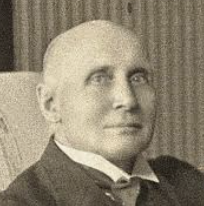
A general definition of civilization: a civilized society is exhibiting the five qualities of truth, beauty, adventure, art, peace.
▼
Source
source
p. 353.
6 days ago
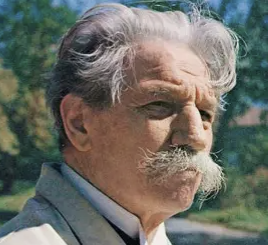
We do not have a complete and satisfying knowledge of the world. We are reduced to the simple conclusion that everywhere in the world there is life like ourselves and that all life is shrouded in mystery. A true acquaintance with the world consists in being filled with a sense of the mystery of existence and life. This mystery becomes only more mysterious with every advance in scientific research. To be filled with the mystery of life is like that which is called in the language of mysticism the "wise ignorance," an ignorance which is nonetheless knowledge of the essential.
▼
Source
source
p. 304
2 months 4 days ago
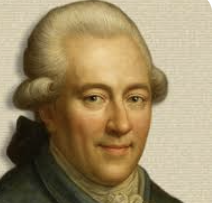
If people should ever start to do only what is necessary millions would die of hunger.
▼
Source
source
C 54 Variant translation: If all mankind were suddenly to practice honesty, many thousands of people would be sure to starve.
4 weeks ago
There is no social entity with a good that undergoes some sacrifice for its own good. There are only individual people, different individual people, with their own individual lives. Using one of these people for the benefit of others, uses him and benefits the others. Nothing more.
▼
Source
source
Ch. 3 : Moral Constraints and the State; Why Side Constraints?, p. 32

4 months 4 days ago
Finally, every man will become dear and pleasing to every other man; all will be beloved by all! and, what is still more desirable, beloved also by Christ; to become acceptable to whom is the highest felicity of human nature.
2 weeks ago
The news of this barbaric orgy of military sadism was kept from the world for half a year. A belated commission of inquiry was appointed by the Government. A committee appointed by the Indian National Congress made a more through investigation and reported 1,200 killed, and 3,600 wounded. Gen. Dyer was censured by the House of Commons, exonerated by the House of Lords, and was retired on a pension. Thinking this was insufficient the militarists of the Empire raised a fund of $150,000 for him and presented him with a jeweled sword of honor. (source: The Case for India - By Will Durant Simon and Schuster, New York. 1930 p. This book was banned by the British Government. Durant held the view that no part of the world suffered so much poverty andoppression as India did and that this was largely due to British imperialism).

2 months 3 weeks ago
Every political good carried to the extreme must be productive of evil.
▼
Source
source
The French Revolution, Bk. V, ch. 4
2 months 4 days ago
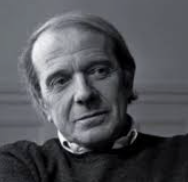
Nietzsche's break with Schopenhauer rests on precisely this point; it is a matter of knowing whether the will is unitary or multiple.
▼
Source
source
p. 7
4 weeks ago
It goes without saying that any persons may attempt to unite kindred spirits, but, whatever their hopes and longings, none have the right to impose their vision of unity upon the rest.
▼
Source
source
Ch. 10 : A Framework for Utopia; The Framework as Utopian Common Ground, p. 325
2 weeks 2 days ago
In the meanest mortal there lies something nobler. The poor swearing soldier, hired to be shot, has his "honor of a soldier," different from drill-regulations and the shilling a day. It is not to taste sweet things, but to do noble and true things, and vindicate himself under God's Heaven as a god-made Man, that the poorest son of Adam dimly longs. Show him the way of doing that, the dullest day-drudge kindles into a hero. They wrong man greatly who say he is to be seduced by ease.
CivilSimian.com created by AxiomaticPanic, CivilSimian, Kalokagathia