


3 months 3 weeks ago
The world is sacred because it gives an inkling of a meaning that escapes us.
▼
Source
source
p. 280
3 months 3 weeks ago
I maintain that inversion is the effect of neither a prenatal choice nor an endocrinal malformation nor even the passive and determined result of complexes. It is an outlet that a child discovers when he is suffocating.

1 week 3 days ago
Virtue alone affords everlasting and peace-giving joy; even if some obstacle arise, it is but like an intervening cloud, which floats beneath the sun but never prevails against it.

3 months 3 weeks ago
It is our interest and our task to make the revolution permanent until all the more or less propertied classes have been driven from their ruling positions, until the proletariat has conquered state power and until the association of the proletarians has progressed sufficiently far - not only in one country but in all the leading countries of the world - that competition between the proletarians of these countries ceases and at least the decisive forces of production are concentrated in the hands of the workers. Our concern cannot simply be to modify private property, but to abolish it, not to hush up class antagonisms but to abolish classes, not to improve the existing society but to found a new one.
▼
Source
source
Address of the Central Committee to the Communist League in London, March 1850

3 months 2 weeks ago
The pleasure is only for a little moment, and it [passes] like a dream, and a man at the end thereof finds death through knowing it.
▼
Source
source
Maxim no. 18. Translated by Sir E. A. Wallis Budge, Teaching Of Amenem Apt Son Of Kanekht (London: Martin Hopkinson and Company Ltd, 1924) p. 58

2 months 5 days ago
If we make a couple of discoveries here and there we need not believe things will go on like this for ever.... Just as we hit water when we dig in the earth, so we discover the incomprehensible sooner or later.
▼
Source
source
F 82
4 months 3 days ago
Men never do good unless necessity drives them to it; but when they are free to choose and can do just as they please, confusion and disorder become rampant.
▼
Source
source
Book 1, Ch. 3 (as translated by LJ Walker and B Crick)

4 months 3 weeks ago
Trantor could win even such a war, but perhaps not without paying a price that would make victory only a pleasanter name for defeat.
2 months 2 weeks ago
Whenever a nation is converted to Christianity, its Christianity, in practice, must be largely converted to paganism.
▼
Source
source
p. 35

3 months 2 days ago
It is manifest that every soul has a certain continuity with the soul of the Universe, so that it must be understood to exist and to be included not only there where it liveth and feeleth, but it is also by its essence and substance diffused throughout immensity. The power of each soul is itself somehow present afar in the Universe. It is not mixed, yet is there in some presence.

2 weeks 3 days ago
"The people may eat grass": hasty words, which fly abroad irrevocable-and will send back tidings.
▼
Source
source
Pt. I, Bk. III, ch. 9.
2 weeks 6 days ago
A scientist worthy of the name, above all a mathematician, experiences in his work the same impression as an artist; his pleasure is as great and of the same nature. ...we work not only to obtain the positive results which, according to the profane, constitute our one and only affection, as to experience this esthetic emotion and to convey it to others who are capable of experiencing it.
▼
Source
source
"Notice sur Halphen," Journal de l'École Polytechnique (Paris, 1890), 60ème cahier, p. 143.
4 months 3 weeks ago
But suppose we were to teach creationism. What would be the content of the teaching? Merely that a creator formed the universe and all species of life ready-made? Nothing more? No details?
2 months 1 week ago
I believe that the man choosing progress can find a new unity through the full development of all his human forces, which are produced in three orientations. These can be presented separately or together: biophilia, love for humanity and nature, and independence and freedom.
3 months 3 weeks ago
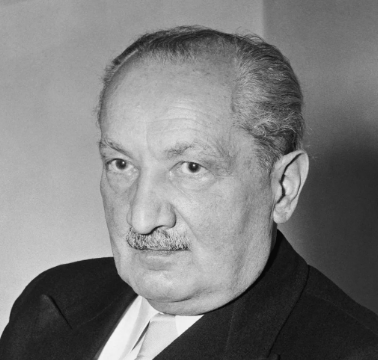
Philosophy will not be able to bring about a direct change of the present state of the world. This is true not only of philosophy but of all merely human meditations and endeavors. Only a god can still save us. I think the only possibility of salvation left to us is to prepare readiness, through thinking and poetry, for the appearance of the god or for the absence of the god during the decline; so that we do not, simply put, die meaningless deaths, but that when we decline, we decline in the face of the absent god.
2 weeks 3 days ago
History a distillation of Rumour.
▼
Source
source
Pt. I, Bk. VII, ch. 5.
4 months 3 weeks ago
My lectures are published and not published; they will be intelligible to those who heard them, and to none beside.
1 month 4 weeks ago
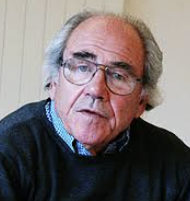
We will never know if an advertisement or opinion poll has had a real influence on individual or collective wills, but we will never know either what would have happened if there had been no opinion poll or advertisement.

2 months 3 weeks ago
We are near awakening when we dream that we dream.

3 months 3 weeks ago
That men do not learn very much from the lessons of history is the most important of all the lessons that history has to teach.
▼
Source
source
"A Case of Voluntary Ignorance" in Collected Essays, 1959
1 month 2 weeks ago
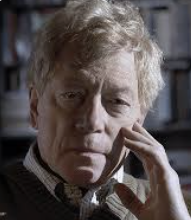
Democracies owe their existence to national loyalties - the loyalties that are supposedly shared by government and opposition, by all political parties, and by the electorate as a whole. Wherever the experience of nationality is weak or non-existent, democracy has failed to take root. For without national loyalty, opposition is a threat to government, and political disagreements create no common ground.

4 months 3 weeks ago
When a war breaks out, people say: "It's too stupid; it can't last long." But though the war may well be "too stupid," that doesn't prevent its lasting. Stupidity has a knack of getting its way; as we should see if we were not always so much wrapped up in ourselves.

3 months ago
What a hell of an economic system! Some are replete with everything while others, whose stomachs are no less demanding, whose hunger is just as recurrent, have nothing to bite on. The worst of it is the constrained posture need puts you in. The needy man does not walk like the rest; he skips, slithers, twists, crawls.

2 months 3 weeks ago
Old forms of government finally grow so oppressive, that they must be thrown off even at the risk of reigns of terror.
▼
Source
source
On Manners and Fashion
1 month 2 weeks ago
A writer who says that there are no truths, or that all truth is 'merely relative,' is asking you not to believe him. So don't.
▼
Source
source
"The Nature of Philosophy" (p. 6)
1 month 2 weeks ago
And why were those haughty [French] nobles destroyed with that utter destruction? Why were they scattered over the face of the earth, their titles abolished, their escutcheons defaced, their parks wasted, their palaces dismantled, their heritage given to strangers? Because they had no sympathy with the people, no discernment of the signs of their time; because, in the pride and narrowness of their hearts, they called those whose warnings might have saved them theorists and speculators; because they refused all concession till the time had arrived when no concession would avail.
▼
Source
source
Speech in the House of Commons on the Reform Bill (20 September 1831), quoted in Speeches of the Right Honourable T. B. Macaulay, M.P. (1854), p. 50
2 months 5 days ago
When Nietzsche praises egoism it is always in an aggressive or polemical way, against the virtues, against the virtue of disinterestedness. But in fact egoism is a bad interpretation of the will, just as atomism is a bad interpretation of force. In order for there to be egoism it is necessary for there to be an ego.
▼
Source
source
p. 7

1 month 3 weeks ago
Even pacifist agitation or the nation-wide fever of big sports competitions acts as a spur to war fever in circumstances like ours. Any kind of excitement or emotion contributes to the possibility of dangerous explosions when the feelings of huge populations are kept inflamed even in peacetime for the sake of the advancement of commerce. Headlines mean street sales. It takes emotion to move merchandise. And wars and rumors of wars are the merchandise and also the emotion of the popular press.
▼
Source
source
p. 7

2 months 2 weeks ago
We are again confronted with one of the most vexing aspects of advanced industrial civilization: the rational character of its irrationality. Its productivity and efficiency, its capacity to increase and spread comforts, ... the extent to which this civilization transforms the object world into an extension of man's mind and body makes the very notion of alienation questionable. The people recognize themselves in their commodities; they find their soul in their automobile, hi-fi set, split-level home, kitchen equipment. The very mechanism which ties the individual to his society has changed, and social control is anchored in the new needs which it has produced.
▼
Source
source
p. 9
3 months 2 days ago
When the end comes, you will be esteemed by the world and rewarded by God, not because you have won the love and respect of the princes of the earth, however powerful, but rather for having loved, defended and cherished one such as I ... what you receive from others is a testimony to their virtue; but all that you do for others is the sign and clear indication of your own.
▼
Source
source
Dedication

4 months 1 week ago
Tentative efforts lead to tentative outcomes. Therefore, give yourself fully to your endeavors. Decide to construct your character through excellent actions, and determine to pay the price for a worthy goal. The trials you encounter will introduce you to your strengths. Remain steadfast... and one day you will build something that endures, something worthy of your potential.

2 months 1 week ago
It reminds us that a man driven to desire to possess a certain female is a highly purposive individual. We have already noted that evolution tends to mark time when individuals have no reason to evolve. The same applies to individuals; they may be talented and intelligent, and yet waste their lives because they somehow lack the motivation to make use of these faculties. The best piece of luck that can befall any individual is to have a strong sense of purpose.
▼
Source
source
p. 225
3 months 3 weeks ago
To choose this or that is to affirm at the same time the value of what we choose, because we can never choose evil. We always choose the good, and nothing can be good for us without being good for all.
▼
Source
source
Existentialism and Human Emotions

4 months 1 week ago
Though absent from our eyes, Christ our Head is bound to us by love. Since the whole Christ is Head and body, let us so listen to the voice of the Head that we may also hear the body speak.He no more wished to speak alone than He wished to exist alone, since He says: Behold, I am with you all days, unto the consummation of the world (Matt. 28:20). If He is with us, then He speaks in us, He speaks of us, and He speaks through us; and we too speak in Him.
▼
Source
source
pp. 420-421



3 months 3 weeks ago
He sees as well as you do that courage is not simply one of the virtues, but the form of every virtue at the testing point, which means, at the point of highest reality. A chastity or honesty, or mercy, which yields to danger will be chaste or honest or merciful only on conditions.
▼
Source
source
Letter XXIX
2 months 2 weeks ago
Egos appear by setting themselves apart from other egos.

3 months 3 weeks ago
A gun gives you the body, not the bird.
▼
Source
source
Quoted by Ralph Waldo Emerson, in C. J. Woodbury (ed.) Talks with Ralph Waldo Emerson, 1890
2 months 3 weeks ago
Once the first radical attack on private property has been launched, the proletariat will find itself forced to go ever further, to concentrate increasingly in the hands of the state all capital, all agriculture, all transport, all trade. All the foregoing measures are directed to this end; and they will become practicable and feasible, capable of producing their centralizing effects to precisely the degree that the proletariat, through its labor, multiplies the country's productive forces.

4 months 5 days ago
I am a lover of liberty. I will not and I cannot serve a party.
▼
Source
source
Spongia adversus aspergines Hutteni (1523), § 176, As quoted in Desiderius Erasmus of Rotterdam (1900) by Ephraim Emerton, p. 377
1 month 3 weeks ago
If a work of art is to explore new environments, it is not to be regarded as a blueprint but rather as a form of action-painting.
▼
Source
source
To Wilfred Watson, October 6 1965. Letters of Marshall McLuhan (1987), p. 325
4 months 3 weeks ago
It is my own experience ... that commentators are far more ingenious at finding meaning than authors are at inserting it.
2 months 1 week ago
The prospects of revolution seem therefore quite restricted. For can a revolution avoid war? It is, however, on this feeble chance that we must stake everything or abandon all hope. An advanced country will not encounter, in the case of revolution, the difficulties which in backward Russia served as a base for the barbarous regime of Stalin. But a war of any scope will give rise to others as formidable.
▼
Source
source
Reflections on War (1933); also in Formative Writings
2 weeks 2 days ago
To my complete surprise, that exposure to out-of-date scientific theory and practice radically undermined some of my basic conceptions about the nature of science and the reasons for its special success.Those conceptions were ones I had previously drawn partly from scientific training itself and partly from a long-standing avocational interest in the philosophy of science. Somehow, whatever their pedagogic utility and their abstract plausibility, those notions did not at all fit the enterprise that historical study displayed. Yet they were and are fundamental to many discussions of science, and their failures of verisimilitude therefore seemed thoroughly worth pursuing. The result was a drastic shift in my career plans, a shift from physics to history of science and then, gradually, from relatively straightforward historical problems back to the more philosophical concerns that had initially led me to history.
2 months 2 weeks ago
The open society is one that is deemed in principle to embrace all humanity.
▼
Source
source
Chapter IV
2 months 1 week ago
For this is our central human problem: that we are almost constantly the victims of our emotions, always being swept up and down on a kind of inner-switchback. We possess a certain control over them; we can 'direct our thoughts' -- or feelings -- in such a way as to intensify them. This is certainly our most remarkable human characteristic: imagination. Animals require actual physical stimuli to trigger their experience. A man can retreat into a book -- or a daydream -- and live through certain experiences quite independent of the physical world. He can even, for example, imagine a sexual encounter, and not only experience all the appropriate physical responses, but even the sexual climax. Such a curious ability is far beyond the power of any animal.
▼
Source
source
p. 23
2 months 4 days ago
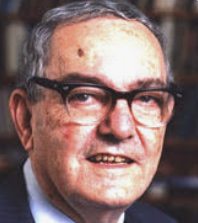
Whereas economic man maximizes - selects the best alternative from among all those available to him, his cousin, administrative man, satisfices - looks for a course of action that is satisfactory or "good enough."
▼
Source
source
p. xxix.
2 months 4 days ago
The techniques of the practitioner are usually called 'synthetic'. He designs by organizing known principles and devices into larger systems.
▼
Source
source
Simon (1945, p. 353); As cited in: Philosophy of Technology and Engineering Sciences (2009) p. 425.

2 months 3 weeks ago
Once we begin to want, we fall under the jurisdiction of the Devil.
CivilSimian.com created by AxiomaticPanic, CivilSimian, Kalokagathia