


4 months 2 weeks ago
The more man meditates upon good thoughts, the better will be his world and the world at large.

4 months 3 weeks ago
The saddest aspect of life right now is that science gathers knowledge faster than society gathers wisdom.

4 months 3 days ago
The very elements themselves, though repugnant in their nature, yet, by a happy equilibrium, preserve eternal peace; and amid the discordancy of their constituent principles, cherish, by a friendly intercourse and coalition, an uninterrupted concord.
2 months 2 weeks ago
The endeavor of scientific research to see events in their more general connection in order to determine their laws, is a legitimate and useful occupation. Any protest against such efforts, in the name of freefom from restrictive conditions, would be fruitless if science did not naïvely identify the abstractions called rules and laws with the actually efficacious forces, and confuse the probability that B will follow A with the actual effort make B follow A.
▼
Source
source
p. 150.
3 months 3 weeks ago
The concept of space, therefore, is a pure intuition, being a singular concept, not made up by sensations, but itself the fundamental form of all external sensation.
1 month 2 weeks ago
Faith exalts the human heart, by removing it from the market-place, making it sacred and unexchangeable. Under the jurisdiction of religion our deeper feelings are sacralized, so as to become raw material for the ethical life: the life lived in judgement.
▼
Source
source
"Avant-garde and Kitsch" (p. 91)

4 months 2 weeks ago
The happiness which belongs to man, is that state in which he enjoys as many of the good things, and suffers as few of the evils incident to human nature as possible; passing his days in a smooth course of permanent tranquility. A wise man, though deprived of sight or hearing, may experience happiness in the enjoyment of the good things which yet remain; and when suffering torture, or laboring under some painful disease, can mitigate the anguish by patience, and can enjoy, in his afflictions, the consciousness of his own constancy.
2 days ago
One of the commonplaces of modern historiography is the polemical exaltation of the civilization of the Renaissance over and against medieval civilization. This is not just the expression of a typical misunderstanding, since this mentality is the effect of one among the innumerable deceptions purposely spread in modern culture by the leaders of global subversion. The truth is that after the collapse of the ancient world, if there ever was a civilization that deserves the name of Renaissance, this was the civilization of the Middle Ages. In its objectivity, its virile spirit, its hierarchical structure, its proud antihumanistic simplicity so often permeated by the sense of the sacred, the Middle Ages represented a return to the origins.
▼
Source
source
p.309

2 months 1 week ago
During the last quarter of a century all the authority associated with the function of spiritual guidance ... has seeped down into the lowest publications. ... Between a poem by Valéry and an advertisement for a beauty cream promising a rich marriage to anyone who used it there was at no point a breach of continuity. So as a result of literature's spiritual usurpation a beauty cream advertisement possessed, in the eyes of little village girls, the authority that was formerly attached to the words of priests.
▼
Source
source
"Morality and literature," p. 164

3 months 3 weeks ago
How significant is the enormous heightening, under mescalin, of the perception of color! ... Man's highly developed color sense is a biological luxury-inestimably precious to him as an intellectual and spiritual being, but unnecessary to his survival as an animal. ... Mescalin raises all colors to a higher power and makes the percipient aware of innumerable fine shades of difference, to which, at ordinary times, he is completely blind. It would seem that, for Mind at Large, the so-called secondary characters of things are primary.
▼
Source
source
describing his experiment with mescaline, pp. 26-27
2 months 3 weeks ago
Thus then does the Doctrine of Knowledge, which in its substance is the realisation of the absolute Power of intelligising which has now been defined, end with the recognition of itself as a mere Schema in a Doctrine of Wisdom, although indeed a necessary and indispensable means to such a Doctrine: - a Schema, the sole aim of which is, with the knowledge thus acquired, - by which knowledge alone a Will, clear and intelligible to itself and reposing upon itself without wavering or perplexity, is possible, - to return wholly into Actual Life; - not into the Life of blind and irrational Instinct which we have laid bare in all its nothingness, but into the Divine Life which shall become visible to us.
2 days ago
Be radical, have principles, be absolute, be that which the bourgeoisie calls an extremist: give yourself without counting or calculating, don't accept what they call 'the reality of life' and act in such a way that you won't be accepted by that kind of 'life', never abandon the principle of struggle.
4 months 3 weeks ago
No matter how various the subject matter I write on, I was a science-fiction writer first and it is as a science-fiction writer that I want to be identified.

3 months 3 weeks ago
I remember the very place in Hyde Park where, in my fourteenth year, on the eve of leaving my father's house for a long absence, he told me that I should find, as I got acquainted with new people, that I had been taught many things which youths of my age did not commonly know; and that many persons would be disposed to talk to me of this, and to compliment me upon it. What other things he said on this topic I remember very imperfectly; but he wound up by saying, that whatever I knew more than others, could not be ascribed to any merit in me, but to the very unusual advantage which had fallen to my lot.
▼
Source
source
(p. 34)

2 months 4 weeks ago
The general interest of the masses might take the place of the insight of genius if it were allowed freedom of action.
2 months 2 weeks ago
The first act by virtue of which the State really constitutes itself the representative of the whole of society-the taking possession of the means of production in the name of society-this is, at the same time, its last independent act as a State. State interference in social relations becomes, in one domain after another, superfluous, and then dies out of itself; the government of persons is replaced by the administration of things, and by the conduct of processes of production. The State is not "abolished." It dies out.
▼
Source
source
Socialism, Utopian and Scientific
5 days ago
The greater part of human activity is designed to make permanent those experiences and joys which are only lovable because they are changing.
▼
Source
source
p. 32

2 months 3 weeks ago
We have repeatedly observed that while any whole is evolving, there is always going on an evolution of the parts into which it divides itself; but we have not observed that this equally holds of the totality of things, which is made up of parts within parts from the greatest down to the smallest.
▼
Source
source
Pt. II, The Knowable; Ch. XV, The Law of Evolution (continued)
4 months 2 days ago
When we are inclined to boast of our position [as Christians] we should remember that we are but Gentiles, while the Jews are of the lineage of Christ. We are aliens and in-laws; they are blood relatives, cousins, and brothers of our Lord. Therefore, if one is to boast of flesh and blood the Jews are actually nearer to Christ than we are.
▼
Source
source
That Jesus Christ Was Born a Jew Luther's Works, American Edition (Philadelphia: Fortress Press, 1962), Vol. 45, p. 201

3 months 3 weeks ago
This is the value of the Communities; not what they have done, but the revolution which they indicate as on the way.

3 months 2 weeks ago
The purely corporeal can be uncanny. Compare the way angels and devils are portrayed. So-called "miracles" must be connected with this. A miracle must be, as it were, a sacred gesture.
▼
Source
source
p. 50e

3 months 3 weeks ago
"They would say," he answered, "that you do not fail in obedience through lack of love, but have lost love because you never attempted obedience."
▼
Source
source
Ch. 7 : The Pendragon, section 2

1 month 3 weeks ago
I sit on a man's back, choking him, and making him carry me, and yet assure myself and others that I am very sorry for him and wish to ease his lot by any means possible, except getting off his back.
▼
Source
source
Writings on Civil Disobedience and Nonviolence
4 months 3 weeks ago
The words that reverberate for us at the confines of this long adventure of rebellion are not formulas for optimism, for which we have no possible use in the extremities of our unhappiness, but words of courage and intelligence which, on the shores of the eternal seas, even have the qualities of virtue.
2 months 4 weeks ago
There is no good father who would want to resemble our Heavenly Father.
▼
Source
source
No. 51

3 months 3 weeks ago
Politics is concerned with herds rather than with individuals, and the passions which are important in politics are, therefore, those in which the various members of a given herd can feel alike.
3 months 3 weeks ago
At the age of five years to enter a spinning-cotton or other factory, and from that time forth to sit there daily, first ten, then twelve, and ultimately fourteen hours, performing the same mechanical labour, is to purchase dearly the satisfaction of drawing breath. But this is the fate of millions, and that of millions more is analogous to it.
▼
Source
source
Vol II: "On the Vanity and Suffering of Life", as translated by R. B. Haldane, and J. Kemp in The World as Will and Idea (1886), p. 389
4 months 2 days ago
Do not fight against these harmful spells. For you do not know what God wants with them. You do not know the greater divine plan behind it all.
▼
Source
source
As attributed by Kai Lehmann, curator of the exhibition "Luther und die Hexen" ("Luther and the witches"). (2013) in "Interview with Dr. Kai Lehmann, curator of the exhibition "Luther und die Hexen" ("Luther and the witches")"

2 months 2 weeks ago
I believe in the salvation of humanity, in the future of cyanide . . .

3 months 3 weeks ago
We all remember how many religious wars were fought for a religion of love and gentleness; how many bodies were burned alive with the genuinely kind intention of saving souls from the eternal fire of hell. Only if we give up our authoritarian attitude in the realm of opinion, only if we establish the attitude of give and take, of readiness to learn from other people, can we hope to control acts of violence inspired by piety and duty.
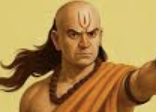
1 month 4 days ago
If a king is energetic, his subjects will be equally energetic. If he is reckless, they will not only be reckless likewise, but also eat into his works. Besides, a reckless king will easily fall into the hands of his enemies. Hence the king shall ever be wakeful.
▼
Source
source
Book I : "Concerning Discipline" Chapter 19 "The Duties of a King"
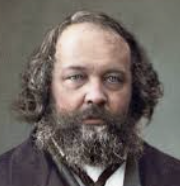
2 months 3 weeks ago
All religions are cruel, all founded on blood; for all rest principally on the idea of sacrifice - that is, on the perpetual immolation of humanity to the insatiable vengeance of divinity.
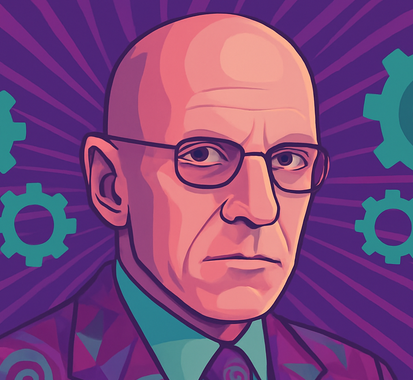
3 months 2 weeks ago
A critique is not a matter of saying that things are not right as they are. It is a matter of pointing out on what kinds of assumptions, what kinds of familiar, unchallenged, unconsidered modes of thought the practices that we accept rest.
▼
Source
source
"Practicing criticism, or, is it really important to think?", interview by Didier Eribon, May 30-31, 1981, in Politics, Philosophy, Culture, ed. L. Kriztman (1988), p. 155
3 months 3 weeks ago
I see that sensible men and conscientious men all over the world were of one religion.
▼
Source
source
The Preacher

1 month 3 weeks ago
The printing press was at first mistaken for an engine of immortality by everybody except Shakespeare.
▼
Source
source
(p. 230)
2 months 2 weeks ago
To resign oneself or to blow out one's brains, that is the choice one faces at certain moments. In any case, the only real dignity is that of exclusion.
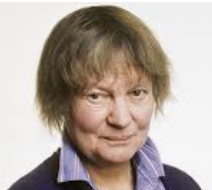
2 months 2 weeks ago
Bereavement is a darkness impenetrable to the imagination of the unbereaved.
▼
Source
source
The Sacred and Profane Love Machine (1974) p. 37.

3 months 3 weeks ago
I love liberty, and I loathe constraint, dependence, and all their kindred annoyances. As long as my purse contains money it secures my independence, and exempts me from the trouble of seeking other money, a trouble of which I have always had a perfect horror; and the dread of seeing the end of my independence, makes me proportionately unwilling to part with my money. The money that we possess is the instrument of liberty, that which we lack and strive to obtain is the instrument of slavery.
3 months 3 weeks ago
I am an investigator by inclination. I feel a great thirst for knowledge and an impatient eagerness to advance, also satisfaction at each progressive step. There was a time when I thought that all this could constitute the honor of humanity, and I despised the mob, which knows nothing about it. Rousseau set me straight. This dazzling excellence vanishes; I learn to honor men, and would consider myself much less useful than common laborers if I did not believe that this consideration could give all the others a value, to establish the rights of humanity.
▼
Source
source
Part III : Selection on Education from Kant's other Writings, Ch. I Pedagogical Fragments, # 55

3 months 1 day ago
The single spirit doth simultaneously temper the whole together; this is the single soul of all things; all are filled with God.
▼
Source
source
IV 9; as translated by Dorothea Waley Singer
2 months 3 weeks ago
Just as man as a social being, cannot in the long run exist without a tie to the community, so the individual will never find the real justification for his existence, and his own spiritual and moral autonomy, anywhere except in an extramundane principle capable of relativizing the overpowering influence of external factors.
▼
Source
source
p 23
4 months 2 days ago
A person must take care to exercise moderate discipline over the body and subject it to the Spirit by means of fasting, vigils, and labor. The goal is to have the body obey and conform - and not hinder - the inner person and faith. Unless it is held in check, we know it is the nature of the body to undermine faith and the inner person.
▼
Source
source
pp. 71-72

3 months 3 weeks ago
Nor is it the irrationality of the form which is taken as characteristic. On the contrary, one overlooks the irrational.
▼
Source
source
Vol. II, Ch. I, p. 30.
1 month 3 weeks ago
Disarmament is illogical and futile, unless one is prepared to regard the available means of production and social organization as affording unique social ends. To divert electrical energy and circuitry into atomic bombs shows the same imaginative power as wiring the dining-room chairs to enable one to electrocute the sitter in the event that he might prove hostile. It is part of the age-old habit of using new means for old purposes instead of discovering what are the new goals contained in the new means.
▼
Source
source
(p.202)
2 months 2 weeks ago
Being good is just a matter of temperament in the end.
▼
Source
source
The Nice and the Good (1968), ch. 14, p. 127. Murdoch attributed this opinion to her character Kate Gray. It was not her own.
3 months 3 weeks ago
Every man takes the limits of his own field of vision for the limits of the world.
▼
Source
source
"Psychological Observations"
1 month 3 weeks ago
I neither approve nor disapprove. I merely try to understand. Sexual freedom is as natural to newly tribalized youth as drugs.

1 month 1 week ago
There will be a time when those trying to turn the world into a Colosseum for their own amusement will be raw meat thrown to the wolves themselves, and the rest of us will watch, as justice is served, with a clean conscience.
CivilSimian.com created by AxiomaticPanic, CivilSimian, Kalokagathia