


3 months 3 weeks ago
Actions may be laudable or blameable; but they cannot be reasonable: Laudable or blameable, therefore, are not the same with reasonable or unreasonable. The merit and demerit of actions frequently contradict, and sometimes controul our natural propensities. But reason has no such influence. Moral distinctions, therefore, are not the offspring of reason. Reason is wholly inactive, and can never be the source of so active a principle as conscience, or a sense of morals.
▼
Source
source
Part 1, Section 1

2 weeks ago
The infinite, absolute character of Virtue has passed into a finite, conditional one; it is no longer a worship of the Beautiful and Good; but a calculation of the Profitable.

4 months 3 weeks ago
Everything which distinguishes man from the animals depends upon this ability to volatilize perceptual metaphors in a schema, and thus to dissolve an image into a concept. For something is possible in the realm of these schemata which could never be achieved with the vivid first impressions: the construction of a pyramidal order according to castes and degrees, the creation of a new world of laws, privileges, subordinations, and clearly marked boundaries, a new world, one which now confronts that other vivid world of first impressions as more solid, more universal, better known, and more human than the immediately perceived world, and thus as the regulative and imperative world.

3 months 3 weeks ago
In capitalist society spare time is acquired for one class by converting the whole life-time of the masses into labour-time.
▼
Source
source
Vol. I, Ch. 17, Section IV, pg. 581.
2 months 3 weeks ago
Women are systematically degraded by receiving the trivial attentions which men think it manly to pay to the sex, when, in fact, men are insultingly supporting their own superiority.
▼
Source
source
Ch. 4
1 month 3 weeks ago
There is only one enduring happiness in life-to live for others.
▼
Source
source
Part 1, chapter 2
2 days ago
The visible world has, as I have said, subsisted around him from all eternity: and the Light also which surrounds the world has also its place from all eternity, not intermittently, nor in different degrees at different times, but constantly and in an equable manner. But whosoever will attempt to estimate, as far as thought goes, this external Nature, by the measure of Time, he will very easily discover respecting the Sun, Sovereign of all things, of how many blessings he is, from all eternity, the author to the world.

3 months 3 weeks ago
The finest workers in stone are not copper or steel tools, but the gentle touches of air and water working at their leisure with a liberal allowance of time.

3 months 2 weeks ago
If someone asked us 'but is that true?' we might say "yes" to him; and if he demanded grounds we might say "I can't give you any grounds, but if you learn more you too will think the same."
2 months ago
It was Rudolf Carnap's dream for the last three decades of his life to show that science proceeds by a formal syntactic method; today no one to my knowledge holds out any hope for that project.
▼
Source
source
Hilary Putnam, in: James Conant, Urszula M. Zeglen (2012) Hilary Putnam: Pragmatism and Realism. p. 14
3 months 1 week ago
Cato the elder wondered how that city was preserved wherein a fish was sold for more than an ox.
▼
Source
source
Cato the Elder

3 months 3 weeks ago
Act, if you like,-but you do it at your peril. Men's actions are too strong for them. Show me a man who has acted, and who has not been the victim and slave of his action. What they have done commits and enforces them to do the same again. The first act, which was to be an experiment, becomes a sacrament. The fiery reformer embodies his aspiration in some rite or covenant, and he and his friends cleave to the form, and lose the aspiration. The Quaker has established Quakerism, the Shaker has established his monastery and his dance; and, although each prates of spirit, there is no spirit, but repetition, which is anti-spiritual.
▼
Source
source
Goethe; or, the Writer
4 months 3 weeks ago
A person might fairly doubt also what in the world they mean by the absolute - this that or the other, since, as they would themselves allow, the account of the humanity is one and the same in the absolute man, and in any individual man: for so far as the individual and the absolute man are both man, they will not differ at all: and if so, then the essential good and any particular good will not differ, in so far as both are good. Nor will it do to say that the eternity of the absolute good makes it to be more good; for a white thing which has lasted white ever so long, is no whiter than that which only lasts for a day.
4 days ago
Man can hardly even recognize the devils of his own creation.
▼
Source
source
This quote was attributed to Albert Schweitzer by Rachel Carson on p. 17 of her seminal work Silent Spring (1962), and is widely cited on various Internet websites, but an actual source from Schweitzer's works is elusive.

3 months 3 weeks ago
This miracle of analysis, this marvel of the world of ideas, an almost amphibian object between Being and Non-being that we call the imaginary number.
▼
Source
source
Quoted in Singularités : individus et relations dans le système de Leibniz (2003) by Christiane Frémont
1 month 2 weeks ago
Everybody needs his memories. They keep the wolf of insignificance from the door.
▼
Source
source
Mr. Sammler's Planet (1970) [Penguin Classics, 2004, ISBN 0-142-43783-2], p. 156

2 months 3 weeks ago
Bad laws are the worst sort of tyranny.
▼
Source
source
Speech at Bristol Previous to the Election (6 September 1780), quoted in The Works of the Right Honourable Edmund Burke, Vol. II (1855), p. 148

2 months 6 days ago
My theory was that we are all fundamentally 'multiple personalities', beginning with the baby and the child, and slowly developing into more complex selves. If, for some reason, we abruptly cease to develop -- through some trauma that undermines self-confidence -- all those potential personalities are stunted and repressed. And some accident or violent shock may give one of them the opportunity to 'take over'. This suggests, of course, that in some mysterious sense, our 'future' personalities are already there, in embryo, so to speak, and that they also develop as we mature. We move from personality to personality, as we might climb a ladder. The Beethovens and Leonardos got further up the ladder than most of us; yet even they failed to reach the top, as we can see if we study their lives.
▼
Source
source
pp. 228- 229
2 months 1 week ago
We cannot think any true thought unless we want the true. Thinking is itself an aspect of practice.
▼
Source
source
p. 45

1 week 1 day ago
Then it is that the height of unhappiness is reached, when men are not only attracted, but even pleased, by shameful things, and when there is no longer any room for a cure, now that those things which once were vices have become habits.

2 months 2 weeks ago
Our place is somewhere between being and nonbeing - between two fictions.
1 month 3 weeks ago
To subdue destruction is one of the most important affirmations of which we are capable in this world. It is the affirmation of this life, bound up with yours, and with the realm of the living: an affirmation caught up with a potential for destruction and its countervailing force.
▼
Source
source
p. 65
2 months 2 weeks ago
The metaphor is perhaps one of man's most fruitful potentialities. Its efficacy verges on magic, and it seems a tool for creation which God forgot inside one of His creatures when He made him. All our other faculties keep us within the realm of the real, of what is already there. The most we can do is to combine things or to break them up. The metaphor alone furnishes an escape; between the real things, it lets emerge imaginary reefs, a crop of floating islands. A strange thing, indeed, the existence in man of this mental activity which substitutes one thing for another - from an urge not so much to get at the first as to get rid of the second.
▼
Source
source
"Taboo and Metaphor"
2 months 2 weeks ago
The human race, in its intellectual life, is organized like the bees: the masculine soul is a worker, sexually atrophied, and essentially dedicated to impersonal and universal arts; the feminine is a queen, infinitely fertile, omnipresent in its brooding industry, but passive and abounding in intuitions without method and passions without justice.
4 months 2 weeks ago
He tried to recall what he had read about the disease. Figures floated across his memory, and he recalled that some thirty or so great plagues known to history had accounted for nearly a hundred million deaths. But what are a hundred million deaths? When one has served in a war, one hardly knows what a dead man is, after a while. And since a dead man has no substance unless one actually sees him dead, a hundred million corpses broadcast through history are no more than a puff of smoke in the imagination.
2 months 2 weeks ago
Two enemies - the same man divided.

3 months 3 weeks ago
God will look to every soul like its first love because He is its first love.
4 months 2 weeks ago
Victories over ingrained patterns of thought are not won in a day or a year.
3 months 2 weeks ago
But what then is this confrontation below the language of reason? Where might this interrogation lead, following not reason in its horizontal becoming, but seeking to retrace in time this constant verticality, which, the length of Western culture, confronts it with what it is not, measuring it with its own extravagance?
▼
Source
source
Preface to 1961 edition
3 months 1 week ago
Cato instigated the magistrates to punish all offenders, saying that they that did not prevent crimes when they might, encouraged them. Of young men, he liked them that blushed better than those who looked pale.
▼
Source
source
Cato the Elder
4 months 3 weeks ago
They pronounce absurdly who thus speak, as the Pythagoreans assert: for at the same time they make the infinite to be essence, and distribute it into parts.

3 months 3 weeks ago
Religion has two principal enemies, fanaticism and infidelity, or that which is called atheism. The first requires to be combated by reason and morality, the other by natural philosophy.
▼
Source
source
A Discourse, &c. &c.
2 weeks ago
In the true Literary Man there is thus ever, acknowledged or not by the world, a sacredness: he is the light of the world; the world's Priest;-guiding it, like a sacred Pillar of Fire, in its dark pilgrimage through the waste of Time.

3 months 3 weeks ago
Most men do not feel in themselves the competence required for leading their group to victory, and therefore seek out a captain who appears to possess the courage and sagacity necessary for the achievement of supremacy. Even in religion this impulse appears. Nietzsche accused Christianity of inculcating a slave-morality, but ultimate triumph was always the goal. "Blessed are the meek, for they shall inherit the earth."
▼
Source
source
Ch. 2: Leaders and Followers

1 month 3 weeks ago
We live invested in an electric information environment that is quite as imperceptible to us as water is to fish.
▼
Source
source
(p. 5)

2 months 3 weeks ago
The best definition of man is: a being that goes on two legs and is ungrateful.
▼
Source
source
Part 1, Chapter 8 (tr. David Magarshack, 1950) The best definition of man is: a biped, ungrateful.
4 months 1 week ago
Don't hold yourselves cheap, seeing that the creator of all things and of you estimates your value so high, so dear, that he pours out for you every day the most precious blood of his only-begotten Son.
▼
Source
source
216:3:1
1 week 1 day ago
Therefore, my dear Lucilius, begin at once to live, and count each separate day as a separate life.
1 month 2 weeks ago
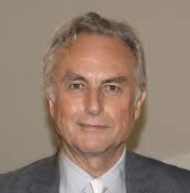
With so many mind-bytes to be downloaded, so many mental codons to be replicated, it is no wonder that child brains are gullible, open to almost any suggestion, vulnerable to subversion, easy prey to Moonies, Scientologists and nuns. Like immune-deficient patients, children are wide open to mental infections that adults might brush off without effort.
1 month 2 days ago
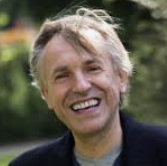
[H]ere we come to the nub of the issue: the alleged moral force of the term "natural". If any creature, by its very nature, causes terrible suffering, albeit unwittingly, is it morally wrong to change that nature? If a civilised human were to come to believe s/he had been committing acts that caused grievous pain for no good reason, then s/he would stop - and want other moral agents to prevent the recurrence of such behaviour. May we assume that the same would be true of a lion, if the lion were morally and cognitively "uplifted" so as to understand the ramifications of what (s)he was doing? Or a house cat tormenting a mouse? Or indeed a human sociopath?
▼
Source
source
"Reprogramming Predators", BLTC Research, 2009

2 months 2 weeks ago
Thou shalt love the Lord thy God with all thy heart, and with all thy soul, and with all thy mind. This is the first and great commandment. And the second is like unto it, Thou shalt love thy neighbour as thyself. On these two commandments hang all the law and the prophets.
▼
Source
source
22:37-40 (KJV)
1 month 2 weeks ago
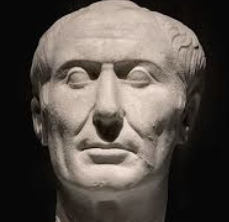
Even a single hair casts its shadow.
▼
Source
source
Maxim 228
1 week 1 day ago
"What," say you, "are you giving me advice? Indeed, have you already advised yourself, already corrected your own faults? Is this the reason why you have leisure to reform other men?" No, I am not so shameless as to undertake to cure my fellow-men when I am ill myself. I am, however, discussing with you troubles which concern us both, and sharing the remedy with you, just as if we were lying ill in the same hospital.
3 months 2 weeks ago
Do not ask who I am and do not ask me to remain the same: leave it to our bureaucrats and our police to see that our papers are in order. At least spare us their morality when we write.
▼
Source
source
The Archaeology of Knowledge (1972), tr. A. M. Sheridan Smith (New York: Pantheon)
1 month 2 weeks ago
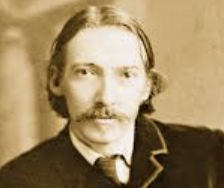
When things fall out opportunely for the person concerned, he is not apt to be critical about the how or why, his own immediate personal convenience seeming a sufficient reason for the strangest oddities and revolutions in our sublunary things.
▼
Source
source
The Sire de Maletroit's Door.
2 weeks ago
The great law of culture is: Let each become all that he was created capable of being.
▼
Source
source
Richter.
3 months 3 weeks ago
None of the things they learn, should ever be made a burthen to them, or impos's on them as a task. Whatever is so proposed, presently becomes irksome; the mind takes an aversion to it, though before it were a thing of delight or indifferency. Let a child but be ordered to whip his top at a certain time every day, whether he has or has not a mind to it; let this be but requir'd of him as a duty, wherein he must spend so many hours morning and afternoon, and see whether he will not soon be weary of any play at this rate. Is it not so with grown men?
▼
Source
source
Sec. 73
1 day ago
All too often people forget that spirituality is essentially a way of life and that its measure does not consist of notions, theories, and ideas that have been stored in one's head. Spirituality is actually what has been successfully actualized and translated into a sense of superiority which is experienced inside by the soul, and a noble demeanor, which is expressed in the body.
▼
Source
source
Meditations on the Peaks: Mountain Climbing as Metaphor for the Spiritual Quest
1 month 3 weeks ago
Dualism makes the problem insoluble; materialism denies the existence of any phenomenon to study, and hence of any problem.
▼
Source
source
Consciousness and Language (2002) p. 47.

3 months 3 weeks ago
He was free, free in every way, free to behave like a fool or a machine, free to accept, free to refuse, free to equivocate; to marry, to give up the game, to drag this death weight about with him for years to come. He could do what he liked, no one had the right to advise him, there would be for him no Good or Evil unless he thought them into being.
▼
Source
source
L'âge de raison (The Age of Reason)
CivilSimian.com created by AxiomaticPanic, CivilSimian, Kalokagathia