


4 months 5 days ago
The hearing ear is always found close to the speaking tongue.
▼
Source
source
Race

5 months 2 days ago
A punishment that penalizes without forestalling is indeed called revenge.

3 months 1 week ago
He was as great as a man can be without morality.
▼
Source
source
Said of Napoleon (1842)

4 months 6 days ago
He who can buy bravery is brace, though a coward. As money is not exchanged for anyone specific quality, for any one specific thing, or for any particular human essential power, but for the entire objective world of man and nature, from the standpoint of its possessor it therefore serves to exchange every property for every other, even contradictory, property and object: it is the fraternization of impossibilities. It makes contradictions embrace.
▼
Source
source
p. 105, The Marx-Engels Reader

3 months 1 day ago
"What is truth?" is a fundamental question. But what is it compared to "How to endure life?" And even this one pales beside the next: "How to endure oneself?" - That is the crucial question in which no one is in a position to give us an answer.

3 days ago
There is a great analogy between grace and genius, for genius is a grace. The real man of genius is the one who acts by grace or by impulsion, without ever contemplating himself and without ever saying to himself: Yes! It is by grace that I act.
▼
Source
source
p. 37

3 months 1 week ago
If man's love for himself be necessary, then his love for Him through whom, first his coming-to-be, and second, his continuance in his essential being with all his inward and outward traits, his substance and his accidents, occur must also be necessary. Whoever is so besotted by his fleshy appetites as to lack this love neglects his Lord and Creator. He possesses no authentic knowledge of Him; his gaze is limited to his cravings and to things of sense.
▼
Source
source
Al-Ghazali on Love, Longing, Intimacy & Contentment, Translated with an introduction and notes by Eric Ormsby. Cambridge: The Islamic Texts Society (2011), p. 25.

4 months 4 days ago
Not till then did his controllers allow him to suspect that death itself might not after all cure the illusion of being a soul-nay, might prove the entry into a world where that illusion raged infinite and unchecked. Escape for the soul, if not for the body, was offered him. He became able to know (and simultaneously refused the knowledge) that he had been wrong from the beginning, that souls and personal responsibility existed. He half saw: he wholly hated. The physical torture of the burning was not fiercer than his hatred of that.
▼
Source
source
Ch. 16 : Banquet at Belbury, section 6
1 month 3 weeks ago
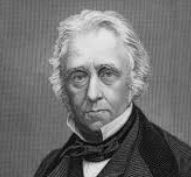
In one point I fully agree with the gentlemen to whose general views I am opposed. I feel with them, that it is impossible for us, with our limited means, to attempt to educate the body of the people. We must at present do our best to form a class who may be interpreters between us and the millions whom we govern; a class of persons, Indian in blood and colour, but English in taste, in opinions, in morals, and in intellect. To that class we may leave it to refine the vernacular dialects of the country, to enrich those dialects with terms of science borrowed from the Western nomenclature, and to render them by degrees fit vehicles for conveying knowledge to the great mass of the population.
2 months 4 weeks ago
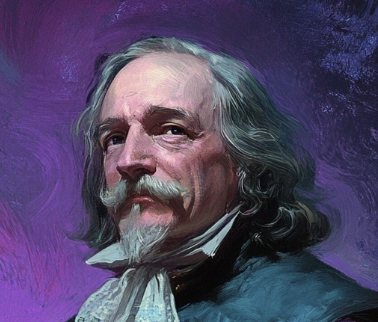
So that every Crime is a sinne; but not every sinne a Crime.
▼
Source
source
The Second Part, Chapter 27, p. 151
3 months 1 day ago
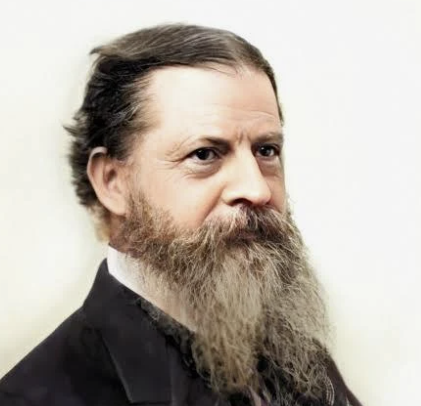
Our whole past experience is continually in our consciousness, though most of it sunk to a great depth of dimness. I think of consciousness as a bottomless lake, whose waters seem transparent, yet into which we can clearly see but a little way.
▼
Source
source
Vol. VII, par. 547

4 months 6 days ago
There is no rule more invariable than that we are paid for our suspicions by finding what we suspect.
▼
Source
source
Pearls of Thought (1881) p. 254
3 weeks 6 days ago
The great man is the one who does not lose his child's heart.
▼
Source
source
Book 4, pt. 2, v. 12
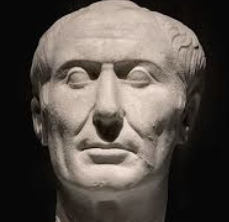
2 months 3 days ago
Necessity gives the law without itself acknowledging one.
▼
Source
source
Maxim 444

4 months ago
In France at least, the history of science and thought gives pride of place sciences, sciences of the necessary, all close to philosophy: one can observe in their history the almost uninterrupted emergence of truth and pure reason. The other disciplines, however - those, for example, that concern living beings, languages, or economic facts - are considered too tinged with empirical thought, too exposed to the vagaries of chance or imagery to age old traditions and external events, for it to be supposed that their history could be anything other irregular. At most, they are expected to provide evidence of a state of mind, an intellectual fashion, a mixture of archaism and bold conjecture, of intuition and blindness. But what if empirical knowledge, at a given time and in a given culture, did possess a well defined regularity.
▼
Source
source
Foreword to the English edition

2 months 4 weeks ago
One who seeks will find, and for one who knocks it will be opened.

2 months 4 weeks ago
This is the pure form of servitude: to exist as an instrument.
▼
Source
source
p. 33

3 months 6 days ago
So far as it has gone, it probably is the most pure and defecated publick good which ever has been conferred on mankind.
▼
Source
source
p. 463 On the Polish Constitution of May 3, 1791
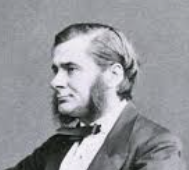
1 month 3 weeks ago
I am too much of a sceptic to deny the possibility of anything - especially as I am now so much occupied with theology - but I don't see my way to your conclusion.
▼
Source
source
Letter to Herbert Spencer (22 March 1886); this is often quoted with a variant spelling as: I am too much of a skeptic to deny the possibility of anything.

4 months 1 week ago
Beneficence is a duty. He who often practices this, and sees his beneficent purpose succeed, comes at last really to love him whom he has benefited. When, therefore, it is said, "Thou shalt love thy neighbor as thyself," this does not mean, "Thou shalt first of all love, and by means of love (in the next place) do him good"; but: "Do good to thy neighbour, and this beneficence will produce in thee the love of men (as a settled habit of inclination to beneficence)."
▼
Source
source
Metaphysical Elements of Ethics (1780). Translated by Thomas Kingsmill Abbott, translation available at Philosophy.eserver.org. From section "Preliminary Notions of the Susceptibility of the Mind for Notions of Duty Generally", Part C ("Of love to men")
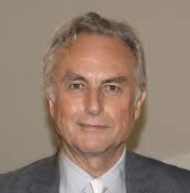
2 months 2 days ago
It would be deeply depressing if the only way children could get moral values was from religion. Either from scripture, and God knows we don't want them to get it from scripture, I mean, just look at scripture. Or, from being afraid of God, being intimidated by God. Anybody who is good for only those two reasons is not really being good at all. Why not teach children things like the Golden Rule, do as you would be done by, how would you like it if other children did that to you, so why do you do it to them... I think it's depressing that anybody should suggest that you actually need God in order to be moral. I would hope that our morals come from a better source than that, and therefore they are genuinely moral rather than based on outmoded scripture, or based on fear.
▼
Source
source
BBC,

5 months 6 days ago
It was a purely Christian satisfaction to me that if ordinarily there was no one else there was one who in action tried a little to do the doctrine about loving the neighbor, alas, one who precisely by his act also received a frightful into what an illusion Christendom is and indeed, particularly later, also into how the common people let themselves be seduced by wretched journalists, whose striving and fighting for equality can only lead, if it leads to anything, since it is in the service of the lie, to making the elite, in self-defense, proud of their aloofness from the common man, and the common man brazen in his rudeness.
4 months 4 days ago
Much of the modern resistance to chastity comes from men's belief that they "own" their bodies - those vast and perilous estates, pulsating with the energy that made the worlds, in which they find themselves without their consent and from which they are ejected at the pleasure of Another!
▼
Source
source
Letter XXI

5 months 3 days ago
There is more to a science fiction story than the science it contains.

5 days ago
The greatest service which can be rendered any country is to add an useful plant to its culture; especially, a bread grain; next in value to bread is oil.
▼
Source
source
Thomas Jefferson, In Memoir, Correspondence, and Miscellanies from the Papers of T. Jefferson (1829), Vol. 1, 144
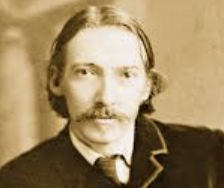
2 months 1 day ago
Times are changed with him who marries; there are no more by-path meadows, where you may innocently linger, but the road lies long and straight and dusty to the grave. Idleness, which is often becoming and even wise in the bachelor, begins to wear a different aspect when you have a wife to support.
▼
Source
source
Virginibus Puerisque, Ch. 2.
4 months 5 days ago
Our condition is like that of the poor wolves: if one of the flock wound himself, or so much as limp, the rest eat him up incontinently. That serene Power interposes the check upon the caprices and officiousness of our wills.
3 months 3 weeks ago
Being asked what learning is the most necessary, he replied, "How to get rid of having anything to unlearn.
▼
Source
source
" § 7
1 month 1 day ago
Those who have taken the planets to be inanimate bodies without function, limited to traveling geometric paths, resemble idiots who would believe that the brain is inanimate because it has no visible function, or that the stomach is idle because it does no visible work as do our limbs. Civilizees have always been reproached for believing nature to be limited to known effects. If the planets were not animate creatures endowed with functions, God would then appear to be an advocate of laziness. He would have created universes furnished with large inert bodies spending eternity in purposeless meandering as do the idlers in our society.
▼
Source
source
L'attraction passioneé

4 months 6 days ago
Choose your parents wisely.
▼
Source
source
On the recipe for longevity; Collected Papers of Bertrand Russell, Vol. 29, 2012
3 months 6 days ago
The tyranny of a multitude is a multiplied tyranny.
▼
Source
source
Letter to Thomas Mercer

2 months 3 weeks ago
Neither is the longing for immortality saved, but rather dissolved and submerged, by agnosticism, or the doctrine of the unknowable. ...The unknowable, if it is something more than the merely hitherto unknown, is but a purely negative concept, a concept of limitation. And upon this foundation no human feeling can be built up.

4 months 2 weeks ago
It might be wiser for me to avoid Camarina and say nothing of theologians. They are a proud, susceptible race. They will smother me under six hundred dogmas. They will call me heretic and bring thunderbolts out of their arsenals, where they keep whole magazines of them for their enemies. Still they are Folly's servants, though they disown their mistress. They live in the third heaven, adoring their own persons and disdaining the poor crawlers upon earth. They are surrounded with a bodyguard of definitions, conclusions, corollaries, propositions explicit, and propositions implicit. ...They will tell you how the world was created. They will show you the crack where Sin crept in and corrupted mankind.
▼
Source
source
as quoted by James Anthony Froude, Life and Letters of Erasmus: Lectures Delivered at Oxford 1893-4

4 months 1 week ago
Apollo said that every one's true worship was that which he found in use in the place where he chanced to be.
▼
Source
source
Book II, Ch. 12. Apology for Raimond Sebond

5 days ago
The issue here really is not whether international trade shall be free but whether or not it makes any sense for a country - or, for that matter, a region - to destroy its own capacity to produce its own food. How can a government, entrusted with the safety and health of its people, conscientiously barter away in the name of an economic idea that people's ability to feed itself? And if people lose their ability to feed themselves, how can they be said to be free?
▼
Source
source
"A Bad Big Idea"

3 months 2 weeks ago
Concern should drive us into action and not into a depression.
▼
Source
source
The Collected Works of Karen Horney (1957) by Karen Horney, p. 154: "We may feel genuinely concerned about world conditions, though such a concern should drive us into action and not into a depression."

4 months 3 weeks ago
The Master said, "He who exercises government by means of his virtue may be compared to the north polar star, which keeps its place and all the stars turn towards it."

4 months 4 days ago
Those who promise us paradise on earth never produced anything but a hell.
▼
Source
source
As quoted in In Passing: Condolences and Complaints on Death, Dying, and Related Disappointments (2005) by Jon Winokur, p. 144

2 weeks 6 days ago
Pain he endures, death he awaits.

2 days ago
Turn thy thoughts now to the consideration of thy life, thy life as a child, as a youth, thy manhood, thy old age, for in these also every change was a death. Is this anything to fear?
▼
Source
source
IX, 21
3 months 1 week ago
If exclusive privileges were not granted, and if the financial system would not tend to concentrate wealth, there would be few great fortunes and no quick wealth. When the means of growing rich is divided between a greater number of citizens, wealth will also be more evenly distributed; extreme poverty and extreme wealth would be also rare.
▼
Source
source
Article on Wealth

1 month ago
A Muslim who knows French will never be a dangerous Muslim.
▼
Source
source
quoted in Arvidsson, Stefan (2006), Aryan Idols: Indo-European Mythology as Ideology and Science, translated by Sonia Wichmann, Chicago and London: The University of Chicago Press.'(107)
4 months 6 days ago
This idea of weapons of mass extermination is utterly horrible and is something which no one with one spark of humanity can tolerate. I will not pretend to obey a government which is organising a mass massacre of mankind.
▼
Source
source
Speech in Birmingham, England encouraging civil disobedience in support of nuclear disarmament, 4/15/1961

4 months 4 days ago
I think of death only with tranquility, as an end. I refuse to let death hamper life. Death must enter life only to define it.
2 months 3 weeks ago
Barthes's discovery and articulation of the "new" liberatory category of perception and deciphering, semiotic-mythology, belongs to the praxis of his heroic mythologist, alone. This unfortunate theoretical strategy makes the articulation of a coalitional consciousness in social struggle impossible to imagine or enact. ... His terminologies appropriate the technologies of the oppressed for use by academic classes.
▼
Source
source
Chela Sandoval, Methodology of the Oppressed, p. 201
3 months 1 day ago
Facing a landscape annihilated by the light, to remain serene supposes a temper I do not have. The sun is my purveyor of black thoughts; and summer the season when I have always reconsidered my relations with this world and with myself, to the greatest prejudice of both.
2 months 3 weeks ago
By becoming the pure subject who knows the world objectively, man ultimately realizes that absolute consciousness with respect to which the body and individual existence are no longer anything but objects; death is deprived of meaning. Reduced to the status of object of consciousness, the body could not be conceived as an intermediary between "things" and the consciousness which knows them.
▼
Source
source
p. 204

3 weeks 5 days ago
For is not a Symbol ever, to him who has eyes for it, some dimmer or clearer revelation of the God-like? B
▼
Source
source
k. III, ch. 3.
2 months 4 weeks ago
Positive philosophy made its counter-attack against critical rationalism on two fronts. Comte fought against the French form of negative philosophy, against the heritage of Descartes and the Enlightenment. In Germany, the struggle was directed against Hegel's system. Schelling received an express commission from Frederick William IV 'to destroy the dragon seed' of Hegelianism, while Stahl, another anti-Hegelian, became the philosophical spokesman of the Prussian monarchy in 1840.
▼
Source
source
P. 326
3 months 2 days ago
The great decisions of human life have as a rule far more to do with the instincts and other mysterious unconscious factors than with conscious will and well-meaning reasonableness. The shoe that fits one person pinches another; there is no recipe for living that suits all cases. Each of us carries his own life-form-an indeterminable form which cannot be superseded by any other.
▼
Source
source
p. 69
CivilSimian.com created by AxiomaticPanic, CivilSimian, Kalokagathia