

1 month 3 weeks ago
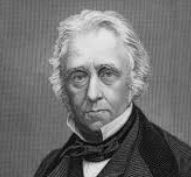
I have no knowledge of either Sanscrit or Arabic. But I have done what I could to form a correct estimate of their value. I have read translations of the most celebrated Arabic and Sanscrit works. I have conversed, both here and at home, with men distinguished by their proficiency in the Eastern tongues. I am quite ready to take the oriental learning at the valuation of the orientalists themselves. I have never found one among them who could deny that a single shelf of a good European library was worth the whole native literature of India and Arabia. The intrinsic superiority of the Western literature is indeed fully admitted by those members of the committee who support the oriental plan of education.

4 months 6 days ago
It is precisely in knowing its limits that philosophy consists.
▼
Source
source
A 727, B 755

4 months 4 days ago
I have lived in the pursuit of a vision, both personal and social. Personal: to care for what is noble, for what is beautiful, for what is gentle; to allow moments of insight to give wisdom at more mundane times. Social: to see in imagination the society that is to be created, where individuals grow freely, and where hate and greed and envy die because there is nothing to nourish them. These things I believe, and the world, for all its horrors, has left me unshaken.

2 months 2 weeks ago
Whatever is merely positive is lifeless. Negativity is essential to vitality.
2 months 2 weeks ago
Psychological disorders are symptoms of a blocked story... The patient is cured the moment she narrates herself free.

5 months ago
In that daily effort in which intelligence and passion mingle and delight each other, the absurd man discovers a discipline that will make up the greatest of his strengths. The required diligence and doggedness and lucidity thus resemble the conqueror's attitude. To create is likewise to give a shape to one's fate. For all these characters, their work defines them at least as much as it is defined by them. The actor taught us this: There is no frontier between being and appearing.

4 months 3 days ago
I am against bigness and greatness in all their forms, and with the invisible molecular moral forces that work from individual to individual, stealing in through the crannies of the world like so many soft rootlets, or like the capillary oozing of water, and yet rending the hardest monuments of man's pride, if you give them time. The bigger the unit you deal with, the hollower, the more brutal, the more mendacious is the life displayed. So I am against all big organizations as such, national ones first and foremost; against all big successes and big results; and in favor of the eternal forces of truth which always work in the individual and immediately unsuccessful way, under-dogs always, till history comes, after they are long dead, and puts them on top. - You need take no notice of these ebullitions of spleen, which are probably quite unintelligible to anyone but myself.
▼
Source
source
Letter to Mrs. Henry Whitman (7 June 1899), in The Letters of William James, ed. Henry James, vol. 2, p. 90, 1926

3 days ago
We know enough of our own history by now to be aware that people exploit what they have merely concluded to be of value, but they defend what they love. To defend what we love we need a particularizing language, for we love what we particularly know.

3 weeks 4 days ago
This Burns appeared under every disadvantage: uninstructed, poor, born only to hard manual toil; and writing, when it came to that, in a rustic special dialect, known only to a small province of the country he lived in. Had he written, even what he did write, in the general language of England, I doubt not he had already become universally recognized as being, or capable to be, one of our greatest men.

2 months 2 weeks ago
My purpose here is to denounce an idea which seems to be dangerous and false. ... Revolutionary trade unionists and orthodox communists are at one in considering everything that is purely theoretical as bourgeois. ... The culture of a socialist society would be a synthesis of theory and practice; but to synthesize is not the same as to confuse together; it is only contraries that can be synthesized. ... Marx's principal glory is to have rescued the study of societies not only from Utopianism but also and at the same time from empiricism. ... Humanity cannot progress by importing into theoretical study the processes of blind routine and haphazard experiment by which production has so long been dominated. ... The true relation between theory and application only appears when theoretical research has been purged of all empiricism.
▼
Source
source
"The teaching of mathematics," p. 71-72
2 weeks 5 days ago
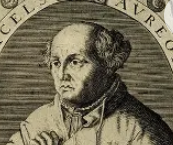
What else is the help of medicine than love?

2 months ago
It would be deeply depressing if the only way children could get moral values was from religion. Either from scripture, and God knows we don't want them to get it from scripture, I mean, just look at scripture. Or, from being afraid of God, being intimidated by God. Anybody who is good for only those two reasons is not really being good at all. Why not teach children things like the Golden Rule, do as you would be done by, how would you like it if other children did that to you, so why do you do it to them... I think it's depressing that anybody should suggest that you actually need God in order to be moral. I would hope that our morals come from a better source than that, and therefore they are genuinely moral rather than based on outmoded scripture, or based on fear.
▼
Source
source
BBC,
2 months 2 weeks ago
Power turns pure being into a having.

Just now
The controlling Intelligence understands its own nature, and what it does, and whereon it works.
▼
Source
source
VI, 5

2 months 1 day ago
Headlines are icons, not literature.
▼
Source
source
(p. 5)

4 months 4 days ago
It appears... that a work similar in its object and general conception to that of Adam Smith, but adapted to the more extended knowledge and improved ideas of the present age, is the kind of contribution which Political Economy at present requires. The Wealth of Nations is in many parts obsolete, and in all, imperfect. Political Economy... has grown up almost from infancy since the time of Adam Smith; and the philosophy of society... has advanced many steps beyond the point at which he left it.
▼
Source
source
Preface, 1848
Just now
...that to expect a bad person not to harm others is like expecting fig trees not to secrete juice, babies not to cry, horses not to neigh-the inevitable not to happen.
▼
Source
source
(Hays translation) XII, 16
2 months 1 week ago
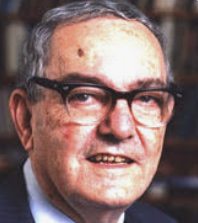
Before a science can develop principles, it must possess concepts. Before a law of gravitation could be formulated, it was necessary to have the notions of "acceleration" and "weight."
▼
Source
source
p. 43.


4 days ago
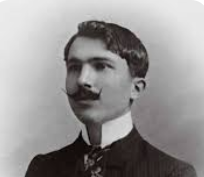
All hopes and despairs vanish in the voracious, funneling whirlwind of God. God laughs, wails, kills, sets us on fire, and then leaves us in the middle of the way, charred embers. And I rejoice to feel between my temples, in the flicker of an eyelid, the beginning and the end of the world. I condense into a lightning moment the seeding, sprouting, blossoming, fructifying, and the disappearance of every tree, animal, man, star, and god. All Earth is a seed planted in the coils of my mind. Whatever struggles for numberless years to unfold and fructify in the dark womb of matter bursts in my head like a small and silent lightning flash. Ah! let us gaze intently on this lightning flash, let us hold it for a moment, let us arrange it into human speech. Let us transfix this momentary eternity which encloses everything, past and future, but without losing in the immobility of language any of its gigantic erotic whirling.

5 months 4 days ago
How absurd men are! They never use the liberties they have, they demand those they do not have. They have freedom of thought, they demand freedom of speech. Either/Or Part I, Swenson Translation p. 19 Variations include: People demand freedom of speech to make up for the freedom of thought, which they avoid. People demand freedom of speech as a compensation for the freedom of thought which they seldom use.
3 days ago
I think we must be careful about too easily accepting, or being too easily grateful for, sacrifices made by others, especially if we have made none ourselves.
2 days ago
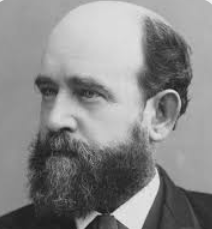
The progress of civilization necessitates the giving of greater and greater attention and intelligence to public affairs. And for this reason I am convinced that we make a great mistake in depriving one sex of voice in public matters, and that we could in no way so increase the attention, the intelligence and the devotion which may be brought to the solution of social problems as by enfranchising our women.
▼
Source
source
Ch. 21 : Conclusion

3 months ago
In a republic, that paradise of debility, the politician is a petty tyrant who obeys the laws.


4 months 2 days ago
Philosophers should consider the fact that the greatest happiness principle can easily be made an excuse for a benevolent dictatorship. We should replace it by a more modest and more realistic principle - the principle that the fight against avoidable misery should be a recognized aim of public policy, while the increase of happiness should be left, in the main, to private initiative.
▼
Source
source
As quoted in 1,001 Pearls of Wisdom (2006) by David Ross

3 months 4 days ago
This day I heard from Laurence who has sent me papers confirming the portentous State of France-where the Elements which compose Human Society seem all to be dissolved, and a world of Monsters to be producd in the place of it-where Mirabeau presides as the Grand Anarch; and the late Grand Monarch makes a figure as ridiculous as pitiable.
▼
Source
source
Letter to Richard Burke (c. 10 October 1789), quoted in Alfred Cobban and Robert A. Smith (eds.), The Correspondence of Edmund Burke, Volume VI: July 1789-December 1791 (1967), p. 30

4 months 6 days ago
The past treatment of Africans must naturally fill them with abhorrence of Christians; lead them to think our religion would make them more inhuman savages, if they embraced it; thus the gain of that trade has been pursued in opposition to the Redeemer's cause, and the happiness of men: Are we not, therefore, bound in duty to him and to them to repair these injuries, as far as possible, by taking some proper measures to instruct, not only the slaves here, but the Africans in their own countries? Primitive Christians laboured always to spread their Divine Religion; and this is equally our duty while there is an Heathen nation: But what singular obligations are we under to these injured people!

4 days ago
And even should the cloud of barbarism and despotism again obscure the science and libraries of Europe, this country remains to preserve and restore light and liberty to them. In short, the flames kindled on the fourth of July, 1776, have spread over too much of the globe to be extinguished by the feeble engines of despotism; on the contrary, they will consume these engines and all who work them.
▼
Source
source
Letter to John Adams, 12 September 1821

4 days ago
Freedom of the press, subject only to liability for personal injuries. This formidable censor of the public functionaries, by arraigning them at the tribunal of public opinion, produces reform peaceably, which must otherwise be done by revolution. It is also the best instrument for enlightening the mind of man, and improving him as a rational, moral, and social being.

3 months 2 weeks ago
Do not ask who started it.
▼
Source
source
Finish it A Dictionary of Thoughts (1908) by Tryon Edwards, p. 234
3 months 3 days ago
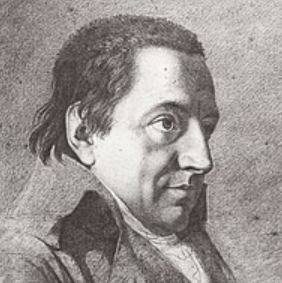
What man is to be, he must become; and as he is to be a being for himself, must become through himself. Nature completed all her works; only from man did she withdraw her hands, and precisely thereby gave him over to himself. Cultivability, as such, is the character of mankind. The impossibility of subsuming to the human form any other conception than that of his own Ego, is it, which forces every man inwardly to consider every other man as his equal.
▼
Source
source
P. 119
3 months 4 days ago
The Revolution and Hanover succession had been objects of the highest veneration to the old Whigs. They thought them not only proofs of the sober and steady spirit of liberty which guided their ancestors; but of their wisdom and provident care of posterity.-The modern Whigs have quite other notions of these events and actions. They do not deny that Mr. Burke has given truly the words of the acts of parliament which secured the succession, and the just sense of them. They attack not him but the law.
▼
Source
source
p. 436
2 months 2 weeks ago
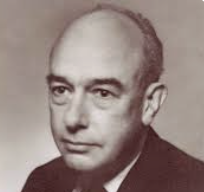
Nonbeing must in some sense be, otherwise what is it that there is not? This tangled doctrine might be nicknamed Plato's beard; historically it has proved tough, frequently dulling the edge of Occam's razor.
▼
Source
source
"On What There Is"

4 months 2 days ago
All human activities are equivalent ... and ... all are on principle doomed to failure.
▼
Source
source
Conclusion, II
Just now
What matter and opportunity [for thy activity] art thou avoiding? For what else are all these things, except exercises for the reason, when it has viewed carefully and by examination into their nature the things which happen in life? Persevere then until thou shalt have made these things thy own, as the stomach which is strengthened makes all things its own, as the blazing fire makes flame and brightness out of everything that is thrown into it.
▼
Source
source
X, 31

2 months 3 weeks ago
The victor and the one who keeps My works to the end: I will give him authority over the nations and He will shepherd them with an iron scepter; He will shatter them like pottery just as I have received this from My Father.

3 months 2 weeks ago
It is better wither to be silent, or to say things of more value than silence. Sooner throw a pearl at hazard than an idle or useless word; and do not say a little in many words, but a great deal in a few.
▼
Source
source
As quoted in A Dictionary of Thoughts: Being a Cyclopedia of Laconic Quotations from the Best Authors of the World, both Ancient and Modern (1908) by Tyron Edwards, p. 525
2 months 4 weeks ago
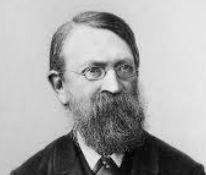
:...Vienna is the origin of so many schools of its own which were dominant in the 1920s. And one of the most fundamental and influential, in which we all were partially caught, was logical positivism. In fact, Mises' brother, Richard von Mises, became one of the leading figures. Now he and I all grew up in this Ernst Mach philosophy that ultimately everything must be rationally justified...
▼
Source
source
Friedrich Hayek, in 1985 interview, quoted in Alan Ebenstein, Hayek's Journey: The Mind of Friedrich Hayek (2003), Ch. 10. Epistemology, Psychology, and Methodology
5 months ago
...there are more things to admire in men than to despise.
2 weeks ago
A genius doesn't adjust his treatment of a theme to a tyrant's taste.

2 months 2 weeks ago
We men do nothing but lie and make ourselves important. Speech was invented for the purpose of magnifying all of our sensations and impressions - perhaps so that we could believe in them.
▼
Source
source
Niebla [Mist]
1 day ago
Men never respect what they have made themselves. This is why an elective king never possesses the moral power of a hereditary sovereign, because he is not noble enough, that is to say he does not possess that kind of greatness independent of men and that is the work of time.
▼
Source
source
p. 72

4 months 1 week ago
Read not to contradict and confute, nor to believe and take for granted, nor to find talk and discourse, but to weigh and consider.
▼
Source
source
Of Studies
3 months ago
True confessions are written with tears only. But my tears would drown the world, as my inner fire would reduce it to ashes.

4 months 1 week ago
The natural effort of every individual to better his own condition, when suffered to exert itself with freedom and security is so powerful a principle that it is alone, and without any assistance, not only capable of carrying on the society to wealth and prosperity, but of surmounting a hundred impertinent obstructions with which the folly of human laws too often incumbers its operations; though the effect of these obstructions is always more or less either to encroach upon its freedom, or to diminish its security.
▼
Source
source
Chapter V, paragraph 82.

3 months 1 week ago
When we consider the being and substance of that universe in which we are immutably set, we shall discover that neither we ourselves nor any substance doth suffer death; for nothing is in fact diminished in its substance, but all things, wandering through infinite space, undergo change of aspect.
▼
Source
source
Introductory Epistle
3 months 3 weeks ago
Force without wisdom falls of its own weight.

3 months 4 weeks ago
Christianity has functioned for the normative self-understanding of modernity as more than a mere precursor or a catalyst. Egalitarian universalism, from which sprang the ideas of freedom and social solidarity, of an antonomous conduct of life and emancipation, of the individual morality of conscience, human rights, and democracy, is the direct heir to the judaic ethic of justice and the Christian ethic of love. This legacy, substantially unchanged, has been the object of continual critical appropriation and reinterpretation. To this day, there is no alternative to it. And in the light of the current challenges of a postnational constellation, we continue to draw on the substance of this heritage. Everything else is just idle postmodern talk.
▼
Source
source
Habermas (2006) "Conversation about God and the World." Time of transitions. Cambridge: Polity Press, p. 150-151.
CivilSimian.com created by AxiomaticPanic, CivilSimian, Kalokagathia