


1 month 3 weeks ago
Quite often a man goes on for years imagining that the religious teaching that had been imparted to him since childhood is still intact, while all the time there is not a trace of it left in him.
▼
Source
source
Pt. I, ch. 1



3 months 3 weeks ago
Men fear thought as they fear nothing else on earth - more than ruin, more even than death. Thought is subversive and revolutionary, destructive and terrible; thought is merciless to privilege, established institutions, and comfortable habits; thought is anarchic and lawless, indifferent to authority, careless of the well-tried wisdom of the ages. Thought looks into the pit of hell and is not afraid. It sees man, a feeble speck, surrounded by unfathomable depths of silence; yet it bears itself proudly, as unmoved as if it were lord of the universe. Thought is great and swift and free, the light of the world, and the chief glory of man.
▼
Source
source
pp. 178-179

3 months 2 weeks ago
The chief function of the disciplinary power is to 'train', rather than to select and to levy; or, no doubt, to train in order to levy and select all the more. It does not link forces together in order to reduce them; it seeks to bind them together in such a way as to multiply and use them.
▼
Source
source
Part Three, The Means of Correct Training

2 months 1 week ago
Being good is just a matter of temperament in the end.
▼
Source
source
The Nice and the Good (1968), ch. 14, p. 127. Murdoch attributed this opinion to her character Kate Gray. It was not her own.

4 months 3 weeks ago
She has forgotten speech and language and the restlessness of thoughts, has forgotten what is even greater restlessness, this self, has forgotten herself-she, the lost woman, who is now lost in her Savior, who, lost in him, rests at his feet-like a picture. He speaks about her; he says: Her many sins are forgiven her, because she loved much. Although she is present, it is almost as if she were absent; it is almost as if he changed her into a picture, a parable.

1 week 6 days ago
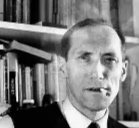
The work we desire and prize is not the courage to die decently, but to live manfully.
2 weeks ago
Culture, when it loses its sacred sense, loses all sense. With the disappearance of the sacred, which imposed limits to the perfection which could be attained by the profane, arises one of the most dangerous illusions of our civilization-the illusion that there are no limits to the changes that human life can undergo, that society is 'in principle' an endlessly flexible thing, and that to deny this flexibility and this perfectibility is to deny man's total autonomy and thus to deny man himself.
▼
Source
source
The Revenge of the Sacred in Secular Culture

4 months 1 week ago
Charity, by which God and neighbor are loved, is the most perfect friendship.
▼
Source
source
Disputed Questions: On Charity, c. 1270

4 months 2 weeks ago
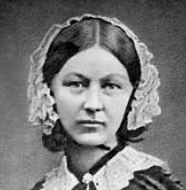
No matter how outrageous a lie may be, it will be accepted if stated loudly enough and often enough.
2 months 4 days ago
Law is the continuous manifestation of God's presence - not reason for believing him absent. Great confusion arises from our using the same word law in two totally distinct senses ... as the cause and the effect. It is said that to "explain away" everything by law is to enable us to do without God. But law is no explanation of anything; law is simply a generalization, a category of facts. Law is neither a cause, nor a reason, nor a power, nor a coercive force. It is nothing but a general formula, a statistical table. Law brings us continually back to God instead of carrying us away from him.
▼
Source
source
Suggestions for Thought : Selections and Commentaries (1994), edited by Michael D. Calabria and Janet A. MacRae, p. 41

4 months 2 weeks ago
Great feelings take with them their own universe, splendid or abject. They light up with their passion an exclusive world in which they recognize their climate. There is a universe of jealousy, of ambition, of selfishness or generosity. A universe in other words a metaphysic and an attitude of mind.

2 months 2 weeks ago
Knowledge, having irritated and stimulated our appetite for power, will lead us inexorably to our ruin.

3 months 4 weeks ago
We were halves throughout, and to that degree that, methinks, by outliving him I defraud him of his part.
▼
Source
source
Ch. 27. Of Friendship, tr. Cotton, rev. W. Hazlitt, 1842

3 months 3 weeks ago
Free in this world as the birds in the air, disengaged from every kind of chains, those who have practiced the Yoga gather in Brahmin the certain fruit of their works. Depend upon it; rude and careless as I am, I would fain practice the yoga faithfully. This Yogi, absorbed in contemplation, contributes in his degree to creation; he breathes a divine perfume, he heard wonderful things. Divine forms traverse him without tearing him and he goes, he acts as animating original matter. To some extent, and at rare intervals, even I am a Yogi.
▼
Source
source
Letter to H. G. O. Blake, November 20, 1849
2 months 2 weeks ago
It is not by genius, it is by suffering, and suffering alone, that one ceases to be a marionette.
1 week 6 days ago
Nature admits no lie.
▼
Source
source
Latter Day Pamphlet, No. 5.

3 months 3 weeks ago
Belief in God and a future life makes it possible to go through life with less of stoic courage than is needed by skeptics. A great many young people lose faith in these dogmas at an age at which despair is easy, and thus have to face a much more intense unhappiness than that which falls to the lot of those who have never had a religious upbringing. Christianity offers reasons for not fearing death or the universe, and in so doing it fails to teach adequately the virtue of courage. The craving for religious faith being largely an outcome of fear, the advocates of faith tend to think that certain kinds of fear are not to be deprecated. In this, to my mind, they are gravely mistaken. To allow oneself to entertain pleasant beliefs as a means of avoiding fear is not to live in the best way. In so far as religion makes its appeal to fear, it is lowering to human dignity.
▼
Source
source
p. 107

4 months 1 day ago
You must acquire the best knowledge first, and without delay; it is the height of madness to learn what you will later have to unlearn.
▼
Source
source
Letter to Christian Northoff (1497), as translated in Collected Works of Erasmus (1974), p. 114

1 week ago
Or, if you enjoy living with Greeks also, spend your time with Socrates and with Zeno: the former will show you how to die if it be necessary; the latter how to die before it is necessary. Live with Chrysippus, with Posidonius: they will make you acquainted with things earthly and things heavenly; they will bid you work hard over something more than neat turns of language and phrases mouthed forth for the entertainment of listeners; they will bid you be stout of heart and rise superior to threats. The only harbour safe from the seething storms of this life is scorn of the future, a firm stand, a readiness to receive Fortune's missiles full in the breast, neither skulking nor turning the back.

2 weeks 3 days ago
Finally, and... somewhat belatedly, there is the growing of a left that... has now been energized and is increasingly vocal... in certain quarters of the cultural community, in the arts and the universities, in Hollywood, in the media... where in some versions it also engages in a kind of illiberal... politics.
▼
Source
source
20:21

3 months 3 weeks ago
There will always be some people who think for themselves, even among the self-appointed guardians of the great mass who, after having thrown off the yoke of immaturity themselves, will spread about them the spirit of a reasonable estimate of their own value and of the need for every man to think for himself.

2 months 3 weeks ago
He was as great as a man can be without morality.
▼
Source
source
Said of Napoleon (1842)
1 month 3 weeks ago
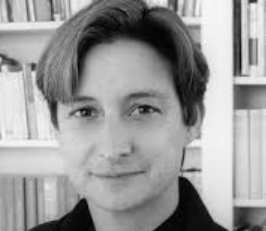
Quite apart from assiduous efforts to restrict the use of violence as means rather than an end, the actualization of violence as a means can inadvertently become its own end, producing new violence, producing violence anew, reiterating the license, and licensing further violence. Violence does not exhaust itself in the realization of a just end; rather, it renews itself in directions that exceed both deliberate intention and instrumental schemes. In other words, by acting as if the use of violence can be a means to achieve a nonviolent end, one imagines that the practice of violence does not in the act posit violence as its own end. The technē is undermined by the praxis, and the use of violence only makes the world into a more violent place, by bringing more violence into the world.
▼
Source
source
p. 20
2 months 3 weeks ago
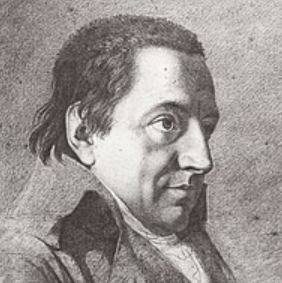
I have distinctly announced the grounds upon which I regard the Apostle John as the only teacher of true Christianity:-namely, that the Apostle Paul and his party, as the authors of the opposite system of Christianity, remained half Jews, and left unaltered the fundamental error of Judaism as well as of Heathenism, which we must afterwards notice. For the present the following may be enough: -It is only with John that the philosopher can deal, for he alone has respect for Reason, and appeals to that evidence which alone has weight with the philosopher-the internal. "If any man will do the will of him that sent me, he shall know of the doctrine, whether it be of God." But this Will of God, accord ing to John, is, that we should truly believe in God, and in Jesus Christ whom he hath sent. The other promulgators of Christianity, however, rely upon the external evidence of Miracle, which, to us at least, proves nothing.
▼
Source
source
P. 96-97
2 months 2 weeks ago
To have failed in everything, always, out of a love of discouragement.

2 weeks 4 days ago
The straightening board was created because of warped wood, and the plumb line came into being because of things that are not straight. Rulers are established and ritual and rightness are illuminated because the nature is evil.
▼
Source
source
Sources of Chinese Tradition (1999), vol. 1, p. 182
3 months 1 week ago
Let's put a limit to the scramble for money. ... Having got what you wanted, you ought to begin to bring that struggle to an end.
▼
Source
source
Book I, satire i, lines 92-94, as translated by N. Rudd
2 months 4 days ago
I believe that the man choosing progress can find a new unity through the full development of all his human forces, which are produced in three orientations. These can be presented separately or together: biophilia, love for humanity and nature, and independence and freedom.
4 months 3 weeks ago
Aristotle's view that philosophy begins with wonder, not as in our day with doubt, is a positive point of departure for philosophy. Indeed, the world will no doubt learn that it does not do to begin with the negative, and the reason for success up to the present is that philosophers have never quite surrendered to the negative and thus have never earnestly done what they have said. They merely flirt with doubt.
2 months 1 day ago
People nowadays have such high hopes of America and the political conditions obtaining there that one might say the desires, at least the secret desires, of all enlightened Europeans are deflected to the west, like our magnetic needles.
▼
Source
source
G 2
2 months 4 days ago
In spite of the universalistic spirit of the monotheistic Western religions and of the progressive political concepts that are expressed in the idea "that all men are created equal," love for mankind has not become a common experience. Love for mankind is looked upon as an achievement which, at best, follows love for an individual or as an abstract concept to be realized only in the future. But love for man cannot be separated from love for one individual. To love one person productively means to be related to his human core, to him as representing mankind. Love for one individual, in so far as it is divorced from love for man, can refer only to the superficial and to the accidental; of necessity it remains shallow.
▼
Source
source
Ch. 2
1 month 1 week ago
In all ages a chief cause of the intestine disorders of states has been that the natural distribution of power and the legal distribution of power have not corresponded with each other.
▼
Source
source
Speech in the House of Commons (28 February 1832), quoted in Speeches of the Right Honourable T. B. Macaulay, M.P. (1854), p. 91

3 months 2 weeks ago
Christianity has functioned for the normative self-understanding of modernity as more than a mere precursor or a catalyst. Egalitarian universalism, from which sprang the ideas of freedom and social solidarity, of an antonomous conduct of life and emancipation, of the individual morality of conscience, human rights, and democracy, is the direct heir to the judaic ethic of justice and the Christian ethic of love. This legacy, substantially unchanged, has been the object of continual critical appropriation and reinterpretation. To this day, there is no alternative to it. And in the light of the current challenges of a postnational constellation, we continue to draw on the substance of this heritage. Everything else is just idle postmodern talk.
▼
Source
source
Habermas (2006) "Conversation about God and the World." Time of transitions. Cambridge: Polity Press, p. 150-151.

2 months 2 weeks ago
We reason deeply, when we forcibly feel.
▼
Source
source
Letter 19
2 weeks 3 days ago
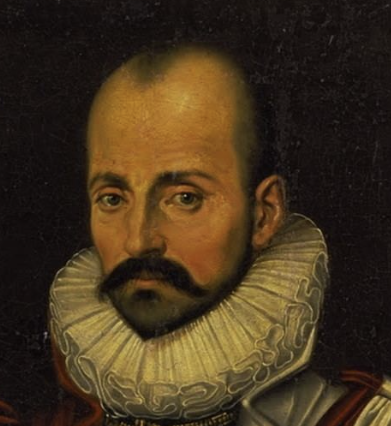
Tyrants would distribute largess, a bushel of wheat, a gallon of wine, and a sesterce: and then everybody would shamelessly cry, "Long live the King!" The fools did not realize that they were merely recovering a portion of their own property, and that their ruler could not have given them what they were receiving without having first taken it from them.
▼
Source
source
Part 2
4 months 2 weeks ago
Nonsense. You are a military man and should know better. If there is one science into which man has probed continuously and successfully, it is that of military technology. No potential weapon would remain unrealized for ten thousand years.

4 months 1 day ago
Another argument of hope may be drawn from this - that some of the inventions already known are such as before they were discovered it could hardly have entered any man's head to think of; they would have been simply set aside as impossible. For in conjecturing what may be men set before them the example of what has been, and divine of the new with an imagination preoccupied and colored by the old; which way of forming opinions is very fallacious, for streams that are drawn from the springheads of nature do not always run in the old channels.
▼
Source
source
Aphorism 109
3 months 3 weeks ago
The plan we are advocating amounts essentially to this: that a certain small income, sufficient for necessaries, should be secured to all, whether they work or not, and that a larger income, as much larger as might be warranted by the total amount of commodities produced, should be given to those who are willing to engage in some work which the community recognizes as useful.
▼
Source
source
Ch. IV: Work and Pay, discussing Universal Basic Income (UBI)
3 months 3 weeks ago
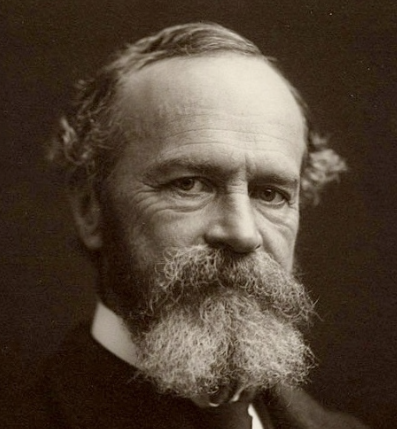
If we remembered everything, we should on most occasions be as ill off as if we remembered nothing. It would take as long for us to recall a space of time as it took the original time to elapse, and we should never get ahead with our thinking. All recollected times undergo, accordingly, what M. Ribot calls foreshortening; and this foreshortening is due to the omission of an enormous number of the facts which filled them.
▼
Source
source
Ch. 16

2 months 2 weeks ago
When there were gathered together an innumerable multitude of people, insomuch that they trode one upon another, he began to say unto his disciples first of all, Beware ye of the leaven of the Pharisees, which is hypocrisy. For there is nothing covered, that shall not be revealed; neither hid, that shall not be known. Therefore whatsoever ye have spoken in darkness shall be heard in the light; and that which ye have spoken in the ear in closets shall be proclaimed upon the housetops. And I say unto you my friends, Be not afraid of them that kill the body, and after that have no more that they can do. But I will forewarn you whom ye shall fear: Fear him, which after he hath killed hath power to cast into hell; yea, I say unto you, Fear him.
▼
Source
source
12:1-5

2 weeks 4 days ago
It is not easy for any of us to stop measuring the world against the standard of Europe, but the concept of the multitude requires it of us. It is a challenge. Embrace it.

4 weeks 1 day ago
If you want to understand the beliefs that are shaping global politics, read the Book of Revelation.
▼
Source
source
Review: Sacred Causes by Michael Burleigh

3 months 3 weeks ago
Shallow men believe in luck, believe in circumstances...Strong men believe in cause and effect.
▼
Source
source
Worship

3 months 1 week ago
Now his principal doctrines were these. That atoms and the vacuum were the beginning of the universe; and that everything else existed only in opinion. (trans. Yonge 1853) The first principles of the universe are atoms and empty space; everything else is merely thought to exist.
▼
Source
source
(trans. by Robert Drew Hicks 1925) Often paraphrased as "Nothing exists except atoms and empty space; everything else is opinion."

4 months 1 week ago
No matter how busy you may think you are, you must find time for reading, or surrender yourself to self-chosen ignorance.
2 months 2 weeks ago
The proletariat is that class in society which lives entirely from the sale of its labor and does not draw profit from any kind of capital; whose weal and woe, whose life and death, whose sole existence depends on the demand for labor - hence, on the changing state of business, on the vagaries of unbridled competition.

3 months 3 weeks ago
"Ah, Psyche," I said, "have I made you so little happy as that?"
▼
Source
source
Orual
CivilSimian.com created by AxiomaticPanic, CivilSimian, Kalokagathia