

3 months 3 weeks ago
And since these things are so, we must suppose that there are contained many things and of all sorts in the things that are uniting, seeds of all things, with all sorts of shapes and colours and savours.
▼
Source
source
Frag. B 4, quoted in John Burnet's Early Greek Philosophy, (1920), Chapter 6.
1 week 6 days ago
A good traveler is one who does not know where he is going to, and a perfect traveler does not know where he came from.
▼
Source
source
p. 332

4 months 1 week ago
God's justice and His power are inseparable; 'tis in vain we invoke His power in an unjust cause. We are to have our souls pure and clean, at that moment at least wherein we pray to Him, and purified from all vicious passions; otherwise we ourselves present Him the rods wherewith to chastise us; instead of repairing anything we have done amiss, we double the wickedness and the offence when we offer to Him, to whom we are to sue for pardon, an affection full of irreverence and hatred. Which makes me not very apt to applaud those whom I observe to be so frequent on their knees, if the actions nearest to the prayer do not give me some evidence of amendment and reformation
▼
Source
source
Ch. 56. Of Prayers, tr. Cotton, rev. W. Carew Hazlitt, 1877

4 months 6 days ago
Some modern philosophers have gone so far as to say that words should never be confronted with facts but should live in a pure, autonomous world where they are compared only with other words. When you say, 'the cat is a carnivorous animal,' you do not mean that actual cats eat actual meat, but only that in zoology books the cat is classified among carnivora. These authors tell us that the attempt to confront language with fact is 'metaphysics' and is on this ground to be condemned. This is one of those views which are so absurd that only very learned men could possibly adopt them.
▼
Source
source
p. 110

2 months 2 weeks ago
When we can't dream any longer we die.
▼
Source
source
Quoted by Margaret C. Anderson in "Emma Goldman in Chicago", Mother Earth magazine

4 months 1 day ago
Make sure that your religion is a matter between you and God only.
▼
Source
source
Comment to Maurice O'Connor Drury, as quoted in Wittgenstein Reads Freud : The Myth of the Unconscious (1996) by Jacques Bouveresse, as translated by Carol Cosman, p. 14
2 months 4 weeks ago
To those who hold abstractly to Hegel's political philosophy, Hobhouse replies that the very fact of class society, the patent influence of class interests on the state, renders it impossible to designate the state as expressive of the real will of individuals as a whole. 'Wherever a community is governed by one class or one race, the remaining class or race is permanently in the position of having to take what it can get.'
▼
Source
source
P. 396
5 days ago
When, in the Course of human events, it becomes necessary for one people to dissolve the political bands which have connected them with another, and to assume among the powers of the earth, the separate and equal station to which the Laws of Nature and of Nature's God entitle them, a decent respect to the opinions of mankind requires that they should declare the causes which impel them to the separation.

5 months 3 days ago
Earth governments in moments of stress are not famous for being reasonable.

4 months 6 days ago
If production be capitalistic in form, so, too, will be reproduction.
▼
Source
source
Vol. I, Ch. 23, pg. 620.

4 months ago
Most of the texts... preserved from this period come from writers... either... affiliated with the aristocratic party, or... distrustful of democratic or radically democratic institutions.
4 months 6 days ago
Force is the midwife of every old society pregnant with a new one. It is itself an economic power.
▼
Source
source
Vol. I, Ch. 31, pg. 824

3 months 1 week ago
I cannot help fearing that men may reach a point where they look on every new theory as a danger, every innovation as a toilsome trouble, every social advance as a first step toward revolution, and that they may absolutely refuse to move at all.
▼
Source
source
Book Three, Chapter XXI.
2 weeks 6 days ago
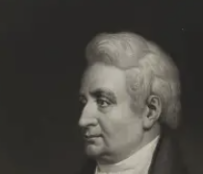
It is always right that a man should be able to render a reason for the faith that is within him.
▼
Source
source
Vol. I, ch. 3, p. 91

2 months 3 weeks ago
Gregorian chant, Romanesque architecture, the Iliad, the invention of geometry were not, for the people through whom they were brought into being and made available to us, occasions for the manifestation of personality.
▼
Source
source
p. 55
2 weeks 2 days ago
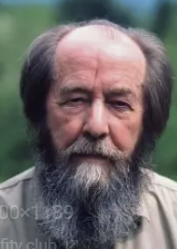
We, holding Art in our hands, confidently consider ourselves to be its masters; boldly we direct it, we renew, reform and manifest it; we sell it for money, use it to please those in power; turn to it at one moment for amusement - right down to popular songs and night-clubs, and at another - grabbing the nearest weapon, cork or cudgel - for the passing needs of politics and for narrow-minded social ends. But art is not defiled by our efforts, neither does it thereby depart from its true nature, but on each occasion and in each application it gives to us a part of its secret inner light.

4 months 5 days ago
Character is higher than intellect...A great soul will be strong to live, as well as strong to think.
▼
Source
source
par. 27
2 months 1 day ago
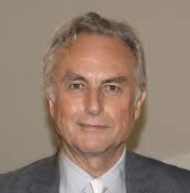
We humans are an extremely important manifestation of the replication bomb, because it is through us - through our brains, our symbolic culture and our technology - that the explosion may proceed to the next stage and reverberate through deep space.
▼
Source
source
Ch. 5: The Replication Bomb
4 months 4 days ago
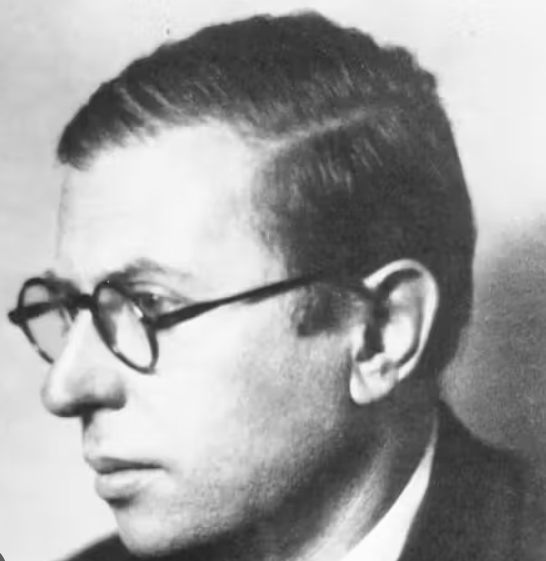
A writer who takes political, social or literary positions must act only with the means that are his. These means are the written words.
▼
Source
source
Refusing the Nobel Prize, New York Times
3 months 3 weeks ago
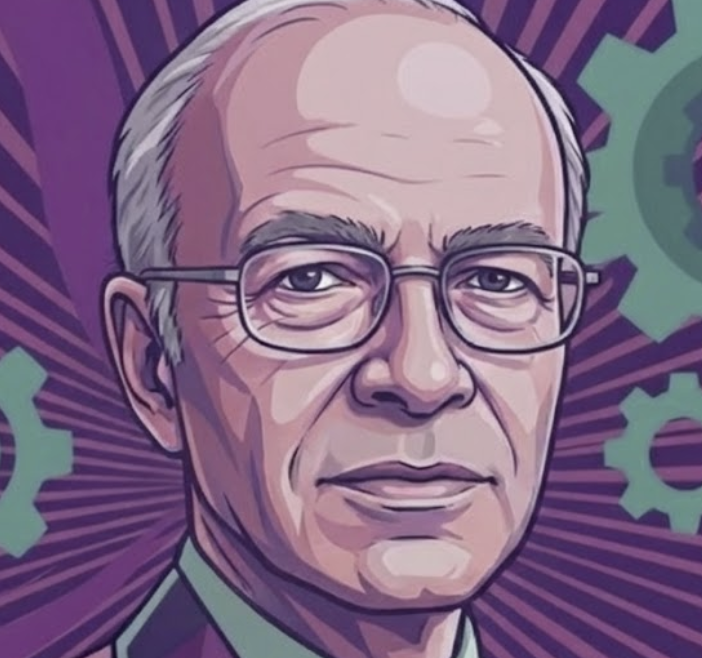
It is easy for us to criticize the prejudices of our grandfathers, from which our fathers freed themselves. It is more difficult to search for prejudices among the beliefs and values that we hold.
▼
Source
source
Ch. 3: Equality for Animals? (p. 49)

4 months 1 week ago
The more one presupposes that his own power will suffice him to realize what he desires the more practical is that desire. When I treat a man contemptuously, I can inspire him with no practical desire to appreciate my grounds of truth. When I treat any one as worthless, I can inspire him with no desire to do right.
▼
Source
source
Part III : Selection on Education from Kant's other Writings, Ch. I Pedagogical Fragments, # 15

4 months 6 days ago
It is so rare to meet with a man out-doors who cherishes a worthy thought in his mind, which is independent of the labor of his hands.
4 weeks 1 day ago
It always seems to me extreme rashness on the part of some when they want to make human abilities the measure of what nature can do. On the contrary, there is not a single effect in nature, even the least that exists, such that the most ingenious theorists can arrive at a complete understanding of it. This vain presumption of understanding everything can have no other basis than never understanding anything. For anyone who had experienced just once the perfect understanding of one single thing, and had truly tasted how knowledge is accomplished, would recognize that of the infinity of other truths he understands nothing.
▼
Source
source
Day One

3 months 1 day ago
Tolerance - the function of an extinguished ardor - tolerance cannot seduce the young.

2 months 3 weeks ago
But it has been necessary, for the benefit of the social order, to convert religion into a kind of police system, and hence hell. Oriental or Greek Christianity is predominantly eschatological, Protestantism predominantly ethical, and Catholicism is a compromise between the two, although with the eschatological element predominating.
4 months ago
We are aware of all the inconveniences of prison, and that it is dangerous when it is not useless. And yet one cannot 'see' how to replace it. It is the detestable solution, which one seems unable to do without.
▼
Source
source
Part Four, Complete and austere institutions
3 months 6 days ago
It cannot at this time be too often repeated; line upon line; precept upon precept; until it comes into the currency of a proverb, To innovate is not to reform.
▼
Source
source
p. 20
4 months 6 days ago
Those things which now most engage the attention of men, as politics and the daily routine, are, it is true, vital functions of human society, but should be unconsciously performed, like the corresponding functions of the physical body. They are infra-human, a kind of vegetation. I sometimes awake to a half-consciousness of them going on about me, as a man may become conscious of some of the processes of digestion in a morbid state, and so have the dyspepsia, as it is called.
▼
Source
source
p. 495

4 months ago
The paradox of race in America is that our common destiny is more pronounced and imperiled precisely when our divisions are deeper.
▼
Source
source
(p4)

2 months 5 days ago
Truth is ... one approach to the attainment of the good, but in and of itself, it is neither the good nor the beautiful ... Socrates, Pascal, and others regarded knowledge of the truth with regard to purposeless objects as incongruous with the good ... [by] exposing deception, truth destroys illusion, which is the principle attribute of beauty.
4 months 5 days ago
A man contains all that is needful to his government within himself. He is made a law unto himself. All real good or evil that can befal him must be from himself. He only can do himself any good or any harm. Nothing can be given to him or can taken from him but always there is a compensation.. There is a correspondence between the human soul and everything that exists in the world; more properly, everything that is known to man. Instead of studying things without the principles of them, all may be penetrated unto with him. Every act puts the agent in a new position. The purpose of life seems to be to acquaint a man with himself. He is not to live the future as described to him but to live the real future to the real present. The highest revelation is that God is in every man.
▼
Source
source
September 8, 1833
3 months 5 days ago
The power of thought is the light of knowledge, the power of will is the energy of character, the power of heart is love. Reason, love and power of will are perfections of man.
▼
Source
source
Introduction, Z. Hanfi, trans., in The Fiery Brook (1972), p. 99
4 months 4 days ago
A sensible human once said, "If people knew how much ill-feeling unselfishness occasions, it would not be so often recommended from the pulpit"; and again, "She's the sort of woman who lives for others-you can always tell the others by their hunted expression."
▼
Source
source
Letter XXVI
2 months 2 weeks ago
With all our boasted reforms, our great social changes, and our far-reaching discoveries, human beings continue to be sent to the worst of hells, wherein they are outraged, degraded, and tortured, that society may be "protected" from the phantoms of its own making.

3 months 1 week ago
Not to be content with Life is the unsatisfactory state of those which destroy themselves; who being afraid to live, run blindly upon their own Death, which no Man fears by Experience.
4 months 1 week ago
Women are the most charitable creatures, and the most troublesome. He who shuns women passes up the trouble, but also the benefits. He who puts up with them gains the benefits, but also the trouble. As the saying goes, there's no honey without bees.
▼
Source
source
Act III, scene iv
4 months 6 days ago
The need of a constantly expanding market for its products chases the bourgeoisie over the whole surface of the globe. It must nestle everywhere, settle everywhere, establish connections everywhere.
▼
Source
source
Section 1, paragraph 19

4 months 1 week ago
It is the privilege of true genius, and certainly of the genius that opens a new road, to make without punishment great mistakes.
▼
Source
source
"Siècle de Louis XIV," ch. 32 (1751), qtd. in Arthur Schopenhauer, "The World as Will and Representation," Criticism of the Kantian philosophy, 1818
4 months 6 days ago
The force of mind is only as great as its expression; its depth only as deep as its power to expand and lose itself.
▼
Source
source
Preface (J. B. Baillie translation), § 10
4 months 4 days ago
Justice is the first virtue of social institutions, as truth is of systems of thought. A theory however elegant and economical must be rejected or revised if it is untrue; likewise laws and institutions no matter how efficient and well-arranged must be reformed or abolished if they are unjust. Each person possesses an inviolability founded on justice that even the welfare of society as a whole cannot override. For this reason justice denies that the loss of freedom for some is made right by a greater good shared by others. It does not allow that the sacrifices imposed on a few are outweighed by the larger sum of advantages enjoyed by many. Therefore in a just society the liberties of equal citizenship are taken as settled; the rights secured by justice are not subject to political bargaining or to the calculus of social interests.
▼
Source
source
Chapter I, Section 1, pg. 3-4
4 months 4 days ago
There is a divergence between private and social accounting that the market fails to register. One essential task of law and government is to institute the necessary conditions.
▼
Source
source
Chapter V, Section 42, p. 268
3 months 5 days ago
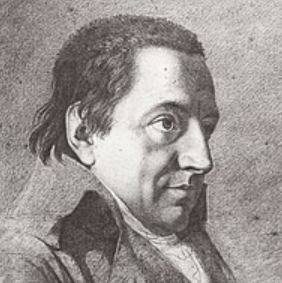
When one rational being affects another rational being as mere matter, then the lower sense of that being is also affected, it is true, and is so affected necessarily and altogether independently of the freedom of that being, (as the lower sense is indeed always affected;) but it is not to be assumed that this affection was in the intention of the person who produced it. His intention was merely to attain his purpose, to express his conception in matter, and he never took into consideration whether that matter would feel it or not. Hence, the reciprocal influence of rational beings upon each other, as such, always occurs by means of the higher sense; for only the higher sense is one which cannot be affected without having been presupposed. Our criterion of this reciprocal influence remains, therefore, correct.
▼
Source
source
P. 108
4 months 1 week ago
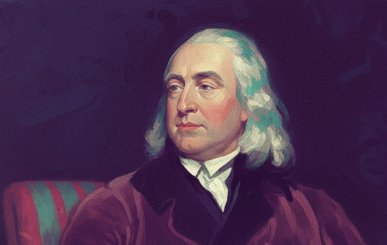
In principle and in practice, in a right track and in a wrong one, the rarest of all human qualities is consistency.
▼
Source
source
Ch. 1: Of the Principle of Utility
5 days ago
Politics, like religion, hold up the torches of martyrdom to the reformers of error.
▼
Source
source
Letter to James Ogilvie
4 months 5 days ago
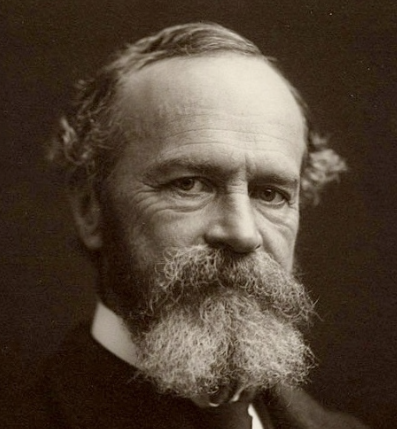
The difference between the first- and second-best things in art absolutely seems to escape verbal definition - it is a matter of a hair, a shade, an inward quiver of some kind - yet what miles away in the point of preciousness!
▼
Source
source
To Henry Rutgers Marshall, 7 February 1899

2 months 4 weeks ago
It is not meet to take the children's bread, and to cast it to dogs.
▼
Source
source
15:26 (KJV)
2 weeks 6 days ago
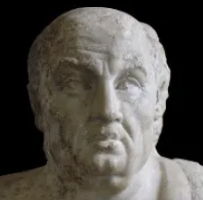
Imagine that nature is saying to us: "Those things of which you complain are the same for all. I cannot give anything easier to any man, but whoever wishes will make things easier for himself." In what way? By equanimity. You must suffer pain, and thirst, and hunger, and old age too, if a longer stay among men shall be granted you; you must be sick, and you must suffer loss and death.

4 months 3 weeks ago
He who is not satisfied with a little, is satisfied with nothing.
4 months 4 days ago
Don't you feel the same way? When I cannot see myself, even though I touch myself, I wonder if I really exist.
▼
Source
source
Estelle, discovering that there are no mirrors in Hell, Act 1, sc. 5


CivilSimian.com created by AxiomaticPanic, CivilSimian, Kalokagathia