


3 months 3 weeks ago
Were a stranger to drop on a sudden into this world, I would show him, as a specimen of its ills, a hospital full of diseases, a prison crowded with malefactors and debtors, a field of battle strewed with carcasses, a fleet foundering in the ocean, a nation languishing under tyranny, famine, or pestilence. To turn the gay side of life to him, and give him a notion of its pleasures; whither should I conduct him? to a ball, to an opera, to court? He might justly think, that I was only showing him a diversity of distress and sorrow.
▼
Source
source
Demea to Philo, Part X
1 month 2 weeks ago
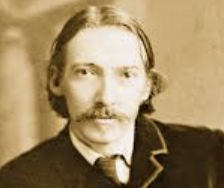
A happy man or woman is a better thing to find than a five-pound note. He or she is a radiating focus of goodwill; and their entrance into a room is as though another candle had been lighted. We need not care whether they could prove the forty-seventh proposition; they do a better thing than that, they practically demonstrate the great Theorem of the Liveableness of Life.
▼
Source
source
An Apology for Idlers.

4 months 1 week ago
The Superior Man is all-embracing and not partial. The inferior man is partial and not all-embracing.

3 months 2 weeks ago
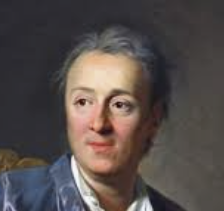
The worker's existence is thus brought under the same condition as the existence of every other commodity. The worker has become a commodity, and it is a bit of luck for him if he can find a buyer, And the demand on which the life of the worker depends, depends on the whim of the rich and the capitalists.
▼
Source
source
Wages of Labor, p. 20.
2 months 3 weeks ago
Only a very bad theologian would confuse the certainty that follows revelation with the truths that are revealed. They are entirely different things.
▼
Source
source
Apology for the Abbé de Prades
3 months 2 weeks ago
The executive of the modern State is but a committee for managing the common affairs of the whole bourgeoisie.
▼
Source
source
As quoted in the Communist Manifesto (1848) p. 7

2 months 5 days ago
But if ether is nothing but an hypothesis explanatory of light, air on the other hand, is a thing that is directly felt; and even if it did not enable us to explain the phenomenon of sound, we should nevertheless always be directly aware of it, and above all, of the lack of it in moments of suffocation or air-hunger. And in the same way God Himself, not the idea of God, may become a reality that is immediately felt; and even though the idea of God does not enable us to explain either the existence or essence of the Universe, we have at times the direct feeling of God, above all in moments of spiritual suffocation. And the feeling, mark it well, for all that is tragic in it and the whole tragic sense of life is founded upon this - this feeling is a feeling of hunger for God, of the lack of God. To believe in God is, in the first instance... to wish that there may be a God, to be unable to live without Him.
3 months 2 weeks ago
In capitalist society however where social reason always asserts itself only post festum great disturbances may and must constantly occur.
▼
Source
source
Vol. II, Ch. XVI, p. 319.
2 months 1 week ago
De Lubac discusses an atheism which means to suppress this searching, he says, "even including the problem as to what is responsible for the birth of God in human consciousness."
▼
Source
source
p. 45
3 days ago
I do not mean to be disrespectful, but the attempt of the Lords to stop the progress of reform reminds me very forcibly of the great storm at Sidmouth, and of the conduct of the excellent Mrs Partington on that occasion. In the winter of 1824 there set in a great flood upon that town - the tide rose to an incredible height - the waves rushed in upon the houses, and everything was threatened with destruction. In the midst of this sublime and terrible storm, Dame Partington, who lived upon the beach, was seen at the door of her house with mop and pattens, trundling her mop, squeezing out the sea-water, and vigorously pushing away the Atlantic Ocean. The Atlantic was roused; Mrs. Partington's spirit was up. But I need not tell you that the contest was unequal.
▼
Source
source
The Atlantic Ocean beat Mrs. Partington. Speech at Taunton

3 months 2 weeks ago
Every intrusion of the spirit that says, "I'm as good as you" into our personal and spiritual life is to be resisted just as jealously as every intrusion of bureaucracy or privilege into our politics. Hierarchy within can alone preserve egalitarianism without. Romantic attacks on democracy will come again. We shall never be safe unless we already understand in our hearts all that the anti-democrats can say, and have provided for it better than they. Human nature will not permanently endure flat equality if it is extended from its proper political field into the more real, more concrete fields within. Let us wear equality; but let us undress every night.

1 month 3 weeks ago
One reason an egalitarian approach to the value of life is important is that it draws from ideals of radical democracy at the same time that it enters into ethical considerations about how best to practice nonviolence. The institutional life of violence will not be brought down by a prohibition, but only by a counter-institutional ethos and practice.
▼
Source
source
p. 61

3 months 3 weeks ago
Furthermore, how will you endure [the Romanists'] terrible idolatries? It was not enough that they venerated the saints and praised God in them, but they actually made them into gods. They put that noble child, the mother Mary, right into the place of Christ. They fashioned Christ into a judge and thus devised a tyrant for anguished consciences, so that all comfort and confidence was transferred from Christ to Mary, and then everyone turned from Christ to his particular saint. Can anyone deny this? Is it not true?
▼
Source
source
Luther's Works, 47:45; cf. also Anderson, Stafford & Burgess (1992), p. 29

1 month 1 week ago
Statues are not about history. We don't memorialize each piece of history. We memorialize things that we want to value and things that we want our children to walk by and say "This person embodied the values that I care about." Therefore, statues are about values not about history.
3 months 2 weeks ago
John - I'm trying to find the Island in the West. Sensible - You refer, no doubt to some aesthetic experience.
▼
Source
source
Pilgrim's Regress 77

4 months 2 weeks ago
For whoever has what he has from the God himself clearly has it at first hand; and he who does not have it from the God himself is not a disciple. Let us assume that it is otherwise, that the contemporary generation of disciples had received the condition from the God, and that the subsequent generations were to receive it from these contemporaries, what would follow?
2 months 1 week ago
The remembrance of forbidden fruit is the earliest thing in the memory of each of us, as it is in that of mankind.
▼
Source
source
Chapter I: Moral Obligation
3 months 2 weeks ago
And O! how the mind is here washed clean of all its early ingrafted Jewish superstition ! It is the most profitable and elevating reading which is possible in the world. It has been the solace of my life, and will be the solace of my death.
▼
Source
source
About the Upanishads. Arthur Schopenhauer, quoted in Europe Looks At India by Mukherhi, D.P.
2 months 5 days ago
The vanity of the passing world and love are the two fundamental and heart-penetrating notes of true poetry. And they are two notes of which neither can be sounded without causing the other to vibrate. The feeling of the vanity of the passing world kindles love in us, the only thing that triumphs over the vain and transitory, the only thing that fills life again and eternalizes it.

4 months 1 week ago
Although the Law of Reason is common, the majority of people live as though they had an understanding of their own.
2 months 2 weeks ago
Third, these general ideas are not mere words, nor do they consist in this, that certain concrete facts will every time happen under certain descriptions of conditions; but they are just as much, or rather far more, living realities than the feelings themselves out of which they are concreted. And to say that mental phenomenon are governed by law does not mean merely that they are describable by a general formula; but that there is a living idea, a conscious continuum of feeling which pervades them, and to which they are docile.
4 months 2 weeks ago
As for the life of money-making, it is one of constraint, and wealth is manifestly not the good of which we are in search, for it is only useful as a means to something else, and for this reason there is less to be said for it than for the ends mentioned before, which are, at any rate, desired for their own sakes.

2 months 3 weeks ago
The noblest Digladiation is in the Theatre of ourselves.
▼
Source
source
Part I, Section XXIV

1 month 3 weeks ago
You need to know enough philosophy so that the methods of logical analysis are available to you to be used as a tool. One of the most depressing things about educated people today is that so few of them, even among professional intellectuals, are able to follow the steps of a simple logical argument.
3 months 2 days ago
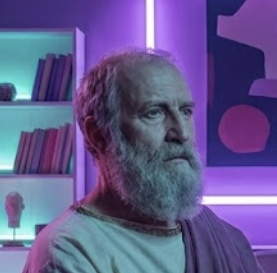
The fleshless diet contributes to health and to a suitable endurance of hard work in philosophy.
▼
Source
source
1, 2, 1
3 months 2 weeks ago
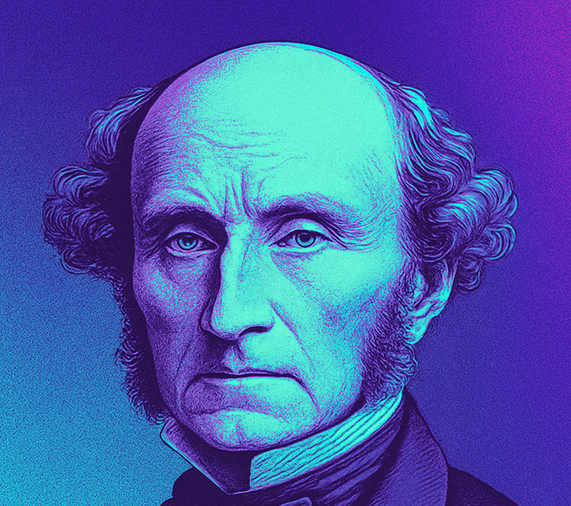
But, in my state of mind, this appearance of superiority to illusion added to the effect which Bentham's doctrines produced on me, by heightening the impression of mental power, and the vista of improvement which he did open was sufficiently large and brilliant to light up my life, as well as to give a definite shape to my aspirations.
▼
Source
source
(p. 67)

3 months 3 weeks ago
Some books are to be tasted, others to be swallowed, and some few to be chewed and digested; that is, some books are to be read only in parts; others to be read, but not curiously; and some few to be read wholly, and with diligence and attention.
▼
Source
source
Of Studies
1 month 2 weeks ago
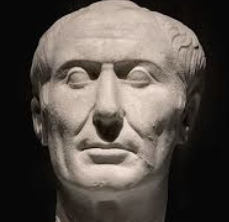
We desire nothing so much as what we ought not to have.
▼
Source
source
Maxim 559 [Mimi et aliorum sententiae 677]

2 months 1 week ago
The sabbath was made for man, and not man for the sabbath.
▼
Source
source
Mark 2:27 (KJV)

3 months 3 weeks ago
The next thing is by gentle degrees to accustom children to those things they are too much afraid of. But here great caution is to be used, that you do not make too much haste, nor attempt this cure too early, for fear lest you increase the mischief instead of remedying it.
▼
Source
source
Sec. 115

2 months 2 weeks ago
Isn't history ultimately the result of our fear of boredom?

1 week 3 days ago
It would be better to be without the Shu-King than to believe every word of it.
▼
Source
source
"Knowledge and Wisdom", no. 131 · "Celebration and Worship", no. 587
3 months 3 weeks ago
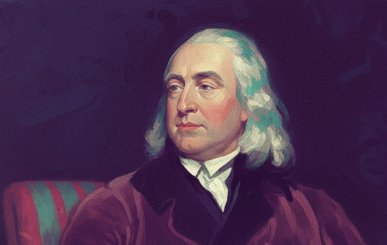
Prose is when all the lines except the last go on to the end. Poetry is when some of them fall short of it.
▼
Source
source
As quoted in Life of John Stuart Mill (1954) by M. St.J. Packe, Bk. I, Ch. II

3 months 2 weeks ago
The film concludes with ... the most nauseatingly luscious, the most penetratingly vulgar mammy song that it has ever been my lot to hear. My flesh crept as the loud speaker poured out those sodden words, the greasy, sagging melody. I felt ashamed of myself for listening to such things, for even being a member of the species to which such things are addressed.
▼
Source
source
"Silence is Golden," p. 62

1 month 2 weeks ago
Science is meaningless because it gives no answer to our question, the only question important for us: 'what shall we do and how shall we live.
▼
Source
source
Quoted by Max Weber in his lecture "Science as a Vocation"; in Lynda Walsh (2013)

3 months 2 weeks ago
A new moral outlook is called for in which submission to the powers of nature is replaced by respect for what is best in man. It is where this respect is lacking that scientific technique is dangerous.
▼
Source
source
Attributed to Russell at the end of Isaac Asimov's short story Franchise with no specific source given.



2 months 1 day ago
These left me in no doubt that something was trying to communicate with us, but that direct communication would be counterproductive. It seemed to be an important part of the scheme to create a sense of mystery.
▼
Source
source
p. 352
3 weeks 1 day ago
You can't satisfy everybody; especially if there are those who will be dissatisfied unless not everybody is satisfied.
▼
Source
source
Ch. 10 : A Framework for Utopia; The Framework as Utopian Common Ground, p. 320

3 months 2 weeks ago
Never aim at more precision than... required by the problem...
3 months 2 weeks ago
How can great minds be produced in a country where the test of a great mind is agreeing in the opinions of small minds?
▼
Source
source
As quoted in Egoists: A Book of Supermen (1909) by James Huneker, p. 367

1 week 2 days ago
The eye of the intellect "sees in all objects what it brought with it the means of seeing."
▼
Source
source
Varnhagen von Ense's Memoirs.
1 month 2 weeks ago
It is a sore thing to have laboured along and scaled the arduous hilltops, and when all is done, find humanity indifferent to your achievement. Hence physicists condemn the unphysical; financiers have only a superficial toleration for those who know little of stocks; literary persons despise the unlettered; and people of all pursuits combine to disparage those who have none. But though this is one difficulty of the subject, it is not the greatest. You could not be put in prison for speaking against industry, but you can be sent to Coventry for speaking like a fool. The greatest difficulty with most subjects is to do them well; therefore, please to remember this is an apology. It is certain that much may be judiciously argued in favour of diligence; only there is something to be said against it, and that is what, on the present occasion, I have to say.
▼
Source
source
An Apology for Idlers.
2 months 3 days ago
Every intellectual revolution which has ever stirred humanity into greatness has been a passionate protest against inert ideas. Then, alas, with pathetic ignorance of human psychology, it has proceeded by some educational scheme to bind humanity afresh with inert ideas of its own fashioning.
1 month 1 week ago
As a scholar [Allan Bloom] intends to enlighten us, and as a writer he has learned from Aristophanes and other models that enlightenment should also be enjoyable. To me, this is not the book of a professor, but that of a thinker who is willing to take the risks more frequently taken by writers. It is risky in a book of ideas to speak in one's own voice, but it reminds us that the sources of the truest truths are inevitably profoundly personal. ... Academics, even those describing themselves as existentialists, very seldom offer themselves publicly and frankly as individuals, as persons.
▼
Source
source
p. 12

3 months 2 weeks ago
Give me health and a day, and I will make the pomp of emperors ridiculous.
▼
Source
source
Beauty

3 months 2 weeks ago
Every man, wherever he goes, is encompassed by a cloud of comforting convictions, which move with him like flies on a summer day.
▼
Source
source
Ch. 2: Dreams and Facts

1 month 2 weeks ago
Obsolescence is the moment of superabundance.
▼
Source
source
Yeats studies, Issue 2, Irish University Press, 1972, p. 135
2 months 2 weeks ago
Before abstraction everything is one, but one like chaos; after abstraction everything is united again, but this union is a free binding of autonomous, self-determined beings. Out of a mob a society has developed, chaos has been transformed into a manifold world.
▼
Source
source
Fragment No. 95
CivilSimian.com created by AxiomaticPanic, CivilSimian, Kalokagathia