

3 days ago
Man with the great M is only an ideal, the species only something thought of.
▼
Source
source
Dover 2005, p. 182
1 month 1 week ago
We no longer have to resort to superstition when faced with the deep problems: Is there a meaning to life? What are we for? What is man?
▼
Source
source
Ch. 1. Why Are People?

4 months 2 weeks ago
The man who does not wish to belong to the mass needs only to cease taking himself easily; let him follow his conscience, which calls to him: Be your self! All you are now doing, thinking, desiring, is not you yourself.

3 months 3 weeks ago
And as every present state of a simple substance is naturally a consequence of its preceding state, so its present is pregnant with its future.
▼
Source
source
La monadologie (22).

3 months 2 weeks ago
The camera is as subjective as we are.
▼
Source
source
An Outline of Philosophy Ch.15 The Nature of our Knowledge of Physics, 1927

3 months 2 weeks ago
Nature paints the best part of a picture, carves the best parts of the statue, builds the best part of the house, and speaks the best part of the oration.
▼
Source
source
Art
1 month ago
I ... understand why the saints were rarely married women. I am convinced it has nothing inherently to do, as I once supposed, with chastity or children. It has primarily to do with distractions ... Women's normal occupations in general run counter to creative life, or contemplative life or saintly life.
▼
Source
source
Ch. 2
1 month 6 days ago
What a singular destiny has been that of this remarkable man! To be regarded in his own age as a classic, and in ours as a companion! To receive from his contemporaries that full homage which men of genius have in general received only from posterity! To be more intimately known to posterity than other men are known to their contemporaries!
▼
Source
source
'Samuel Johnson', The Edinburgh Review (September 1831), quoted in T. B. Macaulay, Critical and Historical Essays Contributed to The Edinburgh Review, Vol. I (1843), p. 407

3 months 2 weeks ago
Three o'clock is always too late or too early for anything you want to do.

3 months 3 weeks ago
Hurl your calumnies boldly; something is sure to stick.
▼
Source
source
De Augmentis Scientiarum

3 weeks 3 days ago
If we are to put interrogators to work in defence of liberal values, their role in the community must receive proper recognition. They will require intensive counselling to overcome the inevitable traumas that this difficult work involves. They must be enabled to see themselves as dedicated workers in the cause of progress. Psychotherapy must be available to help them avoid the negative self-image from which some torturers have suffered in the past.

4 months 1 week ago
When we see men of worth, we should think of equaling them; when we see men of a contrary character, we should turn inwards and examine ourselves.

4 months 2 weeks ago
Parmenides: Whatever the subject of your hypothesis, if you suppose that it is or is not, or that it experiences any other affection, you must consider what happens to it and to any other particular things you may choose, and to a greater number and to all in the same way; and you must consider other things in relation to themselves and to anything else you may choose in any instance, whether you suppose that the subject of your hypothesis exists or does not exist, if you are to train yourself completely to see the truth perfectly.
3 days ago
Human or general needs can be satisfied through society; for satisfaction of unique needs you must do some seeking. A friend and a friendly service, or even an individual's service, society cannot procure you. And yet you will every moment be in need of such a service, and on the slightest occasions require somebody who is helpful to you. Therefore do not rely on society, but see to it that you have the wherewithal to - purchase the fulfilment of your wishes.
▼
Source
source
Cambridge 1995, p. 243

2 months 1 week ago
If the flesh came into being because of spirit, it is a wonder. But if spirit came into being because of the body, it is a wonder of wonders. Indeed, I am amazed at how this great wealth has made its home in this poverty.

3 months 2 weeks ago
The commodity is first of all, an external object, a thing which through its qualities satisfies human needs of whatever kind. The nature of these needs, whether they arise, for example, from the stomach, or the imagination, makes no difference. Nor does it matter here how the thing satisfies man's need, whether directly as a means of subsistence, i.e. an object of consumption, or indirectly as a means of production.
▼
Source
source
Vol. I, Ch. 1, Section 1, pg. 41.

4 months 2 weeks ago
What I will be remembered for are the Foundation Trilogy and the Three Laws of Robotics. What I want to be remembered for is no one book, or no dozen books. Any single thing I have written can be paralleled or even surpassed by something someone else has done. However, my total corpus for quantity, quality and variety can be duplicated by no one else. That is what I want to be remembered for.

2 months ago
The Outsider is always unhappy, but he is an agent that ensures the happiness for millions of 'Insiders'.
▼
Source
source
Chapter Seven, The Great Synthesis…

4 months 2 weeks ago
That a woman is presented as a teacher, as a prototype of piety, cannot amaze anyone who knows that piety or godliness is fundamentally womanliness. ... from a woman you learn concern for the one thing needful, from Mary, sister of Lazarus, who sat silent at Christ's feet with her heart's choice: the one thing needful.

3 months 3 weeks ago
Let us keep to Christ, and cling to Him, and hang on Him, so that no power can remove us.
▼
Source
source
p. 433
3 months 2 weeks ago
Wherever a man comes, there comes revolution. The old is for slaves.
▼
Source
source
p. 25
4 months ago
The art of persuasion consists as much in that of pleasing as in that of convincing, so much more are men governed by caprice than by reason!
2 months 3 weeks ago
What a hell of an economic system! Some are replete with everything while others, whose stomachs are no less demanding, whose hunger is just as recurrent, have nothing to bite on. The worst of it is the constrained posture need puts you in. The needy man does not walk like the rest; he skips, slithers, twists, crawls.
2 months 1 week ago
“What man among you with 100 sheep, on losing one of them, will not leave the 99 behind in the wilderness and go after the lost one until he finds it? And when he has found it, he puts it on his shoulders and rejoices. And when he gets home, he calls his friends and his neighbors together, saying to them, ‘Rejoice with me, for I have found my sheep that was lost.' I tell you that in the same way, there will be more joy in heaven over one sinner who repents than over 99 righteous ones who have no need of repentance.
▼
Source
source
Luke 15: 4-7

2 months 3 weeks ago
The hatred that men bear to privilege increases in proportion as privileges become fewer and less considerable, so that democratic passions would seem to burn most fiercely just when they have least fuel. I have already given the reason for this phenomenon. [all conditions are unequal, no inequality is so great as to offend the eye, whereas the slightest dissimilarity is odious in the midst of general uniformity; the more complete this uniformity is, the more insupportable the sight of such a difference becomes.] Hence it is natural that the love of equality should constantly increase together with equality itself, and that it should grow by what it feeds on.
▼
Source
source
Chapter III.
3 months 2 weeks ago
Whatever limits us we call Fate.
▼
Source
source
Fate


2 months 2 weeks ago
I am excluded from the possession of a determined object, not through the will of the other, but only through my own free-will. If I had not excluded myself, I should not be excluded. But I must exclude myself from something in virtue of the Conception of Rights.
▼
Source
source
** P. 182
1 month 3 weeks ago
A few years ago I had occasion to visit Peru, and I got to know a fine philosopher and a truly wonderful human being-Francisco Miro Casada. Miro Casada has been an idealist all his life, while being, at the same time, a man of great experience (a former member of several governments and a former Ambassador to France). I found him a man who represents the social democratic vision in its purest form. Talking to him, and to my other friends in Peru (who represented quite a spectrum of political opinion), I heard something that was summed up in a remark he, Miro Casada, made to me, "Whenever you have a Republican president, we get a wave of military dictatorships in Latin America".
▼
Source
source
How Not to Solve Ethical Problems

1 month 2 weeks ago
Bless Madison Ave for restoring the magical art of the cavemen to suburbia.
▼
Source
source
(p. 130)

3 months 3 weeks ago
The difference between the most dissimilar characters, between a philosopher and a common street porter, for example, seems to arise not so much from nature, as from habit, custom, and education.
▼
Source
source
Chapter II, p. 17.
2 months 1 week ago
It is written, Man shall not live by bread alone, but by every word that proceedeth out of the mouth of God.
▼
Source
source
4:4 (KJV) Said to Satan. The reference is to Deuteronomy 8:3, "... that he might make thee know that man doth not live by bread only, but by every word that proceedeth out of the mouth of the Lord doth man live." (KJV)

2 months 1 week ago
"Where do you get those superior airs of yours?" "I've managed to survive, you see, all those nights when I wondered: am I going to kill myself at dawn?"
4 months 2 weeks ago
Good prose is written only face to face with poetry.
3 months 2 weeks ago
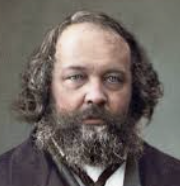
Now, what is 'unrighteousness' in practice? It is in practice behavior of a kind disliked by the herd. By calling it unrighteousness, and by arranging an elaborate system of ethics around this conception, the herd justifies itself in wreaking punishment upon the objects of its own dislike, while at the same time, since the herd is righteous by definition, it enhances its own self-esteem at the very moment when it lets loose its impulse to cruelty. This is the psychology of lynching, and of the other ways in which criminals are punished. The essence of the conception of righteousness, therefore, is to afford an outlet for sadism by cloaking cruelty as justice.
▼
Source
source
"The Idea of Righteousness"
2 months 2 weeks ago
By striving to do the impossible, man has always achieved what is possible. Those who have cautiously done no more than they believed possible have never taken a single step forward.
▼
Source
source
As quoted in The Explorers (1996) by Paolo Novaresio ISBN 1-55670-495-X

2 months 2 weeks ago
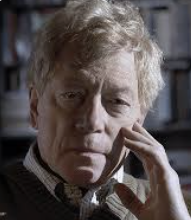
There are few with whom I can communicate so freely as with Pope. But Pope cannot bear every truth. He has a timidity which hinders the full exertion of his faculties, almost as effectually as bigotry cramps those of the general herd of mankind. But whoever is a genuine follower of truth keeps his eye steady upon his guide, indifferent whither he is led, provided that she is the leader. And, my Lord, if it may be properly considered, it were infinitely better to remain possessed by the whole legion of vulgar mistakes, than to reject some, and, at the same time, to retain a fondness for others altogether as absurd and irrational. The first has at least a consistency, that makes a man, however erroneously, uniform at least; but the latter way of proceeding is such an inconsistent chimera and jumble of philosophy and vulgar prejudice, that hardly anything more ridiculous can be conceived.
1 month 1 week ago
In all the areas of life where people have sought and found consolation through forbidding their desires-sex in particular, and taste in general-the habit of judgment is now to be stamped out.
▼
Source
source
"Rays of Hope" (p. 106)

2 months 4 days ago
To all this, someone is sure to object that life ought to subject itself to reason, to which we will reply that nobody ought to do what he is unable to do, and life cannot subject itself to reason. "Ought, therefore can," some Kantian will retort. To which we shall demur: "Cannot, therefore ought not." And life cannot submit itself to reason, because the end of life is living and not understanding.

3 months 3 weeks ago
I find that the best virtue I have has in it some tincture of vice.
▼
Source
source
Book II, Ch. 20. That we taste nothing pure

3 months 1 week ago
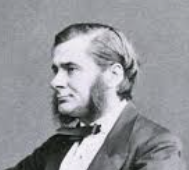
I shall develop the thesis that anyone acting communicatively must, in performing any speech act, raise universal validity claims and suppose that they can be vindicated.
▼
Source
source
p. 22
1 month 3 days ago
The absolute justice of the system of things is as clear to me as any scientific fact. The gravitation of sin to sorrow is as certain as that of the earth to the sun, and more so-for experimental proof of the fact is within reach of us all-nay, is before us all in our own lives, if we had but the eyes to see it.
3 months 3 weeks ago
To found a great empire for the sole purpose of raising up a people of customers, may at first appear a project fit only for a nation of shopkeepers. It is however, a project altogether unfit for a nation of shopkeepers; but extremely fit for a nation whose government is influenced by shopkeepers.
▼
Source
source
Chapter VII, Part Third, p. 667.
3 months 2 weeks ago
Next to enjoying ourselves, the next greatest pleasure consists in preventing others from enjoying themselves, or, more generally, in the acquisition of power.
▼
Source
source
Ch. 10: Recrudescence of Puritanism

3 months 2 weeks ago
By 'arguing...' I mean... criticizing... inviting... criticism; and trying to learn from it.

3 months 2 weeks ago
By means of ever more effective methods of mind-manipulation, the democracies will change their nature; the quaint old forms- elections, parliaments, Supreme Courts and all the rest-will remain. The underlying substance will be a new kind of non-violent totalitarianism. All the traditional names, all the hallowed slogans will remain exactly what they were in the good old days. Democracy and freedom will be the theme of every broadcast and editorial-but democracy and freedom in a strictly Pickwickian sense. Meanwhile the ruling oligarchy and its highly trained elite of soldiers, policemen, thought-manufacturers and mind-manipulators will quietly run the show as they see fit.
▼
Source
source
Chapter 3, p. 25

1 month 2 weeks ago
A real mother, who knows the will of God by experience, will prepare her children also to fulfil it. Such a mother will suffer if she sees her child overfed, effeminate, and dressed-up, for she knows that these things will make it difficult for it to fulfil the will of God which she recognizes.

2 months 2 weeks ago
They think of the philosopher as holding the ideal or subjective in one hand and the real or objective in the other and then have him strike the palms of his hands together so that one abrades the other. The product of this abrasion is the Absolute.
▼
Source
source
P. 12

2 months ago
The average mind is slow in grasping a truth, but when the most thoroughly organized, centralized institution, maintained at an excessive national expense, has proven a complete social failure, the dullest must begin to question its right to exist. The time is past when we can be content with our social fabric merely because it is "ordained by divine right," or by the majesty of the law.
CivilSimian.com created by AxiomaticPanic, CivilSimian, Kalokagathia