


3 months 3 weeks ago
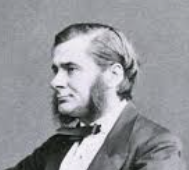
A free man thinks of death least of all things; and his wisdom is a meditation not of death but of life.
▼
Source
source
Part IV, Prop. LXVII
1 month 1 week ago
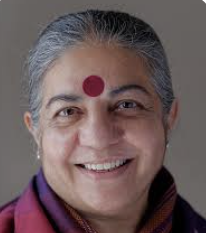
The saying that a little knowledge is a dangerous thing is, to my mind, a very dangerous adage. If knowledge is real and genuine, I do not believe that it is other than a very valuable possession, however infinitesimal its quantity may be. Indeed, if a little knowledge is dangerous, where is the man who has so much as to be out of danger?
▼
Source
source
"On Elementary Instruction in Physiology"
1 month 5 days ago
Those least responsible for climate change are worst affected by it.
▼
Source
source
Soil Not Oil: Environmental Justice in an Age of Climate Crisis

4 months 3 weeks ago
It is mere illusion and pretty sentiment to expect much from mankind if he forgets how to make war. And yet no means are known which call so much into action as a great war, that rough energy born of the camp, that deep impersonality born of hatred, that conscience born of murder and cold-bloodedness, that fervor born of effort of the annihilation of the enemy, that proud indifference to loss, to one's own existence, to that of one's fellows, to that earthquake-like soul-shaking that a people needs when it is losing its vitality.

3 months 3 weeks ago
It is a bad thing to perform menial duties even for the sake of freedom; to fight with pinpricks, instead of with clubs. I have become tired of hypocrisy, stupidity, gross arbitrariness, and of our bowing and scraping, dodging, and hair-splitting over words. Consequently, the government has given me back my freedom.
▼
Source
source
Letter from Marx to Arnold Ruge (25 January 1843)

2 months 2 weeks ago
Should it be proved that woman is naturally weaker than man, from whence does it follow that it is natural for her to labour to become still weaker than nature intended her to be? Arguments of this cast are an insult to common sense, and savour of passion. The divine right of husbands, like the divine right of kings, may, it is to be hoped, in this enlightened age, be contested without danger, and though conviction may not silence many boisterous disputants, yet, when any prevailing prejudice is attacked, the wise will consider, and leave the narrow-minded to rail with thoughtless vehemence at innovation.
▼
Source
source
Ch. 3
2 months 1 week ago
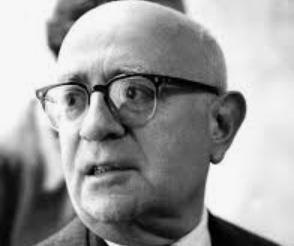
The dressing up and puffing up of the individual erases the lineaments of protest.
▼
Source
source
p. 283

2 months 1 week ago
I must avert here once again to my view of the opposition that exists between individuality and personality, notwithstanding the fact that the one demands the other. Individuality is, if I may so express it, the container or thing which contains, personality the content or thing contained, or I might say that my personality is in a certain sense my comprehension, that which I comprehend or embrace within myself - which is in a certain way the whole Universe - and that my individuality is my extension; the one my infinite, the other my finite.
2 days ago
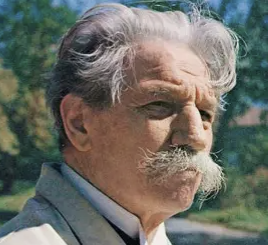
The thinking man must ... oppose all cruel customs no matter how deeply rooted in tradition and surrounded by a halo. True manhood is too precious a spiritual good for us to surrender any part of it to thoughtlessness. p. 305; also in The Animal World of Albert Schweitzer (1950), p. 179 Variant : The thinking man must oppose all cruel customs no matter how deeply rooted in tradition and surrounded by a halo. When we have a choice, we must avoid bringing torment and injury into the life of another, even the lowliest creature; to do so is to renounce our manhood and shoulder a guilt which nothing justifies.
▼
Source
source
As quoted in Becoming Vegan : The Complete Guide to Adopting a Healthy Plant-based Diet (2000) by Brenda Davis and Vesanto Melina, p. 261
2 months 3 weeks ago
Just as when a man commits suicide ne negates the body, this rational limit of subjectivity, so when he lapses into fantastic and trascendental practice he associates himself with embodied divine and ghostly appearances, namely, he negates in practise the difference between imagination and perception.
▼
Source
source
Part III, Section 29

1 month 2 weeks ago
Advertising is the greatest art form of the twentieth century.
▼
Source
source
quoted in Advertising Age, Sep. 3, 1976
2 days ago
Blow the dust off the clock. Your watches are behind the times. Throw open the heavy curtains which are so dear to you - you do not even suspect that the day has already dawned outside.
▼
Source
source
Letter to the Secretariat of the Soviet Writers' Union (12 November 1969) as translated in Solzhenitsyn: A Documentary Record (1970) edited by Leopold Labedz, "Expulsion"

6 days ago
For sometimes it is an act of bravery even to live.
▼
Source
source
Seneca, Ad Lucilium epistulae morales, transl. Richard M. Gummere, 1920 ed., Epistle LXXVIII, pp. 181-182
2 months 4 days ago
Power is never naked. Rather, it is eloquent.

3 months 2 weeks ago
If life becomes hard to bear we think of improvements. But the most important and effective improvement, in our own attitude, hardly occurs to us, and we can decide on this only with the utmost difficulty.
▼
Source
source
p. 60e
3 months 3 weeks ago
This is that which I think great readers are apt to be mistaken in; those who have read of everything, are thought to understand everything too; but it is not always so. Reading furnishes the mind only with materials of knowledge; it is thinking that makes what we read ours. We are of the ruminating kind, and it is not enough to cram ourselves with a great load of collections ; unless we chew them over again, they will not give us strength and nourishment.
▼
Source
source
As quoted in "Hand Book : Caution and Counsels" in The Common School Journal Vol. 5, No. 24 (15 December 1843) by Horace Mann, p. 371
1 month 2 weeks ago
When Fortune is on our side, popular favor bears her company.
▼
Source
source
Maxim 275
6 days ago
He maintained this attitude up to the very end, and no man ever saw Socrates too much elated or too much depressed. Amid all the disturbance of Fortune, he was undisturbed.

3 months 3 weeks ago
The past alone is truly real: the present is but a painful, struggling birth into the immutable being of what is no longer. Only the dead exist fully. The lives of the living are fragmentary, doubtful, and subject to change; but the lives of the dead are complete, free from the sway of Time, the all but omnipotent lord of the world. Their failures and successes, their hopes and fears, their joys and pains, have become eternal-our efforts cannot now abate one jot of them. Sorrows long buried in the grave, tragedies of which only a fading memory remains, loves immortalized by Death's hallowing touch these have a power, a magic, an untroubled calm, to which no present can attain. ...On the banks of the river of Time, the sad procession of human generations is marching slowly to the grave; in the quiet country of the Past, the march is ended, the tired wanderers rest, and the weeping is hushed.
▼
Source
source
On History, 1904

3 months 4 weeks ago
The Apostle Paul wants us to work with our hands in order to share with the needy (Ephesians 5:28). Notice that he could have said that we should work to support ourselves. But Paul says that we work to give to those in need. This is why caring for our body is also a Christian work. If the body is healthy and fit, we are able to work and save money that can be used to help those in need.
▼
Source
source
p. 80
1 month 2 weeks ago
Decisive actions are often taken in a moment and without any conscious deliverance from the rational parts of man.
▼
Source
source
The Rajah's Diamond, Story of the Young Man in Holy Orders.

3 months 3 weeks ago
Nothing contributes more to nourish elevation of sentiments in a people, than the large and free character of their habitations.
▼
Source
source
(p. 55)

3 months 2 weeks ago
For Genet, reflective states of mind are the rule. And although they are of an unstable nature in everyone, in him...reflection is always contrary to the reflected feeling.
▼
Source
source
p. 278

3 months 2 weeks ago
To be ignorant of the past is to remain a child.
▼
Source
source
Cicero
3 months 3 weeks ago
To acquire immunity to eloquence is of the utmost importance to the citizens of a democracy.
▼
Source
source
Ch. 18: The Taming of Power

3 months 2 weeks ago
But supposing one tries to live by Pantheistic philosophy? Does it lead to a complacent Hegelian optimism?
▼
Source
source
Pilgrim's Regress 132-133

2 months 2 weeks ago
At this very moment, I am suffering - as we say in French, j'ai mal. This event, crucial for me, is nonexistent, even inconceivable for anyone else, for everyone else. Except for God, if that word can have a meaning.

3 months 2 weeks ago
To choose this or that is to affirm at the same time the value of what we choose, because we can never choose evil. We always choose the good, and nothing can be good for us without being good for all.
▼
Source
source
Existentialism and Human Emotions

3 months 3 weeks ago
When the profits of trade happen to be greater than ordinary, over-trading becomes a general error both among great and small dealers.
▼
Source
source
Chapter I, p. 469.
3 months 4 weeks ago
Leave the ass burdened with laws behind in the valley. But your conscience, let it ascend with Isaac into the mountain.
▼
Source
source
Chapter 2, Verse 14
1 month 2 weeks ago
The bow too tensely strung is easily broken.
▼
Source
source
Maxim 388
2 months ago
The criterion of efficiency dictates that choice of alternatives which produces the largest result for the given application of resources.
▼
Source
source
Simon (1945, p. 179); As cited in: Harry M. Johnson (1966) Sociology: A Systematic Introduction. p. 287.
6 days ago
What need is there to weep over parts of life?
▼
Source
source
The whole of it calls for tears. Translated by J. W. Basore
3 months 3 weeks ago
It's not too much to say that every indication of Design in the Kosmos is evidence against the Omnipotence of the Designer. For what is meant by Design? Contrivance: the adaptation of means to an end. But the necessity for contrivance - the need of employing means - is a consequence of the limitation of power. Who would have recourse to means if to attain his end his mere word was sufficient? The very idea of means implies that the means have an efficacy which the direct action of the being who employs them has not. ...

3 months 3 weeks ago
Far or forgot to me is near; Shadow and sunlight are the same; The vanished gods to me appear; And one to me are shame and fame.
▼
Source
source
Brahma, st. 2

3 months 1 week ago
Strength and beauty are the blessings of youth; temperance, however, is the flower of old age.
▼
Source
source
Fragment quoted in H. Diels and W. Kranz (eds.) Die Fragmente der Vorsokratiker, Vol. II (1952), no. 294

2 months 1 day ago
What I do not like about our definitions of genius is that there is in them nothing of the day of judgment, nothing of resounding through eternity and nothing of the footsteps of the Almighty.
▼
Source
source
E 92
4 months 1 week ago
Come the Day of Judgment, some believe that the body will be different from our present body. This is only transient, that will be eternal. For this also there are religious arguments.
2 days ago
From my youth onwards, I have felt sure that all thought which thinks itself out to an issue ends in mysticism. In the stillness of the African jungle I have been able to work out this thought and give it expression.
3 months 3 weeks ago
I do not, therefore, need any penetrating acuteness to see what I have to do in order that my volition be morally good. Inexperienced in the course of the world, incapable of being prepared for whatever might come to pass in it, I ask myself only: can you also will that your maxim become a universal law?

3 months 3 days ago
Wish not the thing, which thou mayest not obtain!
2 months 2 weeks ago
In the state of nature, Profit is the measure of Right.
▼
Source
source
De Cive
3 months 3 weeks ago
I do not think it can be questioned that sympathy is a genuine motive, and that some people at some times are made somewhat uncomfortable by the sufferings of some other people. It is sympathy that has produced the many humanitarian advances of the last hundred years. We are shocked when we hear stories of the ill-treatment of lunatics, and there are now quite a number of asylums in which they are not ill-treated. Prisoners in Western countries are not supposed to be tortured, and when they are, there is an outcry if the facts are discovered. We do not approve of treating orphans as they are treated in Oliver Twist.

2 months 3 weeks ago
Yes! We believe in a higher principle than your virtue and the kind of morality you speak of so paltrily and without much conviction. We believe that there is no imperative or reward for virtue for the soul because it simply acts according to the necessity of its inherent nature. The moral imperative expresses itself in an ought and presupposes the concept of an evil next to that of good.
▼
Source
source
P. 43
2 months 1 week ago
Whenever convictions are not arrived at by direct contact with the world and the objects themselves, but indirectly through a critique of the opinions of others, the processes of thinking are impregnated with ressentiment. The establishment of "criteria" for testing the correctness of opinions then becomes the most important task. Genuine and fruitful criticism judges all opinions with reference to the object itself. Ressentiment criticism, on the contrary, accepts no "object" that has not stood the test of criticism.
▼
Source
source
L. Coser, trans. (1973), pp. 67-68

1 month 3 weeks ago
People understand the meaning of eating lies in the nourishment of the body only when they cease to consider that the object of that activity is pleasure. ...People understand the meaning of art only when they cease to consider that the aim of that activity is beauty, i.e., pleasure.

1 month 2 weeks ago
We've reached a truly remarkable situation: a grotesque mismatch between the American intelligentsia and the American electorate. A philosophical opinion about the nature of the universe which is held by the vast majority of top American scientists, and probably the majority of the intelligentsia generally, is so abhorrent to the American electorate that no candidate for popular election dare affirm it in public. If I'm right, this means that high office in the greatest country in the world is barred to the very people best qualified to hold it: the intelligentsia, unless they are prepared to lie about their beliefs. To put it bluntly American political opportunities are heavily loaded against those who are simultaneously intelligent and honest.
▼
Source
source
Richard Dawkins on militant atheism,
3 months 2 weeks ago
Mr. Sensible learned only catchwords from them. He could talk like Epicurus of spare diet, but he was a glutton. He had from Montaigne the language of friendship, but no friend.
▼
Source
source
Pilgrim's Regress 176
CivilSimian.com created by AxiomaticPanic, CivilSimian, Kalokagathia