

2 months 2 weeks ago
There is nothing impossible in the existence of the supernatural: its existence seems to me decidedly probable.
▼
Source
source
The Genteel Tradition at Bay

3 months 3 weeks ago
No man treats a motorcar as foolishly as he treats another human being. When the car will not go, he does not attribute its annoying behaviour to sin; he does not say, "You are a wicked motorcar, and I shall not give you any more petrol until you go." He attempts to find out what is wrong and to set it right. An analogous way of treating human beings is, however, considered to be contrary to the truths of our holy religion.
▼
Source
source
"The Doctrine of Free Will"

4 months ago
A man of understanding has lost nothing, if he has himself.
▼
Source
source
Ch. 39

2 months 4 weeks ago
Persecution is a bad and indirect way to plant Religion.
▼
Source
source
Section 25
3 months 1 week ago
For joys fall not to the rich alone, nor has he lived ill, who from birth to death has passed unknown.
▼
Source
source
Book I, epistle xvii, line 9
1 week 1 day ago
Political freedom means this: that the polis, the state, is free; religious freedom this: that religion is free, just as freedom of conscience indicates that conscience is free; thus, it does not that I am free from state, from religion, from conscience, or that I am rid of them. It does not mean my freedom, but the freedom of a power that rules and vanquishes me; it means that one of my oppressors, like state, religion, conscience, is free.
▼
Source
source
Landstreicher, p. 76
4 months 3 weeks ago
Aristotle's view that philosophy begins with wonder, not as in our day with doubt, is a positive point of departure for philosophy. Indeed, the world will no doubt learn that it does not do to begin with the negative, and the reason for success up to the present is that philosophers have never quite surrendered to the negative and thus have never earnestly done what they have said. They merely flirt with doubt.
1 month 3 weeks ago
Nothing in this book is true.

2 months 2 weeks ago
I am he that liveth, and was dead; and, behold, I am alive for evermore, Amen; and have the keys of hell and of death. Write the things which thou hast seen, and the things which are, and the things which shall be hereafter.
▼
Source
source
Revelation 1:18-19

3 months 3 weeks ago
As we passed under the last bridge over the canal, just before reaching the Merrimack, the people coming out of church paused to look at us from above, and apparently, so strong is custom, indulged in some heathenish comparisons; but we were the truest observers of this sunny day.


1 week 6 days ago
Consider how, even in the meanest sorts of Labour, the whole soul of a man is composed into a kind of real harmony, the instant he sets himself to work! Doubt, Desire, Sorrow, Remorse, Indignation, Despair itself, all these like helldogs lie beleaguering the soul of the poor dayworker, as of every man: but he bends himself with free valour against his task, and all these are stilled, all these shrink murmuring far off into their caves. The man is now a man. The blessed glow of Labour in him, is it not as purifying fire, wherein all poison is burnt up, and of sour smoke itself there is made bright blessed flame!
4 months 3 weeks ago
The life of money-making is one undertaken under compulsion, and wealth is evidently not the good we are seeking; for it is merely useful and for the sake of something else.
2 months 2 days ago
Prejudices are so to speak the mechanical instincts of men: through their prejudices they do without any effort many things they would find too difficult to think through to the point of resolving to do them.
▼
Source
source
A 58
4 months 1 week ago
Come the Day of Judgment, some believe that the body will be different from our present body. This is only transient, that will be eternal. For this also there are religious arguments.
2 months 2 weeks ago
To disappear into deep water or to disappear toward a far horizon, to become part of depth of infinity, such is the destiny of man that finds its image in the destiny of water.
▼
Source
source
Introduction
3 days ago
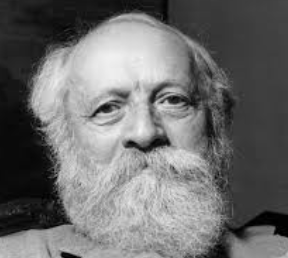
I must interpret the life about me as I interpret the life that is my own. My life is full of meaning to me. The life around me must be full of significance to itself. If I am to expect others to respect my life, then I must respect the other life I see, however strange it may be to mine. And not only other human life, but all kinds of life: life above mine, if there be such life; life below mine, as I know it to exist. Ethics in our Western world has hitherto been largely limited to the relations of man to man. But that is a limited ethics. We need a boundless ethics which will include the animals also.
2 months 1 week ago
The concept of guilt is found most powerfully developed even in the most primitive communal forms which we know: ... the man is guilty who violates one of the original laws which dominate the society and which are mostly derived from a divine founder; the boy who is accepted into the tribal community and learns its laws, which bind him thenceforth, learns to promise; this promise is often given under the sign of death, which is symbolically carried out on the boy, with a symbolical rebirth.
▼
Source
source
p. 178

2 months 2 weeks ago
A heart without music is like beauty without melancholy.

2 months 3 weeks ago
It looks to me to be narrow and pedantic to apply the ordinary ideas of criminal justice to this great public contest. I do not know the method of drawing up an indictment against a whole people.
3 months 1 week ago
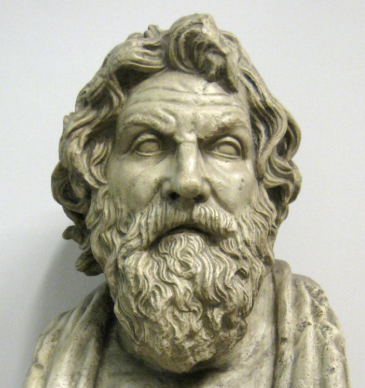
Ill repute is a good thing and much the same as pain.
▼
Source
source
§ 5
3 days ago
I don't know what your destiny will be, but one thing I know, the only ones among you who will be really happy are those who have sought and found how to serve.
▼
Source
source
Widely attributed to Schwietzer online, no known original source.
2 weeks 2 days ago
We seek not what God could have done but what He has done.... God could have caused birds to fly with bones of solid gold, with veins full of quicksilver, with flesh heavier than lead and very small and heavy wings, so as to better show His power ... but He wanted to make their bones, flesh and feathers very light ... to teach us that He likes simplicity and ease.
▼
Source
source
Notes in a copy of Jean-Baptiste Morin's "Famous and ancient problems of the earth's motion or rest, yet to be solved" (published 1631).
3 months 3 weeks ago
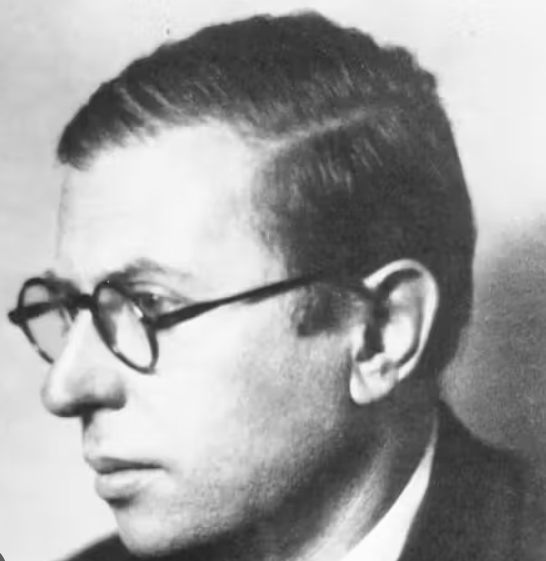
He chooses the most feared, most hated man in order to worship him as a god, feeling sure that he is alone in perceiving the god's secret virtues.
▼
Source
source
p. 165
2 months 6 days ago
If one assumes, as I do, that battery is caused by the belief permeating this culture that hierarchical rule and coercive authority are natural, then all our relationships tend to be based on power and domination, and thus all forms of battery are linked.

2 weeks 3 days ago
The invasion... exhibits in stark terms, the choice that is before us today between maintaining a liberal government that respects the rights of individuals, or moving over to a form of centralized illiberal dictatorship, even if that... illiberal government is somehow democratically legitimated. ...That's the central issue in global politics today. ...That's basically what the... Ukraine invasion is about, and that's why... all liberal societies that care about those individual freedoms... have a very powerful interest in the outcome of that war, because Putin and Russia are at the center of an international network of illiberal forces that are seeking to overturn liberal values in virtually every part of the world, and therefore... that's all part of a larger global struggle over our fundamental liberal values.
▼
Source
source
26:50 Question & Answer period follows
4 months 1 week ago
To no one but the Son of Heaven does it belong to order ceremonies, to fix the measures, and to determine the written characters.
4 months 2 weeks ago
O light! This is the cry of all the characters of ancient drama brought face to face with their fate. This last resort was ours, too, and I knew it now. In the middle of winter I at last discovered that there was in me an invincible summer. Return to Tipasa (1954) Variant translation: In the depths of winter, I finally learned that within me there lay an invincible summer.
2 months 1 day ago
Rationality requires a choice among all possible alternative behaviors. In actual behavior, only a very few of all these possible alternatives come to mind.
1 week 6 days ago
The true Church of England, at this moment, lies in the Editors of its Newspapers. These preach to the people daily, weekly; admonishing kings themselves; advising peace or war, with an authority which only the first Reformers, and a long-past class of Popes, were possessed of; inflicting moral censure; imparting moral encouragement, consolation, edification; in all ways diligently "administering the Discipline of the Church."
2 months 5 days ago
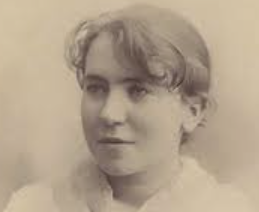
Needless to say, I am not opposed to woman suffrage on the conventional ground that she is not equal to it. I see neither physical, psychological, nor mental reasons why woman should not have the equal right to vote with man. But that can not possibly blind me to the absurd notion that woman will accomplish that wherein man has failed. If she would not make things worse, she certainly could not make them better. To assume, therefore, that she would succeed in purifying something which is not susceptible of purification, is to credit her with supernatural powers. Since woman's greatest misfortune has been that she was looked upon as either angel or devil, her true salvation lies in being placed on earth; namely, in being considered human, and therefore subject to all human follies and mistakes. Are we, then, to believe that two errors will make a right? Are we to assume that the poison already inherent in politics will be decreased, if women were to enter the political arena?

3 months 3 weeks ago
History is not like some individual person, which uses men to achieve its ends. History is nothing but the actions of men in pursuit of their ends.
▼
Source
source
The Holy Family, Ch. VI (1845).
2 months 2 weeks ago
They ask you for facts, proofs, works, and all you can show them are transformed tears.
4 months 1 day ago
My mind is calm, for my fortune is not my felicity. I know I have clean hands and a clean heart, and I hope a clean house for friends or servants; but Job himself, or whoever was the justest judge, by such hunting for matters against him as hath been used against me, may for a time seem foul, especially in a time when greatness is the mark and accusation is the game.
▼
Source
source
Quoted by Thomas Fowler in "Francis Bacon 1561-1626
4 months 2 weeks ago
Martyrs must choose between being forgotten, mocked, or made use of. As for being understood, never!
3 weeks 5 days ago
Utopia is a meta-utopia: the environment in which Utopian experiments may be tried out; the environment in which people are free to do their own thing; the environment which must, to a great extent, be realized first if more particular Utopian visions are to be realized stably.
▼
Source
source
Ch. 10 : A Framework for Utopia; The Framework, p. 312
3 months 3 weeks ago
The same law that shapes the earth-star shapes the snow-star. As surely as the petals of a flower are fixed, each of these countless snow-stars comes whirling to earth...these glorious spangles, the sweeping of heaven's floor.
▼
Source
source
January 5, 1856

3 months 3 weeks ago
The human imagination has seldom had before it an object so sublimely ordered as the medieval cosmos. If it has an aesthetic fault, it is perhaps, for us who have known romanticism, a shade too ordered. For all its vast spaces it might in the end afflict us with a kind of claustrophobia. Is there nowhere any vagueness? No undiscovered by-ways? No twilight? Can we never really get out of doors?
▼
Source
source
The Discarded Image: An Introduction to Medieval and Renaissance Literature, 1964
3 months 1 week ago
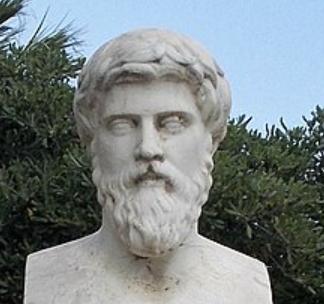
He said they that were serious in ridiculous matters would be ridiculous in serious affairs.
▼
Source
source
Cato the Elder

4 months 2 weeks ago
Certain success evicts one from the paradise of winning against the odds.
3 months 3 weeks ago
The real point at issue always is Turkey in Europe - the great peninsula to the south of the Save and Danube. This splendid territory [the Balkans] has the misfortune to be inhabited by a conglomerate of different races and nationalities, of which it is hard to say which is the least fit for progress and civilization. Slavonians, Greeks, Wallachians, Arnauts, twelve millions of men, are all held in submission by one million of Turks, and up to a recent period, it appeared doubtful whether, of all these different races, the Turks were not the most competent to hold the supremacy which, in such a mixed population, could not but accrue to one of these nationalities.
▼
Source
source
The Russian Menace to Europe, From Karl Marx and Frederick Engels, edited by Paul Blackstock and Bert Hoselitz, and published by George Allen and Unwin, London, 1953
3 months 3 weeks ago
Any man more right than his neighbors constitutes a majority of one.
3 days ago
One thing that specially saddened me was that the unfortunate animals had to suffer so much pain and misery. The sight of an old limping horse, tugged forward by one man while another kept beating it with a stick to get it to the knacker's yard at Colmar, haunted me for weeks. It was quite incomprehensible to me - this was before I began going to school - why in my evening prayers I should pray for human beings only. So when my mother had prayed with me and had kissed me good-night, I used to add silently a prayer that I had composed myself for all living creatures. It ran thus: "O, heavenly Father, protect and bless all things that have breath; guard them from all evil, and let them sleep in peace."
3 months 3 weeks ago
A proud man is always looking down on things and people: and, of course, as long as you are looking down, you cannot see something that is above you.
▼
Source
source
Book III, Chapter 8, "The Great Sin"
3 months 2 weeks ago
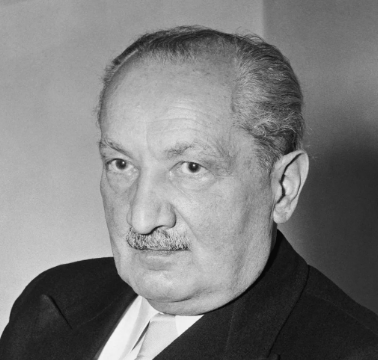
Do the essences of proposition and of the truth determine themselves from out of the essence of the thing, or does the essence of the thing determine itself from out of the essence of the proposition? The question is posed as an either/or. However does this either/or itself suffice? Are the essence of the thing and the essence of the proposition only built as mirror images because both of them together determine themselves from out of the same but deeper lying root? However, what and where can be this common ground for the essence of the thing and of the proposition and of their origin? The unconditioned (Unbedingt)? We stated at the beginning that what conditions the essense of the thing in its thingness can no longer itself be thing and conditioned, it must be an unconditioned (Un-bedingtes).
▼
Source
source
p. 47

3 months 3 weeks ago
The universal propensity to believe in invisible, intelligent power, if not an original instinct, being at least a general attendant of human nature, may be considered as a kind of mark or stamp, which the divine workman has set upon his work; and nothing surely can more dignify mankind, than to be thus selected from all other parts of the creation, and to bear the image or impression of the universal Creator. But consult this image, as it appears in the popular religions of the world. How is the deity disfigured in our representations of him! What caprice, absurdity, and immorality are attributed to him! How much is he degraded even below the character, which we should naturally, in common life, ascribe to a man of sense and virtue!
▼
Source
source
Part XV - General corollary
4 months 3 weeks ago
Death cannot explain itself. The earnestness consists precisely in this, that the observer must explain it to himself.
4 months 1 week ago
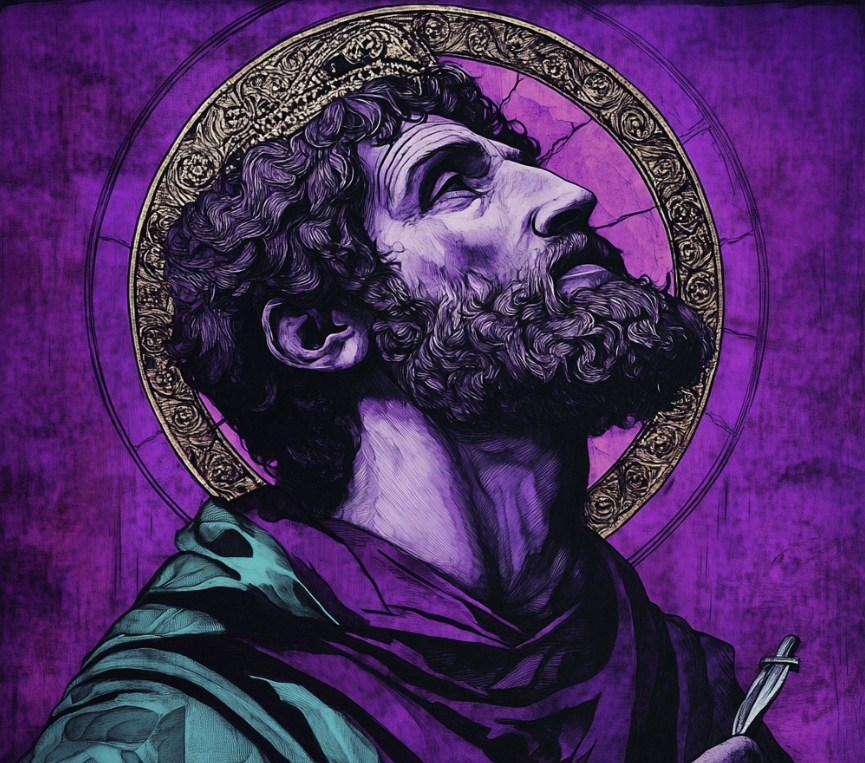
We were ensnared by the wisdom of the serpent; we are set free by the foolishness of God.
▼
Source
source
1:14 Latin: Serpentis sapientia decepti sumus, Dei stultitia liberamur.
CivilSimian.com created by AxiomaticPanic, CivilSimian, Kalokagathia